
Tesla Stock Price Prediction 2030: What’s Ahead?
Ryan Carter
January 18, 2026
1 Views
tesla stock price prediction 2030

Between 2019 and 2021, TSLA surged over 1,500%—outpacing every major automotive manufacturer combined. That kind of growth doesn’t follow traditional rules. It keeps investors both excited and nervous about where this company’s headed next.

I’ve spent a decade watching this market behave in ways that challenge valuation models. This isn’t your typical car company. We’re looking at something that straddles automotive, energy storage, AI development, and manufacturing innovation.

Right now, TSLA trades at $445.01 with a +2.11% uptick. This shows the market’s current positioning as we look toward the next decade. But what does that mean for your investment strategy?

I’ll walk you through the actual evidence behind TSLA price forecast models. We’ll examine analyst projections, fundamental catalysts, and the risks most people overlook. No hype—just data, market trends, and practical frameworks.

You’ll get a clear picture of the variables that matter. We’ll explore the scenarios that could play out. Learn how to think about this investment beyond surface-level speculation.

Key Takeaways

  • TSLA has demonstrated unprecedented growth patterns that defy traditional automotive sector valuations
  • Current market positioning shows the company trading at $445.01 with positive momentum indicators
  • Multiple business segments—automotive, energy, and AI—create complex forecasting challenges and opportunities
  • Evidence-based analysis requires examining analyst projections alongside fundamental business catalysts
  • Understanding downside risks is as critical as identifying growth scenarios for realistic expectations
  • Long-term investment frameworks should account for Tesla’s unique position across multiple industries

Overview of Tesla’s Current Market Position

Tesla’s market position defies traditional automotive industry categories. The stock trades alongside tech giants rather than car manufacturers. This distinction matters more than most investors realize.

This positioning reflects how Wall Street views the company’s future. It shows more than just its present reality.

Understanding Tesla’s current position requires examining multiple factors. Market sentiment, financial performance, and competitive dynamics all play crucial roles. The numbers tell one story, but context reveals the real narrative.

That narrative drives long-term Tesla stock growth potential.

Tesla occupies a unique space in today’s market. It’s an automotive manufacturer, battery technology company, and energy solutions provider. It’s also increasingly a software and AI business.

This multi-faceted identity creates both valuation premiums and analytical challenges. We need to address these head-on.

Recent Stock Performance

TSLA sits at $445.01 as of recent trading sessions. This reflects a daily increase of +2.11%. Tesla trades alongside high-growth technology stocks like NVDA, AMD, and META.

All these stocks share similar volatility patterns and investor enthusiasm. The correlation isn’t accidental.

The stock’s recent performance shows resilience despite broader market uncertainty. Tesla demonstrated strong price action over the past quarter. This suggests institutional confidence remains intact.

The current price represents a recovery from earlier lows. However, it still sits below previous years’ euphoric highs.

Tesla’s trading volume stands out among U.S. securities. Daily volume frequently exceeds 100 million shares. This liquidity reflects sustained investor interest across retail and institutional segments.

Price momentum reveals important market expectations. A +2.11% single-day move might seem modest. But at $445 per share with Tesla’s market cap, this represents billions in value creation.

That kind of movement doesn’t happen without underlying catalysts. These include delivery numbers, production updates, or sector rotation into growth stocks.

Key Financial Indicators

The real substance of Tesla financial analysis lives in key metrics. Revenue growth, margin expansion, and cash generation separate hype from reality. Tesla’s numbers paint a complex but compelling picture.

Tesla’s gross margins deserve special attention. They significantly exceed traditional automotive manufacturers. Legacy automakers typically operate with 15-20% gross margins.

Tesla consistently delivers margins in the 25-30% range on automotive revenue. That difference compounds over time. It directly impacts profitability at scale.

Free cash flow generation has become another crucial metric. Tesla now generates substantial positive free cash flow after years of expansion. This shift fundamentally changes the investment thesis.

It supports the company’s ability to fund future growth. This happens without dilutive capital raises.

Here are the key financial indicators that matter most:

Financial Metric Tesla (Recent) Traditional Auto Average Significance
Gross Margin 25-28% 15-20% Indicates pricing power and manufacturing efficiency
Revenue Growth (YoY) 18-25% 2-5% Shows market expansion and demand strength
Free Cash Flow Margin 8-12% 4-6% Demonstrates operational efficiency and capital generation
R&D as % of Revenue 4-5% 3-4% Reflects investment in future technology development

Tesla’s manufacturing operations show impressive capital efficiency. The company has consistently reduced capital expenditure per unit of production capacity. Newer facilities like Gigafactory Texas and Berlin demonstrate this improved efficiency.

Tesla’s operating leverage is fundamentally different from traditional automakers. As production scales, the fixed cost base gets spread across more units, creating margin expansion that compounds with volume growth.

— Auto industry financial analyst perspective

These indicators collectively suggest an important transition. Tesla has moved from growth-at-any-cost to profitable growth. That transition matters enormously for 2030 projections.

It demonstrates business model sustainability.

Competitor Analysis

The competitive landscape facing Tesla has evolved dramatically. This isn’t the same market from five years ago. Tesla once had the premium EV segment to itself.

Now the company faces competition from multiple directions. Each represents different strategic challenges.

Traditional automakers like Ford and GM have committed substantial resources to electrification. Ford’s F-150 Lightning and Mustang Mach-E demonstrate compelling EV capabilities. GM’s Ultium platform represents a serious long-term bet on electric architecture.

These companies bring established dealer networks and brand loyalty. They also have manufacturing expertise. However, they’re burdened with legacy costs and dealer franchises that resist direct-sales models.

Chinese manufacturers present a different competitive threat entirely. BYD has emerged as a formidable player in the Chinese market. They’ve actually outsold Tesla in recent quarters.

They benefit from government support and lower labor costs. Vertical integration in battery production gives them additional advantages. BYD’s cost advantages create pressure on Tesla’s global pricing power.

Technology companies represent another potential competitive threat. These companies have expertise in autonomous driving, software platforms, and AI. They haven’t yet materialized as direct vehicle manufacturers with few exceptions.

Their capabilities in Tesla’s strategic advantage areas shouldn’t be dismissed.

This means Tesla’s valuation premium depends on maintaining technological advantages. Market share data shows Tesla still dominates key markets like the United States. However, that dominance has eroded from 70%+ to around 50%.

The question isn’t whether competition exists—it’s whether Tesla’s advantages are sustainable.

Product pipeline analysis across competitors reveals important trends. Tesla maintains leads in battery efficiency and charging infrastructure through Supercharger network. Software integration also remains strong.

However, these leads are narrowing. Legacy automakers have improved battery technology faster than expected. Charging networks are expanding through third parties.

Software capabilities are advancing across the industry.

Tesla’s 2030 position will depend on execution in several key areas. Maintaining manufacturing cost advantages is crucial. Sustaining innovation in battery technology matters greatly.

Successfully scaling autonomous capabilities is essential. Expanding into new product categories faster than competitors is vital. The current market position is strong.

But the competitive moat faces genuine challenges. These will shape the path to 2030.

Factors Influencing Tesla’s Stock Price

Analyzing Tesla’s path toward 2030 reveals something fascinating. The stock price balances multiple drivers—some predictable, others wildly uncertain. The company’s valuation doesn’t simply track quarterly deliveries or earnings reports.

Tesla responds to technological progress, market adoption patterns, and macroeconomic forces. These elements collectively determine investment outcomes.

Sustainable energy stock predictions prove challenging for a reason. Tesla operates at the intersection of several transformative trends. Each factor carries its own momentum and uncertainty.

Understanding these elements separates realistic forecasts from wishful thinking. This clarity matters as we look toward the decade’s end.

Demand for Electric Vehicles

The adoption curve for electric vehicles drives Tesla’s long-term value. These patterns evolve differently across markets. The geographic variations tell an important story.

Norway crossed 80% EV market share for new vehicle sales in 2023. This demonstrates what’s possible with the right policy framework and infrastructure.

The United States sits at roughly 8-10% EV penetration. It’s transitioning from early adopters to the early majority phase. This shift matters enormously for revenue projections.

The early majority represents a much larger addressable market. This segment dwarfs the initial enthusiast group.

China’s EV market has exploded to over 30% market share. Aggressive government support and fierce domestic competition drive this growth. These divergent adoption rates create complexity in forecasting Tesla’s global growth.

The electric vehicle market future depends heavily on trajectory patterns. Major markets will follow either the rapid Chinese model or slower American pace.

Industry data from BloombergNEF projects significant growth. Global EV sales could reach 30-40 million units annually by 2030. This compares to roughly 14 million in 2023.

Tesla’s ability to capture market share matters tremendously. Maintaining position within this expanding pie determines stock performance. This impacts whether valuations prove justified or disappoint investors.

Infrastructure buildout acts as both enabler and bottleneck. The US Bipartisan Infrastructure Law allocated $7.5 billion for charging networks. Deployment has been slower than anticipated.

Each delay in charging accessibility pushes mainstream adoption further out. This compresses the timeline for Tesla’s optimistic scenarios.

This resembles how broader technology sector growth played out. Companies like NVDA and AMD surged on current sales. They also surged on the market’s belief in exponential demand curves.

Tesla faces a similar dynamic. The stock price embeds assumptions about transition speed. How quickly will the world shift to electric transportation?

Technological Advancements

Tesla’s premium valuation contains significant embedded value. These technologies remain partially or entirely unrealized. Full Self-Driving technology represents the most obvious example.

The company has collected billions in FSD purchases. The feature still requires driver supervision. It hasn’t achieved the autonomous robotaxi capability that bulls envision.

Each breakthrough or setback sends ripples through Tesla’s valuation. Unsupervised FSD by 2026-2027 unlocks entirely new revenue streams. That scenario could justify stock prices well above current levels.

Continued delays erode confidence. They suggest the premium was unwarranted.

Battery technology advancements follow a similar pattern. Promise meets uncertainty. Tesla’s 4680 battery cells were supposed to deliver step-change improvements.

Production scaling has proven more difficult than initially projected. This pushes some benefits into the late 2020s. They won’t arrive in the early part of the decade.

The company’s AI capabilities extend beyond vehicles into robotics. The Optimus humanoid robot project represents this expansion. Whether this becomes meaningful business or remains research curiosity matters.

This will significantly impact Tesla’s valuation by 2030. Right now, the stock price includes speculative value for moonshot projects.

Innovation-driven sectors can justify elevated valuations. This works when technological moats are defensible. NVDA maintained premium multiples because its CUDA software ecosystem created switching costs.

Tesla needs similar defensibility. This could come through superior battery chemistry, autonomous driving software, or manufacturing efficiency. These factors justify valuation relative to traditional automakers.

Global Economic Conditions

Macroeconomic factors represent the element enthusiasts often underestimate or ignore. The company sells premium-priced vehicles in a world experiencing regular economic cycles. Higher interest rates make Tesla’s vehicles significantly less affordable.

Buyers using financing represent the majority of customers. This group feels rate changes most acutely.

Federal Reserve rate increases from near-zero to above 5% immediately impacted affordability. A $50,000 vehicle financed at 2.5% costs dramatically less per month. Compare this to the same vehicle at 7% interest.

This mathematical reality constrains demand regardless of product quality.

Interest rates also affect Tesla’s stock valuation. They influence the discount rate applied to future cash flows. Growth stocks like Tesla are particularly sensitive to rate changes.

Much of their value derives from earnings expected many years ahead. Higher rates reduce the present value of those future earnings.

Trade tensions between the United States and China create additional uncertainty. Tesla operates major manufacturing facilities in Shanghai. The company sells significant volumes in China.

Any escalation of trade conflicts could disrupt supply chains. Tariffs or limited market access pose concrete risks. These aren’t abstract concerns—they could materially impact 2030 results.

Inflation dynamics also play a critical role. Persistent inflation pressures central banks to maintain higher rates longer. This extends the period of constrained affordability.

It also compresses valuations for growth stocks. Conversely, moderating inflation and declining rates create tailwinds. This benefits both vehicle demand and stock multiples.

Recession risks loom as another consideration. The automotive industry is highly cyclical. Sales drop sharply during economic downturns.

Tesla has somewhat better resilience than traditional automakers. This comes from premium positioning and passionate customer base. But it’s not immune to broader economic weakness.

Developing sustainable energy stock predictions for 2030 requires scenario planning. Different economic environments produce radically different outcomes. An optimistic scenario assumes moderating inflation and declining interest rates by 2025-2026.

It also includes steady global growth. A pessimistic scenario includes recession, persistent inflation, and elevated rates. These conditions could persist through much of the decade.

Tesla’s stock price in 2030 will look radically different. The path we follow determines the outcome.

Tesla’s Growth Strategy

The long-term Tesla investment outlook centers on Elon Musk’s bold growth strategy. It’s not just ambitious—it’s borderline audacious. Tesla is scaling manufacturing, launching new products, and entering entirely new businesses.

The growth strategy is multi-layered, touching manufacturing capacity, product innovation, and business model evolution. Each layer depends on the others. This creates both opportunity and risk.

Tesla approaches growth differently than traditional automakers. They’re not just incrementally improving. They’re attempting to redefine what an automotive company can be.

Building a Global Manufacturing Footprint

Tesla’s expansion plans center on Gigafactories strategically positioned across different continents. Each facility launch tells a different story about Tesla’s operational maturity.

The Shanghai Gigafactory proved Tesla could execute in China’s complex business environment. It became their highest-output facility faster than anyone expected.

Berlin faced significant regulatory delays typical for Germany’s stringent approval processes. Now it produces Model Ys for the European market.

Austin represents something different entirely. It’s becoming the hub for Cybertruck production. The facility scales up with impressive speed and inevitable growing pains.

Gigafactory Location Primary Products Strategic Advantage Market Served
Shanghai, China Model 3, Model Y Cost efficiency, local demand access Asia-Pacific region
Berlin, Germany Model Y European market proximity, reduced tariffs European Union
Austin, Texas Cybertruck, Model Y Central US location, tax incentives North America
Fremont, California Model S, Model X, Model 3 Established operations, innovation hub Global distribution

Geographic diversification reduces risk in ways that matter for long-term investors. Supply chain disruptions in one region don’t cripple global production. Currency fluctuations get balanced across markets.

Each facility represents billions in capital investment that will drive revenue through 2030 and beyond. The capacity is being built now for demand Tesla expects five to seven years out.

The Product Pipeline That Drives Future Revenue

New product launches are where Tesla’s growth story gets really interesting. These are entirely new vehicles targeting different market segments. Each segment has different margin profiles.

The Cybertruck finally entered production after years of delays. The vehicle represents Tesla’s entry into America’s most profitable automotive segment: pickup trucks. If Tesla captures even 10% of that market, the revenue impact is enormous.

The Semi targets commercial trucking. Early customers like PepsiCo are already testing fleets. Commercial vehicles operate on different economics than consumer cars.

Then there’s the rumored affordable compact car. A $25,000 to $30,000 vehicle opens Tesla to mainstream buyers. Many current buyers can’t afford their products.

Beyond automotive, the energy storage business continues growing faster than most analysts expected:

  • Megapack installations for utility-scale energy storage are expanding rapidly as grid operators seek renewable integration solutions
  • Powerwall units for residential storage create recurring revenue through both hardware sales and potential energy services
  • Solar roof integration offers a complete home energy ecosystem, though adoption has been slower than initially projected

Each product launch diversifies revenue streams and reduces dependence on any single vehicle model. That diversification matters enormously for valuation stability through 2030.

Beyond Car Sales: The Ecosystem Approach

Market diversification at Tesla extends far beyond just selling different types of vehicles. They’re building multiple revenue streams that compound on each other.

The traditional automotive business model is straightforward: manufacture vehicles, sell them, maybe offer financing. Tesla is attempting something much more complex and potentially much more valuable.

Consider the business model innovation happening simultaneously:

  1. Direct vehicle sales eliminate dealer margins and create ongoing customer relationships
  2. Energy generation and storage businesses operate in entirely different markets with different growth trajectories
  3. Potential robotaxi services could transform vehicles from products into revenue-generating assets
  4. AI and full self-driving technology might eventually license to other manufacturers
  5. Supercharger network access is opening to other EVs, creating infrastructure revenue

This ecosystem approach is central to understanding the long-term Tesla investment outlook. You’re not just investing in a car company. You’re investing in an energy company that manufactures vehicles.

The diversification reduces risk in ways traditional automakers can’t match. If automotive margins compress due to competition, energy storage might be growing 50% year-over-year. Traditional vehicle sales and energy businesses continue generating revenue.

Other companies have attempted ecosystem strategies with mixed results. Apple succeeded brilliantly. Others failed spectacularly. Tesla’s execution over the next several years will determine which category they fall into.

The growth strategy is aggressive, complex, and dependent on flawless execution across multiple industries. That’s both the opportunity and the risk as we look toward 2030.

Historical Stock Price Trends and Analysis

Tesla’s stock history reads like a rollercoaster designed by someone who forgot about safety regulations. The volatility isn’t just a feature—it’s the defining characteristic that separates casual observers from serious analysts. I’m not looking for smooth upward trajectories or predictable patterns.

I’m searching for inflection points that reveal how this stock responds to specific catalysts. Understanding these responses provides the foundation for any credible analysis of where Tesla might head by 2030.

Price Movement Over the Past Years

The price journey from 2018 to today tells a story of extreme transformation. On a split-adjusted basis, Tesla traded below $50 in 2019. Analysts called it “production hell.”

Then something shifted. The company achieved consistent profitability in 2020, and the stock exploded upward. We witnessed a climb from roughly $85 at the start of 2020 to over $400 by late 2021.

That’s nearly a 370% increase in less than two years. But what goes up on enthusiasm can come down on reality.

The 2022 correction hit hard as interest rates rose and growth stocks faced a reckoning. Tesla dropped from its peak to around $100—a painful 75% decline. This reminded everyone this isn’t a stable blue-chip investment.

The subsequent recovery through 2023 and 2024 showed resilience. The stock climbed back above $250, then fluctuated based on delivery numbers, earnings results, and broader market sentiment. These aren’t gentle waves—they’re 20-30% swings that happen in weeks, sometimes days.

Major Events Impacting Stock Price

Specific events have triggered outsized moves that reveal what truly drives Tesla’s valuation. The S&P 500 inclusion in December 2020 created massive buying pressure as index funds were forced to acquire shares. The stock jumped roughly 70% in the weeks surrounding that announcement.

Stock splits in 2020 and 2022 generated retail investor enthusiasm, though the fundamental value remained unchanged. Each split coincided with significant price appreciation as accessibility increased for smaller investors.

Tesla’s stock doesn’t trade on traditional metrics—it trades on future potential, narrative strength, and the market’s willingness to discount cash flows that may or may not materialize a decade from now.

Delivery record quarters consistently produce positive reactions. Tesla announces production numbers that beat expectations, the stock typically gains 5-15% in the following sessions. Conversely, misses create sharp selloffs.

The Full Self-Driving beta releases have had mixed impacts. Initial announcements generate excitement, but regulatory delays and safety concerns have sometimes created headwinds. Gigafactory openings in Berlin and Texas provided temporary boosts as production capacity expanded.

Then there’s the wild card—CEO activity and controversies. Whether it’s Twitter acquisition drama or public statements about selling shares, these events have triggered volatility. I’ve watched 10% single-day moves happen purely on sentiment shifts tied to executive actions.

Time Period Price Range (Split-Adjusted) Major Event Impact
Q4 2019 $40 – $90 Achieving profitability milestone +125% gain
December 2020 $210 – $280 S&P 500 inclusion +70% surrounding event
November 2021 $380 – $414 Peak valuation amid EV enthusiasm All-time high reached
December 2022 $100 – $125 Interest rate hikes correction -75% from peak
Mid 2024 $240 – $275 Recovery on delivery growth +140% from 2022 low

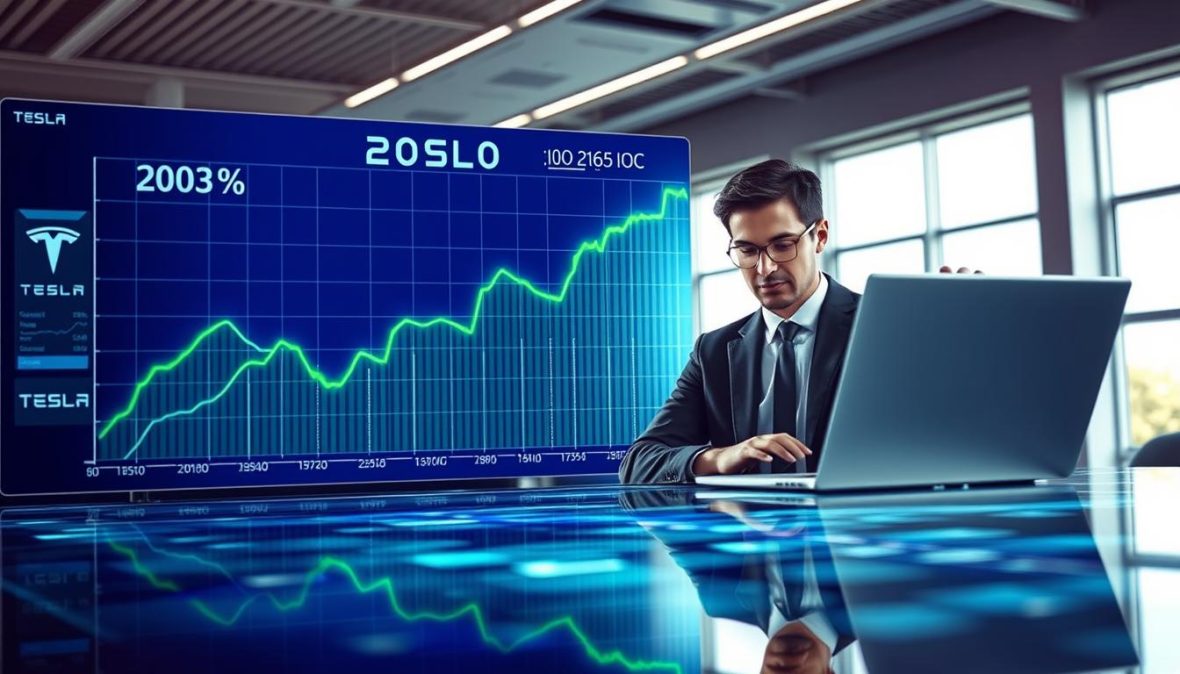
Graph of Historical Trends

Visual representation of Tesla’s stock journey reveals patterns that raw numbers alone can’t capture. The chart shows distinct phases: the skepticism era (pre-2020), the euphoria phase (2020-2021), the correction period (2022), and the consolidation recovery (2023-2024).

Each phase corresponds to changing market conditions and company fundamentals. During the euphoria phase, Tesla valuation projections reached absurd heights as some analysts predicted $3,000+ price targets. The market was pricing in perfect execution across vehicles, energy, and autonomous driving simultaneously.

The correction brought reality back into focus. Growth investors learned that rising interest rates compress future cash flow valuations, especially for companies trading at premium multiples. Tesla’s P/E ratio contracted from over 200 to below 50 during this period.

The historical trends graph also highlights sensitivity to external factors. Comparing Tesla’s movements to the broader NASDAQ, you notice periods of correlation during risk-on/risk-off market rotations. But you also see divergence when company-specific news dominates.

For anyone serious about Tesla valuation projections extending to 2030, this historical context is essential. The stock has demonstrated it can sustain premium valuations when growth metrics support the narrative. But it has also shown vulnerability to macro headwinds and sentiment shifts.

The patterns suggest Tesla trades more like a high-growth technology company than a traditional automaker. That’s both opportunity and risk. Technology companies can maintain elevated multiples if they deliver consistent innovation and market expansion.

But they also face steeper corrections when growth slows or competition intensifies. Looking at the historical volatility—with standard deviations regularly exceeding 60% annualized—tells us that predicting a specific 2030 price is fool’s errand.

What we can extract from history is the range of probable outcomes based on different scenarios. If Tesla executes on autonomous driving and energy storage while maintaining vehicle delivery growth, the historical premium multiples could return or expand.

If execution falters or competition erodes margins, we’ve already seen what the downside looks like. The historical trends don’t predict the future, but they illuminate the stock’s behavioral patterns under various conditions. That’s the real value for long-term investors trying to assess risk and reward.

Expert Opinions on Tesla’s Future

The financial community’s view of Tesla splits into very different camps. You’d think they’re analyzing separate companies. I track what experts say about Tesla’s path toward 2030.

I’m not finding consensus—I’m finding competing narratives. Each side brings evidence and a logical framework. Both can’t be right at the same time.

This disagreement itself becomes valuable data. It tells us Tesla operates in uncharted territory. Traditional valuation models struggle here.

Analyst Predictions for 2030

The spread in analyst predictions for Tesla’s 2030 stock forecast is remarkable. Wall Street analysts project targets ranging from complete failure to world domination. This isn’t just normal variance—it’s fundamental disagreement about Tesla’s business model.

The bullish analysts, particularly at firms like Ark Invest, base their Tesla valuation on revolutionary assumptions. They’re not just pricing in more electric vehicle sales. They’re modeling autonomous robotaxi networks that generate recurring revenue streams from transportation as a service.

Their price targets assume Tesla solves full self-driving. They expect Tesla to scale an energy storage business to rival its automotive division. They also assume Tesla maintains technological leadership across multiple industries.

The evidence supporting bull cases includes Tesla’s current margins. It also includes software capabilities and manufacturing innovation. Bulls see a company that’s fundamentally transformed transportation and energy by 2030.

The bearish perspective focuses on execution risk and competition. Bears point to increasing competition from traditional automakers. Chinese EV manufacturers are closing the technology gap.

They question whether autonomous driving will achieve needed reliability by 2030. They also doubt regulatory approval for robotaxi deployment. Their analyst predictions emphasize margin compression as competition intensifies.

Bears also note the loss of regulatory credits that currently boost profitability.

Here’s how the two camps differ on key assumptions:

Factor Bull Case View Bear Case View
Autonomous Driving Deployed at scale by 2028, creating new revenue stream worth trillions Delayed beyond 2030 or limited deployment due to technical and regulatory challenges
Competition Impact Tesla maintains technology lead and premium positioning with 20%+ margins Increased competition drives margins down to industry average of 5-8%
Energy Business Grows to match automotive revenue by 2030, diversifying income streams Remains small percentage of total business with limited profitability
Production Scaling Achieves 10+ million vehicles annually with improved efficiency Faces manufacturing constraints and quality issues at higher volumes

Neither side lacks evidence—they’re interpreting the same data through different lenses. The source of their disagreement matters more than picking which prediction is correct.

Investor Sentiment

What the market feels about Tesla right now differs from what analysts project. I’ve watched investor sentiment swing wildly based on quarterly earnings. Elon Musk’s tweets and broader market conditions also affect sentiment.

This emotional component creates volatility that’s both risk and opportunity.

Current sentiment measures show Tesla investors are more emotional than typical large-cap stockholders. The stock moves dramatically on news that would barely budge other companies. The investment outlook for Tesla includes a sentiment premium—or discount—that may not reflect reality.

I analyze sentiment patterns and see cycles that repeat. Euphoric phases follow strong delivery numbers or breakthrough announcements. Pessimistic phases emerge during production challenges or controversial executive decisions.

The key question for 2030 is whether Tesla matures into stability. Or whether volatility remains a permanent feature.

Understanding this distinction helps separate temporary price movements from long-term trends. Sentiment creates noise, but fundamentals ultimately determine the destination.

Industry Leader Insights

Automotive executives discuss Tesla with a fascinating mixture: grudging respect combined with skepticism. Traditional automaker leaders acknowledge Tesla’s manufacturing innovation. They particularly note battery technology and software integration.

They’ve learned from Tesla’s direct-sales model and over-the-air update capabilities.

However, these same leaders question some of Tesla’s more ambitious timelines. They point to their own decades of experience in automotive safety. They also cite regulatory compliance and scaled manufacturing experience.

Their perspective suggests Tesla faces challenges that aren’t visible until you operate at massive scale. This expert consensus leans toward Tesla succeeding as a premium electric vehicle manufacturer. But they see Tesla remaining one player among many.

Technology industry leaders view Tesla differently. They focus on artificial intelligence capabilities and data collection advantages. They see potential to disrupt transportation as fundamentally as smartphones disrupted communications.

Silicon Valley’s perspective emphasizes how Elon Musk company value stems from his track record. He’s achieved seemingly impossible goals—reusable orbital rockets, mass-market electric vehicles, global satellite internet.

The Elon Musk company value equation creates unique analysis challenges. His leadership has been inseparable from Tesla’s success. But it also introduces key-person risk that traditional valuation models struggle to quantify.

By 2030, Tesla needs to demonstrate it can sustain innovation beyond its founder. It must show execution beyond his direct daily involvement.

Industry insights also come from supply chain partners and competitors. They see Tesla’s operational reality up close. These sources report impressive engineering capabilities.

But they also note dependencies on key suppliers. They point to vulnerability to material cost fluctuations. Their perspective adds operational context that purely financial analysis might miss.

What matters most isn’t picking which expert is right. It’s understanding the range of informed opinions that define our possibility space. These diverse perspectives help map the territory between best and worst case scenarios for 2030.

Forecasting Tesla’s Stock Price in 2030

Predicting Tesla’s stock price in 2030 takes more than guessing. It requires understanding the models behind the numbers. You probably want a specific target price, and I’ll provide those.

Here’s what years of watching stock predictions taught me. The methodology matters more than the number itself.

Statistical Models Used

Analysts create a TSLA price forecast by making dozens of assumptions. These assumptions involve factors that won’t be clear for years. Small changes in those assumptions create massive differences in outcomes.

That’s why you’ll see wildly different predictions from credible sources. Understanding how these forecasts work gives you something more valuable than a target number. It gives you a framework for evaluating which predictions make sense.

The financial world uses several approaches to project long-term stock prices. Each one tells a different story about Tesla’s future. The most common method is the discounted cash flow model.

This model projects future earnings and calculates their present value. For Tesla valuation projections, DCF models require specific assumptions. These include revenue growth rates, profit margins, and capital expenditures.

Terminal value is particularly tricky. It represents the company’s value beyond the forecast period. Each assumption compounds over seven years.

A 2% difference in margin assumptions can swing the final price target. That swing can be hundreds of dollars per share.

Comparative valuation models take a different approach. They benchmark Tesla against similar companies. Then they apply industry multiples to projected 2030 financials.

The problem? There’s legitimate debate about which companies are actually comparable to Tesla. Should we compare Tesla to traditional automakers like Ford or GM?

Or should we compare it to technology companies like Apple? That choice alone creates a 5x to 10x difference in valuation multiples.

Time-series models extend historical patterns forward. But Tesla’s growth trajectory has been anything but typical. These models work better for mature, stable companies.

Some analysts combine multiple models to triangulate a reasonable range. I’ve found this approach more useful than relying on any single methodology. Different models pointing toward similar values suggest a stronger foundation.

Projected Revenue Growth

Revenue growth is the engine that drives every TSLA price forecast. We need to work backward from what’s physically possible. Tesla produces around 3 million vehicles in 2024.

Can they reach 10 million by 2030? What about 20 million? Each production level requires different assumptions about factory construction and supply chain scaling.

Tesla would need to build multiple new gigafactories. They’d need to ramp them to full production. That’s not impossible, but it’s not guaranteed either.

Automotive revenue is only part of the equation. Tesla’s energy business could represent anywhere from 10% to 40% of total revenue by 2030. This includes solar panels, solar roofs, and battery storage systems.

The wide range reflects uncertainty about how aggressively this division will scale. Then there’s the wildcard: services and “other” revenue.

This category could include Full Self-Driving subscriptions and potential robotaxi revenue. It might also include insurance products and services we haven’t even imagined yet.

Conservative analysts project Tesla’s 2030 revenue between $250 billion and $400 billion. That assumes continued vehicle growth plus modest expansion in energy and services. These projections treat Tesla primarily as a car company.

Aggressive projections push toward $600 billion to $1 trillion in revenue. These forecasts assume Tesla becomes a dominant player in autonomous transportation. They assume robotaxis generating substantial recurring revenue.

They also assume significant energy business growth. My read on the evidence? The truth will probably land somewhere in the middle range—$350 billion to $500 billion.

This assumes strong execution on vehicle production. It assumes meaningful energy business growth and some progress on autonomous driving. It doesn’t assume full robotaxi deployment at scale.

Price Targets from Analysts

Current analyst price targets for Tesla in 2030 span an enormous range. They go from around $150 per share on the bearish end. They reach over $2,000 on the bullish end.

That’s not a typo. We’re talking about a more than 13x difference between forecasts. This spread reflects genuinely different views about Tesla’s business model evolution.

It’s not that some analysts are wrong and others are right. They’re making different assumptions about which version of Tesla’s future will materialize.

The conservative case treats Tesla as an automotive manufacturer with some nice side businesses. These analysts apply traditional auto industry valuation multiples—typically 8 to 12 times earnings. They assume Tesla maintains strong margins but faces increasing competition.

The moderate case projects prices between $400 and $800 per share. Many mainstream analysts land here. This scenario assumes Tesla successfully grows vehicle production.

It assumes the company expands the energy business. It assumes meaningful software revenue without becoming a pure technology company.

The aggressive case treats Tesla as a technology platform that happens to make cars. These projections apply software company multiples—20 to 40 times earnings. They apply these to recurring revenue streams from autonomous driving and energy services.

Forecast Scenario 2030 Price Target Key Assumptions Revenue Projection
Conservative $150 – $300 Traditional auto company, limited tech premium $250B – $350B
Moderate $400 – $800 Leading EV maker with growing energy/software $400B – $500B
Aggressive $1,000 – $2,000+ Technology platform with robotaxi deployment $600B – $1T
Bull Case $2,500+ Dominant autonomous transport + energy giant $1T+

The exact location within these ranges depends heavily on execution against specific technology milestones. Autonomous driving capability is the single biggest variable. If Tesla achieves Level 4 or Level 5 autonomy by 2030, we’re looking higher.

If they deploy a robotaxi network at meaningful scale, Tesla valuation projections reach the higher end. If Tesla remains primarily a vehicle manufacturer, the lower to middle range becomes more realistic.

There’s nothing wrong with that outcome, by the way. A $300 to $500 stock price in 2030 would still represent solid growth. It would be solid growth from current levels.

Here’s what I watch to gauge which scenario is unfolding. Full Self-Driving progress, energy business quarterly results, and gross margin trends. These metrics tell you whether Tesla is evolving into a tech platform.

They show whether it’s remaining an automotive company, however excellent. One final thought on analyst targets: update frequency matters. The Tesla story changes quickly.

Forecasts from six months ago may not reflect current realities. I make it a practice to check the date on any prediction. I do this before putting weight on it.

Risks and Challenges Ahead

You need to understand the significant obstacles that could impact stock performance through 2030. Many investors get caught up in growth stories without properly assessing what could go wrong. Tesla faces a unique combination of challenges that could derail even optimistic predictions.

Understanding these risks doesn’t mean you shouldn’t invest. It means you’re making informed decisions rather than gambling on hope.

Regulatory Hurdles

The regulatory landscape represents one of the most unpredictable challenges facing Tesla through 2030. Autonomous driving regulations remain highly uncertain across different jurisdictions. If major markets don’t approve full self-driving capabilities, a substantial portion of Tesla’s valuation thesis disappears.

Regulatory decisions can reshape entire industries overnight. Tesla’s Autopilot and Full Self-Driving features face ongoing scrutiny from the National Highway Traffic Safety Administration.

Environmental regulations create a double-edged sword. Stricter emissions standards help Tesla’s competitive position against traditional automakers. But regulations around manufacturing processes, mining operations, and battery disposal could significantly increase operational costs.

Trade regulations between the U.S. and China add another layer of complexity. Tesla operates manufacturing facilities in both countries and depends on global supply chains. Any escalation in trade tensions could force difficult choices about production allocation and market access.

  • Autonomous vehicle approval timelines vary by country and state
  • Battery recycling regulations are tightening globally
  • Import tariffs on electric vehicles fluctuate with political changes
  • Safety standards for new technologies require constant adaptation

Supply Chain Vulnerabilities

The pandemic and chip shortage exposed just how fragile global supply chains can be. Tesla depends on critical materials like lithium, cobalt, nickel, and rare earth elements. Many of these resources come from geopolitically sensitive regions.

China dominates battery supply chains, controlling roughly 80% of global battery cell production. Any disruption can halt production lines. These disruptions include geopolitics, labor disputes, natural disasters, or resource constraints.

Tesla has worked hard to vertically integrate and secure direct supply agreements. They’ve even invested in lithium mining operations. But complete insulation from supply chain risk is impossible for a company manufacturing at global scale.

Manufacturing execution presents its own challenges. Building multiple gigafactories and ramping production to meet ambitious targets is extraordinarily difficult. Tesla’s history includes well-documented “production hell” periods.

The question isn’t whether supply chain disruptions will occur. The question is how severe they’ll be. How effectively can Tesla navigate them compared to competitors?

Competition Risks

Competition represents perhaps the most underestimated challenge in any long-term Tesla investment outlook. Every major automaker has committed billions to electrifying their lineups. The competitive landscape in 2030 will look radically different from today.

Traditional automakers bring established manufacturing expertise, dealer networks, and brand loyalty. Companies like Ford, General Motors, and Volkswagen aren’t standing still. They’re leveraging decades of automotive experience to close the technology gap.

Chinese manufacturers pose an equally serious threat. Companies like BYD, NIO, and XPeng are producing compelling electric vehicles at lower price points. They dominate the world’s largest EV market and are expanding globally.

Technology companies are also entering the autonomous vehicle space. Waymo, Cruise, and others are developing self-driving systems. These systems could compete with or surpass Tesla’s technology.

History teaches us that early technology leaders don’t always maintain dominance. Nokia dominated mobile phones before smartphones. BlackBerry led the smartphone market before touchscreens.

First-mover advantage is real, but it’s not permanent. Tesla needs to continuously innovate and execute flawlessly to maintain market share. By 2030, they’ll be fighting battles on multiple fronts simultaneously.

For Tesla to hit optimistic 2030 price targets, they need to successfully navigate regulatory uncertainty. They must handle supply chain complexity and intensifying competition. That’s not impossible, but it requires honest assessment rather than blind optimism.

Tools for Tracking Tesla’s Stock

I’ve spent years testing different platforms for Tesla financial analysis. The difference between informed decisions and following the crowd comes down to having the right information sources. You don’t need every tool out there, but you do need the right combination.

Building a proper toolkit isn’t about collecting subscriptions. It’s about creating a system that delivers actionable intelligence without drowning you in noise. Let me break down what I actually use and why each piece matters.

Stock Analysis Websites

Your foundation for serious Tesla research starts with quality stock analysis websites. These platforms aggregate data that would otherwise require visiting dozens of different sources.

Yahoo Finance gives you the basics free—charts, financials, analyst estimates, and news all in one place. I check it daily because it’s fast and covers the fundamentals without unnecessary complexity. The interface isn’t fancy, but it delivers what matters most.

Seeking Alpha provides deeper analysis articles and earnings call transcripts. The quality varies wildly though, so you need to develop filters for whose analysis you trust. Following specific contributors rather than reading everything improves signal-to-noise ratio dramatically.

TipRanks takes a different approach by aggregating analyst ratings and tracking their historical accuracy. This matters because not all analyst opinions deserve equal weight. You can adjust credibility when an analyst has been consistently wrong about Tesla.

For technical analysis, TradingView offers sophisticated charting tools. You can examine price action, volume patterns, and technical indicators in detail. Understanding technical levels helps with entry and exit timing.

Financial News Platforms

Real-time information flow moves stocks in the short term. It shapes narratives in the long term. You need reliable news sources that break stories fast without sacrificing accuracy.

Bloomberg and Reuters offer professional-grade financial news if you have access through work. For most individual investors, though, free alternatives work fine. CNBC, MarketWatch, and Financial Times cover major Tesla developments adequately.

I also monitor Tesla-specific communities like r/TeslaInvestorsClub on Reddit. You have to filter signal from noise—there’s a lot of noise. The community often catches developments before mainstream media.

Twitter remains relevant for Tesla news because several credible analysts break stories there first. I maintain a curated list of Tesla analysts, journalists, and company executives. Similar to tracking PEV stocks powering the future of, staying informed about the broader EV sector helps contextualize Tesla-specific news.

Investment Apps and Resources

The platforms where you actually invest matter as much as your research tools. Major brokerages like Fidelity, Charles Schwab, and Interactive Brokers provide research tools alongside your account. These often include analyst reports, earnings call transcripts, and direct access to SEC filings.

Reading Tesla’s actual 10-K annual reports and 10-Q quarterly reports from the EDGAR database gives you information straight from the source. No journalist or analyst interpretation—just what the company officially reports. The Management Discussion section and risk factors reveal insights you won’t find in news articles.

For modeling and forecasting, even a simple spreadsheet helps tremendously. I track deliveries, revenue, margins, and cash flow quarterly. Building your own models forces you to develop your own perspective.

The guide here is to build a diversified information diet. Use quantitative data from financial sites and qualitative analysis from news sources. Get primary information from company filings and diverse perspectives from the investor community.

Platform Type Best Options Primary Use Case Cost
Stock Analysis Yahoo Finance, TipRanks, TradingView Charts, fundamentals, analyst tracking Free to $15/month
News Platforms CNBC, MarketWatch, Reuters Breaking news, market commentary Free to $40/month
Brokerage Research Fidelity, Schwab, Interactive Brokers Professional reports, integrated trading Free with account
Primary Sources SEC EDGAR, Tesla IR site Official filings, earnings transcripts Free

The most expensive tools aren’t necessarily the best. Combining free resources strategically often beats paying for premium services that duplicate information. Start with the free options, identify gaps in your research process, then consider paid upgrades.

Your toolkit should evolve as your investing approach matures. What works for a beginning investor differs from what a seasoned trader needs. The constant is maintaining multiple information sources and cross-referencing before making decisions.

FAQs About Tesla Stock Price Predictions

Are you trying to make sense of tesla stock price prediction 2030? These frequently asked questions probably match what’s running through your mind right now. I’ve fielded these questions hundreds of times from investors at different experience levels.

The answers reveal what really matters about Tesla’s long-term prospects. Let me walk you through the most important ones.

Understanding Tesla’s Current Valuation Context

People always start by asking what Tesla’s stock price is right now. That’s actually the less important question. Recent trading data shows TSLA at $445.01 with a +2.11% change.

Here’s what matters more: that number will be different by the time you finish reading. The real question is what that price represents in terms of market expectations.

At $445 per share, Tesla carries a market capitalization around $1.4 trillion. That valuation makes it worth more than Toyota, Volkswagen, and Ford combined.

Think about that for a second. The market is pricing Tesla as if it’s already won the future of transportation. That’s why 2030 predictions matter so much.

They’re really asking whether today’s price is justified by where the company will actually be in six years.

How Prediction Models Actually Work

The methodology behind analyst forecasts isn’t mysterious, but it’s more assumption-driven than most people realize. Analysts create their tesla stock price prediction 2030 models using a pretty standard framework. This framework involves several layers of projection.

They start with revenue modeling based on estimated unit sales, pricing trends, and new business segments. For Tesla, that means projecting vehicle deliveries, energy storage growth, and potential revenue from autonomous driving services.

Next comes margin analysis. Analysts estimate what profit margins Tesla will achieve based on manufacturing scale, competition, and cost structure evolution. A company producing 10 million vehicles annually operates very differently than one making 2 million.

Here’s where it gets tricky: they apply valuation multiples to those projected earnings. This is where analyst predictions diverge wildly. One analyst might use a 40 P/E ratio assuming Tesla maintains its growth premium.

Another might use 20, assuming it gets valued more like a mature automaker. The assumptions drive everything.

Two analysts using identical methodologies can arrive at 2030 price targets that differ by 300%. This happens because one assumes robotaxis generate $50 billion in annual revenue while the other assumes $5 billion. Neither assumption is necessarily “wrong”—they’re dealing with genuinely uncertain futures.

The best analysts show their work transparently. They let you see exactly which assumptions their predictions rest on. That transparency matters more than the final number.

What Smart Investors Focus On for 2030

The guidance question that actually matters is what you should consider about Tesla as a 2030 investment. This isn’t about picking an exact price target. It’s about positioning appropriately for a range of possibilities.

First, consider your actual time horizon. If you need money in 2026 for a house down payment, Tesla’s volatility creates risk. This remains true regardless of where it lands in 2030.

The path matters as much as the destination when you have interim liquidity needs.

Second, think about position sizing within your portfolio. Even if you’re bullish on tesla stock price prediction 2030, concentration risk is real. Financial advisors typically suggest no single stock should represent more than 5-10% of your portfolio.

Maybe 15% if you’re particularly convinced and risk-tolerant.

Third—and this is critical—evaluate your conviction on the key questions that will determine Tesla’s trajectory:

  • Will Tesla maintain technology leadership as competition intensifies?
  • Will autonomous driving receive regulatory approval and achieve consumer adoption?
  • Can Tesla execute its expansion plans without quality or margin deterioration?
  • How much will competition erode pricing power and profitability?

Your honest answers to these questions should determine whether Tesla belongs in your portfolio. They should also determine at what weight. If you’re uncertain about most of them, smaller position sizing makes sense.

Fourth, consider the broader economic environment. A sustained recession, persistently high interest rates, or major geopolitical disruptions could impact Tesla’s path. This can happen regardless of company-specific execution.

The 2030 outcome depends partly on factors completely outside Tesla’s control.

Finally—and I can’t stress this enough—think through alternative scenarios. Don’t just plan for your base case. What would you do if Tesla significantly outperforms expectations and doubles your investment by 2027?

Would you take profits or let it ride? What if it underperforms and drops 40% by 2026? Would you buy more, hold steady, or cut losses?

Having these decision frameworks in place before emotions get involved makes you a better investor. The prediction game is less about nailing the exact 2030 price. It’s more about understanding the range of possibilities and positioning appropriately for your personal situation.

That’s the real answer to what investors should consider.

Conclusion: Where is Tesla Headed?

So what’s the verdict on Tesla’s path to 2030? I’ve spent years watching this company evolve. One thing’s clear: predicting its exact trajectory is more art than science.

The Tesla stock growth potential hinges on variables that haven’t fully played out yet.

The Big Takeaways

Tesla sits in a strong position today but faces real competition. Electric vehicle adoption rates will matter enormously.

The company’s ambitious expansion into autonomous driving and energy storage could reshape everything. Historical volatility isn’t going away anytime soon.

Expert predictions range wildly because legitimate scenarios exist on both ends. A conservative automotive-focused valuation might see prices stagnate. An optimistic technology platform scenario could send shares soaring past current levels.

Investment Reality Check

The sustainable energy stock predictions show genuine tailwinds backing Tesla. Electrification is accelerating globally.

But remember: being positioned well and executing perfectly are different challenges entirely.

This isn’t a passive investment. You need conviction about which scenario feels most probable. Size your position based on that conviction, not hype or fear.

Staying Informed

Track Tesla’s quarterly earnings calls for strategic updates. Follow third-party technology analyses from firms like Sandy Munro. Watch competitor moves closely.

The energy storage and autonomous driving sectors will provide crucial signals.

Understanding the underlying technology helps you separate signal from noise. That knowledge beats any single price target prediction.

FAQ

What is the current stock price of Tesla?

TSLA is at 5.01, up 2.11%, though this changes constantly during market hours. This price represents a market value of roughly What is the current stock price of Tesla?TSLA is at 5.01, up 2.11%, though this changes constantly during market hours. This price represents a market value of roughly

FAQ

What is the current stock price of Tesla?

TSLA is at 5.01, up 2.11%, though this changes constantly during market hours. This price represents a market value of roughly

FAQ

What is the current stock price of Tesla?

TSLA is at $445.01, up 2.11%, though this changes constantly during market hours. This price represents a market value of roughly $1.4 trillion. That makes Tesla worth more than most major automakers combined.

The market is pricing in significant future growth. Understanding the 2030 prediction helps determine if current prices make sense. Tesla’s stock moves like a high-growth technology play, explaining its premium valuation and volatility.

How do analysts make their predictions for Tesla’s 2030 stock price?

Analysts start with revenue models based on projected unit sales and pricing assumptions. They include new business lines like energy storage and potential robotaxi services. They estimate profit margins based on scale economies and competitive pressures.

Here’s what most people miss—the assumptions drive everything. Two analysts might use similar methods but reach wildly different 2030 targets. One assumes robotaxis generate $50 billion in revenue while another assumes $5 billion.

One might apply a 40 P/E multiple, another a 20 multiple. Neither is necessarily “wrong”—they’re working with different assumptions about uncertain futures. The best analysts are transparent about their assumptions.

What should investors consider when evaluating Tesla’s 2030 prospects?

First, consider your time horizon—if you need money before 2030, Tesla’s volatility might be problematic. Second, think about position sizing; Tesla shouldn’t be your entire portfolio. Third, consider your conviction level about key questions.

Will Tesla maintain technology leadership? Will autonomous driving be approved and adopted? Can they execute their expansion plans? Your answers should determine whether Tesla makes sense for your portfolio.

Fourth, consider the broader market environment—recessions, high interest rates, or major disruptions could all impact Tesla’s path. Finally, consider alternative scenarios: think through what you’d do if Tesla significantly outperforms or underperforms expectations.

Is Tesla still a good long-term investment compared to other electric vehicle stocks?

Tesla maintains distinct advantages in battery technology, manufacturing efficiency, and software integration. However, those leads are narrowing. The company isn’t just competing with traditional automakers anymore.

They’re in a multi-front battle against legacy brands going electric. Chinese manufacturers like BYD have cost advantages and government support. Tech companies are entering autonomous vehicles.

Tesla is building an ecosystem rather than just making cars. This includes vehicle sales, energy generation and storage, potential robotaxi services, and AI applications. This diversification reduces dependence on any single revenue stream.

What are the biggest risks that could derail Tesla’s growth by 2030?

Regulatory hurdles represent a multi-dimensional challenge. If major markets don’t approve full self-driving, a significant portion of Tesla’s valuation thesis evaporates. Supply chain vulnerabilities remain critical.

Tesla depends on lithium, cobalt, nickel, and rare earth elements from geopolitically sensitive regions. Any disruption can impact production. Competition risks are perhaps the most underestimated challenge.

Every major automaker is electrifying their lineup. Chinese manufacturers are producing compelling EVs at lower price points. Manufacturing execution risk is ongoing.

Higher interest rates make Tesla’s vehicles less affordable and hurt growth stock valuations. Trade conflicts could disrupt supply chains or market access. For Tesla to hit optimistic 2030 targets, they need to navigate all these risks successfully.

How realistic are the $1,000+ price targets for Tesla stock by 2030?

The $1,000+ targets depend heavily on assumptions about autonomous driving adoption. They also depend on the energy business scaling significantly. If robotaxis become a meaningful business by 2030, we’re looking at the higher end of forecasts.

A realistic base case might see Tesla as a $2-3 trillion company if they execute well. That would put the stock somewhere in the $600-1,000 range. An optimistic case could justify valuations above $5 trillion and stock prices exceeding $1,500.

A pessimistic case might see stock prices potentially lower than today’s levels. This could happen if competition intensifies, margins compress, and autonomous driving fails to materialize. The wide range reflects genuine uncertainty about technological and market outcomes.

What role does Elon Musk play in Tesla’s long-term valuation?

Elon Musk is inseparable from Tesla’s value equation. His track record of eventually delivering on seemingly impossible promises creates both opportunity and risk. By 2030, Tesla will either have proven it can sustain innovation beyond its founder’s direct involvement.

Musk’s leadership has been instrumental in Tesla’s success. However, dependence on a single charismatic leader represents a concentration risk. The company’s ability to institutionalize innovation without Musk’s daily involvement will be tested.

How does Tesla’s energy business affect its stock price predictions?

The energy storage business—Megapacks and Powerwalls—remains undervalued in most analyses. It represents significant diversification beyond automotive. This business could be anywhere from 10% to 40% of revenue by 2030.

Energy storage addresses grid stability challenges as renewable energy penetration increases. This creates substantial market opportunity. The margins on energy products differ from vehicles.

For sustainable energy stock predictions, Tesla’s positioning across vehicle electrification and grid-scale storage strengthens the investment thesis. If the energy business scales as some analysts project, it could add hundreds of billions to Tesla’s valuation.

What metrics should I track to evaluate Tesla’s progress toward 2030 goals?

Focus on several key metrics for meaningful Tesla financial analysis. Delivery numbers by quarter and year show whether production is scaling as planned. Automotive gross margin indicates whether Tesla maintains pricing power and manufacturing efficiency despite competition.

Energy storage deployments measured in gigawatt-hours reveal whether that business is actually scaling. Free cash flow generation shows whether Tesla can fund growth internally or needs external capital. Full Self-Driving beta metrics provide evidence about autonomous driving progress.

Factory utilization rates at each Gigafactory indicate manufacturing execution. Watch market share trends in key regions. Reading the actual 10-K annual reports and 10-Q quarterly reports gives you this information straight from the source.

How do interest rates and economic conditions affect Tesla’s stock valuation?

Higher interest rates hurt Tesla in multiple ways. First, they make Tesla’s vehicles less affordable for buyers using financing, potentially reducing demand. Second, they increase Tesla’s own borrowing costs for expansion.

Third, higher rates reduce the present value of future earnings. This particularly impacts growth stocks like Tesla that are valued largely on expectations of future profits. During periods of low interest rates, growth stocks soared.

Global economic conditions matter too—recessions reduce consumer spending on big-ticket items like vehicles. Trade tensions between the US and China could disrupt Tesla’s supply chains or market access. These factors will shape whether Tesla’s 2030 stock price hits optimistic targets or falls short.

.4 trillion. That makes Tesla worth more than most major automakers combined.

The market is pricing in significant future growth. Understanding the 2030 prediction helps determine if current prices make sense. Tesla’s stock moves like a high-growth technology play, explaining its premium valuation and volatility.

How do analysts make their predictions for Tesla’s 2030 stock price?

Analysts start with revenue models based on projected unit sales and pricing assumptions. They include new business lines like energy storage and potential robotaxi services. They estimate profit margins based on scale economies and competitive pressures.

Here’s what most people miss—the assumptions drive everything. Two analysts might use similar methods but reach wildly different 2030 targets. One assumes robotaxis generate billion in revenue while another assumes billion.

One might apply a 40 P/E multiple, another a 20 multiple. Neither is necessarily “wrong”—they’re working with different assumptions about uncertain futures. The best analysts are transparent about their assumptions.

What should investors consider when evaluating Tesla’s 2030 prospects?

First, consider your time horizon—if you need money before 2030, Tesla’s volatility might be problematic. Second, think about position sizing; Tesla shouldn’t be your entire portfolio. Third, consider your conviction level about key questions.

Will Tesla maintain technology leadership? Will autonomous driving be approved and adopted? Can they execute their expansion plans? Your answers should determine whether Tesla makes sense for your portfolio.

Fourth, consider the broader market environment—recessions, high interest rates, or major disruptions could all impact Tesla’s path. Finally, consider alternative scenarios: think through what you’d do if Tesla significantly outperforms or underperforms expectations.

Is Tesla still a good long-term investment compared to other electric vehicle stocks?

Tesla maintains distinct advantages in battery technology, manufacturing efficiency, and software integration. However, those leads are narrowing. The company isn’t just competing with traditional automakers anymore.

They’re in a multi-front battle against legacy brands going electric. Chinese manufacturers like BYD have cost advantages and government support. Tech companies are entering autonomous vehicles.

Tesla is building an ecosystem rather than just making cars. This includes vehicle sales, energy generation and storage, potential robotaxi services, and AI applications. This diversification reduces dependence on any single revenue stream.

What are the biggest risks that could derail Tesla’s growth by 2030?

Regulatory hurdles represent a multi-dimensional challenge. If major markets don’t approve full self-driving, a significant portion of Tesla’s valuation thesis evaporates. Supply chain vulnerabilities remain critical.

Tesla depends on lithium, cobalt, nickel, and rare earth elements from geopolitically sensitive regions. Any disruption can impact production. Competition risks are perhaps the most underestimated challenge.

Every major automaker is electrifying their lineup. Chinese manufacturers are producing compelling EVs at lower price points. Manufacturing execution risk is ongoing.

Higher interest rates make Tesla’s vehicles less affordable and hurt growth stock valuations. Trade conflicts could disrupt supply chains or market access. For Tesla to hit optimistic 2030 targets, they need to navigate all these risks successfully.

How realistic are the

FAQ

What is the current stock price of Tesla?

TSLA is at $445.01, up 2.11%, though this changes constantly during market hours. This price represents a market value of roughly $1.4 trillion. That makes Tesla worth more than most major automakers combined.

The market is pricing in significant future growth. Understanding the 2030 prediction helps determine if current prices make sense. Tesla’s stock moves like a high-growth technology play, explaining its premium valuation and volatility.

How do analysts make their predictions for Tesla’s 2030 stock price?

Analysts start with revenue models based on projected unit sales and pricing assumptions. They include new business lines like energy storage and potential robotaxi services. They estimate profit margins based on scale economies and competitive pressures.

Here’s what most people miss—the assumptions drive everything. Two analysts might use similar methods but reach wildly different 2030 targets. One assumes robotaxis generate $50 billion in revenue while another assumes $5 billion.

One might apply a 40 P/E multiple, another a 20 multiple. Neither is necessarily “wrong”—they’re working with different assumptions about uncertain futures. The best analysts are transparent about their assumptions.

What should investors consider when evaluating Tesla’s 2030 prospects?

First, consider your time horizon—if you need money before 2030, Tesla’s volatility might be problematic. Second, think about position sizing; Tesla shouldn’t be your entire portfolio. Third, consider your conviction level about key questions.

Will Tesla maintain technology leadership? Will autonomous driving be approved and adopted? Can they execute their expansion plans? Your answers should determine whether Tesla makes sense for your portfolio.

Fourth, consider the broader market environment—recessions, high interest rates, or major disruptions could all impact Tesla’s path. Finally, consider alternative scenarios: think through what you’d do if Tesla significantly outperforms or underperforms expectations.

Is Tesla still a good long-term investment compared to other electric vehicle stocks?

Tesla maintains distinct advantages in battery technology, manufacturing efficiency, and software integration. However, those leads are narrowing. The company isn’t just competing with traditional automakers anymore.

They’re in a multi-front battle against legacy brands going electric. Chinese manufacturers like BYD have cost advantages and government support. Tech companies are entering autonomous vehicles.

Tesla is building an ecosystem rather than just making cars. This includes vehicle sales, energy generation and storage, potential robotaxi services, and AI applications. This diversification reduces dependence on any single revenue stream.

What are the biggest risks that could derail Tesla’s growth by 2030?

Regulatory hurdles represent a multi-dimensional challenge. If major markets don’t approve full self-driving, a significant portion of Tesla’s valuation thesis evaporates. Supply chain vulnerabilities remain critical.

Tesla depends on lithium, cobalt, nickel, and rare earth elements from geopolitically sensitive regions. Any disruption can impact production. Competition risks are perhaps the most underestimated challenge.

Every major automaker is electrifying their lineup. Chinese manufacturers are producing compelling EVs at lower price points. Manufacturing execution risk is ongoing.

Higher interest rates make Tesla’s vehicles less affordable and hurt growth stock valuations. Trade conflicts could disrupt supply chains or market access. For Tesla to hit optimistic 2030 targets, they need to navigate all these risks successfully.

How realistic are the $1,000+ price targets for Tesla stock by 2030?

The $1,000+ targets depend heavily on assumptions about autonomous driving adoption. They also depend on the energy business scaling significantly. If robotaxis become a meaningful business by 2030, we’re looking at the higher end of forecasts.

A realistic base case might see Tesla as a $2-3 trillion company if they execute well. That would put the stock somewhere in the $600-1,000 range. An optimistic case could justify valuations above $5 trillion and stock prices exceeding $1,500.

A pessimistic case might see stock prices potentially lower than today’s levels. This could happen if competition intensifies, margins compress, and autonomous driving fails to materialize. The wide range reflects genuine uncertainty about technological and market outcomes.

What role does Elon Musk play in Tesla’s long-term valuation?

Elon Musk is inseparable from Tesla’s value equation. His track record of eventually delivering on seemingly impossible promises creates both opportunity and risk. By 2030, Tesla will either have proven it can sustain innovation beyond its founder’s direct involvement.

Musk’s leadership has been instrumental in Tesla’s success. However, dependence on a single charismatic leader represents a concentration risk. The company’s ability to institutionalize innovation without Musk’s daily involvement will be tested.

How does Tesla’s energy business affect its stock price predictions?

The energy storage business—Megapacks and Powerwalls—remains undervalued in most analyses. It represents significant diversification beyond automotive. This business could be anywhere from 10% to 40% of revenue by 2030.

Energy storage addresses grid stability challenges as renewable energy penetration increases. This creates substantial market opportunity. The margins on energy products differ from vehicles.

For sustainable energy stock predictions, Tesla’s positioning across vehicle electrification and grid-scale storage strengthens the investment thesis. If the energy business scales as some analysts project, it could add hundreds of billions to Tesla’s valuation.

What metrics should I track to evaluate Tesla’s progress toward 2030 goals?

Focus on several key metrics for meaningful Tesla financial analysis. Delivery numbers by quarter and year show whether production is scaling as planned. Automotive gross margin indicates whether Tesla maintains pricing power and manufacturing efficiency despite competition.

Energy storage deployments measured in gigawatt-hours reveal whether that business is actually scaling. Free cash flow generation shows whether Tesla can fund growth internally or needs external capital. Full Self-Driving beta metrics provide evidence about autonomous driving progress.

Factory utilization rates at each Gigafactory indicate manufacturing execution. Watch market share trends in key regions. Reading the actual 10-K annual reports and 10-Q quarterly reports gives you this information straight from the source.

How do interest rates and economic conditions affect Tesla’s stock valuation?

Higher interest rates hurt Tesla in multiple ways. First, they make Tesla’s vehicles less affordable for buyers using financing, potentially reducing demand. Second, they increase Tesla’s own borrowing costs for expansion.

Third, higher rates reduce the present value of future earnings. This particularly impacts growth stocks like Tesla that are valued largely on expectations of future profits. During periods of low interest rates, growth stocks soared.

Global economic conditions matter too—recessions reduce consumer spending on big-ticket items like vehicles. Trade tensions between the US and China could disrupt Tesla’s supply chains or market access. These factors will shape whether Tesla’s 2030 stock price hits optimistic targets or falls short.

,000+ price targets for Tesla stock by 2030?

The

FAQ

What is the current stock price of Tesla?

TSLA is at $445.01, up 2.11%, though this changes constantly during market hours. This price represents a market value of roughly $1.4 trillion. That makes Tesla worth more than most major automakers combined.

The market is pricing in significant future growth. Understanding the 2030 prediction helps determine if current prices make sense. Tesla’s stock moves like a high-growth technology play, explaining its premium valuation and volatility.

How do analysts make their predictions for Tesla’s 2030 stock price?

Analysts start with revenue models based on projected unit sales and pricing assumptions. They include new business lines like energy storage and potential robotaxi services. They estimate profit margins based on scale economies and competitive pressures.

Here’s what most people miss—the assumptions drive everything. Two analysts might use similar methods but reach wildly different 2030 targets. One assumes robotaxis generate $50 billion in revenue while another assumes $5 billion.

One might apply a 40 P/E multiple, another a 20 multiple. Neither is necessarily “wrong”—they’re working with different assumptions about uncertain futures. The best analysts are transparent about their assumptions.

What should investors consider when evaluating Tesla’s 2030 prospects?

First, consider your time horizon—if you need money before 2030, Tesla’s volatility might be problematic. Second, think about position sizing; Tesla shouldn’t be your entire portfolio. Third, consider your conviction level about key questions.

Will Tesla maintain technology leadership? Will autonomous driving be approved and adopted? Can they execute their expansion plans? Your answers should determine whether Tesla makes sense for your portfolio.

Fourth, consider the broader market environment—recessions, high interest rates, or major disruptions could all impact Tesla’s path. Finally, consider alternative scenarios: think through what you’d do if Tesla significantly outperforms or underperforms expectations.

Is Tesla still a good long-term investment compared to other electric vehicle stocks?

Tesla maintains distinct advantages in battery technology, manufacturing efficiency, and software integration. However, those leads are narrowing. The company isn’t just competing with traditional automakers anymore.

They’re in a multi-front battle against legacy brands going electric. Chinese manufacturers like BYD have cost advantages and government support. Tech companies are entering autonomous vehicles.

Tesla is building an ecosystem rather than just making cars. This includes vehicle sales, energy generation and storage, potential robotaxi services, and AI applications. This diversification reduces dependence on any single revenue stream.

What are the biggest risks that could derail Tesla’s growth by 2030?

Regulatory hurdles represent a multi-dimensional challenge. If major markets don’t approve full self-driving, a significant portion of Tesla’s valuation thesis evaporates. Supply chain vulnerabilities remain critical.

Tesla depends on lithium, cobalt, nickel, and rare earth elements from geopolitically sensitive regions. Any disruption can impact production. Competition risks are perhaps the most underestimated challenge.

Every major automaker is electrifying their lineup. Chinese manufacturers are producing compelling EVs at lower price points. Manufacturing execution risk is ongoing.

Higher interest rates make Tesla’s vehicles less affordable and hurt growth stock valuations. Trade conflicts could disrupt supply chains or market access. For Tesla to hit optimistic 2030 targets, they need to navigate all these risks successfully.

How realistic are the $1,000+ price targets for Tesla stock by 2030?

The $1,000+ targets depend heavily on assumptions about autonomous driving adoption. They also depend on the energy business scaling significantly. If robotaxis become a meaningful business by 2030, we’re looking at the higher end of forecasts.

A realistic base case might see Tesla as a $2-3 trillion company if they execute well. That would put the stock somewhere in the $600-1,000 range. An optimistic case could justify valuations above $5 trillion and stock prices exceeding $1,500.

A pessimistic case might see stock prices potentially lower than today’s levels. This could happen if competition intensifies, margins compress, and autonomous driving fails to materialize. The wide range reflects genuine uncertainty about technological and market outcomes.

What role does Elon Musk play in Tesla’s long-term valuation?

Elon Musk is inseparable from Tesla’s value equation. His track record of eventually delivering on seemingly impossible promises creates both opportunity and risk. By 2030, Tesla will either have proven it can sustain innovation beyond its founder’s direct involvement.

Musk’s leadership has been instrumental in Tesla’s success. However, dependence on a single charismatic leader represents a concentration risk. The company’s ability to institutionalize innovation without Musk’s daily involvement will be tested.

How does Tesla’s energy business affect its stock price predictions?

The energy storage business—Megapacks and Powerwalls—remains undervalued in most analyses. It represents significant diversification beyond automotive. This business could be anywhere from 10% to 40% of revenue by 2030.

Energy storage addresses grid stability challenges as renewable energy penetration increases. This creates substantial market opportunity. The margins on energy products differ from vehicles.

For sustainable energy stock predictions, Tesla’s positioning across vehicle electrification and grid-scale storage strengthens the investment thesis. If the energy business scales as some analysts project, it could add hundreds of billions to Tesla’s valuation.

What metrics should I track to evaluate Tesla’s progress toward 2030 goals?

Focus on several key metrics for meaningful Tesla financial analysis. Delivery numbers by quarter and year show whether production is scaling as planned. Automotive gross margin indicates whether Tesla maintains pricing power and manufacturing efficiency despite competition.

Energy storage deployments measured in gigawatt-hours reveal whether that business is actually scaling. Free cash flow generation shows whether Tesla can fund growth internally or needs external capital. Full Self-Driving beta metrics provide evidence about autonomous driving progress.

Factory utilization rates at each Gigafactory indicate manufacturing execution. Watch market share trends in key regions. Reading the actual 10-K annual reports and 10-Q quarterly reports gives you this information straight from the source.

How do interest rates and economic conditions affect Tesla’s stock valuation?

Higher interest rates hurt Tesla in multiple ways. First, they make Tesla’s vehicles less affordable for buyers using financing, potentially reducing demand. Second, they increase Tesla’s own borrowing costs for expansion.

Third, higher rates reduce the present value of future earnings. This particularly impacts growth stocks like Tesla that are valued largely on expectations of future profits. During periods of low interest rates, growth stocks soared.

Global economic conditions matter too—recessions reduce consumer spending on big-ticket items like vehicles. Trade tensions between the US and China could disrupt Tesla’s supply chains or market access. These factors will shape whether Tesla’s 2030 stock price hits optimistic targets or falls short.

,000+ targets depend heavily on assumptions about autonomous driving adoption. They also depend on the energy business scaling significantly. If robotaxis become a meaningful business by 2030, we’re looking at the higher end of forecasts.

A realistic base case might see Tesla as a -3 trillion company if they execute well. That would put the stock somewhere in the 0-1,000 range. An optimistic case could justify valuations above trillion and stock prices exceeding

FAQ

What is the current stock price of Tesla?

TSLA is at $445.01, up 2.11%, though this changes constantly during market hours. This price represents a market value of roughly $1.4 trillion. That makes Tesla worth more than most major automakers combined.

The market is pricing in significant future growth. Understanding the 2030 prediction helps determine if current prices make sense. Tesla’s stock moves like a high-growth technology play, explaining its premium valuation and volatility.

How do analysts make their predictions for Tesla’s 2030 stock price?

Analysts start with revenue models based on projected unit sales and pricing assumptions. They include new business lines like energy storage and potential robotaxi services. They estimate profit margins based on scale economies and competitive pressures.

Here’s what most people miss—the assumptions drive everything. Two analysts might use similar methods but reach wildly different 2030 targets. One assumes robotaxis generate $50 billion in revenue while another assumes $5 billion.

One might apply a 40 P/E multiple, another a 20 multiple. Neither is necessarily “wrong”—they’re working with different assumptions about uncertain futures. The best analysts are transparent about their assumptions.

What should investors consider when evaluating Tesla’s 2030 prospects?

First, consider your time horizon—if you need money before 2030, Tesla’s volatility might be problematic. Second, think about position sizing; Tesla shouldn’t be your entire portfolio. Third, consider your conviction level about key questions.

Will Tesla maintain technology leadership? Will autonomous driving be approved and adopted? Can they execute their expansion plans? Your answers should determine whether Tesla makes sense for your portfolio.

Fourth, consider the broader market environment—recessions, high interest rates, or major disruptions could all impact Tesla’s path. Finally, consider alternative scenarios: think through what you’d do if Tesla significantly outperforms or underperforms expectations.

Is Tesla still a good long-term investment compared to other electric vehicle stocks?

Tesla maintains distinct advantages in battery technology, manufacturing efficiency, and software integration. However, those leads are narrowing. The company isn’t just competing with traditional automakers anymore.

They’re in a multi-front battle against legacy brands going electric. Chinese manufacturers like BYD have cost advantages and government support. Tech companies are entering autonomous vehicles.

Tesla is building an ecosystem rather than just making cars. This includes vehicle sales, energy generation and storage, potential robotaxi services, and AI applications. This diversification reduces dependence on any single revenue stream.

What are the biggest risks that could derail Tesla’s growth by 2030?

Regulatory hurdles represent a multi-dimensional challenge. If major markets don’t approve full self-driving, a significant portion of Tesla’s valuation thesis evaporates. Supply chain vulnerabilities remain critical.

Tesla depends on lithium, cobalt, nickel, and rare earth elements from geopolitically sensitive regions. Any disruption can impact production. Competition risks are perhaps the most underestimated challenge.

Every major automaker is electrifying their lineup. Chinese manufacturers are producing compelling EVs at lower price points. Manufacturing execution risk is ongoing.

Higher interest rates make Tesla’s vehicles less affordable and hurt growth stock valuations. Trade conflicts could disrupt supply chains or market access. For Tesla to hit optimistic 2030 targets, they need to navigate all these risks successfully.

How realistic are the $1,000+ price targets for Tesla stock by 2030?

The $1,000+ targets depend heavily on assumptions about autonomous driving adoption. They also depend on the energy business scaling significantly. If robotaxis become a meaningful business by 2030, we’re looking at the higher end of forecasts.

A realistic base case might see Tesla as a $2-3 trillion company if they execute well. That would put the stock somewhere in the $600-1,000 range. An optimistic case could justify valuations above $5 trillion and stock prices exceeding $1,500.

A pessimistic case might see stock prices potentially lower than today’s levels. This could happen if competition intensifies, margins compress, and autonomous driving fails to materialize. The wide range reflects genuine uncertainty about technological and market outcomes.

What role does Elon Musk play in Tesla’s long-term valuation?

Elon Musk is inseparable from Tesla’s value equation. His track record of eventually delivering on seemingly impossible promises creates both opportunity and risk. By 2030, Tesla will either have proven it can sustain innovation beyond its founder’s direct involvement.

Musk’s leadership has been instrumental in Tesla’s success. However, dependence on a single charismatic leader represents a concentration risk. The company’s ability to institutionalize innovation without Musk’s daily involvement will be tested.

How does Tesla’s energy business affect its stock price predictions?

The energy storage business—Megapacks and Powerwalls—remains undervalued in most analyses. It represents significant diversification beyond automotive. This business could be anywhere from 10% to 40% of revenue by 2030.

Energy storage addresses grid stability challenges as renewable energy penetration increases. This creates substantial market opportunity. The margins on energy products differ from vehicles.

For sustainable energy stock predictions, Tesla’s positioning across vehicle electrification and grid-scale storage strengthens the investment thesis. If the energy business scales as some analysts project, it could add hundreds of billions to Tesla’s valuation.

What metrics should I track to evaluate Tesla’s progress toward 2030 goals?

Focus on several key metrics for meaningful Tesla financial analysis. Delivery numbers by quarter and year show whether production is scaling as planned. Automotive gross margin indicates whether Tesla maintains pricing power and manufacturing efficiency despite competition.

Energy storage deployments measured in gigawatt-hours reveal whether that business is actually scaling. Free cash flow generation shows whether Tesla can fund growth internally or needs external capital. Full Self-Driving beta metrics provide evidence about autonomous driving progress.

Factory utilization rates at each Gigafactory indicate manufacturing execution. Watch market share trends in key regions. Reading the actual 10-K annual reports and 10-Q quarterly reports gives you this information straight from the source.

How do interest rates and economic conditions affect Tesla’s stock valuation?

Higher interest rates hurt Tesla in multiple ways. First, they make Tesla’s vehicles less affordable for buyers using financing, potentially reducing demand. Second, they increase Tesla’s own borrowing costs for expansion.

Third, higher rates reduce the present value of future earnings. This particularly impacts growth stocks like Tesla that are valued largely on expectations of future profits. During periods of low interest rates, growth stocks soared.

Global economic conditions matter too—recessions reduce consumer spending on big-ticket items like vehicles. Trade tensions between the US and China could disrupt Tesla’s supply chains or market access. These factors will shape whether Tesla’s 2030 stock price hits optimistic targets or falls short.

,500.

A pessimistic case might see stock prices potentially lower than today’s levels. This could happen if competition intensifies, margins compress, and autonomous driving fails to materialize. The wide range reflects genuine uncertainty about technological and market outcomes.

What role does Elon Musk play in Tesla’s long-term valuation?

Elon Musk is inseparable from Tesla’s value equation. His track record of eventually delivering on seemingly impossible promises creates both opportunity and risk. By 2030, Tesla will either have proven it can sustain innovation beyond its founder’s direct involvement.

Musk’s leadership has been instrumental in Tesla’s success. However, dependence on a single charismatic leader represents a concentration risk. The company’s ability to institutionalize innovation without Musk’s daily involvement will be tested.

How does Tesla’s energy business affect its stock price predictions?

The energy storage business—Megapacks and Powerwalls—remains undervalued in most analyses. It represents significant diversification beyond automotive. This business could be anywhere from 10% to 40% of revenue by 2030.

Energy storage addresses grid stability challenges as renewable energy penetration increases. This creates substantial market opportunity. The margins on energy products differ from vehicles.

For sustainable energy stock predictions, Tesla’s positioning across vehicle electrification and grid-scale storage strengthens the investment thesis. If the energy business scales as some analysts project, it could add hundreds of billions to Tesla’s valuation.

What metrics should I track to evaluate Tesla’s progress toward 2030 goals?

Focus on several key metrics for meaningful Tesla financial analysis. Delivery numbers by quarter and year show whether production is scaling as planned. Automotive gross margin indicates whether Tesla maintains pricing power and manufacturing efficiency despite competition.

Energy storage deployments measured in gigawatt-hours reveal whether that business is actually scaling. Free cash flow generation shows whether Tesla can fund growth internally or needs external capital. Full Self-Driving beta metrics provide evidence about autonomous driving progress.

Factory utilization rates at each Gigafactory indicate manufacturing execution. Watch market share trends in key regions. Reading the actual 10-K annual reports and 10-Q quarterly reports gives you this information straight from the source.

How do interest rates and economic conditions affect Tesla’s stock valuation?

Higher interest rates hurt Tesla in multiple ways. First, they make Tesla’s vehicles less affordable for buyers using financing, potentially reducing demand. Second, they increase Tesla’s own borrowing costs for expansion.

Third, higher rates reduce the present value of future earnings. This particularly impacts growth stocks like Tesla that are valued largely on expectations of future profits. During periods of low interest rates, growth stocks soared.

Global economic conditions matter too—recessions reduce consumer spending on big-ticket items like vehicles. Trade tensions between the US and China could disrupt Tesla’s supply chains or market access. These factors will shape whether Tesla’s 2030 stock price hits optimistic targets or falls short.

.4 trillion. That makes Tesla worth more than most major automakers combined.The market is pricing in significant future growth. Understanding the 2030 prediction helps determine if current prices make sense. Tesla’s stock moves like a high-growth technology play, explaining its premium valuation and volatility.How do analysts make their predictions for Tesla’s 2030 stock price?Analysts start with revenue models based on projected unit sales and pricing assumptions. They include new business lines like energy storage and potential robotaxi services. They estimate profit margins based on scale economies and competitive pressures.Here’s what most people miss—the assumptions drive everything. Two analysts might use similar methods but reach wildly different 2030 targets. One assumes robotaxis generate billion in revenue while another assumes billion.One might apply a 40 P/E multiple, another a 20 multiple. Neither is necessarily “wrong”—they’re working with different assumptions about uncertain futures. The best analysts are transparent about their assumptions.What should investors consider when evaluating Tesla’s 2030 prospects?First, consider your time horizon—if you need money before 2030, Tesla’s volatility might be problematic. Second, think about position sizing; Tesla shouldn’t be your entire portfolio. Third, consider your conviction level about key questions.Will Tesla maintain technology leadership? Will autonomous driving be approved and adopted? Can they execute their expansion plans? Your answers should determine whether Tesla makes sense for your portfolio.Fourth, consider the broader market environment—recessions, high interest rates, or major disruptions could all impact Tesla’s path. Finally, consider alternative scenarios: think through what you’d do if Tesla significantly outperforms or underperforms expectations.Is Tesla still a good long-term investment compared to other electric vehicle stocks?Tesla maintains distinct advantages in battery technology, manufacturing efficiency, and software integration. However, those leads are narrowing. The company isn’t just competing with traditional automakers anymore.They’re in a multi-front battle against legacy brands going electric. Chinese manufacturers like BYD have cost advantages and government support. Tech companies are entering autonomous vehicles.Tesla is building an ecosystem rather than just making cars. This includes vehicle sales, energy generation and storage, potential robotaxi services, and AI applications. This diversification reduces dependence on any single revenue stream.What are the biggest risks that could derail Tesla’s growth by 2030?Regulatory hurdles represent a multi-dimensional challenge. If major markets don’t approve full self-driving, a significant portion of Tesla’s valuation thesis evaporates. Supply chain vulnerabilities remain critical.Tesla depends on lithium, cobalt, nickel, and rare earth elements from geopolitically sensitive regions. Any disruption can impact production. Competition risks are perhaps the most underestimated challenge.Every major automaker is electrifying their lineup. Chinese manufacturers are producing compelling EVs at lower price points. Manufacturing execution risk is ongoing.Higher interest rates make Tesla’s vehicles less affordable and hurt growth stock valuations. Trade conflicts could disrupt supply chains or market access. For Tesla to hit optimistic 2030 targets, they need to navigate all these risks successfully.How realistic are the

FAQ

What is the current stock price of Tesla?

TSLA is at 5.01, up 2.11%, though this changes constantly during market hours. This price represents a market value of roughly

FAQ

What is the current stock price of Tesla?

TSLA is at $445.01, up 2.11%, though this changes constantly during market hours. This price represents a market value of roughly $1.4 trillion. That makes Tesla worth more than most major automakers combined.

The market is pricing in significant future growth. Understanding the 2030 prediction helps determine if current prices make sense. Tesla’s stock moves like a high-growth technology play, explaining its premium valuation and volatility.

How do analysts make their predictions for Tesla’s 2030 stock price?

Analysts start with revenue models based on projected unit sales and pricing assumptions. They include new business lines like energy storage and potential robotaxi services. They estimate profit margins based on scale economies and competitive pressures.

Here’s what most people miss—the assumptions drive everything. Two analysts might use similar methods but reach wildly different 2030 targets. One assumes robotaxis generate $50 billion in revenue while another assumes $5 billion.

One might apply a 40 P/E multiple, another a 20 multiple. Neither is necessarily “wrong”—they’re working with different assumptions about uncertain futures. The best analysts are transparent about their assumptions.

What should investors consider when evaluating Tesla’s 2030 prospects?

First, consider your time horizon—if you need money before 2030, Tesla’s volatility might be problematic. Second, think about position sizing; Tesla shouldn’t be your entire portfolio. Third, consider your conviction level about key questions.

Will Tesla maintain technology leadership? Will autonomous driving be approved and adopted? Can they execute their expansion plans? Your answers should determine whether Tesla makes sense for your portfolio.

Fourth, consider the broader market environment—recessions, high interest rates, or major disruptions could all impact Tesla’s path. Finally, consider alternative scenarios: think through what you’d do if Tesla significantly outperforms or underperforms expectations.

Is Tesla still a good long-term investment compared to other electric vehicle stocks?

Tesla maintains distinct advantages in battery technology, manufacturing efficiency, and software integration. However, those leads are narrowing. The company isn’t just competing with traditional automakers anymore.

They’re in a multi-front battle against legacy brands going electric. Chinese manufacturers like BYD have cost advantages and government support. Tech companies are entering autonomous vehicles.

Tesla is building an ecosystem rather than just making cars. This includes vehicle sales, energy generation and storage, potential robotaxi services, and AI applications. This diversification reduces dependence on any single revenue stream.

What are the biggest risks that could derail Tesla’s growth by 2030?

Regulatory hurdles represent a multi-dimensional challenge. If major markets don’t approve full self-driving, a significant portion of Tesla’s valuation thesis evaporates. Supply chain vulnerabilities remain critical.

Tesla depends on lithium, cobalt, nickel, and rare earth elements from geopolitically sensitive regions. Any disruption can impact production. Competition risks are perhaps the most underestimated challenge.

Every major automaker is electrifying their lineup. Chinese manufacturers are producing compelling EVs at lower price points. Manufacturing execution risk is ongoing.

Higher interest rates make Tesla’s vehicles less affordable and hurt growth stock valuations. Trade conflicts could disrupt supply chains or market access. For Tesla to hit optimistic 2030 targets, they need to navigate all these risks successfully.

How realistic are the $1,000+ price targets for Tesla stock by 2030?

The $1,000+ targets depend heavily on assumptions about autonomous driving adoption. They also depend on the energy business scaling significantly. If robotaxis become a meaningful business by 2030, we’re looking at the higher end of forecasts.

A realistic base case might see Tesla as a $2-3 trillion company if they execute well. That would put the stock somewhere in the $600-1,000 range. An optimistic case could justify valuations above $5 trillion and stock prices exceeding $1,500.

A pessimistic case might see stock prices potentially lower than today’s levels. This could happen if competition intensifies, margins compress, and autonomous driving fails to materialize. The wide range reflects genuine uncertainty about technological and market outcomes.

What role does Elon Musk play in Tesla’s long-term valuation?

Elon Musk is inseparable from Tesla’s value equation. His track record of eventually delivering on seemingly impossible promises creates both opportunity and risk. By 2030, Tesla will either have proven it can sustain innovation beyond its founder’s direct involvement.

Musk’s leadership has been instrumental in Tesla’s success. However, dependence on a single charismatic leader represents a concentration risk. The company’s ability to institutionalize innovation without Musk’s daily involvement will be tested.

How does Tesla’s energy business affect its stock price predictions?

The energy storage business—Megapacks and Powerwalls—remains undervalued in most analyses. It represents significant diversification beyond automotive. This business could be anywhere from 10% to 40% of revenue by 2030.

Energy storage addresses grid stability challenges as renewable energy penetration increases. This creates substantial market opportunity. The margins on energy products differ from vehicles.

For sustainable energy stock predictions, Tesla’s positioning across vehicle electrification and grid-scale storage strengthens the investment thesis. If the energy business scales as some analysts project, it could add hundreds of billions to Tesla’s valuation.

What metrics should I track to evaluate Tesla’s progress toward 2030 goals?

Focus on several key metrics for meaningful Tesla financial analysis. Delivery numbers by quarter and year show whether production is scaling as planned. Automotive gross margin indicates whether Tesla maintains pricing power and manufacturing efficiency despite competition.

Energy storage deployments measured in gigawatt-hours reveal whether that business is actually scaling. Free cash flow generation shows whether Tesla can fund growth internally or needs external capital. Full Self-Driving beta metrics provide evidence about autonomous driving progress.

Factory utilization rates at each Gigafactory indicate manufacturing execution. Watch market share trends in key regions. Reading the actual 10-K annual reports and 10-Q quarterly reports gives you this information straight from the source.

How do interest rates and economic conditions affect Tesla’s stock valuation?

Higher interest rates hurt Tesla in multiple ways. First, they make Tesla’s vehicles less affordable for buyers using financing, potentially reducing demand. Second, they increase Tesla’s own borrowing costs for expansion.

Third, higher rates reduce the present value of future earnings. This particularly impacts growth stocks like Tesla that are valued largely on expectations of future profits. During periods of low interest rates, growth stocks soared.

Global economic conditions matter too—recessions reduce consumer spending on big-ticket items like vehicles. Trade tensions between the US and China could disrupt Tesla’s supply chains or market access. These factors will shape whether Tesla’s 2030 stock price hits optimistic targets or falls short.

.4 trillion. That makes Tesla worth more than most major automakers combined.

The market is pricing in significant future growth. Understanding the 2030 prediction helps determine if current prices make sense. Tesla’s stock moves like a high-growth technology play, explaining its premium valuation and volatility.

How do analysts make their predictions for Tesla’s 2030 stock price?

Analysts start with revenue models based on projected unit sales and pricing assumptions. They include new business lines like energy storage and potential robotaxi services. They estimate profit margins based on scale economies and competitive pressures.

Here’s what most people miss—the assumptions drive everything. Two analysts might use similar methods but reach wildly different 2030 targets. One assumes robotaxis generate billion in revenue while another assumes billion.

One might apply a 40 P/E multiple, another a 20 multiple. Neither is necessarily “wrong”—they’re working with different assumptions about uncertain futures. The best analysts are transparent about their assumptions.

What should investors consider when evaluating Tesla’s 2030 prospects?

First, consider your time horizon—if you need money before 2030, Tesla’s volatility might be problematic. Second, think about position sizing; Tesla shouldn’t be your entire portfolio. Third, consider your conviction level about key questions.

Will Tesla maintain technology leadership? Will autonomous driving be approved and adopted? Can they execute their expansion plans? Your answers should determine whether Tesla makes sense for your portfolio.

Fourth, consider the broader market environment—recessions, high interest rates, or major disruptions could all impact Tesla’s path. Finally, consider alternative scenarios: think through what you’d do if Tesla significantly outperforms or underperforms expectations.

Is Tesla still a good long-term investment compared to other electric vehicle stocks?

Tesla maintains distinct advantages in battery technology, manufacturing efficiency, and software integration. However, those leads are narrowing. The company isn’t just competing with traditional automakers anymore.

They’re in a multi-front battle against legacy brands going electric. Chinese manufacturers like BYD have cost advantages and government support. Tech companies are entering autonomous vehicles.

Tesla is building an ecosystem rather than just making cars. This includes vehicle sales, energy generation and storage, potential robotaxi services, and AI applications. This diversification reduces dependence on any single revenue stream.

What are the biggest risks that could derail Tesla’s growth by 2030?

Regulatory hurdles represent a multi-dimensional challenge. If major markets don’t approve full self-driving, a significant portion of Tesla’s valuation thesis evaporates. Supply chain vulnerabilities remain critical.

Tesla depends on lithium, cobalt, nickel, and rare earth elements from geopolitically sensitive regions. Any disruption can impact production. Competition risks are perhaps the most underestimated challenge.

Every major automaker is electrifying their lineup. Chinese manufacturers are producing compelling EVs at lower price points. Manufacturing execution risk is ongoing.

Higher interest rates make Tesla’s vehicles less affordable and hurt growth stock valuations. Trade conflicts could disrupt supply chains or market access. For Tesla to hit optimistic 2030 targets, they need to navigate all these risks successfully.

How realistic are the

FAQ

What is the current stock price of Tesla?

TSLA is at $445.01, up 2.11%, though this changes constantly during market hours. This price represents a market value of roughly $1.4 trillion. That makes Tesla worth more than most major automakers combined.

The market is pricing in significant future growth. Understanding the 2030 prediction helps determine if current prices make sense. Tesla’s stock moves like a high-growth technology play, explaining its premium valuation and volatility.

How do analysts make their predictions for Tesla’s 2030 stock price?

Analysts start with revenue models based on projected unit sales and pricing assumptions. They include new business lines like energy storage and potential robotaxi services. They estimate profit margins based on scale economies and competitive pressures.

Here’s what most people miss—the assumptions drive everything. Two analysts might use similar methods but reach wildly different 2030 targets. One assumes robotaxis generate $50 billion in revenue while another assumes $5 billion.

One might apply a 40 P/E multiple, another a 20 multiple. Neither is necessarily “wrong”—they’re working with different assumptions about uncertain futures. The best analysts are transparent about their assumptions.

What should investors consider when evaluating Tesla’s 2030 prospects?

First, consider your time horizon—if you need money before 2030, Tesla’s volatility might be problematic. Second, think about position sizing; Tesla shouldn’t be your entire portfolio. Third, consider your conviction level about key questions.

Will Tesla maintain technology leadership? Will autonomous driving be approved and adopted? Can they execute their expansion plans? Your answers should determine whether Tesla makes sense for your portfolio.

Fourth, consider the broader market environment—recessions, high interest rates, or major disruptions could all impact Tesla’s path. Finally, consider alternative scenarios: think through what you’d do if Tesla significantly outperforms or underperforms expectations.

Is Tesla still a good long-term investment compared to other electric vehicle stocks?

Tesla maintains distinct advantages in battery technology, manufacturing efficiency, and software integration. However, those leads are narrowing. The company isn’t just competing with traditional automakers anymore.

They’re in a multi-front battle against legacy brands going electric. Chinese manufacturers like BYD have cost advantages and government support. Tech companies are entering autonomous vehicles.

Tesla is building an ecosystem rather than just making cars. This includes vehicle sales, energy generation and storage, potential robotaxi services, and AI applications. This diversification reduces dependence on any single revenue stream.

What are the biggest risks that could derail Tesla’s growth by 2030?

Regulatory hurdles represent a multi-dimensional challenge. If major markets don’t approve full self-driving, a significant portion of Tesla’s valuation thesis evaporates. Supply chain vulnerabilities remain critical.

Tesla depends on lithium, cobalt, nickel, and rare earth elements from geopolitically sensitive regions. Any disruption can impact production. Competition risks are perhaps the most underestimated challenge.

Every major automaker is electrifying their lineup. Chinese manufacturers are producing compelling EVs at lower price points. Manufacturing execution risk is ongoing.

Higher interest rates make Tesla’s vehicles less affordable and hurt growth stock valuations. Trade conflicts could disrupt supply chains or market access. For Tesla to hit optimistic 2030 targets, they need to navigate all these risks successfully.

How realistic are the $1,000+ price targets for Tesla stock by 2030?

The $1,000+ targets depend heavily on assumptions about autonomous driving adoption. They also depend on the energy business scaling significantly. If robotaxis become a meaningful business by 2030, we’re looking at the higher end of forecasts.

A realistic base case might see Tesla as a $2-3 trillion company if they execute well. That would put the stock somewhere in the $600-1,000 range. An optimistic case could justify valuations above $5 trillion and stock prices exceeding $1,500.

A pessimistic case might see stock prices potentially lower than today’s levels. This could happen if competition intensifies, margins compress, and autonomous driving fails to materialize. The wide range reflects genuine uncertainty about technological and market outcomes.

What role does Elon Musk play in Tesla’s long-term valuation?

Elon Musk is inseparable from Tesla’s value equation. His track record of eventually delivering on seemingly impossible promises creates both opportunity and risk. By 2030, Tesla will either have proven it can sustain innovation beyond its founder’s direct involvement.

Musk’s leadership has been instrumental in Tesla’s success. However, dependence on a single charismatic leader represents a concentration risk. The company’s ability to institutionalize innovation without Musk’s daily involvement will be tested.

How does Tesla’s energy business affect its stock price predictions?

The energy storage business—Megapacks and Powerwalls—remains undervalued in most analyses. It represents significant diversification beyond automotive. This business could be anywhere from 10% to 40% of revenue by 2030.

Energy storage addresses grid stability challenges as renewable energy penetration increases. This creates substantial market opportunity. The margins on energy products differ from vehicles.

For sustainable energy stock predictions, Tesla’s positioning across vehicle electrification and grid-scale storage strengthens the investment thesis. If the energy business scales as some analysts project, it could add hundreds of billions to Tesla’s valuation.

What metrics should I track to evaluate Tesla’s progress toward 2030 goals?

Focus on several key metrics for meaningful Tesla financial analysis. Delivery numbers by quarter and year show whether production is scaling as planned. Automotive gross margin indicates whether Tesla maintains pricing power and manufacturing efficiency despite competition.

Energy storage deployments measured in gigawatt-hours reveal whether that business is actually scaling. Free cash flow generation shows whether Tesla can fund growth internally or needs external capital. Full Self-Driving beta metrics provide evidence about autonomous driving progress.

Factory utilization rates at each Gigafactory indicate manufacturing execution. Watch market share trends in key regions. Reading the actual 10-K annual reports and 10-Q quarterly reports gives you this information straight from the source.

How do interest rates and economic conditions affect Tesla’s stock valuation?

Higher interest rates hurt Tesla in multiple ways. First, they make Tesla’s vehicles less affordable for buyers using financing, potentially reducing demand. Second, they increase Tesla’s own borrowing costs for expansion.

Third, higher rates reduce the present value of future earnings. This particularly impacts growth stocks like Tesla that are valued largely on expectations of future profits. During periods of low interest rates, growth stocks soared.

Global economic conditions matter too—recessions reduce consumer spending on big-ticket items like vehicles. Trade tensions between the US and China could disrupt Tesla’s supply chains or market access. These factors will shape whether Tesla’s 2030 stock price hits optimistic targets or falls short.

,000+ price targets for Tesla stock by 2030?

The

FAQ

What is the current stock price of Tesla?

TSLA is at $445.01, up 2.11%, though this changes constantly during market hours. This price represents a market value of roughly $1.4 trillion. That makes Tesla worth more than most major automakers combined.

The market is pricing in significant future growth. Understanding the 2030 prediction helps determine if current prices make sense. Tesla’s stock moves like a high-growth technology play, explaining its premium valuation and volatility.

How do analysts make their predictions for Tesla’s 2030 stock price?

Analysts start with revenue models based on projected unit sales and pricing assumptions. They include new business lines like energy storage and potential robotaxi services. They estimate profit margins based on scale economies and competitive pressures.

Here’s what most people miss—the assumptions drive everything. Two analysts might use similar methods but reach wildly different 2030 targets. One assumes robotaxis generate $50 billion in revenue while another assumes $5 billion.

One might apply a 40 P/E multiple, another a 20 multiple. Neither is necessarily “wrong”—they’re working with different assumptions about uncertain futures. The best analysts are transparent about their assumptions.

What should investors consider when evaluating Tesla’s 2030 prospects?

First, consider your time horizon—if you need money before 2030, Tesla’s volatility might be problematic. Second, think about position sizing; Tesla shouldn’t be your entire portfolio. Third, consider your conviction level about key questions.

Will Tesla maintain technology leadership? Will autonomous driving be approved and adopted? Can they execute their expansion plans? Your answers should determine whether Tesla makes sense for your portfolio.

Fourth, consider the broader market environment—recessions, high interest rates, or major disruptions could all impact Tesla’s path. Finally, consider alternative scenarios: think through what you’d do if Tesla significantly outperforms or underperforms expectations.

Is Tesla still a good long-term investment compared to other electric vehicle stocks?

Tesla maintains distinct advantages in battery technology, manufacturing efficiency, and software integration. However, those leads are narrowing. The company isn’t just competing with traditional automakers anymore.

They’re in a multi-front battle against legacy brands going electric. Chinese manufacturers like BYD have cost advantages and government support. Tech companies are entering autonomous vehicles.

Tesla is building an ecosystem rather than just making cars. This includes vehicle sales, energy generation and storage, potential robotaxi services, and AI applications. This diversification reduces dependence on any single revenue stream.

What are the biggest risks that could derail Tesla’s growth by 2030?

Regulatory hurdles represent a multi-dimensional challenge. If major markets don’t approve full self-driving, a significant portion of Tesla’s valuation thesis evaporates. Supply chain vulnerabilities remain critical.

Tesla depends on lithium, cobalt, nickel, and rare earth elements from geopolitically sensitive regions. Any disruption can impact production. Competition risks are perhaps the most underestimated challenge.

Every major automaker is electrifying their lineup. Chinese manufacturers are producing compelling EVs at lower price points. Manufacturing execution risk is ongoing.

Higher interest rates make Tesla’s vehicles less affordable and hurt growth stock valuations. Trade conflicts could disrupt supply chains or market access. For Tesla to hit optimistic 2030 targets, they need to navigate all these risks successfully.

How realistic are the $1,000+ price targets for Tesla stock by 2030?

The $1,000+ targets depend heavily on assumptions about autonomous driving adoption. They also depend on the energy business scaling significantly. If robotaxis become a meaningful business by 2030, we’re looking at the higher end of forecasts.

A realistic base case might see Tesla as a $2-3 trillion company if they execute well. That would put the stock somewhere in the $600-1,000 range. An optimistic case could justify valuations above $5 trillion and stock prices exceeding $1,500.

A pessimistic case might see stock prices potentially lower than today’s levels. This could happen if competition intensifies, margins compress, and autonomous driving fails to materialize. The wide range reflects genuine uncertainty about technological and market outcomes.

What role does Elon Musk play in Tesla’s long-term valuation?

Elon Musk is inseparable from Tesla’s value equation. His track record of eventually delivering on seemingly impossible promises creates both opportunity and risk. By 2030, Tesla will either have proven it can sustain innovation beyond its founder’s direct involvement.

Musk’s leadership has been instrumental in Tesla’s success. However, dependence on a single charismatic leader represents a concentration risk. The company’s ability to institutionalize innovation without Musk’s daily involvement will be tested.

How does Tesla’s energy business affect its stock price predictions?

The energy storage business—Megapacks and Powerwalls—remains undervalued in most analyses. It represents significant diversification beyond automotive. This business could be anywhere from 10% to 40% of revenue by 2030.

Energy storage addresses grid stability challenges as renewable energy penetration increases. This creates substantial market opportunity. The margins on energy products differ from vehicles.

For sustainable energy stock predictions, Tesla’s positioning across vehicle electrification and grid-scale storage strengthens the investment thesis. If the energy business scales as some analysts project, it could add hundreds of billions to Tesla’s valuation.

What metrics should I track to evaluate Tesla’s progress toward 2030 goals?

Focus on several key metrics for meaningful Tesla financial analysis. Delivery numbers by quarter and year show whether production is scaling as planned. Automotive gross margin indicates whether Tesla maintains pricing power and manufacturing efficiency despite competition.

Energy storage deployments measured in gigawatt-hours reveal whether that business is actually scaling. Free cash flow generation shows whether Tesla can fund growth internally or needs external capital. Full Self-Driving beta metrics provide evidence about autonomous driving progress.

Factory utilization rates at each Gigafactory indicate manufacturing execution. Watch market share trends in key regions. Reading the actual 10-K annual reports and 10-Q quarterly reports gives you this information straight from the source.

How do interest rates and economic conditions affect Tesla’s stock valuation?

Higher interest rates hurt Tesla in multiple ways. First, they make Tesla’s vehicles less affordable for buyers using financing, potentially reducing demand. Second, they increase Tesla’s own borrowing costs for expansion.

Third, higher rates reduce the present value of future earnings. This particularly impacts growth stocks like Tesla that are valued largely on expectations of future profits. During periods of low interest rates, growth stocks soared.

Global economic conditions matter too—recessions reduce consumer spending on big-ticket items like vehicles. Trade tensions between the US and China could disrupt Tesla’s supply chains or market access. These factors will shape whether Tesla’s 2030 stock price hits optimistic targets or falls short.

,000+ targets depend heavily on assumptions about autonomous driving adoption. They also depend on the energy business scaling significantly. If robotaxis become a meaningful business by 2030, we’re looking at the higher end of forecasts.

A realistic base case might see Tesla as a -3 trillion company if they execute well. That would put the stock somewhere in the 0-1,000 range. An optimistic case could justify valuations above trillion and stock prices exceeding

FAQ

What is the current stock price of Tesla?

TSLA is at $445.01, up 2.11%, though this changes constantly during market hours. This price represents a market value of roughly $1.4 trillion. That makes Tesla worth more than most major automakers combined.

The market is pricing in significant future growth. Understanding the 2030 prediction helps determine if current prices make sense. Tesla’s stock moves like a high-growth technology play, explaining its premium valuation and volatility.

How do analysts make their predictions for Tesla’s 2030 stock price?

Analysts start with revenue models based on projected unit sales and pricing assumptions. They include new business lines like energy storage and potential robotaxi services. They estimate profit margins based on scale economies and competitive pressures.

Here’s what most people miss—the assumptions drive everything. Two analysts might use similar methods but reach wildly different 2030 targets. One assumes robotaxis generate $50 billion in revenue while another assumes $5 billion.

One might apply a 40 P/E multiple, another a 20 multiple. Neither is necessarily “wrong”—they’re working with different assumptions about uncertain futures. The best analysts are transparent about their assumptions.

What should investors consider when evaluating Tesla’s 2030 prospects?

First, consider your time horizon—if you need money before 2030, Tesla’s volatility might be problematic. Second, think about position sizing; Tesla shouldn’t be your entire portfolio. Third, consider your conviction level about key questions.

Will Tesla maintain technology leadership? Will autonomous driving be approved and adopted? Can they execute their expansion plans? Your answers should determine whether Tesla makes sense for your portfolio.

Fourth, consider the broader market environment—recessions, high interest rates, or major disruptions could all impact Tesla’s path. Finally, consider alternative scenarios: think through what you’d do if Tesla significantly outperforms or underperforms expectations.

Is Tesla still a good long-term investment compared to other electric vehicle stocks?

Tesla maintains distinct advantages in battery technology, manufacturing efficiency, and software integration. However, those leads are narrowing. The company isn’t just competing with traditional automakers anymore.

They’re in a multi-front battle against legacy brands going electric. Chinese manufacturers like BYD have cost advantages and government support. Tech companies are entering autonomous vehicles.

Tesla is building an ecosystem rather than just making cars. This includes vehicle sales, energy generation and storage, potential robotaxi services, and AI applications. This diversification reduces dependence on any single revenue stream.

What are the biggest risks that could derail Tesla’s growth by 2030?

Regulatory hurdles represent a multi-dimensional challenge. If major markets don’t approve full self-driving, a significant portion of Tesla’s valuation thesis evaporates. Supply chain vulnerabilities remain critical.

Tesla depends on lithium, cobalt, nickel, and rare earth elements from geopolitically sensitive regions. Any disruption can impact production. Competition risks are perhaps the most underestimated challenge.

Every major automaker is electrifying their lineup. Chinese manufacturers are producing compelling EVs at lower price points. Manufacturing execution risk is ongoing.

Higher interest rates make Tesla’s vehicles less affordable and hurt growth stock valuations. Trade conflicts could disrupt supply chains or market access. For Tesla to hit optimistic 2030 targets, they need to navigate all these risks successfully.

How realistic are the $1,000+ price targets for Tesla stock by 2030?

The $1,000+ targets depend heavily on assumptions about autonomous driving adoption. They also depend on the energy business scaling significantly. If robotaxis become a meaningful business by 2030, we’re looking at the higher end of forecasts.

A realistic base case might see Tesla as a $2-3 trillion company if they execute well. That would put the stock somewhere in the $600-1,000 range. An optimistic case could justify valuations above $5 trillion and stock prices exceeding $1,500.

A pessimistic case might see stock prices potentially lower than today’s levels. This could happen if competition intensifies, margins compress, and autonomous driving fails to materialize. The wide range reflects genuine uncertainty about technological and market outcomes.

What role does Elon Musk play in Tesla’s long-term valuation?

Elon Musk is inseparable from Tesla’s value equation. His track record of eventually delivering on seemingly impossible promises creates both opportunity and risk. By 2030, Tesla will either have proven it can sustain innovation beyond its founder’s direct involvement.

Musk’s leadership has been instrumental in Tesla’s success. However, dependence on a single charismatic leader represents a concentration risk. The company’s ability to institutionalize innovation without Musk’s daily involvement will be tested.

How does Tesla’s energy business affect its stock price predictions?

The energy storage business—Megapacks and Powerwalls—remains undervalued in most analyses. It represents significant diversification beyond automotive. This business could be anywhere from 10% to 40% of revenue by 2030.

Energy storage addresses grid stability challenges as renewable energy penetration increases. This creates substantial market opportunity. The margins on energy products differ from vehicles.

For sustainable energy stock predictions, Tesla’s positioning across vehicle electrification and grid-scale storage strengthens the investment thesis. If the energy business scales as some analysts project, it could add hundreds of billions to Tesla’s valuation.

What metrics should I track to evaluate Tesla’s progress toward 2030 goals?

Focus on several key metrics for meaningful Tesla financial analysis. Delivery numbers by quarter and year show whether production is scaling as planned. Automotive gross margin indicates whether Tesla maintains pricing power and manufacturing efficiency despite competition.

Energy storage deployments measured in gigawatt-hours reveal whether that business is actually scaling. Free cash flow generation shows whether Tesla can fund growth internally or needs external capital. Full Self-Driving beta metrics provide evidence about autonomous driving progress.

Factory utilization rates at each Gigafactory indicate manufacturing execution. Watch market share trends in key regions. Reading the actual 10-K annual reports and 10-Q quarterly reports gives you this information straight from the source.

How do interest rates and economic conditions affect Tesla’s stock valuation?

Higher interest rates hurt Tesla in multiple ways. First, they make Tesla’s vehicles less affordable for buyers using financing, potentially reducing demand. Second, they increase Tesla’s own borrowing costs for expansion.

Third, higher rates reduce the present value of future earnings. This particularly impacts growth stocks like Tesla that are valued largely on expectations of future profits. During periods of low interest rates, growth stocks soared.

Global economic conditions matter too—recessions reduce consumer spending on big-ticket items like vehicles. Trade tensions between the US and China could disrupt Tesla’s supply chains or market access. These factors will shape whether Tesla’s 2030 stock price hits optimistic targets or falls short.

,500.

A pessimistic case might see stock prices potentially lower than today’s levels. This could happen if competition intensifies, margins compress, and autonomous driving fails to materialize. The wide range reflects genuine uncertainty about technological and market outcomes.

What role does Elon Musk play in Tesla’s long-term valuation?

Elon Musk is inseparable from Tesla’s value equation. His track record of eventually delivering on seemingly impossible promises creates both opportunity and risk. By 2030, Tesla will either have proven it can sustain innovation beyond its founder’s direct involvement.

Musk’s leadership has been instrumental in Tesla’s success. However, dependence on a single charismatic leader represents a concentration risk. The company’s ability to institutionalize innovation without Musk’s daily involvement will be tested.

How does Tesla’s energy business affect its stock price predictions?

The energy storage business—Megapacks and Powerwalls—remains undervalued in most analyses. It represents significant diversification beyond automotive. This business could be anywhere from 10% to 40% of revenue by 2030.

Energy storage addresses grid stability challenges as renewable energy penetration increases. This creates substantial market opportunity. The margins on energy products differ from vehicles.

For sustainable energy stock predictions, Tesla’s positioning across vehicle electrification and grid-scale storage strengthens the investment thesis. If the energy business scales as some analysts project, it could add hundreds of billions to Tesla’s valuation.

What metrics should I track to evaluate Tesla’s progress toward 2030 goals?

Focus on several key metrics for meaningful Tesla financial analysis. Delivery numbers by quarter and year show whether production is scaling as planned. Automotive gross margin indicates whether Tesla maintains pricing power and manufacturing efficiency despite competition.

Energy storage deployments measured in gigawatt-hours reveal whether that business is actually scaling. Free cash flow generation shows whether Tesla can fund growth internally or needs external capital. Full Self-Driving beta metrics provide evidence about autonomous driving progress.

Factory utilization rates at each Gigafactory indicate manufacturing execution. Watch market share trends in key regions. Reading the actual 10-K annual reports and 10-Q quarterly reports gives you this information straight from the source.

How do interest rates and economic conditions affect Tesla’s stock valuation?

Higher interest rates hurt Tesla in multiple ways. First, they make Tesla’s vehicles less affordable for buyers using financing, potentially reducing demand. Second, they increase Tesla’s own borrowing costs for expansion.

Third, higher rates reduce the present value of future earnings. This particularly impacts growth stocks like Tesla that are valued largely on expectations of future profits. During periods of low interest rates, growth stocks soared.

Global economic conditions matter too—recessions reduce consumer spending on big-ticket items like vehicles. Trade tensions between the US and China could disrupt Tesla’s supply chains or market access. These factors will shape whether Tesla’s 2030 stock price hits optimistic targets or falls short.

,000+ price targets for Tesla stock by 2030?The

FAQ

What is the current stock price of Tesla?

TSLA is at 5.01, up 2.11%, though this changes constantly during market hours. This price represents a market value of roughly

FAQ

What is the current stock price of Tesla?

TSLA is at $445.01, up 2.11%, though this changes constantly during market hours. This price represents a market value of roughly $1.4 trillion. That makes Tesla worth more than most major automakers combined.

The market is pricing in significant future growth. Understanding the 2030 prediction helps determine if current prices make sense. Tesla’s stock moves like a high-growth technology play, explaining its premium valuation and volatility.

How do analysts make their predictions for Tesla’s 2030 stock price?

Analysts start with revenue models based on projected unit sales and pricing assumptions. They include new business lines like energy storage and potential robotaxi services. They estimate profit margins based on scale economies and competitive pressures.

Here’s what most people miss—the assumptions drive everything. Two analysts might use similar methods but reach wildly different 2030 targets. One assumes robotaxis generate $50 billion in revenue while another assumes $5 billion.

One might apply a 40 P/E multiple, another a 20 multiple. Neither is necessarily “wrong”—they’re working with different assumptions about uncertain futures. The best analysts are transparent about their assumptions.

What should investors consider when evaluating Tesla’s 2030 prospects?

First, consider your time horizon—if you need money before 2030, Tesla’s volatility might be problematic. Second, think about position sizing; Tesla shouldn’t be your entire portfolio. Third, consider your conviction level about key questions.

Will Tesla maintain technology leadership? Will autonomous driving be approved and adopted? Can they execute their expansion plans? Your answers should determine whether Tesla makes sense for your portfolio.

Fourth, consider the broader market environment—recessions, high interest rates, or major disruptions could all impact Tesla’s path. Finally, consider alternative scenarios: think through what you’d do if Tesla significantly outperforms or underperforms expectations.

Is Tesla still a good long-term investment compared to other electric vehicle stocks?

Tesla maintains distinct advantages in battery technology, manufacturing efficiency, and software integration. However, those leads are narrowing. The company isn’t just competing with traditional automakers anymore.

They’re in a multi-front battle against legacy brands going electric. Chinese manufacturers like BYD have cost advantages and government support. Tech companies are entering autonomous vehicles.

Tesla is building an ecosystem rather than just making cars. This includes vehicle sales, energy generation and storage, potential robotaxi services, and AI applications. This diversification reduces dependence on any single revenue stream.

What are the biggest risks that could derail Tesla’s growth by 2030?

Regulatory hurdles represent a multi-dimensional challenge. If major markets don’t approve full self-driving, a significant portion of Tesla’s valuation thesis evaporates. Supply chain vulnerabilities remain critical.

Tesla depends on lithium, cobalt, nickel, and rare earth elements from geopolitically sensitive regions. Any disruption can impact production. Competition risks are perhaps the most underestimated challenge.

Every major automaker is electrifying their lineup. Chinese manufacturers are producing compelling EVs at lower price points. Manufacturing execution risk is ongoing.

Higher interest rates make Tesla’s vehicles less affordable and hurt growth stock valuations. Trade conflicts could disrupt supply chains or market access. For Tesla to hit optimistic 2030 targets, they need to navigate all these risks successfully.

How realistic are the $1,000+ price targets for Tesla stock by 2030?

The $1,000+ targets depend heavily on assumptions about autonomous driving adoption. They also depend on the energy business scaling significantly. If robotaxis become a meaningful business by 2030, we’re looking at the higher end of forecasts.

A realistic base case might see Tesla as a $2-3 trillion company if they execute well. That would put the stock somewhere in the $600-1,000 range. An optimistic case could justify valuations above $5 trillion and stock prices exceeding $1,500.

A pessimistic case might see stock prices potentially lower than today’s levels. This could happen if competition intensifies, margins compress, and autonomous driving fails to materialize. The wide range reflects genuine uncertainty about technological and market outcomes.

What role does Elon Musk play in Tesla’s long-term valuation?

Elon Musk is inseparable from Tesla’s value equation. His track record of eventually delivering on seemingly impossible promises creates both opportunity and risk. By 2030, Tesla will either have proven it can sustain innovation beyond its founder’s direct involvement.

Musk’s leadership has been instrumental in Tesla’s success. However, dependence on a single charismatic leader represents a concentration risk. The company’s ability to institutionalize innovation without Musk’s daily involvement will be tested.

How does Tesla’s energy business affect its stock price predictions?

The energy storage business—Megapacks and Powerwalls—remains undervalued in most analyses. It represents significant diversification beyond automotive. This business could be anywhere from 10% to 40% of revenue by 2030.

Energy storage addresses grid stability challenges as renewable energy penetration increases. This creates substantial market opportunity. The margins on energy products differ from vehicles.

For sustainable energy stock predictions, Tesla’s positioning across vehicle electrification and grid-scale storage strengthens the investment thesis. If the energy business scales as some analysts project, it could add hundreds of billions to Tesla’s valuation.

What metrics should I track to evaluate Tesla’s progress toward 2030 goals?

Focus on several key metrics for meaningful Tesla financial analysis. Delivery numbers by quarter and year show whether production is scaling as planned. Automotive gross margin indicates whether Tesla maintains pricing power and manufacturing efficiency despite competition.

Energy storage deployments measured in gigawatt-hours reveal whether that business is actually scaling. Free cash flow generation shows whether Tesla can fund growth internally or needs external capital. Full Self-Driving beta metrics provide evidence about autonomous driving progress.

Factory utilization rates at each Gigafactory indicate manufacturing execution. Watch market share trends in key regions. Reading the actual 10-K annual reports and 10-Q quarterly reports gives you this information straight from the source.

How do interest rates and economic conditions affect Tesla’s stock valuation?

Higher interest rates hurt Tesla in multiple ways. First, they make Tesla’s vehicles less affordable for buyers using financing, potentially reducing demand. Second, they increase Tesla’s own borrowing costs for expansion.

Third, higher rates reduce the present value of future earnings. This particularly impacts growth stocks like Tesla that are valued largely on expectations of future profits. During periods of low interest rates, growth stocks soared.

Global economic conditions matter too—recessions reduce consumer spending on big-ticket items like vehicles. Trade tensions between the US and China could disrupt Tesla’s supply chains or market access. These factors will shape whether Tesla’s 2030 stock price hits optimistic targets or falls short.

.4 trillion. That makes Tesla worth more than most major automakers combined.

The market is pricing in significant future growth. Understanding the 2030 prediction helps determine if current prices make sense. Tesla’s stock moves like a high-growth technology play, explaining its premium valuation and volatility.

How do analysts make their predictions for Tesla’s 2030 stock price?

Analysts start with revenue models based on projected unit sales and pricing assumptions. They include new business lines like energy storage and potential robotaxi services. They estimate profit margins based on scale economies and competitive pressures.

Here’s what most people miss—the assumptions drive everything. Two analysts might use similar methods but reach wildly different 2030 targets. One assumes robotaxis generate billion in revenue while another assumes billion.

One might apply a 40 P/E multiple, another a 20 multiple. Neither is necessarily “wrong”—they’re working with different assumptions about uncertain futures. The best analysts are transparent about their assumptions.

What should investors consider when evaluating Tesla’s 2030 prospects?

First, consider your time horizon—if you need money before 2030, Tesla’s volatility might be problematic. Second, think about position sizing; Tesla shouldn’t be your entire portfolio. Third, consider your conviction level about key questions.

Will Tesla maintain technology leadership? Will autonomous driving be approved and adopted? Can they execute their expansion plans? Your answers should determine whether Tesla makes sense for your portfolio.

Fourth, consider the broader market environment—recessions, high interest rates, or major disruptions could all impact Tesla’s path. Finally, consider alternative scenarios: think through what you’d do if Tesla significantly outperforms or underperforms expectations.

Is Tesla still a good long-term investment compared to other electric vehicle stocks?

Tesla maintains distinct advantages in battery technology, manufacturing efficiency, and software integration. However, those leads are narrowing. The company isn’t just competing with traditional automakers anymore.

They’re in a multi-front battle against legacy brands going electric. Chinese manufacturers like BYD have cost advantages and government support. Tech companies are entering autonomous vehicles.

Tesla is building an ecosystem rather than just making cars. This includes vehicle sales, energy generation and storage, potential robotaxi services, and AI applications. This diversification reduces dependence on any single revenue stream.

What are the biggest risks that could derail Tesla’s growth by 2030?

Regulatory hurdles represent a multi-dimensional challenge. If major markets don’t approve full self-driving, a significant portion of Tesla’s valuation thesis evaporates. Supply chain vulnerabilities remain critical.

Tesla depends on lithium, cobalt, nickel, and rare earth elements from geopolitically sensitive regions. Any disruption can impact production. Competition risks are perhaps the most underestimated challenge.

Every major automaker is electrifying their lineup. Chinese manufacturers are producing compelling EVs at lower price points. Manufacturing execution risk is ongoing.

Higher interest rates make Tesla’s vehicles less affordable and hurt growth stock valuations. Trade conflicts could disrupt supply chains or market access. For Tesla to hit optimistic 2030 targets, they need to navigate all these risks successfully.

How realistic are the

FAQ

What is the current stock price of Tesla?

TSLA is at $445.01, up 2.11%, though this changes constantly during market hours. This price represents a market value of roughly $1.4 trillion. That makes Tesla worth more than most major automakers combined.

The market is pricing in significant future growth. Understanding the 2030 prediction helps determine if current prices make sense. Tesla’s stock moves like a high-growth technology play, explaining its premium valuation and volatility.

How do analysts make their predictions for Tesla’s 2030 stock price?

Analysts start with revenue models based on projected unit sales and pricing assumptions. They include new business lines like energy storage and potential robotaxi services. They estimate profit margins based on scale economies and competitive pressures.

Here’s what most people miss—the assumptions drive everything. Two analysts might use similar methods but reach wildly different 2030 targets. One assumes robotaxis generate $50 billion in revenue while another assumes $5 billion.

One might apply a 40 P/E multiple, another a 20 multiple. Neither is necessarily “wrong”—they’re working with different assumptions about uncertain futures. The best analysts are transparent about their assumptions.

What should investors consider when evaluating Tesla’s 2030 prospects?

First, consider your time horizon—if you need money before 2030, Tesla’s volatility might be problematic. Second, think about position sizing; Tesla shouldn’t be your entire portfolio. Third, consider your conviction level about key questions.

Will Tesla maintain technology leadership? Will autonomous driving be approved and adopted? Can they execute their expansion plans? Your answers should determine whether Tesla makes sense for your portfolio.

Fourth, consider the broader market environment—recessions, high interest rates, or major disruptions could all impact Tesla’s path. Finally, consider alternative scenarios: think through what you’d do if Tesla significantly outperforms or underperforms expectations.

Is Tesla still a good long-term investment compared to other electric vehicle stocks?

Tesla maintains distinct advantages in battery technology, manufacturing efficiency, and software integration. However, those leads are narrowing. The company isn’t just competing with traditional automakers anymore.

They’re in a multi-front battle against legacy brands going electric. Chinese manufacturers like BYD have cost advantages and government support. Tech companies are entering autonomous vehicles.

Tesla is building an ecosystem rather than just making cars. This includes vehicle sales, energy generation and storage, potential robotaxi services, and AI applications. This diversification reduces dependence on any single revenue stream.

What are the biggest risks that could derail Tesla’s growth by 2030?

Regulatory hurdles represent a multi-dimensional challenge. If major markets don’t approve full self-driving, a significant portion of Tesla’s valuation thesis evaporates. Supply chain vulnerabilities remain critical.

Tesla depends on lithium, cobalt, nickel, and rare earth elements from geopolitically sensitive regions. Any disruption can impact production. Competition risks are perhaps the most underestimated challenge.

Every major automaker is electrifying their lineup. Chinese manufacturers are producing compelling EVs at lower price points. Manufacturing execution risk is ongoing.

Higher interest rates make Tesla’s vehicles less affordable and hurt growth stock valuations. Trade conflicts could disrupt supply chains or market access. For Tesla to hit optimistic 2030 targets, they need to navigate all these risks successfully.

How realistic are the $1,000+ price targets for Tesla stock by 2030?

The $1,000+ targets depend heavily on assumptions about autonomous driving adoption. They also depend on the energy business scaling significantly. If robotaxis become a meaningful business by 2030, we’re looking at the higher end of forecasts.

A realistic base case might see Tesla as a $2-3 trillion company if they execute well. That would put the stock somewhere in the $600-1,000 range. An optimistic case could justify valuations above $5 trillion and stock prices exceeding $1,500.

A pessimistic case might see stock prices potentially lower than today’s levels. This could happen if competition intensifies, margins compress, and autonomous driving fails to materialize. The wide range reflects genuine uncertainty about technological and market outcomes.

What role does Elon Musk play in Tesla’s long-term valuation?

Elon Musk is inseparable from Tesla’s value equation. His track record of eventually delivering on seemingly impossible promises creates both opportunity and risk. By 2030, Tesla will either have proven it can sustain innovation beyond its founder’s direct involvement.

Musk’s leadership has been instrumental in Tesla’s success. However, dependence on a single charismatic leader represents a concentration risk. The company’s ability to institutionalize innovation without Musk’s daily involvement will be tested.

How does Tesla’s energy business affect its stock price predictions?

The energy storage business—Megapacks and Powerwalls—remains undervalued in most analyses. It represents significant diversification beyond automotive. This business could be anywhere from 10% to 40% of revenue by 2030.

Energy storage addresses grid stability challenges as renewable energy penetration increases. This creates substantial market opportunity. The margins on energy products differ from vehicles.

For sustainable energy stock predictions, Tesla’s positioning across vehicle electrification and grid-scale storage strengthens the investment thesis. If the energy business scales as some analysts project, it could add hundreds of billions to Tesla’s valuation.

What metrics should I track to evaluate Tesla’s progress toward 2030 goals?

Focus on several key metrics for meaningful Tesla financial analysis. Delivery numbers by quarter and year show whether production is scaling as planned. Automotive gross margin indicates whether Tesla maintains pricing power and manufacturing efficiency despite competition.

Energy storage deployments measured in gigawatt-hours reveal whether that business is actually scaling. Free cash flow generation shows whether Tesla can fund growth internally or needs external capital. Full Self-Driving beta metrics provide evidence about autonomous driving progress.

Factory utilization rates at each Gigafactory indicate manufacturing execution. Watch market share trends in key regions. Reading the actual 10-K annual reports and 10-Q quarterly reports gives you this information straight from the source.

How do interest rates and economic conditions affect Tesla’s stock valuation?

Higher interest rates hurt Tesla in multiple ways. First, they make Tesla’s vehicles less affordable for buyers using financing, potentially reducing demand. Second, they increase Tesla’s own borrowing costs for expansion.

Third, higher rates reduce the present value of future earnings. This particularly impacts growth stocks like Tesla that are valued largely on expectations of future profits. During periods of low interest rates, growth stocks soared.

Global economic conditions matter too—recessions reduce consumer spending on big-ticket items like vehicles. Trade tensions between the US and China could disrupt Tesla’s supply chains or market access. These factors will shape whether Tesla’s 2030 stock price hits optimistic targets or falls short.

,000+ price targets for Tesla stock by 2030?

The

FAQ

What is the current stock price of Tesla?

TSLA is at $445.01, up 2.11%, though this changes constantly during market hours. This price represents a market value of roughly $1.4 trillion. That makes Tesla worth more than most major automakers combined.

The market is pricing in significant future growth. Understanding the 2030 prediction helps determine if current prices make sense. Tesla’s stock moves like a high-growth technology play, explaining its premium valuation and volatility.

How do analysts make their predictions for Tesla’s 2030 stock price?

Analysts start with revenue models based on projected unit sales and pricing assumptions. They include new business lines like energy storage and potential robotaxi services. They estimate profit margins based on scale economies and competitive pressures.

Here’s what most people miss—the assumptions drive everything. Two analysts might use similar methods but reach wildly different 2030 targets. One assumes robotaxis generate $50 billion in revenue while another assumes $5 billion.

One might apply a 40 P/E multiple, another a 20 multiple. Neither is necessarily “wrong”—they’re working with different assumptions about uncertain futures. The best analysts are transparent about their assumptions.

What should investors consider when evaluating Tesla’s 2030 prospects?

First, consider your time horizon—if you need money before 2030, Tesla’s volatility might be problematic. Second, think about position sizing; Tesla shouldn’t be your entire portfolio. Third, consider your conviction level about key questions.

Will Tesla maintain technology leadership? Will autonomous driving be approved and adopted? Can they execute their expansion plans? Your answers should determine whether Tesla makes sense for your portfolio.

Fourth, consider the broader market environment—recessions, high interest rates, or major disruptions could all impact Tesla’s path. Finally, consider alternative scenarios: think through what you’d do if Tesla significantly outperforms or underperforms expectations.

Is Tesla still a good long-term investment compared to other electric vehicle stocks?

Tesla maintains distinct advantages in battery technology, manufacturing efficiency, and software integration. However, those leads are narrowing. The company isn’t just competing with traditional automakers anymore.

They’re in a multi-front battle against legacy brands going electric. Chinese manufacturers like BYD have cost advantages and government support. Tech companies are entering autonomous vehicles.

Tesla is building an ecosystem rather than just making cars. This includes vehicle sales, energy generation and storage, potential robotaxi services, and AI applications. This diversification reduces dependence on any single revenue stream.

What are the biggest risks that could derail Tesla’s growth by 2030?

Regulatory hurdles represent a multi-dimensional challenge. If major markets don’t approve full self-driving, a significant portion of Tesla’s valuation thesis evaporates. Supply chain vulnerabilities remain critical.

Tesla depends on lithium, cobalt, nickel, and rare earth elements from geopolitically sensitive regions. Any disruption can impact production. Competition risks are perhaps the most underestimated challenge.

Every major automaker is electrifying their lineup. Chinese manufacturers are producing compelling EVs at lower price points. Manufacturing execution risk is ongoing.

Higher interest rates make Tesla’s vehicles less affordable and hurt growth stock valuations. Trade conflicts could disrupt supply chains or market access. For Tesla to hit optimistic 2030 targets, they need to navigate all these risks successfully.

How realistic are the $1,000+ price targets for Tesla stock by 2030?

The $1,000+ targets depend heavily on assumptions about autonomous driving adoption. They also depend on the energy business scaling significantly. If robotaxis become a meaningful business by 2030, we’re looking at the higher end of forecasts.

A realistic base case might see Tesla as a $2-3 trillion company if they execute well. That would put the stock somewhere in the $600-1,000 range. An optimistic case could justify valuations above $5 trillion and stock prices exceeding $1,500.

A pessimistic case might see stock prices potentially lower than today’s levels. This could happen if competition intensifies, margins compress, and autonomous driving fails to materialize. The wide range reflects genuine uncertainty about technological and market outcomes.

What role does Elon Musk play in Tesla’s long-term valuation?

Elon Musk is inseparable from Tesla’s value equation. His track record of eventually delivering on seemingly impossible promises creates both opportunity and risk. By 2030, Tesla will either have proven it can sustain innovation beyond its founder’s direct involvement.

Musk’s leadership has been instrumental in Tesla’s success. However, dependence on a single charismatic leader represents a concentration risk. The company’s ability to institutionalize innovation without Musk’s daily involvement will be tested.

How does Tesla’s energy business affect its stock price predictions?

The energy storage business—Megapacks and Powerwalls—remains undervalued in most analyses. It represents significant diversification beyond automotive. This business could be anywhere from 10% to 40% of revenue by 2030.

Energy storage addresses grid stability challenges as renewable energy penetration increases. This creates substantial market opportunity. The margins on energy products differ from vehicles.

For sustainable energy stock predictions, Tesla’s positioning across vehicle electrification and grid-scale storage strengthens the investment thesis. If the energy business scales as some analysts project, it could add hundreds of billions to Tesla’s valuation.

What metrics should I track to evaluate Tesla’s progress toward 2030 goals?

Focus on several key metrics for meaningful Tesla financial analysis. Delivery numbers by quarter and year show whether production is scaling as planned. Automotive gross margin indicates whether Tesla maintains pricing power and manufacturing efficiency despite competition.

Energy storage deployments measured in gigawatt-hours reveal whether that business is actually scaling. Free cash flow generation shows whether Tesla can fund growth internally or needs external capital. Full Self-Driving beta metrics provide evidence about autonomous driving progress.

Factory utilization rates at each Gigafactory indicate manufacturing execution. Watch market share trends in key regions. Reading the actual 10-K annual reports and 10-Q quarterly reports gives you this information straight from the source.

How do interest rates and economic conditions affect Tesla’s stock valuation?

Higher interest rates hurt Tesla in multiple ways. First, they make Tesla’s vehicles less affordable for buyers using financing, potentially reducing demand. Second, they increase Tesla’s own borrowing costs for expansion.

Third, higher rates reduce the present value of future earnings. This particularly impacts growth stocks like Tesla that are valued largely on expectations of future profits. During periods of low interest rates, growth stocks soared.

Global economic conditions matter too—recessions reduce consumer spending on big-ticket items like vehicles. Trade tensions between the US and China could disrupt Tesla’s supply chains or market access. These factors will shape whether Tesla’s 2030 stock price hits optimistic targets or falls short.

,000+ targets depend heavily on assumptions about autonomous driving adoption. They also depend on the energy business scaling significantly. If robotaxis become a meaningful business by 2030, we’re looking at the higher end of forecasts.

A realistic base case might see Tesla as a -3 trillion company if they execute well. That would put the stock somewhere in the 0-1,000 range. An optimistic case could justify valuations above trillion and stock prices exceeding

FAQ

What is the current stock price of Tesla?

TSLA is at $445.01, up 2.11%, though this changes constantly during market hours. This price represents a market value of roughly $1.4 trillion. That makes Tesla worth more than most major automakers combined.

The market is pricing in significant future growth. Understanding the 2030 prediction helps determine if current prices make sense. Tesla’s stock moves like a high-growth technology play, explaining its premium valuation and volatility.

How do analysts make their predictions for Tesla’s 2030 stock price?

Analysts start with revenue models based on projected unit sales and pricing assumptions. They include new business lines like energy storage and potential robotaxi services. They estimate profit margins based on scale economies and competitive pressures.

Here’s what most people miss—the assumptions drive everything. Two analysts might use similar methods but reach wildly different 2030 targets. One assumes robotaxis generate $50 billion in revenue while another assumes $5 billion.

One might apply a 40 P/E multiple, another a 20 multiple. Neither is necessarily “wrong”—they’re working with different assumptions about uncertain futures. The best analysts are transparent about their assumptions.

What should investors consider when evaluating Tesla’s 2030 prospects?

First, consider your time horizon—if you need money before 2030, Tesla’s volatility might be problematic. Second, think about position sizing; Tesla shouldn’t be your entire portfolio. Third, consider your conviction level about key questions.

Will Tesla maintain technology leadership? Will autonomous driving be approved and adopted? Can they execute their expansion plans? Your answers should determine whether Tesla makes sense for your portfolio.

Fourth, consider the broader market environment—recessions, high interest rates, or major disruptions could all impact Tesla’s path. Finally, consider alternative scenarios: think through what you’d do if Tesla significantly outperforms or underperforms expectations.

Is Tesla still a good long-term investment compared to other electric vehicle stocks?

Tesla maintains distinct advantages in battery technology, manufacturing efficiency, and software integration. However, those leads are narrowing. The company isn’t just competing with traditional automakers anymore.

They’re in a multi-front battle against legacy brands going electric. Chinese manufacturers like BYD have cost advantages and government support. Tech companies are entering autonomous vehicles.

Tesla is building an ecosystem rather than just making cars. This includes vehicle sales, energy generation and storage, potential robotaxi services, and AI applications. This diversification reduces dependence on any single revenue stream.

What are the biggest risks that could derail Tesla’s growth by 2030?

Regulatory hurdles represent a multi-dimensional challenge. If major markets don’t approve full self-driving, a significant portion of Tesla’s valuation thesis evaporates. Supply chain vulnerabilities remain critical.

Tesla depends on lithium, cobalt, nickel, and rare earth elements from geopolitically sensitive regions. Any disruption can impact production. Competition risks are perhaps the most underestimated challenge.

Every major automaker is electrifying their lineup. Chinese manufacturers are producing compelling EVs at lower price points. Manufacturing execution risk is ongoing.

Higher interest rates make Tesla’s vehicles less affordable and hurt growth stock valuations. Trade conflicts could disrupt supply chains or market access. For Tesla to hit optimistic 2030 targets, they need to navigate all these risks successfully.

How realistic are the $1,000+ price targets for Tesla stock by 2030?

The $1,000+ targets depend heavily on assumptions about autonomous driving adoption. They also depend on the energy business scaling significantly. If robotaxis become a meaningful business by 2030, we’re looking at the higher end of forecasts.

A realistic base case might see Tesla as a $2-3 trillion company if they execute well. That would put the stock somewhere in the $600-1,000 range. An optimistic case could justify valuations above $5 trillion and stock prices exceeding $1,500.

A pessimistic case might see stock prices potentially lower than today’s levels. This could happen if competition intensifies, margins compress, and autonomous driving fails to materialize. The wide range reflects genuine uncertainty about technological and market outcomes.

What role does Elon Musk play in Tesla’s long-term valuation?

Elon Musk is inseparable from Tesla’s value equation. His track record of eventually delivering on seemingly impossible promises creates both opportunity and risk. By 2030, Tesla will either have proven it can sustain innovation beyond its founder’s direct involvement.

Musk’s leadership has been instrumental in Tesla’s success. However, dependence on a single charismatic leader represents a concentration risk. The company’s ability to institutionalize innovation without Musk’s daily involvement will be tested.

How does Tesla’s energy business affect its stock price predictions?

The energy storage business—Megapacks and Powerwalls—remains undervalued in most analyses. It represents significant diversification beyond automotive. This business could be anywhere from 10% to 40% of revenue by 2030.

Energy storage addresses grid stability challenges as renewable energy penetration increases. This creates substantial market opportunity. The margins on energy products differ from vehicles.

For sustainable energy stock predictions, Tesla’s positioning across vehicle electrification and grid-scale storage strengthens the investment thesis. If the energy business scales as some analysts project, it could add hundreds of billions to Tesla’s valuation.

What metrics should I track to evaluate Tesla’s progress toward 2030 goals?

Focus on several key metrics for meaningful Tesla financial analysis. Delivery numbers by quarter and year show whether production is scaling as planned. Automotive gross margin indicates whether Tesla maintains pricing power and manufacturing efficiency despite competition.

Energy storage deployments measured in gigawatt-hours reveal whether that business is actually scaling. Free cash flow generation shows whether Tesla can fund growth internally or needs external capital. Full Self-Driving beta metrics provide evidence about autonomous driving progress.

Factory utilization rates at each Gigafactory indicate manufacturing execution. Watch market share trends in key regions. Reading the actual 10-K annual reports and 10-Q quarterly reports gives you this information straight from the source.

How do interest rates and economic conditions affect Tesla’s stock valuation?

Higher interest rates hurt Tesla in multiple ways. First, they make Tesla’s vehicles less affordable for buyers using financing, potentially reducing demand. Second, they increase Tesla’s own borrowing costs for expansion.

Third, higher rates reduce the present value of future earnings. This particularly impacts growth stocks like Tesla that are valued largely on expectations of future profits. During periods of low interest rates, growth stocks soared.

Global economic conditions matter too—recessions reduce consumer spending on big-ticket items like vehicles. Trade tensions between the US and China could disrupt Tesla’s supply chains or market access. These factors will shape whether Tesla’s 2030 stock price hits optimistic targets or falls short.

,500.

A pessimistic case might see stock prices potentially lower than today’s levels. This could happen if competition intensifies, margins compress, and autonomous driving fails to materialize. The wide range reflects genuine uncertainty about technological and market outcomes.

What role does Elon Musk play in Tesla’s long-term valuation?

Elon Musk is inseparable from Tesla’s value equation. His track record of eventually delivering on seemingly impossible promises creates both opportunity and risk. By 2030, Tesla will either have proven it can sustain innovation beyond its founder’s direct involvement.

Musk’s leadership has been instrumental in Tesla’s success. However, dependence on a single charismatic leader represents a concentration risk. The company’s ability to institutionalize innovation without Musk’s daily involvement will be tested.

How does Tesla’s energy business affect its stock price predictions?

The energy storage business—Megapacks and Powerwalls—remains undervalued in most analyses. It represents significant diversification beyond automotive. This business could be anywhere from 10% to 40% of revenue by 2030.

Energy storage addresses grid stability challenges as renewable energy penetration increases. This creates substantial market opportunity. The margins on energy products differ from vehicles.

For sustainable energy stock predictions, Tesla’s positioning across vehicle electrification and grid-scale storage strengthens the investment thesis. If the energy business scales as some analysts project, it could add hundreds of billions to Tesla’s valuation.

What metrics should I track to evaluate Tesla’s progress toward 2030 goals?

Focus on several key metrics for meaningful Tesla financial analysis. Delivery numbers by quarter and year show whether production is scaling as planned. Automotive gross margin indicates whether Tesla maintains pricing power and manufacturing efficiency despite competition.

Energy storage deployments measured in gigawatt-hours reveal whether that business is actually scaling. Free cash flow generation shows whether Tesla can fund growth internally or needs external capital. Full Self-Driving beta metrics provide evidence about autonomous driving progress.

Factory utilization rates at each Gigafactory indicate manufacturing execution. Watch market share trends in key regions. Reading the actual 10-K annual reports and 10-Q quarterly reports gives you this information straight from the source.

How do interest rates and economic conditions affect Tesla’s stock valuation?

Higher interest rates hurt Tesla in multiple ways. First, they make Tesla’s vehicles less affordable for buyers using financing, potentially reducing demand. Second, they increase Tesla’s own borrowing costs for expansion.

Third, higher rates reduce the present value of future earnings. This particularly impacts growth stocks like Tesla that are valued largely on expectations of future profits. During periods of low interest rates, growth stocks soared.

Global economic conditions matter too—recessions reduce consumer spending on big-ticket items like vehicles. Trade tensions between the US and China could disrupt Tesla’s supply chains or market access. These factors will shape whether Tesla’s 2030 stock price hits optimistic targets or falls short.

,000+ targets depend heavily on assumptions about autonomous driving adoption. They also depend on the energy business scaling significantly. If robotaxis become a meaningful business by 2030, we’re looking at the higher end of forecasts.A realistic base case might see Tesla as a -3 trillion company if they execute well. That would put the stock somewhere in the 0-1,000 range. An optimistic case could justify valuations above trillion and stock prices exceeding

FAQ

What is the current stock price of Tesla?

TSLA is at 5.01, up 2.11%, though this changes constantly during market hours. This price represents a market value of roughly

FAQ

What is the current stock price of Tesla?

TSLA is at $445.01, up 2.11%, though this changes constantly during market hours. This price represents a market value of roughly $1.4 trillion. That makes Tesla worth more than most major automakers combined.

The market is pricing in significant future growth. Understanding the 2030 prediction helps determine if current prices make sense. Tesla’s stock moves like a high-growth technology play, explaining its premium valuation and volatility.

How do analysts make their predictions for Tesla’s 2030 stock price?

Analysts start with revenue models based on projected unit sales and pricing assumptions. They include new business lines like energy storage and potential robotaxi services. They estimate profit margins based on scale economies and competitive pressures.

Here’s what most people miss—the assumptions drive everything. Two analysts might use similar methods but reach wildly different 2030 targets. One assumes robotaxis generate $50 billion in revenue while another assumes $5 billion.

One might apply a 40 P/E multiple, another a 20 multiple. Neither is necessarily “wrong”—they’re working with different assumptions about uncertain futures. The best analysts are transparent about their assumptions.

What should investors consider when evaluating Tesla’s 2030 prospects?

First, consider your time horizon—if you need money before 2030, Tesla’s volatility might be problematic. Second, think about position sizing; Tesla shouldn’t be your entire portfolio. Third, consider your conviction level about key questions.

Will Tesla maintain technology leadership? Will autonomous driving be approved and adopted? Can they execute their expansion plans? Your answers should determine whether Tesla makes sense for your portfolio.

Fourth, consider the broader market environment—recessions, high interest rates, or major disruptions could all impact Tesla’s path. Finally, consider alternative scenarios: think through what you’d do if Tesla significantly outperforms or underperforms expectations.

Is Tesla still a good long-term investment compared to other electric vehicle stocks?

Tesla maintains distinct advantages in battery technology, manufacturing efficiency, and software integration. However, those leads are narrowing. The company isn’t just competing with traditional automakers anymore.

They’re in a multi-front battle against legacy brands going electric. Chinese manufacturers like BYD have cost advantages and government support. Tech companies are entering autonomous vehicles.

Tesla is building an ecosystem rather than just making cars. This includes vehicle sales, energy generation and storage, potential robotaxi services, and AI applications. This diversification reduces dependence on any single revenue stream.

What are the biggest risks that could derail Tesla’s growth by 2030?

Regulatory hurdles represent a multi-dimensional challenge. If major markets don’t approve full self-driving, a significant portion of Tesla’s valuation thesis evaporates. Supply chain vulnerabilities remain critical.

Tesla depends on lithium, cobalt, nickel, and rare earth elements from geopolitically sensitive regions. Any disruption can impact production. Competition risks are perhaps the most underestimated challenge.

Every major automaker is electrifying their lineup. Chinese manufacturers are producing compelling EVs at lower price points. Manufacturing execution risk is ongoing.

Higher interest rates make Tesla’s vehicles less affordable and hurt growth stock valuations. Trade conflicts could disrupt supply chains or market access. For Tesla to hit optimistic 2030 targets, they need to navigate all these risks successfully.

How realistic are the $1,000+ price targets for Tesla stock by 2030?

The $1,000+ targets depend heavily on assumptions about autonomous driving adoption. They also depend on the energy business scaling significantly. If robotaxis become a meaningful business by 2030, we’re looking at the higher end of forecasts.

A realistic base case might see Tesla as a $2-3 trillion company if they execute well. That would put the stock somewhere in the $600-1,000 range. An optimistic case could justify valuations above $5 trillion and stock prices exceeding $1,500.

A pessimistic case might see stock prices potentially lower than today’s levels. This could happen if competition intensifies, margins compress, and autonomous driving fails to materialize. The wide range reflects genuine uncertainty about technological and market outcomes.

What role does Elon Musk play in Tesla’s long-term valuation?

Elon Musk is inseparable from Tesla’s value equation. His track record of eventually delivering on seemingly impossible promises creates both opportunity and risk. By 2030, Tesla will either have proven it can sustain innovation beyond its founder’s direct involvement.

Musk’s leadership has been instrumental in Tesla’s success. However, dependence on a single charismatic leader represents a concentration risk. The company’s ability to institutionalize innovation without Musk’s daily involvement will be tested.

How does Tesla’s energy business affect its stock price predictions?

The energy storage business—Megapacks and Powerwalls—remains undervalued in most analyses. It represents significant diversification beyond automotive. This business could be anywhere from 10% to 40% of revenue by 2030.

Energy storage addresses grid stability challenges as renewable energy penetration increases. This creates substantial market opportunity. The margins on energy products differ from vehicles.

For sustainable energy stock predictions, Tesla’s positioning across vehicle electrification and grid-scale storage strengthens the investment thesis. If the energy business scales as some analysts project, it could add hundreds of billions to Tesla’s valuation.

What metrics should I track to evaluate Tesla’s progress toward 2030 goals?

Focus on several key metrics for meaningful Tesla financial analysis. Delivery numbers by quarter and year show whether production is scaling as planned. Automotive gross margin indicates whether Tesla maintains pricing power and manufacturing efficiency despite competition.

Energy storage deployments measured in gigawatt-hours reveal whether that business is actually scaling. Free cash flow generation shows whether Tesla can fund growth internally or needs external capital. Full Self-Driving beta metrics provide evidence about autonomous driving progress.

Factory utilization rates at each Gigafactory indicate manufacturing execution. Watch market share trends in key regions. Reading the actual 10-K annual reports and 10-Q quarterly reports gives you this information straight from the source.

How do interest rates and economic conditions affect Tesla’s stock valuation?

Higher interest rates hurt Tesla in multiple ways. First, they make Tesla’s vehicles less affordable for buyers using financing, potentially reducing demand. Second, they increase Tesla’s own borrowing costs for expansion.

Third, higher rates reduce the present value of future earnings. This particularly impacts growth stocks like Tesla that are valued largely on expectations of future profits. During periods of low interest rates, growth stocks soared.

Global economic conditions matter too—recessions reduce consumer spending on big-ticket items like vehicles. Trade tensions between the US and China could disrupt Tesla’s supply chains or market access. These factors will shape whether Tesla’s 2030 stock price hits optimistic targets or falls short.

.4 trillion. That makes Tesla worth more than most major automakers combined.

The market is pricing in significant future growth. Understanding the 2030 prediction helps determine if current prices make sense. Tesla’s stock moves like a high-growth technology play, explaining its premium valuation and volatility.

How do analysts make their predictions for Tesla’s 2030 stock price?

Analysts start with revenue models based on projected unit sales and pricing assumptions. They include new business lines like energy storage and potential robotaxi services. They estimate profit margins based on scale economies and competitive pressures.

Here’s what most people miss—the assumptions drive everything. Two analysts might use similar methods but reach wildly different 2030 targets. One assumes robotaxis generate billion in revenue while another assumes billion.

One might apply a 40 P/E multiple, another a 20 multiple. Neither is necessarily “wrong”—they’re working with different assumptions about uncertain futures. The best analysts are transparent about their assumptions.

What should investors consider when evaluating Tesla’s 2030 prospects?

First, consider your time horizon—if you need money before 2030, Tesla’s volatility might be problematic. Second, think about position sizing; Tesla shouldn’t be your entire portfolio. Third, consider your conviction level about key questions.

Will Tesla maintain technology leadership? Will autonomous driving be approved and adopted? Can they execute their expansion plans? Your answers should determine whether Tesla makes sense for your portfolio.

Fourth, consider the broader market environment—recessions, high interest rates, or major disruptions could all impact Tesla’s path. Finally, consider alternative scenarios: think through what you’d do if Tesla significantly outperforms or underperforms expectations.

Is Tesla still a good long-term investment compared to other electric vehicle stocks?

Tesla maintains distinct advantages in battery technology, manufacturing efficiency, and software integration. However, those leads are narrowing. The company isn’t just competing with traditional automakers anymore.

They’re in a multi-front battle against legacy brands going electric. Chinese manufacturers like BYD have cost advantages and government support. Tech companies are entering autonomous vehicles.

Tesla is building an ecosystem rather than just making cars. This includes vehicle sales, energy generation and storage, potential robotaxi services, and AI applications. This diversification reduces dependence on any single revenue stream.

What are the biggest risks that could derail Tesla’s growth by 2030?

Regulatory hurdles represent a multi-dimensional challenge. If major markets don’t approve full self-driving, a significant portion of Tesla’s valuation thesis evaporates. Supply chain vulnerabilities remain critical.

Tesla depends on lithium, cobalt, nickel, and rare earth elements from geopolitically sensitive regions. Any disruption can impact production. Competition risks are perhaps the most underestimated challenge.

Every major automaker is electrifying their lineup. Chinese manufacturers are producing compelling EVs at lower price points. Manufacturing execution risk is ongoing.

Higher interest rates make Tesla’s vehicles less affordable and hurt growth stock valuations. Trade conflicts could disrupt supply chains or market access. For Tesla to hit optimistic 2030 targets, they need to navigate all these risks successfully.

How realistic are the

FAQ

What is the current stock price of Tesla?

TSLA is at $445.01, up 2.11%, though this changes constantly during market hours. This price represents a market value of roughly $1.4 trillion. That makes Tesla worth more than most major automakers combined.

The market is pricing in significant future growth. Understanding the 2030 prediction helps determine if current prices make sense. Tesla’s stock moves like a high-growth technology play, explaining its premium valuation and volatility.

How do analysts make their predictions for Tesla’s 2030 stock price?

Analysts start with revenue models based on projected unit sales and pricing assumptions. They include new business lines like energy storage and potential robotaxi services. They estimate profit margins based on scale economies and competitive pressures.

Here’s what most people miss—the assumptions drive everything. Two analysts might use similar methods but reach wildly different 2030 targets. One assumes robotaxis generate $50 billion in revenue while another assumes $5 billion.

One might apply a 40 P/E multiple, another a 20 multiple. Neither is necessarily “wrong”—they’re working with different assumptions about uncertain futures. The best analysts are transparent about their assumptions.

What should investors consider when evaluating Tesla’s 2030 prospects?

First, consider your time horizon—if you need money before 2030, Tesla’s volatility might be problematic. Second, think about position sizing; Tesla shouldn’t be your entire portfolio. Third, consider your conviction level about key questions.

Will Tesla maintain technology leadership? Will autonomous driving be approved and adopted? Can they execute their expansion plans? Your answers should determine whether Tesla makes sense for your portfolio.

Fourth, consider the broader market environment—recessions, high interest rates, or major disruptions could all impact Tesla’s path. Finally, consider alternative scenarios: think through what you’d do if Tesla significantly outperforms or underperforms expectations.

Is Tesla still a good long-term investment compared to other electric vehicle stocks?

Tesla maintains distinct advantages in battery technology, manufacturing efficiency, and software integration. However, those leads are narrowing. The company isn’t just competing with traditional automakers anymore.

They’re in a multi-front battle against legacy brands going electric. Chinese manufacturers like BYD have cost advantages and government support. Tech companies are entering autonomous vehicles.

Tesla is building an ecosystem rather than just making cars. This includes vehicle sales, energy generation and storage, potential robotaxi services, and AI applications. This diversification reduces dependence on any single revenue stream.

What are the biggest risks that could derail Tesla’s growth by 2030?

Regulatory hurdles represent a multi-dimensional challenge. If major markets don’t approve full self-driving, a significant portion of Tesla’s valuation thesis evaporates. Supply chain vulnerabilities remain critical.

Tesla depends on lithium, cobalt, nickel, and rare earth elements from geopolitically sensitive regions. Any disruption can impact production. Competition risks are perhaps the most underestimated challenge.

Every major automaker is electrifying their lineup. Chinese manufacturers are producing compelling EVs at lower price points. Manufacturing execution risk is ongoing.

Higher interest rates make Tesla’s vehicles less affordable and hurt growth stock valuations. Trade conflicts could disrupt supply chains or market access. For Tesla to hit optimistic 2030 targets, they need to navigate all these risks successfully.

How realistic are the $1,000+ price targets for Tesla stock by 2030?

The $1,000+ targets depend heavily on assumptions about autonomous driving adoption. They also depend on the energy business scaling significantly. If robotaxis become a meaningful business by 2030, we’re looking at the higher end of forecasts.

A realistic base case might see Tesla as a $2-3 trillion company if they execute well. That would put the stock somewhere in the $600-1,000 range. An optimistic case could justify valuations above $5 trillion and stock prices exceeding $1,500.

A pessimistic case might see stock prices potentially lower than today’s levels. This could happen if competition intensifies, margins compress, and autonomous driving fails to materialize. The wide range reflects genuine uncertainty about technological and market outcomes.

What role does Elon Musk play in Tesla’s long-term valuation?

Elon Musk is inseparable from Tesla’s value equation. His track record of eventually delivering on seemingly impossible promises creates both opportunity and risk. By 2030, Tesla will either have proven it can sustain innovation beyond its founder’s direct involvement.

Musk’s leadership has been instrumental in Tesla’s success. However, dependence on a single charismatic leader represents a concentration risk. The company’s ability to institutionalize innovation without Musk’s daily involvement will be tested.

How does Tesla’s energy business affect its stock price predictions?

The energy storage business—Megapacks and Powerwalls—remains undervalued in most analyses. It represents significant diversification beyond automotive. This business could be anywhere from 10% to 40% of revenue by 2030.

Energy storage addresses grid stability challenges as renewable energy penetration increases. This creates substantial market opportunity. The margins on energy products differ from vehicles.

For sustainable energy stock predictions, Tesla’s positioning across vehicle electrification and grid-scale storage strengthens the investment thesis. If the energy business scales as some analysts project, it could add hundreds of billions to Tesla’s valuation.

What metrics should I track to evaluate Tesla’s progress toward 2030 goals?

Focus on several key metrics for meaningful Tesla financial analysis. Delivery numbers by quarter and year show whether production is scaling as planned. Automotive gross margin indicates whether Tesla maintains pricing power and manufacturing efficiency despite competition.

Energy storage deployments measured in gigawatt-hours reveal whether that business is actually scaling. Free cash flow generation shows whether Tesla can fund growth internally or needs external capital. Full Self-Driving beta metrics provide evidence about autonomous driving progress.

Factory utilization rates at each Gigafactory indicate manufacturing execution. Watch market share trends in key regions. Reading the actual 10-K annual reports and 10-Q quarterly reports gives you this information straight from the source.

How do interest rates and economic conditions affect Tesla’s stock valuation?

Higher interest rates hurt Tesla in multiple ways. First, they make Tesla’s vehicles less affordable for buyers using financing, potentially reducing demand. Second, they increase Tesla’s own borrowing costs for expansion.

Third, higher rates reduce the present value of future earnings. This particularly impacts growth stocks like Tesla that are valued largely on expectations of future profits. During periods of low interest rates, growth stocks soared.

Global economic conditions matter too—recessions reduce consumer spending on big-ticket items like vehicles. Trade tensions between the US and China could disrupt Tesla’s supply chains or market access. These factors will shape whether Tesla’s 2030 stock price hits optimistic targets or falls short.

,000+ price targets for Tesla stock by 2030?

The

FAQ

What is the current stock price of Tesla?

TSLA is at $445.01, up 2.11%, though this changes constantly during market hours. This price represents a market value of roughly $1.4 trillion. That makes Tesla worth more than most major automakers combined.

The market is pricing in significant future growth. Understanding the 2030 prediction helps determine if current prices make sense. Tesla’s stock moves like a high-growth technology play, explaining its premium valuation and volatility.

How do analysts make their predictions for Tesla’s 2030 stock price?

Analysts start with revenue models based on projected unit sales and pricing assumptions. They include new business lines like energy storage and potential robotaxi services. They estimate profit margins based on scale economies and competitive pressures.

Here’s what most people miss—the assumptions drive everything. Two analysts might use similar methods but reach wildly different 2030 targets. One assumes robotaxis generate $50 billion in revenue while another assumes $5 billion.

One might apply a 40 P/E multiple, another a 20 multiple. Neither is necessarily “wrong”—they’re working with different assumptions about uncertain futures. The best analysts are transparent about their assumptions.

What should investors consider when evaluating Tesla’s 2030 prospects?

First, consider your time horizon—if you need money before 2030, Tesla’s volatility might be problematic. Second, think about position sizing; Tesla shouldn’t be your entire portfolio. Third, consider your conviction level about key questions.

Will Tesla maintain technology leadership? Will autonomous driving be approved and adopted? Can they execute their expansion plans? Your answers should determine whether Tesla makes sense for your portfolio.

Fourth, consider the broader market environment—recessions, high interest rates, or major disruptions could all impact Tesla’s path. Finally, consider alternative scenarios: think through what you’d do if Tesla significantly outperforms or underperforms expectations.

Is Tesla still a good long-term investment compared to other electric vehicle stocks?

Tesla maintains distinct advantages in battery technology, manufacturing efficiency, and software integration. However, those leads are narrowing. The company isn’t just competing with traditional automakers anymore.

They’re in a multi-front battle against legacy brands going electric. Chinese manufacturers like BYD have cost advantages and government support. Tech companies are entering autonomous vehicles.

Tesla is building an ecosystem rather than just making cars. This includes vehicle sales, energy generation and storage, potential robotaxi services, and AI applications. This diversification reduces dependence on any single revenue stream.

What are the biggest risks that could derail Tesla’s growth by 2030?

Regulatory hurdles represent a multi-dimensional challenge. If major markets don’t approve full self-driving, a significant portion of Tesla’s valuation thesis evaporates. Supply chain vulnerabilities remain critical.

Tesla depends on lithium, cobalt, nickel, and rare earth elements from geopolitically sensitive regions. Any disruption can impact production. Competition risks are perhaps the most underestimated challenge.

Every major automaker is electrifying their lineup. Chinese manufacturers are producing compelling EVs at lower price points. Manufacturing execution risk is ongoing.

Higher interest rates make Tesla’s vehicles less affordable and hurt growth stock valuations. Trade conflicts could disrupt supply chains or market access. For Tesla to hit optimistic 2030 targets, they need to navigate all these risks successfully.

How realistic are the $1,000+ price targets for Tesla stock by 2030?

The $1,000+ targets depend heavily on assumptions about autonomous driving adoption. They also depend on the energy business scaling significantly. If robotaxis become a meaningful business by 2030, we’re looking at the higher end of forecasts.

A realistic base case might see Tesla as a $2-3 trillion company if they execute well. That would put the stock somewhere in the $600-1,000 range. An optimistic case could justify valuations above $5 trillion and stock prices exceeding $1,500.

A pessimistic case might see stock prices potentially lower than today’s levels. This could happen if competition intensifies, margins compress, and autonomous driving fails to materialize. The wide range reflects genuine uncertainty about technological and market outcomes.

What role does Elon Musk play in Tesla’s long-term valuation?

Elon Musk is inseparable from Tesla’s value equation. His track record of eventually delivering on seemingly impossible promises creates both opportunity and risk. By 2030, Tesla will either have proven it can sustain innovation beyond its founder’s direct involvement.

Musk’s leadership has been instrumental in Tesla’s success. However, dependence on a single charismatic leader represents a concentration risk. The company’s ability to institutionalize innovation without Musk’s daily involvement will be tested.

How does Tesla’s energy business affect its stock price predictions?

The energy storage business—Megapacks and Powerwalls—remains undervalued in most analyses. It represents significant diversification beyond automotive. This business could be anywhere from 10% to 40% of revenue by 2030.

Energy storage addresses grid stability challenges as renewable energy penetration increases. This creates substantial market opportunity. The margins on energy products differ from vehicles.

For sustainable energy stock predictions, Tesla’s positioning across vehicle electrification and grid-scale storage strengthens the investment thesis. If the energy business scales as some analysts project, it could add hundreds of billions to Tesla’s valuation.

What metrics should I track to evaluate Tesla’s progress toward 2030 goals?

Focus on several key metrics for meaningful Tesla financial analysis. Delivery numbers by quarter and year show whether production is scaling as planned. Automotive gross margin indicates whether Tesla maintains pricing power and manufacturing efficiency despite competition.

Energy storage deployments measured in gigawatt-hours reveal whether that business is actually scaling. Free cash flow generation shows whether Tesla can fund growth internally or needs external capital. Full Self-Driving beta metrics provide evidence about autonomous driving progress.

Factory utilization rates at each Gigafactory indicate manufacturing execution. Watch market share trends in key regions. Reading the actual 10-K annual reports and 10-Q quarterly reports gives you this information straight from the source.

How do interest rates and economic conditions affect Tesla’s stock valuation?

Higher interest rates hurt Tesla in multiple ways. First, they make Tesla’s vehicles less affordable for buyers using financing, potentially reducing demand. Second, they increase Tesla’s own borrowing costs for expansion.

Third, higher rates reduce the present value of future earnings. This particularly impacts growth stocks like Tesla that are valued largely on expectations of future profits. During periods of low interest rates, growth stocks soared.

Global economic conditions matter too—recessions reduce consumer spending on big-ticket items like vehicles. Trade tensions between the US and China could disrupt Tesla’s supply chains or market access. These factors will shape whether Tesla’s 2030 stock price hits optimistic targets or falls short.

,000+ targets depend heavily on assumptions about autonomous driving adoption. They also depend on the energy business scaling significantly. If robotaxis become a meaningful business by 2030, we’re looking at the higher end of forecasts.

A realistic base case might see Tesla as a -3 trillion company if they execute well. That would put the stock somewhere in the 0-1,000 range. An optimistic case could justify valuations above trillion and stock prices exceeding

FAQ

What is the current stock price of Tesla?

TSLA is at $445.01, up 2.11%, though this changes constantly during market hours. This price represents a market value of roughly $1.4 trillion. That makes Tesla worth more than most major automakers combined.

The market is pricing in significant future growth. Understanding the 2030 prediction helps determine if current prices make sense. Tesla’s stock moves like a high-growth technology play, explaining its premium valuation and volatility.

How do analysts make their predictions for Tesla’s 2030 stock price?

Analysts start with revenue models based on projected unit sales and pricing assumptions. They include new business lines like energy storage and potential robotaxi services. They estimate profit margins based on scale economies and competitive pressures.

Here’s what most people miss—the assumptions drive everything. Two analysts might use similar methods but reach wildly different 2030 targets. One assumes robotaxis generate $50 billion in revenue while another assumes $5 billion.

One might apply a 40 P/E multiple, another a 20 multiple. Neither is necessarily “wrong”—they’re working with different assumptions about uncertain futures. The best analysts are transparent about their assumptions.

What should investors consider when evaluating Tesla’s 2030 prospects?

First, consider your time horizon—if you need money before 2030, Tesla’s volatility might be problematic. Second, think about position sizing; Tesla shouldn’t be your entire portfolio. Third, consider your conviction level about key questions.

Will Tesla maintain technology leadership? Will autonomous driving be approved and adopted? Can they execute their expansion plans? Your answers should determine whether Tesla makes sense for your portfolio.

Fourth, consider the broader market environment—recessions, high interest rates, or major disruptions could all impact Tesla’s path. Finally, consider alternative scenarios: think through what you’d do if Tesla significantly outperforms or underperforms expectations.

Is Tesla still a good long-term investment compared to other electric vehicle stocks?

Tesla maintains distinct advantages in battery technology, manufacturing efficiency, and software integration. However, those leads are narrowing. The company isn’t just competing with traditional automakers anymore.

They’re in a multi-front battle against legacy brands going electric. Chinese manufacturers like BYD have cost advantages and government support. Tech companies are entering autonomous vehicles.

Tesla is building an ecosystem rather than just making cars. This includes vehicle sales, energy generation and storage, potential robotaxi services, and AI applications. This diversification reduces dependence on any single revenue stream.

What are the biggest risks that could derail Tesla’s growth by 2030?

Regulatory hurdles represent a multi-dimensional challenge. If major markets don’t approve full self-driving, a significant portion of Tesla’s valuation thesis evaporates. Supply chain vulnerabilities remain critical.

Tesla depends on lithium, cobalt, nickel, and rare earth elements from geopolitically sensitive regions. Any disruption can impact production. Competition risks are perhaps the most underestimated challenge.

Every major automaker is electrifying their lineup. Chinese manufacturers are producing compelling EVs at lower price points. Manufacturing execution risk is ongoing.

Higher interest rates make Tesla’s vehicles less affordable and hurt growth stock valuations. Trade conflicts could disrupt supply chains or market access. For Tesla to hit optimistic 2030 targets, they need to navigate all these risks successfully.

How realistic are the $1,000+ price targets for Tesla stock by 2030?

The $1,000+ targets depend heavily on assumptions about autonomous driving adoption. They also depend on the energy business scaling significantly. If robotaxis become a meaningful business by 2030, we’re looking at the higher end of forecasts.

A realistic base case might see Tesla as a $2-3 trillion company if they execute well. That would put the stock somewhere in the $600-1,000 range. An optimistic case could justify valuations above $5 trillion and stock prices exceeding $1,500.

A pessimistic case might see stock prices potentially lower than today’s levels. This could happen if competition intensifies, margins compress, and autonomous driving fails to materialize. The wide range reflects genuine uncertainty about technological and market outcomes.

What role does Elon Musk play in Tesla’s long-term valuation?

Elon Musk is inseparable from Tesla’s value equation. His track record of eventually delivering on seemingly impossible promises creates both opportunity and risk. By 2030, Tesla will either have proven it can sustain innovation beyond its founder’s direct involvement.

Musk’s leadership has been instrumental in Tesla’s success. However, dependence on a single charismatic leader represents a concentration risk. The company’s ability to institutionalize innovation without Musk’s daily involvement will be tested.

How does Tesla’s energy business affect its stock price predictions?

The energy storage business—Megapacks and Powerwalls—remains undervalued in most analyses. It represents significant diversification beyond automotive. This business could be anywhere from 10% to 40% of revenue by 2030.

Energy storage addresses grid stability challenges as renewable energy penetration increases. This creates substantial market opportunity. The margins on energy products differ from vehicles.

For sustainable energy stock predictions, Tesla’s positioning across vehicle electrification and grid-scale storage strengthens the investment thesis. If the energy business scales as some analysts project, it could add hundreds of billions to Tesla’s valuation.

What metrics should I track to evaluate Tesla’s progress toward 2030 goals?

Focus on several key metrics for meaningful Tesla financial analysis. Delivery numbers by quarter and year show whether production is scaling as planned. Automotive gross margin indicates whether Tesla maintains pricing power and manufacturing efficiency despite competition.

Energy storage deployments measured in gigawatt-hours reveal whether that business is actually scaling. Free cash flow generation shows whether Tesla can fund growth internally or needs external capital. Full Self-Driving beta metrics provide evidence about autonomous driving progress.

Factory utilization rates at each Gigafactory indicate manufacturing execution. Watch market share trends in key regions. Reading the actual 10-K annual reports and 10-Q quarterly reports gives you this information straight from the source.

How do interest rates and economic conditions affect Tesla’s stock valuation?

Higher interest rates hurt Tesla in multiple ways. First, they make Tesla’s vehicles less affordable for buyers using financing, potentially reducing demand. Second, they increase Tesla’s own borrowing costs for expansion.

Third, higher rates reduce the present value of future earnings. This particularly impacts growth stocks like Tesla that are valued largely on expectations of future profits. During periods of low interest rates, growth stocks soared.

Global economic conditions matter too—recessions reduce consumer spending on big-ticket items like vehicles. Trade tensions between the US and China could disrupt Tesla’s supply chains or market access. These factors will shape whether Tesla’s 2030 stock price hits optimistic targets or falls short.

,500.

A pessimistic case might see stock prices potentially lower than today’s levels. This could happen if competition intensifies, margins compress, and autonomous driving fails to materialize. The wide range reflects genuine uncertainty about technological and market outcomes.

What role does Elon Musk play in Tesla’s long-term valuation?

Elon Musk is inseparable from Tesla’s value equation. His track record of eventually delivering on seemingly impossible promises creates both opportunity and risk. By 2030, Tesla will either have proven it can sustain innovation beyond its founder’s direct involvement.

Musk’s leadership has been instrumental in Tesla’s success. However, dependence on a single charismatic leader represents a concentration risk. The company’s ability to institutionalize innovation without Musk’s daily involvement will be tested.

How does Tesla’s energy business affect its stock price predictions?

The energy storage business—Megapacks and Powerwalls—remains undervalued in most analyses. It represents significant diversification beyond automotive. This business could be anywhere from 10% to 40% of revenue by 2030.

Energy storage addresses grid stability challenges as renewable energy penetration increases. This creates substantial market opportunity. The margins on energy products differ from vehicles.

For sustainable energy stock predictions, Tesla’s positioning across vehicle electrification and grid-scale storage strengthens the investment thesis. If the energy business scales as some analysts project, it could add hundreds of billions to Tesla’s valuation.

What metrics should I track to evaluate Tesla’s progress toward 2030 goals?

Focus on several key metrics for meaningful Tesla financial analysis. Delivery numbers by quarter and year show whether production is scaling as planned. Automotive gross margin indicates whether Tesla maintains pricing power and manufacturing efficiency despite competition.

Energy storage deployments measured in gigawatt-hours reveal whether that business is actually scaling. Free cash flow generation shows whether Tesla can fund growth internally or needs external capital. Full Self-Driving beta metrics provide evidence about autonomous driving progress.

Factory utilization rates at each Gigafactory indicate manufacturing execution. Watch market share trends in key regions. Reading the actual 10-K annual reports and 10-Q quarterly reports gives you this information straight from the source.

How do interest rates and economic conditions affect Tesla’s stock valuation?

Higher interest rates hurt Tesla in multiple ways. First, they make Tesla’s vehicles less affordable for buyers using financing, potentially reducing demand. Second, they increase Tesla’s own borrowing costs for expansion.

Third, higher rates reduce the present value of future earnings. This particularly impacts growth stocks like Tesla that are valued largely on expectations of future profits. During periods of low interest rates, growth stocks soared.

Global economic conditions matter too—recessions reduce consumer spending on big-ticket items like vehicles. Trade tensions between the US and China could disrupt Tesla’s supply chains or market access. These factors will shape whether Tesla’s 2030 stock price hits optimistic targets or falls short.

,500.A pessimistic case might see stock prices potentially lower than today’s levels. This could happen if competition intensifies, margins compress, and autonomous driving fails to materialize. The wide range reflects genuine uncertainty about technological and market outcomes.What role does Elon Musk play in Tesla’s long-term valuation?Elon Musk is inseparable from Tesla’s value equation. His track record of eventually delivering on seemingly impossible promises creates both opportunity and risk. By 2030, Tesla will either have proven it can sustain innovation beyond its founder’s direct involvement.Musk’s leadership has been instrumental in Tesla’s success. However, dependence on a single charismatic leader represents a concentration risk. The company’s ability to institutionalize innovation without Musk’s daily involvement will be tested.How does Tesla’s energy business affect its stock price predictions?The energy storage business—Megapacks and Powerwalls—remains undervalued in most analyses. It represents significant diversification beyond automotive. This business could be anywhere from 10% to 40% of revenue by 2030.Energy storage addresses grid stability challenges as renewable energy penetration increases. This creates substantial market opportunity. The margins on energy products differ from vehicles.For sustainable energy stock predictions, Tesla’s positioning across vehicle electrification and grid-scale storage strengthens the investment thesis. If the energy business scales as some analysts project, it could add hundreds of billions to Tesla’s valuation.What metrics should I track to evaluate Tesla’s progress toward 2030 goals?Focus on several key metrics for meaningful Tesla financial analysis. Delivery numbers by quarter and year show whether production is scaling as planned. Automotive gross margin indicates whether Tesla maintains pricing power and manufacturing efficiency despite competition.Energy storage deployments measured in gigawatt-hours reveal whether that business is actually scaling. Free cash flow generation shows whether Tesla can fund growth internally or needs external capital. Full Self-Driving beta metrics provide evidence about autonomous driving progress.Factory utilization rates at each Gigafactory indicate manufacturing execution. Watch market share trends in key regions. Reading the actual 10-K annual reports and 10-Q quarterly reports gives you this information straight from the source.How do interest rates and economic conditions affect Tesla’s stock valuation?Higher interest rates hurt Tesla in multiple ways. First, they make Tesla’s vehicles less affordable for buyers using financing, potentially reducing demand. Second, they increase Tesla’s own borrowing costs for expansion.Third, higher rates reduce the present value of future earnings. This particularly impacts growth stocks like Tesla that are valued largely on expectations of future profits. During periods of low interest rates, growth stocks soared.Global economic conditions matter too—recessions reduce consumer spending on big-ticket items like vehicles. Trade tensions between the US and China could disrupt Tesla’s supply chains or market access. These factors will shape whether Tesla’s 2030 stock price hits optimistic targets or falls short..4 trillion. That makes Tesla worth more than most major automakers combined.The market is pricing in significant future growth. Understanding the 2030 prediction helps determine if current prices make sense. Tesla’s stock moves like a high-growth technology play, explaining its premium valuation and volatility.

How do analysts make their predictions for Tesla’s 2030 stock price?

Analysts start with revenue models based on projected unit sales and pricing assumptions. They include new business lines like energy storage and potential robotaxi services. They estimate profit margins based on scale economies and competitive pressures.Here’s what most people miss—the assumptions drive everything. Two analysts might use similar methods but reach wildly different 2030 targets. One assumes robotaxis generate billion in revenue while another assumes billion.One might apply a 40 P/E multiple, another a 20 multiple. Neither is necessarily “wrong”—they’re working with different assumptions about uncertain futures. The best analysts are transparent about their assumptions.

What should investors consider when evaluating Tesla’s 2030 prospects?

First, consider your time horizon—if you need money before 2030, Tesla’s volatility might be problematic. Second, think about position sizing; Tesla shouldn’t be your entire portfolio. Third, consider your conviction level about key questions.Will Tesla maintain technology leadership? Will autonomous driving be approved and adopted? Can they execute their expansion plans? Your answers should determine whether Tesla makes sense for your portfolio.Fourth, consider the broader market environment—recessions, high interest rates, or major disruptions could all impact Tesla’s path. Finally, consider alternative scenarios: think through what you’d do if Tesla significantly outperforms or underperforms expectations.

Is Tesla still a good long-term investment compared to other electric vehicle stocks?

Tesla maintains distinct advantages in battery technology, manufacturing efficiency, and software integration. However, those leads are narrowing. The company isn’t just competing with traditional automakers anymore.They’re in a multi-front battle against legacy brands going electric. Chinese manufacturers like BYD have cost advantages and government support. Tech companies are entering autonomous vehicles.Tesla is building an ecosystem rather than just making cars. This includes vehicle sales, energy generation and storage, potential robotaxi services, and AI applications. This diversification reduces dependence on any single revenue stream.

What are the biggest risks that could derail Tesla’s growth by 2030?

Regulatory hurdles represent a multi-dimensional challenge. If major markets don’t approve full self-driving, a significant portion of Tesla’s valuation thesis evaporates. Supply chain vulnerabilities remain critical.Tesla depends on lithium, cobalt, nickel, and rare earth elements from geopolitically sensitive regions. Any disruption can impact production. Competition risks are perhaps the most underestimated challenge.Every major automaker is electrifying their lineup. Chinese manufacturers are producing compelling EVs at lower price points. Manufacturing execution risk is ongoing.Higher interest rates make Tesla’s vehicles less affordable and hurt growth stock valuations. Trade conflicts could disrupt supply chains or market access. For Tesla to hit optimistic 2030 targets, they need to navigate all these risks successfully.

How realistic are the

What is the current stock price of Tesla?

TSLA is at 5.01, up 2.11%, though this changes constantly during market hours. This price represents a market value of roughly

FAQ

What is the current stock price of Tesla?

TSLA is at 5.01, up 2.11%, though this changes constantly during market hours. This price represents a market value of roughly

FAQ

What is the current stock price of Tesla?

TSLA is at $445.01, up 2.11%, though this changes constantly during market hours. This price represents a market value of roughly $1.4 trillion. That makes Tesla worth more than most major automakers combined.

The market is pricing in significant future growth. Understanding the 2030 prediction helps determine if current prices make sense. Tesla’s stock moves like a high-growth technology play, explaining its premium valuation and volatility.

How do analysts make their predictions for Tesla’s 2030 stock price?

Analysts start with revenue models based on projected unit sales and pricing assumptions. They include new business lines like energy storage and potential robotaxi services. They estimate profit margins based on scale economies and competitive pressures.

Here’s what most people miss—the assumptions drive everything. Two analysts might use similar methods but reach wildly different 2030 targets. One assumes robotaxis generate $50 billion in revenue while another assumes $5 billion.

One might apply a 40 P/E multiple, another a 20 multiple. Neither is necessarily “wrong”—they’re working with different assumptions about uncertain futures. The best analysts are transparent about their assumptions.

What should investors consider when evaluating Tesla’s 2030 prospects?

First, consider your time horizon—if you need money before 2030, Tesla’s volatility might be problematic. Second, think about position sizing; Tesla shouldn’t be your entire portfolio. Third, consider your conviction level about key questions.

Will Tesla maintain technology leadership? Will autonomous driving be approved and adopted? Can they execute their expansion plans? Your answers should determine whether Tesla makes sense for your portfolio.

Fourth, consider the broader market environment—recessions, high interest rates, or major disruptions could all impact Tesla’s path. Finally, consider alternative scenarios: think through what you’d do if Tesla significantly outperforms or underperforms expectations.

Is Tesla still a good long-term investment compared to other electric vehicle stocks?

Tesla maintains distinct advantages in battery technology, manufacturing efficiency, and software integration. However, those leads are narrowing. The company isn’t just competing with traditional automakers anymore.

They’re in a multi-front battle against legacy brands going electric. Chinese manufacturers like BYD have cost advantages and government support. Tech companies are entering autonomous vehicles.

Tesla is building an ecosystem rather than just making cars. This includes vehicle sales, energy generation and storage, potential robotaxi services, and AI applications. This diversification reduces dependence on any single revenue stream.

What are the biggest risks that could derail Tesla’s growth by 2030?

Regulatory hurdles represent a multi-dimensional challenge. If major markets don’t approve full self-driving, a significant portion of Tesla’s valuation thesis evaporates. Supply chain vulnerabilities remain critical.

Tesla depends on lithium, cobalt, nickel, and rare earth elements from geopolitically sensitive regions. Any disruption can impact production. Competition risks are perhaps the most underestimated challenge.

Every major automaker is electrifying their lineup. Chinese manufacturers are producing compelling EVs at lower price points. Manufacturing execution risk is ongoing.

Higher interest rates make Tesla’s vehicles less affordable and hurt growth stock valuations. Trade conflicts could disrupt supply chains or market access. For Tesla to hit optimistic 2030 targets, they need to navigate all these risks successfully.

How realistic are the $1,000+ price targets for Tesla stock by 2030?

The $1,000+ targets depend heavily on assumptions about autonomous driving adoption. They also depend on the energy business scaling significantly. If robotaxis become a meaningful business by 2030, we’re looking at the higher end of forecasts.

A realistic base case might see Tesla as a $2-3 trillion company if they execute well. That would put the stock somewhere in the $600-1,000 range. An optimistic case could justify valuations above $5 trillion and stock prices exceeding $1,500.

A pessimistic case might see stock prices potentially lower than today’s levels. This could happen if competition intensifies, margins compress, and autonomous driving fails to materialize. The wide range reflects genuine uncertainty about technological and market outcomes.

What role does Elon Musk play in Tesla’s long-term valuation?

Elon Musk is inseparable from Tesla’s value equation. His track record of eventually delivering on seemingly impossible promises creates both opportunity and risk. By 2030, Tesla will either have proven it can sustain innovation beyond its founder’s direct involvement.

Musk’s leadership has been instrumental in Tesla’s success. However, dependence on a single charismatic leader represents a concentration risk. The company’s ability to institutionalize innovation without Musk’s daily involvement will be tested.

How does Tesla’s energy business affect its stock price predictions?

The energy storage business—Megapacks and Powerwalls—remains undervalued in most analyses. It represents significant diversification beyond automotive. This business could be anywhere from 10% to 40% of revenue by 2030.

Energy storage addresses grid stability challenges as renewable energy penetration increases. This creates substantial market opportunity. The margins on energy products differ from vehicles.

For sustainable energy stock predictions, Tesla’s positioning across vehicle electrification and grid-scale storage strengthens the investment thesis. If the energy business scales as some analysts project, it could add hundreds of billions to Tesla’s valuation.

What metrics should I track to evaluate Tesla’s progress toward 2030 goals?

Focus on several key metrics for meaningful Tesla financial analysis. Delivery numbers by quarter and year show whether production is scaling as planned. Automotive gross margin indicates whether Tesla maintains pricing power and manufacturing efficiency despite competition.

Energy storage deployments measured in gigawatt-hours reveal whether that business is actually scaling. Free cash flow generation shows whether Tesla can fund growth internally or needs external capital. Full Self-Driving beta metrics provide evidence about autonomous driving progress.

Factory utilization rates at each Gigafactory indicate manufacturing execution. Watch market share trends in key regions. Reading the actual 10-K annual reports and 10-Q quarterly reports gives you this information straight from the source.

How do interest rates and economic conditions affect Tesla’s stock valuation?

Higher interest rates hurt Tesla in multiple ways. First, they make Tesla’s vehicles less affordable for buyers using financing, potentially reducing demand. Second, they increase Tesla’s own borrowing costs for expansion.

Third, higher rates reduce the present value of future earnings. This particularly impacts growth stocks like Tesla that are valued largely on expectations of future profits. During periods of low interest rates, growth stocks soared.

Global economic conditions matter too—recessions reduce consumer spending on big-ticket items like vehicles. Trade tensions between the US and China could disrupt Tesla’s supply chains or market access. These factors will shape whether Tesla’s 2030 stock price hits optimistic targets or falls short.

.4 trillion. That makes Tesla worth more than most major automakers combined.

The market is pricing in significant future growth. Understanding the 2030 prediction helps determine if current prices make sense. Tesla’s stock moves like a high-growth technology play, explaining its premium valuation and volatility.

How do analysts make their predictions for Tesla’s 2030 stock price?

Analysts start with revenue models based on projected unit sales and pricing assumptions. They include new business lines like energy storage and potential robotaxi services. They estimate profit margins based on scale economies and competitive pressures.

Here’s what most people miss—the assumptions drive everything. Two analysts might use similar methods but reach wildly different 2030 targets. One assumes robotaxis generate billion in revenue while another assumes billion.

One might apply a 40 P/E multiple, another a 20 multiple. Neither is necessarily “wrong”—they’re working with different assumptions about uncertain futures. The best analysts are transparent about their assumptions.

What should investors consider when evaluating Tesla’s 2030 prospects?

First, consider your time horizon—if you need money before 2030, Tesla’s volatility might be problematic. Second, think about position sizing; Tesla shouldn’t be your entire portfolio. Third, consider your conviction level about key questions.

Will Tesla maintain technology leadership? Will autonomous driving be approved and adopted? Can they execute their expansion plans? Your answers should determine whether Tesla makes sense for your portfolio.

Fourth, consider the broader market environment—recessions, high interest rates, or major disruptions could all impact Tesla’s path. Finally, consider alternative scenarios: think through what you’d do if Tesla significantly outperforms or underperforms expectations.

Is Tesla still a good long-term investment compared to other electric vehicle stocks?

Tesla maintains distinct advantages in battery technology, manufacturing efficiency, and software integration. However, those leads are narrowing. The company isn’t just competing with traditional automakers anymore.

They’re in a multi-front battle against legacy brands going electric. Chinese manufacturers like BYD have cost advantages and government support. Tech companies are entering autonomous vehicles.

Tesla is building an ecosystem rather than just making cars. This includes vehicle sales, energy generation and storage, potential robotaxi services, and AI applications. This diversification reduces dependence on any single revenue stream.

What are the biggest risks that could derail Tesla’s growth by 2030?

Regulatory hurdles represent a multi-dimensional challenge. If major markets don’t approve full self-driving, a significant portion of Tesla’s valuation thesis evaporates. Supply chain vulnerabilities remain critical.

Tesla depends on lithium, cobalt, nickel, and rare earth elements from geopolitically sensitive regions. Any disruption can impact production. Competition risks are perhaps the most underestimated challenge.

Every major automaker is electrifying their lineup. Chinese manufacturers are producing compelling EVs at lower price points. Manufacturing execution risk is ongoing.

Higher interest rates make Tesla’s vehicles less affordable and hurt growth stock valuations. Trade conflicts could disrupt supply chains or market access. For Tesla to hit optimistic 2030 targets, they need to navigate all these risks successfully.

How realistic are the

FAQ

What is the current stock price of Tesla?

TSLA is at $445.01, up 2.11%, though this changes constantly during market hours. This price represents a market value of roughly $1.4 trillion. That makes Tesla worth more than most major automakers combined.

The market is pricing in significant future growth. Understanding the 2030 prediction helps determine if current prices make sense. Tesla’s stock moves like a high-growth technology play, explaining its premium valuation and volatility.

How do analysts make their predictions for Tesla’s 2030 stock price?

Analysts start with revenue models based on projected unit sales and pricing assumptions. They include new business lines like energy storage and potential robotaxi services. They estimate profit margins based on scale economies and competitive pressures.

Here’s what most people miss—the assumptions drive everything. Two analysts might use similar methods but reach wildly different 2030 targets. One assumes robotaxis generate $50 billion in revenue while another assumes $5 billion.

One might apply a 40 P/E multiple, another a 20 multiple. Neither is necessarily “wrong”—they’re working with different assumptions about uncertain futures. The best analysts are transparent about their assumptions.

What should investors consider when evaluating Tesla’s 2030 prospects?

First, consider your time horizon—if you need money before 2030, Tesla’s volatility might be problematic. Second, think about position sizing; Tesla shouldn’t be your entire portfolio. Third, consider your conviction level about key questions.

Will Tesla maintain technology leadership? Will autonomous driving be approved and adopted? Can they execute their expansion plans? Your answers should determine whether Tesla makes sense for your portfolio.

Fourth, consider the broader market environment—recessions, high interest rates, or major disruptions could all impact Tesla’s path. Finally, consider alternative scenarios: think through what you’d do if Tesla significantly outperforms or underperforms expectations.

Is Tesla still a good long-term investment compared to other electric vehicle stocks?

Tesla maintains distinct advantages in battery technology, manufacturing efficiency, and software integration. However, those leads are narrowing. The company isn’t just competing with traditional automakers anymore.

They’re in a multi-front battle against legacy brands going electric. Chinese manufacturers like BYD have cost advantages and government support. Tech companies are entering autonomous vehicles.

Tesla is building an ecosystem rather than just making cars. This includes vehicle sales, energy generation and storage, potential robotaxi services, and AI applications. This diversification reduces dependence on any single revenue stream.

What are the biggest risks that could derail Tesla’s growth by 2030?

Regulatory hurdles represent a multi-dimensional challenge. If major markets don’t approve full self-driving, a significant portion of Tesla’s valuation thesis evaporates. Supply chain vulnerabilities remain critical.

Tesla depends on lithium, cobalt, nickel, and rare earth elements from geopolitically sensitive regions. Any disruption can impact production. Competition risks are perhaps the most underestimated challenge.

Every major automaker is electrifying their lineup. Chinese manufacturers are producing compelling EVs at lower price points. Manufacturing execution risk is ongoing.

Higher interest rates make Tesla’s vehicles less affordable and hurt growth stock valuations. Trade conflicts could disrupt supply chains or market access. For Tesla to hit optimistic 2030 targets, they need to navigate all these risks successfully.

How realistic are the $1,000+ price targets for Tesla stock by 2030?

The $1,000+ targets depend heavily on assumptions about autonomous driving adoption. They also depend on the energy business scaling significantly. If robotaxis become a meaningful business by 2030, we’re looking at the higher end of forecasts.

A realistic base case might see Tesla as a $2-3 trillion company if they execute well. That would put the stock somewhere in the $600-1,000 range. An optimistic case could justify valuations above $5 trillion and stock prices exceeding $1,500.

A pessimistic case might see stock prices potentially lower than today’s levels. This could happen if competition intensifies, margins compress, and autonomous driving fails to materialize. The wide range reflects genuine uncertainty about technological and market outcomes.

What role does Elon Musk play in Tesla’s long-term valuation?

Elon Musk is inseparable from Tesla’s value equation. His track record of eventually delivering on seemingly impossible promises creates both opportunity and risk. By 2030, Tesla will either have proven it can sustain innovation beyond its founder’s direct involvement.

Musk’s leadership has been instrumental in Tesla’s success. However, dependence on a single charismatic leader represents a concentration risk. The company’s ability to institutionalize innovation without Musk’s daily involvement will be tested.

How does Tesla’s energy business affect its stock price predictions?

The energy storage business—Megapacks and Powerwalls—remains undervalued in most analyses. It represents significant diversification beyond automotive. This business could be anywhere from 10% to 40% of revenue by 2030.

Energy storage addresses grid stability challenges as renewable energy penetration increases. This creates substantial market opportunity. The margins on energy products differ from vehicles.

For sustainable energy stock predictions, Tesla’s positioning across vehicle electrification and grid-scale storage strengthens the investment thesis. If the energy business scales as some analysts project, it could add hundreds of billions to Tesla’s valuation.

What metrics should I track to evaluate Tesla’s progress toward 2030 goals?

Focus on several key metrics for meaningful Tesla financial analysis. Delivery numbers by quarter and year show whether production is scaling as planned. Automotive gross margin indicates whether Tesla maintains pricing power and manufacturing efficiency despite competition.

Energy storage deployments measured in gigawatt-hours reveal whether that business is actually scaling. Free cash flow generation shows whether Tesla can fund growth internally or needs external capital. Full Self-Driving beta metrics provide evidence about autonomous driving progress.

Factory utilization rates at each Gigafactory indicate manufacturing execution. Watch market share trends in key regions. Reading the actual 10-K annual reports and 10-Q quarterly reports gives you this information straight from the source.

How do interest rates and economic conditions affect Tesla’s stock valuation?

Higher interest rates hurt Tesla in multiple ways. First, they make Tesla’s vehicles less affordable for buyers using financing, potentially reducing demand. Second, they increase Tesla’s own borrowing costs for expansion.

Third, higher rates reduce the present value of future earnings. This particularly impacts growth stocks like Tesla that are valued largely on expectations of future profits. During periods of low interest rates, growth stocks soared.

Global economic conditions matter too—recessions reduce consumer spending on big-ticket items like vehicles. Trade tensions between the US and China could disrupt Tesla’s supply chains or market access. These factors will shape whether Tesla’s 2030 stock price hits optimistic targets or falls short.

,000+ price targets for Tesla stock by 2030?

The

FAQ

What is the current stock price of Tesla?

TSLA is at $445.01, up 2.11%, though this changes constantly during market hours. This price represents a market value of roughly $1.4 trillion. That makes Tesla worth more than most major automakers combined.

The market is pricing in significant future growth. Understanding the 2030 prediction helps determine if current prices make sense. Tesla’s stock moves like a high-growth technology play, explaining its premium valuation and volatility.

How do analysts make their predictions for Tesla’s 2030 stock price?

Analysts start with revenue models based on projected unit sales and pricing assumptions. They include new business lines like energy storage and potential robotaxi services. They estimate profit margins based on scale economies and competitive pressures.

Here’s what most people miss—the assumptions drive everything. Two analysts might use similar methods but reach wildly different 2030 targets. One assumes robotaxis generate $50 billion in revenue while another assumes $5 billion.

One might apply a 40 P/E multiple, another a 20 multiple. Neither is necessarily “wrong”—they’re working with different assumptions about uncertain futures. The best analysts are transparent about their assumptions.

What should investors consider when evaluating Tesla’s 2030 prospects?

First, consider your time horizon—if you need money before 2030, Tesla’s volatility might be problematic. Second, think about position sizing; Tesla shouldn’t be your entire portfolio. Third, consider your conviction level about key questions.

Will Tesla maintain technology leadership? Will autonomous driving be approved and adopted? Can they execute their expansion plans? Your answers should determine whether Tesla makes sense for your portfolio.

Fourth, consider the broader market environment—recessions, high interest rates, or major disruptions could all impact Tesla’s path. Finally, consider alternative scenarios: think through what you’d do if Tesla significantly outperforms or underperforms expectations.

Is Tesla still a good long-term investment compared to other electric vehicle stocks?

Tesla maintains distinct advantages in battery technology, manufacturing efficiency, and software integration. However, those leads are narrowing. The company isn’t just competing with traditional automakers anymore.

They’re in a multi-front battle against legacy brands going electric. Chinese manufacturers like BYD have cost advantages and government support. Tech companies are entering autonomous vehicles.

Tesla is building an ecosystem rather than just making cars. This includes vehicle sales, energy generation and storage, potential robotaxi services, and AI applications. This diversification reduces dependence on any single revenue stream.

What are the biggest risks that could derail Tesla’s growth by 2030?

Regulatory hurdles represent a multi-dimensional challenge. If major markets don’t approve full self-driving, a significant portion of Tesla’s valuation thesis evaporates. Supply chain vulnerabilities remain critical.

Tesla depends on lithium, cobalt, nickel, and rare earth elements from geopolitically sensitive regions. Any disruption can impact production. Competition risks are perhaps the most underestimated challenge.

Every major automaker is electrifying their lineup. Chinese manufacturers are producing compelling EVs at lower price points. Manufacturing execution risk is ongoing.

Higher interest rates make Tesla’s vehicles less affordable and hurt growth stock valuations. Trade conflicts could disrupt supply chains or market access. For Tesla to hit optimistic 2030 targets, they need to navigate all these risks successfully.

How realistic are the $1,000+ price targets for Tesla stock by 2030?

The $1,000+ targets depend heavily on assumptions about autonomous driving adoption. They also depend on the energy business scaling significantly. If robotaxis become a meaningful business by 2030, we’re looking at the higher end of forecasts.

A realistic base case might see Tesla as a $2-3 trillion company if they execute well. That would put the stock somewhere in the $600-1,000 range. An optimistic case could justify valuations above $5 trillion and stock prices exceeding $1,500.

A pessimistic case might see stock prices potentially lower than today’s levels. This could happen if competition intensifies, margins compress, and autonomous driving fails to materialize. The wide range reflects genuine uncertainty about technological and market outcomes.

What role does Elon Musk play in Tesla’s long-term valuation?

Elon Musk is inseparable from Tesla’s value equation. His track record of eventually delivering on seemingly impossible promises creates both opportunity and risk. By 2030, Tesla will either have proven it can sustain innovation beyond its founder’s direct involvement.

Musk’s leadership has been instrumental in Tesla’s success. However, dependence on a single charismatic leader represents a concentration risk. The company’s ability to institutionalize innovation without Musk’s daily involvement will be tested.

How does Tesla’s energy business affect its stock price predictions?

The energy storage business—Megapacks and Powerwalls—remains undervalued in most analyses. It represents significant diversification beyond automotive. This business could be anywhere from 10% to 40% of revenue by 2030.

Energy storage addresses grid stability challenges as renewable energy penetration increases. This creates substantial market opportunity. The margins on energy products differ from vehicles.

For sustainable energy stock predictions, Tesla’s positioning across vehicle electrification and grid-scale storage strengthens the investment thesis. If the energy business scales as some analysts project, it could add hundreds of billions to Tesla’s valuation.

What metrics should I track to evaluate Tesla’s progress toward 2030 goals?

Focus on several key metrics for meaningful Tesla financial analysis. Delivery numbers by quarter and year show whether production is scaling as planned. Automotive gross margin indicates whether Tesla maintains pricing power and manufacturing efficiency despite competition.

Energy storage deployments measured in gigawatt-hours reveal whether that business is actually scaling. Free cash flow generation shows whether Tesla can fund growth internally or needs external capital. Full Self-Driving beta metrics provide evidence about autonomous driving progress.

Factory utilization rates at each Gigafactory indicate manufacturing execution. Watch market share trends in key regions. Reading the actual 10-K annual reports and 10-Q quarterly reports gives you this information straight from the source.

How do interest rates and economic conditions affect Tesla’s stock valuation?

Higher interest rates hurt Tesla in multiple ways. First, they make Tesla’s vehicles less affordable for buyers using financing, potentially reducing demand. Second, they increase Tesla’s own borrowing costs for expansion.

Third, higher rates reduce the present value of future earnings. This particularly impacts growth stocks like Tesla that are valued largely on expectations of future profits. During periods of low interest rates, growth stocks soared.

Global economic conditions matter too—recessions reduce consumer spending on big-ticket items like vehicles. Trade tensions between the US and China could disrupt Tesla’s supply chains or market access. These factors will shape whether Tesla’s 2030 stock price hits optimistic targets or falls short.

,000+ targets depend heavily on assumptions about autonomous driving adoption. They also depend on the energy business scaling significantly. If robotaxis become a meaningful business by 2030, we’re looking at the higher end of forecasts.

A realistic base case might see Tesla as a -3 trillion company if they execute well. That would put the stock somewhere in the 0-1,000 range. An optimistic case could justify valuations above trillion and stock prices exceeding

FAQ

What is the current stock price of Tesla?

TSLA is at $445.01, up 2.11%, though this changes constantly during market hours. This price represents a market value of roughly $1.4 trillion. That makes Tesla worth more than most major automakers combined.

The market is pricing in significant future growth. Understanding the 2030 prediction helps determine if current prices make sense. Tesla’s stock moves like a high-growth technology play, explaining its premium valuation and volatility.

How do analysts make their predictions for Tesla’s 2030 stock price?

Analysts start with revenue models based on projected unit sales and pricing assumptions. They include new business lines like energy storage and potential robotaxi services. They estimate profit margins based on scale economies and competitive pressures.

Here’s what most people miss—the assumptions drive everything. Two analysts might use similar methods but reach wildly different 2030 targets. One assumes robotaxis generate $50 billion in revenue while another assumes $5 billion.

One might apply a 40 P/E multiple, another a 20 multiple. Neither is necessarily “wrong”—they’re working with different assumptions about uncertain futures. The best analysts are transparent about their assumptions.

What should investors consider when evaluating Tesla’s 2030 prospects?

First, consider your time horizon—if you need money before 2030, Tesla’s volatility might be problematic. Second, think about position sizing; Tesla shouldn’t be your entire portfolio. Third, consider your conviction level about key questions.

Will Tesla maintain technology leadership? Will autonomous driving be approved and adopted? Can they execute their expansion plans? Your answers should determine whether Tesla makes sense for your portfolio.

Fourth, consider the broader market environment—recessions, high interest rates, or major disruptions could all impact Tesla’s path. Finally, consider alternative scenarios: think through what you’d do if Tesla significantly outperforms or underperforms expectations.

Is Tesla still a good long-term investment compared to other electric vehicle stocks?

Tesla maintains distinct advantages in battery technology, manufacturing efficiency, and software integration. However, those leads are narrowing. The company isn’t just competing with traditional automakers anymore.

They’re in a multi-front battle against legacy brands going electric. Chinese manufacturers like BYD have cost advantages and government support. Tech companies are entering autonomous vehicles.

Tesla is building an ecosystem rather than just making cars. This includes vehicle sales, energy generation and storage, potential robotaxi services, and AI applications. This diversification reduces dependence on any single revenue stream.

What are the biggest risks that could derail Tesla’s growth by 2030?

Regulatory hurdles represent a multi-dimensional challenge. If major markets don’t approve full self-driving, a significant portion of Tesla’s valuation thesis evaporates. Supply chain vulnerabilities remain critical.

Tesla depends on lithium, cobalt, nickel, and rare earth elements from geopolitically sensitive regions. Any disruption can impact production. Competition risks are perhaps the most underestimated challenge.

Every major automaker is electrifying their lineup. Chinese manufacturers are producing compelling EVs at lower price points. Manufacturing execution risk is ongoing.

Higher interest rates make Tesla’s vehicles less affordable and hurt growth stock valuations. Trade conflicts could disrupt supply chains or market access. For Tesla to hit optimistic 2030 targets, they need to navigate all these risks successfully.

How realistic are the $1,000+ price targets for Tesla stock by 2030?

The $1,000+ targets depend heavily on assumptions about autonomous driving adoption. They also depend on the energy business scaling significantly. If robotaxis become a meaningful business by 2030, we’re looking at the higher end of forecasts.

A realistic base case might see Tesla as a $2-3 trillion company if they execute well. That would put the stock somewhere in the $600-1,000 range. An optimistic case could justify valuations above $5 trillion and stock prices exceeding $1,500.

A pessimistic case might see stock prices potentially lower than today’s levels. This could happen if competition intensifies, margins compress, and autonomous driving fails to materialize. The wide range reflects genuine uncertainty about technological and market outcomes.

What role does Elon Musk play in Tesla’s long-term valuation?

Elon Musk is inseparable from Tesla’s value equation. His track record of eventually delivering on seemingly impossible promises creates both opportunity and risk. By 2030, Tesla will either have proven it can sustain innovation beyond its founder’s direct involvement.

Musk’s leadership has been instrumental in Tesla’s success. However, dependence on a single charismatic leader represents a concentration risk. The company’s ability to institutionalize innovation without Musk’s daily involvement will be tested.

How does Tesla’s energy business affect its stock price predictions?

The energy storage business—Megapacks and Powerwalls—remains undervalued in most analyses. It represents significant diversification beyond automotive. This business could be anywhere from 10% to 40% of revenue by 2030.

Energy storage addresses grid stability challenges as renewable energy penetration increases. This creates substantial market opportunity. The margins on energy products differ from vehicles.

For sustainable energy stock predictions, Tesla’s positioning across vehicle electrification and grid-scale storage strengthens the investment thesis. If the energy business scales as some analysts project, it could add hundreds of billions to Tesla’s valuation.

What metrics should I track to evaluate Tesla’s progress toward 2030 goals?

Focus on several key metrics for meaningful Tesla financial analysis. Delivery numbers by quarter and year show whether production is scaling as planned. Automotive gross margin indicates whether Tesla maintains pricing power and manufacturing efficiency despite competition.

Energy storage deployments measured in gigawatt-hours reveal whether that business is actually scaling. Free cash flow generation shows whether Tesla can fund growth internally or needs external capital. Full Self-Driving beta metrics provide evidence about autonomous driving progress.

Factory utilization rates at each Gigafactory indicate manufacturing execution. Watch market share trends in key regions. Reading the actual 10-K annual reports and 10-Q quarterly reports gives you this information straight from the source.

How do interest rates and economic conditions affect Tesla’s stock valuation?

Higher interest rates hurt Tesla in multiple ways. First, they make Tesla’s vehicles less affordable for buyers using financing, potentially reducing demand. Second, they increase Tesla’s own borrowing costs for expansion.

Third, higher rates reduce the present value of future earnings. This particularly impacts growth stocks like Tesla that are valued largely on expectations of future profits. During periods of low interest rates, growth stocks soared.

Global economic conditions matter too—recessions reduce consumer spending on big-ticket items like vehicles. Trade tensions between the US and China could disrupt Tesla’s supply chains or market access. These factors will shape whether Tesla’s 2030 stock price hits optimistic targets or falls short.

,500.

A pessimistic case might see stock prices potentially lower than today’s levels. This could happen if competition intensifies, margins compress, and autonomous driving fails to materialize. The wide range reflects genuine uncertainty about technological and market outcomes.

What role does Elon Musk play in Tesla’s long-term valuation?

Elon Musk is inseparable from Tesla’s value equation. His track record of eventually delivering on seemingly impossible promises creates both opportunity and risk. By 2030, Tesla will either have proven it can sustain innovation beyond its founder’s direct involvement.

Musk’s leadership has been instrumental in Tesla’s success. However, dependence on a single charismatic leader represents a concentration risk. The company’s ability to institutionalize innovation without Musk’s daily involvement will be tested.

How does Tesla’s energy business affect its stock price predictions?

The energy storage business—Megapacks and Powerwalls—remains undervalued in most analyses. It represents significant diversification beyond automotive. This business could be anywhere from 10% to 40% of revenue by 2030.

Energy storage addresses grid stability challenges as renewable energy penetration increases. This creates substantial market opportunity. The margins on energy products differ from vehicles.

For sustainable energy stock predictions, Tesla’s positioning across vehicle electrification and grid-scale storage strengthens the investment thesis. If the energy business scales as some analysts project, it could add hundreds of billions to Tesla’s valuation.

What metrics should I track to evaluate Tesla’s progress toward 2030 goals?

Focus on several key metrics for meaningful Tesla financial analysis. Delivery numbers by quarter and year show whether production is scaling as planned. Automotive gross margin indicates whether Tesla maintains pricing power and manufacturing efficiency despite competition.

Energy storage deployments measured in gigawatt-hours reveal whether that business is actually scaling. Free cash flow generation shows whether Tesla can fund growth internally or needs external capital. Full Self-Driving beta metrics provide evidence about autonomous driving progress.

Factory utilization rates at each Gigafactory indicate manufacturing execution. Watch market share trends in key regions. Reading the actual 10-K annual reports and 10-Q quarterly reports gives you this information straight from the source.

How do interest rates and economic conditions affect Tesla’s stock valuation?

Higher interest rates hurt Tesla in multiple ways. First, they make Tesla’s vehicles less affordable for buyers using financing, potentially reducing demand. Second, they increase Tesla’s own borrowing costs for expansion.

Third, higher rates reduce the present value of future earnings. This particularly impacts growth stocks like Tesla that are valued largely on expectations of future profits. During periods of low interest rates, growth stocks soared.

Global economic conditions matter too—recessions reduce consumer spending on big-ticket items like vehicles. Trade tensions between the US and China could disrupt Tesla’s supply chains or market access. These factors will shape whether Tesla’s 2030 stock price hits optimistic targets or falls short.

.4 trillion. That makes Tesla worth more than most major automakers combined.The market is pricing in significant future growth. Understanding the 2030 prediction helps determine if current prices make sense. Tesla’s stock moves like a high-growth technology play, explaining its premium valuation and volatility.How do analysts make their predictions for Tesla’s 2030 stock price?Analysts start with revenue models based on projected unit sales and pricing assumptions. They include new business lines like energy storage and potential robotaxi services. They estimate profit margins based on scale economies and competitive pressures.Here’s what most people miss—the assumptions drive everything. Two analysts might use similar methods but reach wildly different 2030 targets. One assumes robotaxis generate billion in revenue while another assumes billion.One might apply a 40 P/E multiple, another a 20 multiple. Neither is necessarily “wrong”—they’re working with different assumptions about uncertain futures. The best analysts are transparent about their assumptions.What should investors consider when evaluating Tesla’s 2030 prospects?First, consider your time horizon—if you need money before 2030, Tesla’s volatility might be problematic. Second, think about position sizing; Tesla shouldn’t be your entire portfolio. Third, consider your conviction level about key questions.Will Tesla maintain technology leadership? Will autonomous driving be approved and adopted? Can they execute their expansion plans? Your answers should determine whether Tesla makes sense for your portfolio.Fourth, consider the broader market environment—recessions, high interest rates, or major disruptions could all impact Tesla’s path. Finally, consider alternative scenarios: think through what you’d do if Tesla significantly outperforms or underperforms expectations.Is Tesla still a good long-term investment compared to other electric vehicle stocks?Tesla maintains distinct advantages in battery technology, manufacturing efficiency, and software integration. However, those leads are narrowing. The company isn’t just competing with traditional automakers anymore.They’re in a multi-front battle against legacy brands going electric. Chinese manufacturers like BYD have cost advantages and government support. Tech companies are entering autonomous vehicles.Tesla is building an ecosystem rather than just making cars. This includes vehicle sales, energy generation and storage, potential robotaxi services, and AI applications. This diversification reduces dependence on any single revenue stream.What are the biggest risks that could derail Tesla’s growth by 2030?Regulatory hurdles represent a multi-dimensional challenge. If major markets don’t approve full self-driving, a significant portion of Tesla’s valuation thesis evaporates. Supply chain vulnerabilities remain critical.Tesla depends on lithium, cobalt, nickel, and rare earth elements from geopolitically sensitive regions. Any disruption can impact production. Competition risks are perhaps the most underestimated challenge.Every major automaker is electrifying their lineup. Chinese manufacturers are producing compelling EVs at lower price points. Manufacturing execution risk is ongoing.Higher interest rates make Tesla’s vehicles less affordable and hurt growth stock valuations. Trade conflicts could disrupt supply chains or market access. For Tesla to hit optimistic 2030 targets, they need to navigate all these risks successfully.How realistic are the

FAQ

What is the current stock price of Tesla?

TSLA is at 5.01, up 2.11%, though this changes constantly during market hours. This price represents a market value of roughly

FAQ

What is the current stock price of Tesla?

TSLA is at $445.01, up 2.11%, though this changes constantly during market hours. This price represents a market value of roughly $1.4 trillion. That makes Tesla worth more than most major automakers combined.

The market is pricing in significant future growth. Understanding the 2030 prediction helps determine if current prices make sense. Tesla’s stock moves like a high-growth technology play, explaining its premium valuation and volatility.

How do analysts make their predictions for Tesla’s 2030 stock price?

Analysts start with revenue models based on projected unit sales and pricing assumptions. They include new business lines like energy storage and potential robotaxi services. They estimate profit margins based on scale economies and competitive pressures.

Here’s what most people miss—the assumptions drive everything. Two analysts might use similar methods but reach wildly different 2030 targets. One assumes robotaxis generate $50 billion in revenue while another assumes $5 billion.

One might apply a 40 P/E multiple, another a 20 multiple. Neither is necessarily “wrong”—they’re working with different assumptions about uncertain futures. The best analysts are transparent about their assumptions.

What should investors consider when evaluating Tesla’s 2030 prospects?

First, consider your time horizon—if you need money before 2030, Tesla’s volatility might be problematic. Second, think about position sizing; Tesla shouldn’t be your entire portfolio. Third, consider your conviction level about key questions.

Will Tesla maintain technology leadership? Will autonomous driving be approved and adopted? Can they execute their expansion plans? Your answers should determine whether Tesla makes sense for your portfolio.

Fourth, consider the broader market environment—recessions, high interest rates, or major disruptions could all impact Tesla’s path. Finally, consider alternative scenarios: think through what you’d do if Tesla significantly outperforms or underperforms expectations.

Is Tesla still a good long-term investment compared to other electric vehicle stocks?

Tesla maintains distinct advantages in battery technology, manufacturing efficiency, and software integration. However, those leads are narrowing. The company isn’t just competing with traditional automakers anymore.

They’re in a multi-front battle against legacy brands going electric. Chinese manufacturers like BYD have cost advantages and government support. Tech companies are entering autonomous vehicles.

Tesla is building an ecosystem rather than just making cars. This includes vehicle sales, energy generation and storage, potential robotaxi services, and AI applications. This diversification reduces dependence on any single revenue stream.

What are the biggest risks that could derail Tesla’s growth by 2030?

Regulatory hurdles represent a multi-dimensional challenge. If major markets don’t approve full self-driving, a significant portion of Tesla’s valuation thesis evaporates. Supply chain vulnerabilities remain critical.

Tesla depends on lithium, cobalt, nickel, and rare earth elements from geopolitically sensitive regions. Any disruption can impact production. Competition risks are perhaps the most underestimated challenge.

Every major automaker is electrifying their lineup. Chinese manufacturers are producing compelling EVs at lower price points. Manufacturing execution risk is ongoing.

Higher interest rates make Tesla’s vehicles less affordable and hurt growth stock valuations. Trade conflicts could disrupt supply chains or market access. For Tesla to hit optimistic 2030 targets, they need to navigate all these risks successfully.

How realistic are the $1,000+ price targets for Tesla stock by 2030?

The $1,000+ targets depend heavily on assumptions about autonomous driving adoption. They also depend on the energy business scaling significantly. If robotaxis become a meaningful business by 2030, we’re looking at the higher end of forecasts.

A realistic base case might see Tesla as a $2-3 trillion company if they execute well. That would put the stock somewhere in the $600-1,000 range. An optimistic case could justify valuations above $5 trillion and stock prices exceeding $1,500.

A pessimistic case might see stock prices potentially lower than today’s levels. This could happen if competition intensifies, margins compress, and autonomous driving fails to materialize. The wide range reflects genuine uncertainty about technological and market outcomes.

What role does Elon Musk play in Tesla’s long-term valuation?

Elon Musk is inseparable from Tesla’s value equation. His track record of eventually delivering on seemingly impossible promises creates both opportunity and risk. By 2030, Tesla will either have proven it can sustain innovation beyond its founder’s direct involvement.

Musk’s leadership has been instrumental in Tesla’s success. However, dependence on a single charismatic leader represents a concentration risk. The company’s ability to institutionalize innovation without Musk’s daily involvement will be tested.

How does Tesla’s energy business affect its stock price predictions?

The energy storage business—Megapacks and Powerwalls—remains undervalued in most analyses. It represents significant diversification beyond automotive. This business could be anywhere from 10% to 40% of revenue by 2030.

Energy storage addresses grid stability challenges as renewable energy penetration increases. This creates substantial market opportunity. The margins on energy products differ from vehicles.

For sustainable energy stock predictions, Tesla’s positioning across vehicle electrification and grid-scale storage strengthens the investment thesis. If the energy business scales as some analysts project, it could add hundreds of billions to Tesla’s valuation.

What metrics should I track to evaluate Tesla’s progress toward 2030 goals?

Focus on several key metrics for meaningful Tesla financial analysis. Delivery numbers by quarter and year show whether production is scaling as planned. Automotive gross margin indicates whether Tesla maintains pricing power and manufacturing efficiency despite competition.

Energy storage deployments measured in gigawatt-hours reveal whether that business is actually scaling. Free cash flow generation shows whether Tesla can fund growth internally or needs external capital. Full Self-Driving beta metrics provide evidence about autonomous driving progress.

Factory utilization rates at each Gigafactory indicate manufacturing execution. Watch market share trends in key regions. Reading the actual 10-K annual reports and 10-Q quarterly reports gives you this information straight from the source.

How do interest rates and economic conditions affect Tesla’s stock valuation?

Higher interest rates hurt Tesla in multiple ways. First, they make Tesla’s vehicles less affordable for buyers using financing, potentially reducing demand. Second, they increase Tesla’s own borrowing costs for expansion.

Third, higher rates reduce the present value of future earnings. This particularly impacts growth stocks like Tesla that are valued largely on expectations of future profits. During periods of low interest rates, growth stocks soared.

Global economic conditions matter too—recessions reduce consumer spending on big-ticket items like vehicles. Trade tensions between the US and China could disrupt Tesla’s supply chains or market access. These factors will shape whether Tesla’s 2030 stock price hits optimistic targets or falls short.

.4 trillion. That makes Tesla worth more than most major automakers combined.

The market is pricing in significant future growth. Understanding the 2030 prediction helps determine if current prices make sense. Tesla’s stock moves like a high-growth technology play, explaining its premium valuation and volatility.

How do analysts make their predictions for Tesla’s 2030 stock price?

Analysts start with revenue models based on projected unit sales and pricing assumptions. They include new business lines like energy storage and potential robotaxi services. They estimate profit margins based on scale economies and competitive pressures.

Here’s what most people miss—the assumptions drive everything. Two analysts might use similar methods but reach wildly different 2030 targets. One assumes robotaxis generate billion in revenue while another assumes billion.

One might apply a 40 P/E multiple, another a 20 multiple. Neither is necessarily “wrong”—they’re working with different assumptions about uncertain futures. The best analysts are transparent about their assumptions.

What should investors consider when evaluating Tesla’s 2030 prospects?

First, consider your time horizon—if you need money before 2030, Tesla’s volatility might be problematic. Second, think about position sizing; Tesla shouldn’t be your entire portfolio. Third, consider your conviction level about key questions.

Will Tesla maintain technology leadership? Will autonomous driving be approved and adopted? Can they execute their expansion plans? Your answers should determine whether Tesla makes sense for your portfolio.

Fourth, consider the broader market environment—recessions, high interest rates, or major disruptions could all impact Tesla’s path. Finally, consider alternative scenarios: think through what you’d do if Tesla significantly outperforms or underperforms expectations.

Is Tesla still a good long-term investment compared to other electric vehicle stocks?

Tesla maintains distinct advantages in battery technology, manufacturing efficiency, and software integration. However, those leads are narrowing. The company isn’t just competing with traditional automakers anymore.

They’re in a multi-front battle against legacy brands going electric. Chinese manufacturers like BYD have cost advantages and government support. Tech companies are entering autonomous vehicles.

Tesla is building an ecosystem rather than just making cars. This includes vehicle sales, energy generation and storage, potential robotaxi services, and AI applications. This diversification reduces dependence on any single revenue stream.

What are the biggest risks that could derail Tesla’s growth by 2030?

Regulatory hurdles represent a multi-dimensional challenge. If major markets don’t approve full self-driving, a significant portion of Tesla’s valuation thesis evaporates. Supply chain vulnerabilities remain critical.

Tesla depends on lithium, cobalt, nickel, and rare earth elements from geopolitically sensitive regions. Any disruption can impact production. Competition risks are perhaps the most underestimated challenge.

Every major automaker is electrifying their lineup. Chinese manufacturers are producing compelling EVs at lower price points. Manufacturing execution risk is ongoing.

Higher interest rates make Tesla’s vehicles less affordable and hurt growth stock valuations. Trade conflicts could disrupt supply chains or market access. For Tesla to hit optimistic 2030 targets, they need to navigate all these risks successfully.

How realistic are the

FAQ

What is the current stock price of Tesla?

TSLA is at $445.01, up 2.11%, though this changes constantly during market hours. This price represents a market value of roughly $1.4 trillion. That makes Tesla worth more than most major automakers combined.

The market is pricing in significant future growth. Understanding the 2030 prediction helps determine if current prices make sense. Tesla’s stock moves like a high-growth technology play, explaining its premium valuation and volatility.

How do analysts make their predictions for Tesla’s 2030 stock price?

Analysts start with revenue models based on projected unit sales and pricing assumptions. They include new business lines like energy storage and potential robotaxi services. They estimate profit margins based on scale economies and competitive pressures.

Here’s what most people miss—the assumptions drive everything. Two analysts might use similar methods but reach wildly different 2030 targets. One assumes robotaxis generate $50 billion in revenue while another assumes $5 billion.

One might apply a 40 P/E multiple, another a 20 multiple. Neither is necessarily “wrong”—they’re working with different assumptions about uncertain futures. The best analysts are transparent about their assumptions.

What should investors consider when evaluating Tesla’s 2030 prospects?

First, consider your time horizon—if you need money before 2030, Tesla’s volatility might be problematic. Second, think about position sizing; Tesla shouldn’t be your entire portfolio. Third, consider your conviction level about key questions.

Will Tesla maintain technology leadership? Will autonomous driving be approved and adopted? Can they execute their expansion plans? Your answers should determine whether Tesla makes sense for your portfolio.

Fourth, consider the broader market environment—recessions, high interest rates, or major disruptions could all impact Tesla’s path. Finally, consider alternative scenarios: think through what you’d do if Tesla significantly outperforms or underperforms expectations.

Is Tesla still a good long-term investment compared to other electric vehicle stocks?

Tesla maintains distinct advantages in battery technology, manufacturing efficiency, and software integration. However, those leads are narrowing. The company isn’t just competing with traditional automakers anymore.

They’re in a multi-front battle against legacy brands going electric. Chinese manufacturers like BYD have cost advantages and government support. Tech companies are entering autonomous vehicles.

Tesla is building an ecosystem rather than just making cars. This includes vehicle sales, energy generation and storage, potential robotaxi services, and AI applications. This diversification reduces dependence on any single revenue stream.

What are the biggest risks that could derail Tesla’s growth by 2030?

Regulatory hurdles represent a multi-dimensional challenge. If major markets don’t approve full self-driving, a significant portion of Tesla’s valuation thesis evaporates. Supply chain vulnerabilities remain critical.

Tesla depends on lithium, cobalt, nickel, and rare earth elements from geopolitically sensitive regions. Any disruption can impact production. Competition risks are perhaps the most underestimated challenge.

Every major automaker is electrifying their lineup. Chinese manufacturers are producing compelling EVs at lower price points. Manufacturing execution risk is ongoing.

Higher interest rates make Tesla’s vehicles less affordable and hurt growth stock valuations. Trade conflicts could disrupt supply chains or market access. For Tesla to hit optimistic 2030 targets, they need to navigate all these risks successfully.

How realistic are the $1,000+ price targets for Tesla stock by 2030?

The $1,000+ targets depend heavily on assumptions about autonomous driving adoption. They also depend on the energy business scaling significantly. If robotaxis become a meaningful business by 2030, we’re looking at the higher end of forecasts.

A realistic base case might see Tesla as a $2-3 trillion company if they execute well. That would put the stock somewhere in the $600-1,000 range. An optimistic case could justify valuations above $5 trillion and stock prices exceeding $1,500.

A pessimistic case might see stock prices potentially lower than today’s levels. This could happen if competition intensifies, margins compress, and autonomous driving fails to materialize. The wide range reflects genuine uncertainty about technological and market outcomes.

What role does Elon Musk play in Tesla’s long-term valuation?

Elon Musk is inseparable from Tesla’s value equation. His track record of eventually delivering on seemingly impossible promises creates both opportunity and risk. By 2030, Tesla will either have proven it can sustain innovation beyond its founder’s direct involvement.

Musk’s leadership has been instrumental in Tesla’s success. However, dependence on a single charismatic leader represents a concentration risk. The company’s ability to institutionalize innovation without Musk’s daily involvement will be tested.

How does Tesla’s energy business affect its stock price predictions?

The energy storage business—Megapacks and Powerwalls—remains undervalued in most analyses. It represents significant diversification beyond automotive. This business could be anywhere from 10% to 40% of revenue by 2030.

Energy storage addresses grid stability challenges as renewable energy penetration increases. This creates substantial market opportunity. The margins on energy products differ from vehicles.

For sustainable energy stock predictions, Tesla’s positioning across vehicle electrification and grid-scale storage strengthens the investment thesis. If the energy business scales as some analysts project, it could add hundreds of billions to Tesla’s valuation.

What metrics should I track to evaluate Tesla’s progress toward 2030 goals?

Focus on several key metrics for meaningful Tesla financial analysis. Delivery numbers by quarter and year show whether production is scaling as planned. Automotive gross margin indicates whether Tesla maintains pricing power and manufacturing efficiency despite competition.

Energy storage deployments measured in gigawatt-hours reveal whether that business is actually scaling. Free cash flow generation shows whether Tesla can fund growth internally or needs external capital. Full Self-Driving beta metrics provide evidence about autonomous driving progress.

Factory utilization rates at each Gigafactory indicate manufacturing execution. Watch market share trends in key regions. Reading the actual 10-K annual reports and 10-Q quarterly reports gives you this information straight from the source.

How do interest rates and economic conditions affect Tesla’s stock valuation?

Higher interest rates hurt Tesla in multiple ways. First, they make Tesla’s vehicles less affordable for buyers using financing, potentially reducing demand. Second, they increase Tesla’s own borrowing costs for expansion.

Third, higher rates reduce the present value of future earnings. This particularly impacts growth stocks like Tesla that are valued largely on expectations of future profits. During periods of low interest rates, growth stocks soared.

Global economic conditions matter too—recessions reduce consumer spending on big-ticket items like vehicles. Trade tensions between the US and China could disrupt Tesla’s supply chains or market access. These factors will shape whether Tesla’s 2030 stock price hits optimistic targets or falls short.

,000+ price targets for Tesla stock by 2030?

The

FAQ

What is the current stock price of Tesla?

TSLA is at $445.01, up 2.11%, though this changes constantly during market hours. This price represents a market value of roughly $1.4 trillion. That makes Tesla worth more than most major automakers combined.

The market is pricing in significant future growth. Understanding the 2030 prediction helps determine if current prices make sense. Tesla’s stock moves like a high-growth technology play, explaining its premium valuation and volatility.

How do analysts make their predictions for Tesla’s 2030 stock price?

Analysts start with revenue models based on projected unit sales and pricing assumptions. They include new business lines like energy storage and potential robotaxi services. They estimate profit margins based on scale economies and competitive pressures.

Here’s what most people miss—the assumptions drive everything. Two analysts might use similar methods but reach wildly different 2030 targets. One assumes robotaxis generate $50 billion in revenue while another assumes $5 billion.

One might apply a 40 P/E multiple, another a 20 multiple. Neither is necessarily “wrong”—they’re working with different assumptions about uncertain futures. The best analysts are transparent about their assumptions.

What should investors consider when evaluating Tesla’s 2030 prospects?

First, consider your time horizon—if you need money before 2030, Tesla’s volatility might be problematic. Second, think about position sizing; Tesla shouldn’t be your entire portfolio. Third, consider your conviction level about key questions.

Will Tesla maintain technology leadership? Will autonomous driving be approved and adopted? Can they execute their expansion plans? Your answers should determine whether Tesla makes sense for your portfolio.

Fourth, consider the broader market environment—recessions, high interest rates, or major disruptions could all impact Tesla’s path. Finally, consider alternative scenarios: think through what you’d do if Tesla significantly outperforms or underperforms expectations.

Is Tesla still a good long-term investment compared to other electric vehicle stocks?

Tesla maintains distinct advantages in battery technology, manufacturing efficiency, and software integration. However, those leads are narrowing. The company isn’t just competing with traditional automakers anymore.

They’re in a multi-front battle against legacy brands going electric. Chinese manufacturers like BYD have cost advantages and government support. Tech companies are entering autonomous vehicles.

Tesla is building an ecosystem rather than just making cars. This includes vehicle sales, energy generation and storage, potential robotaxi services, and AI applications. This diversification reduces dependence on any single revenue stream.

What are the biggest risks that could derail Tesla’s growth by 2030?

Regulatory hurdles represent a multi-dimensional challenge. If major markets don’t approve full self-driving, a significant portion of Tesla’s valuation thesis evaporates. Supply chain vulnerabilities remain critical.

Tesla depends on lithium, cobalt, nickel, and rare earth elements from geopolitically sensitive regions. Any disruption can impact production. Competition risks are perhaps the most underestimated challenge.

Every major automaker is electrifying their lineup. Chinese manufacturers are producing compelling EVs at lower price points. Manufacturing execution risk is ongoing.

Higher interest rates make Tesla’s vehicles less affordable and hurt growth stock valuations. Trade conflicts could disrupt supply chains or market access. For Tesla to hit optimistic 2030 targets, they need to navigate all these risks successfully.

How realistic are the $1,000+ price targets for Tesla stock by 2030?

The $1,000+ targets depend heavily on assumptions about autonomous driving adoption. They also depend on the energy business scaling significantly. If robotaxis become a meaningful business by 2030, we’re looking at the higher end of forecasts.

A realistic base case might see Tesla as a $2-3 trillion company if they execute well. That would put the stock somewhere in the $600-1,000 range. An optimistic case could justify valuations above $5 trillion and stock prices exceeding $1,500.

A pessimistic case might see stock prices potentially lower than today’s levels. This could happen if competition intensifies, margins compress, and autonomous driving fails to materialize. The wide range reflects genuine uncertainty about technological and market outcomes.

What role does Elon Musk play in Tesla’s long-term valuation?

Elon Musk is inseparable from Tesla’s value equation. His track record of eventually delivering on seemingly impossible promises creates both opportunity and risk. By 2030, Tesla will either have proven it can sustain innovation beyond its founder’s direct involvement.

Musk’s leadership has been instrumental in Tesla’s success. However, dependence on a single charismatic leader represents a concentration risk. The company’s ability to institutionalize innovation without Musk’s daily involvement will be tested.

How does Tesla’s energy business affect its stock price predictions?

The energy storage business—Megapacks and Powerwalls—remains undervalued in most analyses. It represents significant diversification beyond automotive. This business could be anywhere from 10% to 40% of revenue by 2030.

Energy storage addresses grid stability challenges as renewable energy penetration increases. This creates substantial market opportunity. The margins on energy products differ from vehicles.

For sustainable energy stock predictions, Tesla’s positioning across vehicle electrification and grid-scale storage strengthens the investment thesis. If the energy business scales as some analysts project, it could add hundreds of billions to Tesla’s valuation.

What metrics should I track to evaluate Tesla’s progress toward 2030 goals?

Focus on several key metrics for meaningful Tesla financial analysis. Delivery numbers by quarter and year show whether production is scaling as planned. Automotive gross margin indicates whether Tesla maintains pricing power and manufacturing efficiency despite competition.

Energy storage deployments measured in gigawatt-hours reveal whether that business is actually scaling. Free cash flow generation shows whether Tesla can fund growth internally or needs external capital. Full Self-Driving beta metrics provide evidence about autonomous driving progress.

Factory utilization rates at each Gigafactory indicate manufacturing execution. Watch market share trends in key regions. Reading the actual 10-K annual reports and 10-Q quarterly reports gives you this information straight from the source.

How do interest rates and economic conditions affect Tesla’s stock valuation?

Higher interest rates hurt Tesla in multiple ways. First, they make Tesla’s vehicles less affordable for buyers using financing, potentially reducing demand. Second, they increase Tesla’s own borrowing costs for expansion.

Third, higher rates reduce the present value of future earnings. This particularly impacts growth stocks like Tesla that are valued largely on expectations of future profits. During periods of low interest rates, growth stocks soared.

Global economic conditions matter too—recessions reduce consumer spending on big-ticket items like vehicles. Trade tensions between the US and China could disrupt Tesla’s supply chains or market access. These factors will shape whether Tesla’s 2030 stock price hits optimistic targets or falls short.

,000+ targets depend heavily on assumptions about autonomous driving adoption. They also depend on the energy business scaling significantly. If robotaxis become a meaningful business by 2030, we’re looking at the higher end of forecasts.

A realistic base case might see Tesla as a -3 trillion company if they execute well. That would put the stock somewhere in the 0-1,000 range. An optimistic case could justify valuations above trillion and stock prices exceeding

FAQ

What is the current stock price of Tesla?

TSLA is at $445.01, up 2.11%, though this changes constantly during market hours. This price represents a market value of roughly $1.4 trillion. That makes Tesla worth more than most major automakers combined.

The market is pricing in significant future growth. Understanding the 2030 prediction helps determine if current prices make sense. Tesla’s stock moves like a high-growth technology play, explaining its premium valuation and volatility.

How do analysts make their predictions for Tesla’s 2030 stock price?

Analysts start with revenue models based on projected unit sales and pricing assumptions. They include new business lines like energy storage and potential robotaxi services. They estimate profit margins based on scale economies and competitive pressures.

Here’s what most people miss—the assumptions drive everything. Two analysts might use similar methods but reach wildly different 2030 targets. One assumes robotaxis generate $50 billion in revenue while another assumes $5 billion.

One might apply a 40 P/E multiple, another a 20 multiple. Neither is necessarily “wrong”—they’re working with different assumptions about uncertain futures. The best analysts are transparent about their assumptions.

What should investors consider when evaluating Tesla’s 2030 prospects?

First, consider your time horizon—if you need money before 2030, Tesla’s volatility might be problematic. Second, think about position sizing; Tesla shouldn’t be your entire portfolio. Third, consider your conviction level about key questions.

Will Tesla maintain technology leadership? Will autonomous driving be approved and adopted? Can they execute their expansion plans? Your answers should determine whether Tesla makes sense for your portfolio.

Fourth, consider the broader market environment—recessions, high interest rates, or major disruptions could all impact Tesla’s path. Finally, consider alternative scenarios: think through what you’d do if Tesla significantly outperforms or underperforms expectations.

Is Tesla still a good long-term investment compared to other electric vehicle stocks?

Tesla maintains distinct advantages in battery technology, manufacturing efficiency, and software integration. However, those leads are narrowing. The company isn’t just competing with traditional automakers anymore.

They’re in a multi-front battle against legacy brands going electric. Chinese manufacturers like BYD have cost advantages and government support. Tech companies are entering autonomous vehicles.

Tesla is building an ecosystem rather than just making cars. This includes vehicle sales, energy generation and storage, potential robotaxi services, and AI applications. This diversification reduces dependence on any single revenue stream.

What are the biggest risks that could derail Tesla’s growth by 2030?

Regulatory hurdles represent a multi-dimensional challenge. If major markets don’t approve full self-driving, a significant portion of Tesla’s valuation thesis evaporates. Supply chain vulnerabilities remain critical.

Tesla depends on lithium, cobalt, nickel, and rare earth elements from geopolitically sensitive regions. Any disruption can impact production. Competition risks are perhaps the most underestimated challenge.

Every major automaker is electrifying their lineup. Chinese manufacturers are producing compelling EVs at lower price points. Manufacturing execution risk is ongoing.

Higher interest rates make Tesla’s vehicles less affordable and hurt growth stock valuations. Trade conflicts could disrupt supply chains or market access. For Tesla to hit optimistic 2030 targets, they need to navigate all these risks successfully.

How realistic are the $1,000+ price targets for Tesla stock by 2030?

The $1,000+ targets depend heavily on assumptions about autonomous driving adoption. They also depend on the energy business scaling significantly. If robotaxis become a meaningful business by 2030, we’re looking at the higher end of forecasts.

A realistic base case might see Tesla as a $2-3 trillion company if they execute well. That would put the stock somewhere in the $600-1,000 range. An optimistic case could justify valuations above $5 trillion and stock prices exceeding $1,500.

A pessimistic case might see stock prices potentially lower than today’s levels. This could happen if competition intensifies, margins compress, and autonomous driving fails to materialize. The wide range reflects genuine uncertainty about technological and market outcomes.

What role does Elon Musk play in Tesla’s long-term valuation?

Elon Musk is inseparable from Tesla’s value equation. His track record of eventually delivering on seemingly impossible promises creates both opportunity and risk. By 2030, Tesla will either have proven it can sustain innovation beyond its founder’s direct involvement.

Musk’s leadership has been instrumental in Tesla’s success. However, dependence on a single charismatic leader represents a concentration risk. The company’s ability to institutionalize innovation without Musk’s daily involvement will be tested.

How does Tesla’s energy business affect its stock price predictions?

The energy storage business—Megapacks and Powerwalls—remains undervalued in most analyses. It represents significant diversification beyond automotive. This business could be anywhere from 10% to 40% of revenue by 2030.

Energy storage addresses grid stability challenges as renewable energy penetration increases. This creates substantial market opportunity. The margins on energy products differ from vehicles.

For sustainable energy stock predictions, Tesla’s positioning across vehicle electrification and grid-scale storage strengthens the investment thesis. If the energy business scales as some analysts project, it could add hundreds of billions to Tesla’s valuation.

What metrics should I track to evaluate Tesla’s progress toward 2030 goals?

Focus on several key metrics for meaningful Tesla financial analysis. Delivery numbers by quarter and year show whether production is scaling as planned. Automotive gross margin indicates whether Tesla maintains pricing power and manufacturing efficiency despite competition.

Energy storage deployments measured in gigawatt-hours reveal whether that business is actually scaling. Free cash flow generation shows whether Tesla can fund growth internally or needs external capital. Full Self-Driving beta metrics provide evidence about autonomous driving progress.

Factory utilization rates at each Gigafactory indicate manufacturing execution. Watch market share trends in key regions. Reading the actual 10-K annual reports and 10-Q quarterly reports gives you this information straight from the source.

How do interest rates and economic conditions affect Tesla’s stock valuation?

Higher interest rates hurt Tesla in multiple ways. First, they make Tesla’s vehicles less affordable for buyers using financing, potentially reducing demand. Second, they increase Tesla’s own borrowing costs for expansion.

Third, higher rates reduce the present value of future earnings. This particularly impacts growth stocks like Tesla that are valued largely on expectations of future profits. During periods of low interest rates, growth stocks soared.

Global economic conditions matter too—recessions reduce consumer spending on big-ticket items like vehicles. Trade tensions between the US and China could disrupt Tesla’s supply chains or market access. These factors will shape whether Tesla’s 2030 stock price hits optimistic targets or falls short.

,500.

A pessimistic case might see stock prices potentially lower than today’s levels. This could happen if competition intensifies, margins compress, and autonomous driving fails to materialize. The wide range reflects genuine uncertainty about technological and market outcomes.

What role does Elon Musk play in Tesla’s long-term valuation?

Elon Musk is inseparable from Tesla’s value equation. His track record of eventually delivering on seemingly impossible promises creates both opportunity and risk. By 2030, Tesla will either have proven it can sustain innovation beyond its founder’s direct involvement.

Musk’s leadership has been instrumental in Tesla’s success. However, dependence on a single charismatic leader represents a concentration risk. The company’s ability to institutionalize innovation without Musk’s daily involvement will be tested.

How does Tesla’s energy business affect its stock price predictions?

The energy storage business—Megapacks and Powerwalls—remains undervalued in most analyses. It represents significant diversification beyond automotive. This business could be anywhere from 10% to 40% of revenue by 2030.

Energy storage addresses grid stability challenges as renewable energy penetration increases. This creates substantial market opportunity. The margins on energy products differ from vehicles.

For sustainable energy stock predictions, Tesla’s positioning across vehicle electrification and grid-scale storage strengthens the investment thesis. If the energy business scales as some analysts project, it could add hundreds of billions to Tesla’s valuation.

What metrics should I track to evaluate Tesla’s progress toward 2030 goals?

Focus on several key metrics for meaningful Tesla financial analysis. Delivery numbers by quarter and year show whether production is scaling as planned. Automotive gross margin indicates whether Tesla maintains pricing power and manufacturing efficiency despite competition.

Energy storage deployments measured in gigawatt-hours reveal whether that business is actually scaling. Free cash flow generation shows whether Tesla can fund growth internally or needs external capital. Full Self-Driving beta metrics provide evidence about autonomous driving progress.

Factory utilization rates at each Gigafactory indicate manufacturing execution. Watch market share trends in key regions. Reading the actual 10-K annual reports and 10-Q quarterly reports gives you this information straight from the source.

How do interest rates and economic conditions affect Tesla’s stock valuation?

Higher interest rates hurt Tesla in multiple ways. First, they make Tesla’s vehicles less affordable for buyers using financing, potentially reducing demand. Second, they increase Tesla’s own borrowing costs for expansion.

Third, higher rates reduce the present value of future earnings. This particularly impacts growth stocks like Tesla that are valued largely on expectations of future profits. During periods of low interest rates, growth stocks soared.

Global economic conditions matter too—recessions reduce consumer spending on big-ticket items like vehicles. Trade tensions between the US and China could disrupt Tesla’s supply chains or market access. These factors will shape whether Tesla’s 2030 stock price hits optimistic targets or falls short.

,000+ price targets for Tesla stock by 2030?The

FAQ

What is the current stock price of Tesla?

TSLA is at 5.01, up 2.11%, though this changes constantly during market hours. This price represents a market value of roughly

FAQ

What is the current stock price of Tesla?

TSLA is at $445.01, up 2.11%, though this changes constantly during market hours. This price represents a market value of roughly $1.4 trillion. That makes Tesla worth more than most major automakers combined.

The market is pricing in significant future growth. Understanding the 2030 prediction helps determine if current prices make sense. Tesla’s stock moves like a high-growth technology play, explaining its premium valuation and volatility.

How do analysts make their predictions for Tesla’s 2030 stock price?

Analysts start with revenue models based on projected unit sales and pricing assumptions. They include new business lines like energy storage and potential robotaxi services. They estimate profit margins based on scale economies and competitive pressures.

Here’s what most people miss—the assumptions drive everything. Two analysts might use similar methods but reach wildly different 2030 targets. One assumes robotaxis generate $50 billion in revenue while another assumes $5 billion.

One might apply a 40 P/E multiple, another a 20 multiple. Neither is necessarily “wrong”—they’re working with different assumptions about uncertain futures. The best analysts are transparent about their assumptions.

What should investors consider when evaluating Tesla’s 2030 prospects?

First, consider your time horizon—if you need money before 2030, Tesla’s volatility might be problematic. Second, think about position sizing; Tesla shouldn’t be your entire portfolio. Third, consider your conviction level about key questions.

Will Tesla maintain technology leadership? Will autonomous driving be approved and adopted? Can they execute their expansion plans? Your answers should determine whether Tesla makes sense for your portfolio.

Fourth, consider the broader market environment—recessions, high interest rates, or major disruptions could all impact Tesla’s path. Finally, consider alternative scenarios: think through what you’d do if Tesla significantly outperforms or underperforms expectations.

Is Tesla still a good long-term investment compared to other electric vehicle stocks?

Tesla maintains distinct advantages in battery technology, manufacturing efficiency, and software integration. However, those leads are narrowing. The company isn’t just competing with traditional automakers anymore.

They’re in a multi-front battle against legacy brands going electric. Chinese manufacturers like BYD have cost advantages and government support. Tech companies are entering autonomous vehicles.

Tesla is building an ecosystem rather than just making cars. This includes vehicle sales, energy generation and storage, potential robotaxi services, and AI applications. This diversification reduces dependence on any single revenue stream.

What are the biggest risks that could derail Tesla’s growth by 2030?

Regulatory hurdles represent a multi-dimensional challenge. If major markets don’t approve full self-driving, a significant portion of Tesla’s valuation thesis evaporates. Supply chain vulnerabilities remain critical.

Tesla depends on lithium, cobalt, nickel, and rare earth elements from geopolitically sensitive regions. Any disruption can impact production. Competition risks are perhaps the most underestimated challenge.

Every major automaker is electrifying their lineup. Chinese manufacturers are producing compelling EVs at lower price points. Manufacturing execution risk is ongoing.

Higher interest rates make Tesla’s vehicles less affordable and hurt growth stock valuations. Trade conflicts could disrupt supply chains or market access. For Tesla to hit optimistic 2030 targets, they need to navigate all these risks successfully.

How realistic are the $1,000+ price targets for Tesla stock by 2030?

The $1,000+ targets depend heavily on assumptions about autonomous driving adoption. They also depend on the energy business scaling significantly. If robotaxis become a meaningful business by 2030, we’re looking at the higher end of forecasts.

A realistic base case might see Tesla as a $2-3 trillion company if they execute well. That would put the stock somewhere in the $600-1,000 range. An optimistic case could justify valuations above $5 trillion and stock prices exceeding $1,500.

A pessimistic case might see stock prices potentially lower than today’s levels. This could happen if competition intensifies, margins compress, and autonomous driving fails to materialize. The wide range reflects genuine uncertainty about technological and market outcomes.

What role does Elon Musk play in Tesla’s long-term valuation?

Elon Musk is inseparable from Tesla’s value equation. His track record of eventually delivering on seemingly impossible promises creates both opportunity and risk. By 2030, Tesla will either have proven it can sustain innovation beyond its founder’s direct involvement.

Musk’s leadership has been instrumental in Tesla’s success. However, dependence on a single charismatic leader represents a concentration risk. The company’s ability to institutionalize innovation without Musk’s daily involvement will be tested.

How does Tesla’s energy business affect its stock price predictions?

The energy storage business—Megapacks and Powerwalls—remains undervalued in most analyses. It represents significant diversification beyond automotive. This business could be anywhere from 10% to 40% of revenue by 2030.

Energy storage addresses grid stability challenges as renewable energy penetration increases. This creates substantial market opportunity. The margins on energy products differ from vehicles.

For sustainable energy stock predictions, Tesla’s positioning across vehicle electrification and grid-scale storage strengthens the investment thesis. If the energy business scales as some analysts project, it could add hundreds of billions to Tesla’s valuation.

What metrics should I track to evaluate Tesla’s progress toward 2030 goals?

Focus on several key metrics for meaningful Tesla financial analysis. Delivery numbers by quarter and year show whether production is scaling as planned. Automotive gross margin indicates whether Tesla maintains pricing power and manufacturing efficiency despite competition.

Energy storage deployments measured in gigawatt-hours reveal whether that business is actually scaling. Free cash flow generation shows whether Tesla can fund growth internally or needs external capital. Full Self-Driving beta metrics provide evidence about autonomous driving progress.

Factory utilization rates at each Gigafactory indicate manufacturing execution. Watch market share trends in key regions. Reading the actual 10-K annual reports and 10-Q quarterly reports gives you this information straight from the source.

How do interest rates and economic conditions affect Tesla’s stock valuation?

Higher interest rates hurt Tesla in multiple ways. First, they make Tesla’s vehicles less affordable for buyers using financing, potentially reducing demand. Second, they increase Tesla’s own borrowing costs for expansion.

Third, higher rates reduce the present value of future earnings. This particularly impacts growth stocks like Tesla that are valued largely on expectations of future profits. During periods of low interest rates, growth stocks soared.

Global economic conditions matter too—recessions reduce consumer spending on big-ticket items like vehicles. Trade tensions between the US and China could disrupt Tesla’s supply chains or market access. These factors will shape whether Tesla’s 2030 stock price hits optimistic targets or falls short.

.4 trillion. That makes Tesla worth more than most major automakers combined.

The market is pricing in significant future growth. Understanding the 2030 prediction helps determine if current prices make sense. Tesla’s stock moves like a high-growth technology play, explaining its premium valuation and volatility.

How do analysts make their predictions for Tesla’s 2030 stock price?

Analysts start with revenue models based on projected unit sales and pricing assumptions. They include new business lines like energy storage and potential robotaxi services. They estimate profit margins based on scale economies and competitive pressures.

Here’s what most people miss—the assumptions drive everything. Two analysts might use similar methods but reach wildly different 2030 targets. One assumes robotaxis generate billion in revenue while another assumes billion.

One might apply a 40 P/E multiple, another a 20 multiple. Neither is necessarily “wrong”—they’re working with different assumptions about uncertain futures. The best analysts are transparent about their assumptions.

What should investors consider when evaluating Tesla’s 2030 prospects?

First, consider your time horizon—if you need money before 2030, Tesla’s volatility might be problematic. Second, think about position sizing; Tesla shouldn’t be your entire portfolio. Third, consider your conviction level about key questions.

Will Tesla maintain technology leadership? Will autonomous driving be approved and adopted? Can they execute their expansion plans? Your answers should determine whether Tesla makes sense for your portfolio.

Fourth, consider the broader market environment—recessions, high interest rates, or major disruptions could all impact Tesla’s path. Finally, consider alternative scenarios: think through what you’d do if Tesla significantly outperforms or underperforms expectations.

Is Tesla still a good long-term investment compared to other electric vehicle stocks?

Tesla maintains distinct advantages in battery technology, manufacturing efficiency, and software integration. However, those leads are narrowing. The company isn’t just competing with traditional automakers anymore.

They’re in a multi-front battle against legacy brands going electric. Chinese manufacturers like BYD have cost advantages and government support. Tech companies are entering autonomous vehicles.

Tesla is building an ecosystem rather than just making cars. This includes vehicle sales, energy generation and storage, potential robotaxi services, and AI applications. This diversification reduces dependence on any single revenue stream.

What are the biggest risks that could derail Tesla’s growth by 2030?

Regulatory hurdles represent a multi-dimensional challenge. If major markets don’t approve full self-driving, a significant portion of Tesla’s valuation thesis evaporates. Supply chain vulnerabilities remain critical.

Tesla depends on lithium, cobalt, nickel, and rare earth elements from geopolitically sensitive regions. Any disruption can impact production. Competition risks are perhaps the most underestimated challenge.

Every major automaker is electrifying their lineup. Chinese manufacturers are producing compelling EVs at lower price points. Manufacturing execution risk is ongoing.

Higher interest rates make Tesla’s vehicles less affordable and hurt growth stock valuations. Trade conflicts could disrupt supply chains or market access. For Tesla to hit optimistic 2030 targets, they need to navigate all these risks successfully.

How realistic are the

FAQ

What is the current stock price of Tesla?

TSLA is at $445.01, up 2.11%, though this changes constantly during market hours. This price represents a market value of roughly $1.4 trillion. That makes Tesla worth more than most major automakers combined.

The market is pricing in significant future growth. Understanding the 2030 prediction helps determine if current prices make sense. Tesla’s stock moves like a high-growth technology play, explaining its premium valuation and volatility.

How do analysts make their predictions for Tesla’s 2030 stock price?

Analysts start with revenue models based on projected unit sales and pricing assumptions. They include new business lines like energy storage and potential robotaxi services. They estimate profit margins based on scale economies and competitive pressures.

Here’s what most people miss—the assumptions drive everything. Two analysts might use similar methods but reach wildly different 2030 targets. One assumes robotaxis generate $50 billion in revenue while another assumes $5 billion.

One might apply a 40 P/E multiple, another a 20 multiple. Neither is necessarily “wrong”—they’re working with different assumptions about uncertain futures. The best analysts are transparent about their assumptions.

What should investors consider when evaluating Tesla’s 2030 prospects?

First, consider your time horizon—if you need money before 2030, Tesla’s volatility might be problematic. Second, think about position sizing; Tesla shouldn’t be your entire portfolio. Third, consider your conviction level about key questions.

Will Tesla maintain technology leadership? Will autonomous driving be approved and adopted? Can they execute their expansion plans? Your answers should determine whether Tesla makes sense for your portfolio.

Fourth, consider the broader market environment—recessions, high interest rates, or major disruptions could all impact Tesla’s path. Finally, consider alternative scenarios: think through what you’d do if Tesla significantly outperforms or underperforms expectations.

Is Tesla still a good long-term investment compared to other electric vehicle stocks?

Tesla maintains distinct advantages in battery technology, manufacturing efficiency, and software integration. However, those leads are narrowing. The company isn’t just competing with traditional automakers anymore.

They’re in a multi-front battle against legacy brands going electric. Chinese manufacturers like BYD have cost advantages and government support. Tech companies are entering autonomous vehicles.

Tesla is building an ecosystem rather than just making cars. This includes vehicle sales, energy generation and storage, potential robotaxi services, and AI applications. This diversification reduces dependence on any single revenue stream.

What are the biggest risks that could derail Tesla’s growth by 2030?

Regulatory hurdles represent a multi-dimensional challenge. If major markets don’t approve full self-driving, a significant portion of Tesla’s valuation thesis evaporates. Supply chain vulnerabilities remain critical.

Tesla depends on lithium, cobalt, nickel, and rare earth elements from geopolitically sensitive regions. Any disruption can impact production. Competition risks are perhaps the most underestimated challenge.

Every major automaker is electrifying their lineup. Chinese manufacturers are producing compelling EVs at lower price points. Manufacturing execution risk is ongoing.

Higher interest rates make Tesla’s vehicles less affordable and hurt growth stock valuations. Trade conflicts could disrupt supply chains or market access. For Tesla to hit optimistic 2030 targets, they need to navigate all these risks successfully.

How realistic are the $1,000+ price targets for Tesla stock by 2030?

The $1,000+ targets depend heavily on assumptions about autonomous driving adoption. They also depend on the energy business scaling significantly. If robotaxis become a meaningful business by 2030, we’re looking at the higher end of forecasts.

A realistic base case might see Tesla as a $2-3 trillion company if they execute well. That would put the stock somewhere in the $600-1,000 range. An optimistic case could justify valuations above $5 trillion and stock prices exceeding $1,500.

A pessimistic case might see stock prices potentially lower than today’s levels. This could happen if competition intensifies, margins compress, and autonomous driving fails to materialize. The wide range reflects genuine uncertainty about technological and market outcomes.

What role does Elon Musk play in Tesla’s long-term valuation?

Elon Musk is inseparable from Tesla’s value equation. His track record of eventually delivering on seemingly impossible promises creates both opportunity and risk. By 2030, Tesla will either have proven it can sustain innovation beyond its founder’s direct involvement.

Musk’s leadership has been instrumental in Tesla’s success. However, dependence on a single charismatic leader represents a concentration risk. The company’s ability to institutionalize innovation without Musk’s daily involvement will be tested.

How does Tesla’s energy business affect its stock price predictions?

The energy storage business—Megapacks and Powerwalls—remains undervalued in most analyses. It represents significant diversification beyond automotive. This business could be anywhere from 10% to 40% of revenue by 2030.

Energy storage addresses grid stability challenges as renewable energy penetration increases. This creates substantial market opportunity. The margins on energy products differ from vehicles.

For sustainable energy stock predictions, Tesla’s positioning across vehicle electrification and grid-scale storage strengthens the investment thesis. If the energy business scales as some analysts project, it could add hundreds of billions to Tesla’s valuation.

What metrics should I track to evaluate Tesla’s progress toward 2030 goals?

Focus on several key metrics for meaningful Tesla financial analysis. Delivery numbers by quarter and year show whether production is scaling as planned. Automotive gross margin indicates whether Tesla maintains pricing power and manufacturing efficiency despite competition.

Energy storage deployments measured in gigawatt-hours reveal whether that business is actually scaling. Free cash flow generation shows whether Tesla can fund growth internally or needs external capital. Full Self-Driving beta metrics provide evidence about autonomous driving progress.

Factory utilization rates at each Gigafactory indicate manufacturing execution. Watch market share trends in key regions. Reading the actual 10-K annual reports and 10-Q quarterly reports gives you this information straight from the source.

How do interest rates and economic conditions affect Tesla’s stock valuation?

Higher interest rates hurt Tesla in multiple ways. First, they make Tesla’s vehicles less affordable for buyers using financing, potentially reducing demand. Second, they increase Tesla’s own borrowing costs for expansion.

Third, higher rates reduce the present value of future earnings. This particularly impacts growth stocks like Tesla that are valued largely on expectations of future profits. During periods of low interest rates, growth stocks soared.

Global economic conditions matter too—recessions reduce consumer spending on big-ticket items like vehicles. Trade tensions between the US and China could disrupt Tesla’s supply chains or market access. These factors will shape whether Tesla’s 2030 stock price hits optimistic targets or falls short.

,000+ price targets for Tesla stock by 2030?

The

FAQ

What is the current stock price of Tesla?

TSLA is at $445.01, up 2.11%, though this changes constantly during market hours. This price represents a market value of roughly $1.4 trillion. That makes Tesla worth more than most major automakers combined.

The market is pricing in significant future growth. Understanding the 2030 prediction helps determine if current prices make sense. Tesla’s stock moves like a high-growth technology play, explaining its premium valuation and volatility.

How do analysts make their predictions for Tesla’s 2030 stock price?

Analysts start with revenue models based on projected unit sales and pricing assumptions. They include new business lines like energy storage and potential robotaxi services. They estimate profit margins based on scale economies and competitive pressures.

Here’s what most people miss—the assumptions drive everything. Two analysts might use similar methods but reach wildly different 2030 targets. One assumes robotaxis generate $50 billion in revenue while another assumes $5 billion.

One might apply a 40 P/E multiple, another a 20 multiple. Neither is necessarily “wrong”—they’re working with different assumptions about uncertain futures. The best analysts are transparent about their assumptions.

What should investors consider when evaluating Tesla’s 2030 prospects?

First, consider your time horizon—if you need money before 2030, Tesla’s volatility might be problematic. Second, think about position sizing; Tesla shouldn’t be your entire portfolio. Third, consider your conviction level about key questions.

Will Tesla maintain technology leadership? Will autonomous driving be approved and adopted? Can they execute their expansion plans? Your answers should determine whether Tesla makes sense for your portfolio.

Fourth, consider the broader market environment—recessions, high interest rates, or major disruptions could all impact Tesla’s path. Finally, consider alternative scenarios: think through what you’d do if Tesla significantly outperforms or underperforms expectations.

Is Tesla still a good long-term investment compared to other electric vehicle stocks?

Tesla maintains distinct advantages in battery technology, manufacturing efficiency, and software integration. However, those leads are narrowing. The company isn’t just competing with traditional automakers anymore.

They’re in a multi-front battle against legacy brands going electric. Chinese manufacturers like BYD have cost advantages and government support. Tech companies are entering autonomous vehicles.

Tesla is building an ecosystem rather than just making cars. This includes vehicle sales, energy generation and storage, potential robotaxi services, and AI applications. This diversification reduces dependence on any single revenue stream.

What are the biggest risks that could derail Tesla’s growth by 2030?

Regulatory hurdles represent a multi-dimensional challenge. If major markets don’t approve full self-driving, a significant portion of Tesla’s valuation thesis evaporates. Supply chain vulnerabilities remain critical.

Tesla depends on lithium, cobalt, nickel, and rare earth elements from geopolitically sensitive regions. Any disruption can impact production. Competition risks are perhaps the most underestimated challenge.

Every major automaker is electrifying their lineup. Chinese manufacturers are producing compelling EVs at lower price points. Manufacturing execution risk is ongoing.

Higher interest rates make Tesla’s vehicles less affordable and hurt growth stock valuations. Trade conflicts could disrupt supply chains or market access. For Tesla to hit optimistic 2030 targets, they need to navigate all these risks successfully.

How realistic are the $1,000+ price targets for Tesla stock by 2030?

The $1,000+ targets depend heavily on assumptions about autonomous driving adoption. They also depend on the energy business scaling significantly. If robotaxis become a meaningful business by 2030, we’re looking at the higher end of forecasts.

A realistic base case might see Tesla as a $2-3 trillion company if they execute well. That would put the stock somewhere in the $600-1,000 range. An optimistic case could justify valuations above $5 trillion and stock prices exceeding $1,500.

A pessimistic case might see stock prices potentially lower than today’s levels. This could happen if competition intensifies, margins compress, and autonomous driving fails to materialize. The wide range reflects genuine uncertainty about technological and market outcomes.

What role does Elon Musk play in Tesla’s long-term valuation?

Elon Musk is inseparable from Tesla’s value equation. His track record of eventually delivering on seemingly impossible promises creates both opportunity and risk. By 2030, Tesla will either have proven it can sustain innovation beyond its founder’s direct involvement.

Musk’s leadership has been instrumental in Tesla’s success. However, dependence on a single charismatic leader represents a concentration risk. The company’s ability to institutionalize innovation without Musk’s daily involvement will be tested.

How does Tesla’s energy business affect its stock price predictions?

The energy storage business—Megapacks and Powerwalls—remains undervalued in most analyses. It represents significant diversification beyond automotive. This business could be anywhere from 10% to 40% of revenue by 2030.

Energy storage addresses grid stability challenges as renewable energy penetration increases. This creates substantial market opportunity. The margins on energy products differ from vehicles.

For sustainable energy stock predictions, Tesla’s positioning across vehicle electrification and grid-scale storage strengthens the investment thesis. If the energy business scales as some analysts project, it could add hundreds of billions to Tesla’s valuation.

What metrics should I track to evaluate Tesla’s progress toward 2030 goals?

Focus on several key metrics for meaningful Tesla financial analysis. Delivery numbers by quarter and year show whether production is scaling as planned. Automotive gross margin indicates whether Tesla maintains pricing power and manufacturing efficiency despite competition.

Energy storage deployments measured in gigawatt-hours reveal whether that business is actually scaling. Free cash flow generation shows whether Tesla can fund growth internally or needs external capital. Full Self-Driving beta metrics provide evidence about autonomous driving progress.

Factory utilization rates at each Gigafactory indicate manufacturing execution. Watch market share trends in key regions. Reading the actual 10-K annual reports and 10-Q quarterly reports gives you this information straight from the source.

How do interest rates and economic conditions affect Tesla’s stock valuation?

Higher interest rates hurt Tesla in multiple ways. First, they make Tesla’s vehicles less affordable for buyers using financing, potentially reducing demand. Second, they increase Tesla’s own borrowing costs for expansion.

Third, higher rates reduce the present value of future earnings. This particularly impacts growth stocks like Tesla that are valued largely on expectations of future profits. During periods of low interest rates, growth stocks soared.

Global economic conditions matter too—recessions reduce consumer spending on big-ticket items like vehicles. Trade tensions between the US and China could disrupt Tesla’s supply chains or market access. These factors will shape whether Tesla’s 2030 stock price hits optimistic targets or falls short.

,000+ targets depend heavily on assumptions about autonomous driving adoption. They also depend on the energy business scaling significantly. If robotaxis become a meaningful business by 2030, we’re looking at the higher end of forecasts.

A realistic base case might see Tesla as a -3 trillion company if they execute well. That would put the stock somewhere in the 0-1,000 range. An optimistic case could justify valuations above trillion and stock prices exceeding

FAQ

What is the current stock price of Tesla?

TSLA is at $445.01, up 2.11%, though this changes constantly during market hours. This price represents a market value of roughly $1.4 trillion. That makes Tesla worth more than most major automakers combined.

The market is pricing in significant future growth. Understanding the 2030 prediction helps determine if current prices make sense. Tesla’s stock moves like a high-growth technology play, explaining its premium valuation and volatility.

How do analysts make their predictions for Tesla’s 2030 stock price?

Analysts start with revenue models based on projected unit sales and pricing assumptions. They include new business lines like energy storage and potential robotaxi services. They estimate profit margins based on scale economies and competitive pressures.

Here’s what most people miss—the assumptions drive everything. Two analysts might use similar methods but reach wildly different 2030 targets. One assumes robotaxis generate $50 billion in revenue while another assumes $5 billion.

One might apply a 40 P/E multiple, another a 20 multiple. Neither is necessarily “wrong”—they’re working with different assumptions about uncertain futures. The best analysts are transparent about their assumptions.

What should investors consider when evaluating Tesla’s 2030 prospects?

First, consider your time horizon—if you need money before 2030, Tesla’s volatility might be problematic. Second, think about position sizing; Tesla shouldn’t be your entire portfolio. Third, consider your conviction level about key questions.

Will Tesla maintain technology leadership? Will autonomous driving be approved and adopted? Can they execute their expansion plans? Your answers should determine whether Tesla makes sense for your portfolio.

Fourth, consider the broader market environment—recessions, high interest rates, or major disruptions could all impact Tesla’s path. Finally, consider alternative scenarios: think through what you’d do if Tesla significantly outperforms or underperforms expectations.

Is Tesla still a good long-term investment compared to other electric vehicle stocks?

Tesla maintains distinct advantages in battery technology, manufacturing efficiency, and software integration. However, those leads are narrowing. The company isn’t just competing with traditional automakers anymore.

They’re in a multi-front battle against legacy brands going electric. Chinese manufacturers like BYD have cost advantages and government support. Tech companies are entering autonomous vehicles.

Tesla is building an ecosystem rather than just making cars. This includes vehicle sales, energy generation and storage, potential robotaxi services, and AI applications. This diversification reduces dependence on any single revenue stream.

What are the biggest risks that could derail Tesla’s growth by 2030?

Regulatory hurdles represent a multi-dimensional challenge. If major markets don’t approve full self-driving, a significant portion of Tesla’s valuation thesis evaporates. Supply chain vulnerabilities remain critical.

Tesla depends on lithium, cobalt, nickel, and rare earth elements from geopolitically sensitive regions. Any disruption can impact production. Competition risks are perhaps the most underestimated challenge.

Every major automaker is electrifying their lineup. Chinese manufacturers are producing compelling EVs at lower price points. Manufacturing execution risk is ongoing.

Higher interest rates make Tesla’s vehicles less affordable and hurt growth stock valuations. Trade conflicts could disrupt supply chains or market access. For Tesla to hit optimistic 2030 targets, they need to navigate all these risks successfully.

How realistic are the $1,000+ price targets for Tesla stock by 2030?

The $1,000+ targets depend heavily on assumptions about autonomous driving adoption. They also depend on the energy business scaling significantly. If robotaxis become a meaningful business by 2030, we’re looking at the higher end of forecasts.

A realistic base case might see Tesla as a $2-3 trillion company if they execute well. That would put the stock somewhere in the $600-1,000 range. An optimistic case could justify valuations above $5 trillion and stock prices exceeding $1,500.

A pessimistic case might see stock prices potentially lower than today’s levels. This could happen if competition intensifies, margins compress, and autonomous driving fails to materialize. The wide range reflects genuine uncertainty about technological and market outcomes.

What role does Elon Musk play in Tesla’s long-term valuation?

Elon Musk is inseparable from Tesla’s value equation. His track record of eventually delivering on seemingly impossible promises creates both opportunity and risk. By 2030, Tesla will either have proven it can sustain innovation beyond its founder’s direct involvement.

Musk’s leadership has been instrumental in Tesla’s success. However, dependence on a single charismatic leader represents a concentration risk. The company’s ability to institutionalize innovation without Musk’s daily involvement will be tested.

How does Tesla’s energy business affect its stock price predictions?

The energy storage business—Megapacks and Powerwalls—remains undervalued in most analyses. It represents significant diversification beyond automotive. This business could be anywhere from 10% to 40% of revenue by 2030.

Energy storage addresses grid stability challenges as renewable energy penetration increases. This creates substantial market opportunity. The margins on energy products differ from vehicles.

For sustainable energy stock predictions, Tesla’s positioning across vehicle electrification and grid-scale storage strengthens the investment thesis. If the energy business scales as some analysts project, it could add hundreds of billions to Tesla’s valuation.

What metrics should I track to evaluate Tesla’s progress toward 2030 goals?

Focus on several key metrics for meaningful Tesla financial analysis. Delivery numbers by quarter and year show whether production is scaling as planned. Automotive gross margin indicates whether Tesla maintains pricing power and manufacturing efficiency despite competition.

Energy storage deployments measured in gigawatt-hours reveal whether that business is actually scaling. Free cash flow generation shows whether Tesla can fund growth internally or needs external capital. Full Self-Driving beta metrics provide evidence about autonomous driving progress.

Factory utilization rates at each Gigafactory indicate manufacturing execution. Watch market share trends in key regions. Reading the actual 10-K annual reports and 10-Q quarterly reports gives you this information straight from the source.

How do interest rates and economic conditions affect Tesla’s stock valuation?

Higher interest rates hurt Tesla in multiple ways. First, they make Tesla’s vehicles less affordable for buyers using financing, potentially reducing demand. Second, they increase Tesla’s own borrowing costs for expansion.

Third, higher rates reduce the present value of future earnings. This particularly impacts growth stocks like Tesla that are valued largely on expectations of future profits. During periods of low interest rates, growth stocks soared.

Global economic conditions matter too—recessions reduce consumer spending on big-ticket items like vehicles. Trade tensions between the US and China could disrupt Tesla’s supply chains or market access. These factors will shape whether Tesla’s 2030 stock price hits optimistic targets or falls short.

,500.

A pessimistic case might see stock prices potentially lower than today’s levels. This could happen if competition intensifies, margins compress, and autonomous driving fails to materialize. The wide range reflects genuine uncertainty about technological and market outcomes.

What role does Elon Musk play in Tesla’s long-term valuation?

Elon Musk is inseparable from Tesla’s value equation. His track record of eventually delivering on seemingly impossible promises creates both opportunity and risk. By 2030, Tesla will either have proven it can sustain innovation beyond its founder’s direct involvement.

Musk’s leadership has been instrumental in Tesla’s success. However, dependence on a single charismatic leader represents a concentration risk. The company’s ability to institutionalize innovation without Musk’s daily involvement will be tested.

How does Tesla’s energy business affect its stock price predictions?

The energy storage business—Megapacks and Powerwalls—remains undervalued in most analyses. It represents significant diversification beyond automotive. This business could be anywhere from 10% to 40% of revenue by 2030.

Energy storage addresses grid stability challenges as renewable energy penetration increases. This creates substantial market opportunity. The margins on energy products differ from vehicles.

For sustainable energy stock predictions, Tesla’s positioning across vehicle electrification and grid-scale storage strengthens the investment thesis. If the energy business scales as some analysts project, it could add hundreds of billions to Tesla’s valuation.

What metrics should I track to evaluate Tesla’s progress toward 2030 goals?

Focus on several key metrics for meaningful Tesla financial analysis. Delivery numbers by quarter and year show whether production is scaling as planned. Automotive gross margin indicates whether Tesla maintains pricing power and manufacturing efficiency despite competition.

Energy storage deployments measured in gigawatt-hours reveal whether that business is actually scaling. Free cash flow generation shows whether Tesla can fund growth internally or needs external capital. Full Self-Driving beta metrics provide evidence about autonomous driving progress.

Factory utilization rates at each Gigafactory indicate manufacturing execution. Watch market share trends in key regions. Reading the actual 10-K annual reports and 10-Q quarterly reports gives you this information straight from the source.

How do interest rates and economic conditions affect Tesla’s stock valuation?

Higher interest rates hurt Tesla in multiple ways. First, they make Tesla’s vehicles less affordable for buyers using financing, potentially reducing demand. Second, they increase Tesla’s own borrowing costs for expansion.

Third, higher rates reduce the present value of future earnings. This particularly impacts growth stocks like Tesla that are valued largely on expectations of future profits. During periods of low interest rates, growth stocks soared.

Global economic conditions matter too—recessions reduce consumer spending on big-ticket items like vehicles. Trade tensions between the US and China could disrupt Tesla’s supply chains or market access. These factors will shape whether Tesla’s 2030 stock price hits optimistic targets or falls short.

,000+ targets depend heavily on assumptions about autonomous driving adoption. They also depend on the energy business scaling significantly. If robotaxis become a meaningful business by 2030, we’re looking at the higher end of forecasts.A realistic base case might see Tesla as a -3 trillion company if they execute well. That would put the stock somewhere in the 0-1,000 range. An optimistic case could justify valuations above trillion and stock prices exceeding

FAQ

What is the current stock price of Tesla?

TSLA is at 5.01, up 2.11%, though this changes constantly during market hours. This price represents a market value of roughly

FAQ

What is the current stock price of Tesla?

TSLA is at $445.01, up 2.11%, though this changes constantly during market hours. This price represents a market value of roughly $1.4 trillion. That makes Tesla worth more than most major automakers combined.

The market is pricing in significant future growth. Understanding the 2030 prediction helps determine if current prices make sense. Tesla’s stock moves like a high-growth technology play, explaining its premium valuation and volatility.

How do analysts make their predictions for Tesla’s 2030 stock price?

Analysts start with revenue models based on projected unit sales and pricing assumptions. They include new business lines like energy storage and potential robotaxi services. They estimate profit margins based on scale economies and competitive pressures.

Here’s what most people miss—the assumptions drive everything. Two analysts might use similar methods but reach wildly different 2030 targets. One assumes robotaxis generate $50 billion in revenue while another assumes $5 billion.

One might apply a 40 P/E multiple, another a 20 multiple. Neither is necessarily “wrong”—they’re working with different assumptions about uncertain futures. The best analysts are transparent about their assumptions.

What should investors consider when evaluating Tesla’s 2030 prospects?

First, consider your time horizon—if you need money before 2030, Tesla’s volatility might be problematic. Second, think about position sizing; Tesla shouldn’t be your entire portfolio. Third, consider your conviction level about key questions.

Will Tesla maintain technology leadership? Will autonomous driving be approved and adopted? Can they execute their expansion plans? Your answers should determine whether Tesla makes sense for your portfolio.

Fourth, consider the broader market environment—recessions, high interest rates, or major disruptions could all impact Tesla’s path. Finally, consider alternative scenarios: think through what you’d do if Tesla significantly outperforms or underperforms expectations.

Is Tesla still a good long-term investment compared to other electric vehicle stocks?

Tesla maintains distinct advantages in battery technology, manufacturing efficiency, and software integration. However, those leads are narrowing. The company isn’t just competing with traditional automakers anymore.

They’re in a multi-front battle against legacy brands going electric. Chinese manufacturers like BYD have cost advantages and government support. Tech companies are entering autonomous vehicles.

Tesla is building an ecosystem rather than just making cars. This includes vehicle sales, energy generation and storage, potential robotaxi services, and AI applications. This diversification reduces dependence on any single revenue stream.

What are the biggest risks that could derail Tesla’s growth by 2030?

Regulatory hurdles represent a multi-dimensional challenge. If major markets don’t approve full self-driving, a significant portion of Tesla’s valuation thesis evaporates. Supply chain vulnerabilities remain critical.

Tesla depends on lithium, cobalt, nickel, and rare earth elements from geopolitically sensitive regions. Any disruption can impact production. Competition risks are perhaps the most underestimated challenge.

Every major automaker is electrifying their lineup. Chinese manufacturers are producing compelling EVs at lower price points. Manufacturing execution risk is ongoing.

Higher interest rates make Tesla’s vehicles less affordable and hurt growth stock valuations. Trade conflicts could disrupt supply chains or market access. For Tesla to hit optimistic 2030 targets, they need to navigate all these risks successfully.

How realistic are the $1,000+ price targets for Tesla stock by 2030?

The $1,000+ targets depend heavily on assumptions about autonomous driving adoption. They also depend on the energy business scaling significantly. If robotaxis become a meaningful business by 2030, we’re looking at the higher end of forecasts.

A realistic base case might see Tesla as a $2-3 trillion company if they execute well. That would put the stock somewhere in the $600-1,000 range. An optimistic case could justify valuations above $5 trillion and stock prices exceeding $1,500.

A pessimistic case might see stock prices potentially lower than today’s levels. This could happen if competition intensifies, margins compress, and autonomous driving fails to materialize. The wide range reflects genuine uncertainty about technological and market outcomes.

What role does Elon Musk play in Tesla’s long-term valuation?

Elon Musk is inseparable from Tesla’s value equation. His track record of eventually delivering on seemingly impossible promises creates both opportunity and risk. By 2030, Tesla will either have proven it can sustain innovation beyond its founder’s direct involvement.

Musk’s leadership has been instrumental in Tesla’s success. However, dependence on a single charismatic leader represents a concentration risk. The company’s ability to institutionalize innovation without Musk’s daily involvement will be tested.

How does Tesla’s energy business affect its stock price predictions?

The energy storage business—Megapacks and Powerwalls—remains undervalued in most analyses. It represents significant diversification beyond automotive. This business could be anywhere from 10% to 40% of revenue by 2030.

Energy storage addresses grid stability challenges as renewable energy penetration increases. This creates substantial market opportunity. The margins on energy products differ from vehicles.

For sustainable energy stock predictions, Tesla’s positioning across vehicle electrification and grid-scale storage strengthens the investment thesis. If the energy business scales as some analysts project, it could add hundreds of billions to Tesla’s valuation.

What metrics should I track to evaluate Tesla’s progress toward 2030 goals?

Focus on several key metrics for meaningful Tesla financial analysis. Delivery numbers by quarter and year show whether production is scaling as planned. Automotive gross margin indicates whether Tesla maintains pricing power and manufacturing efficiency despite competition.

Energy storage deployments measured in gigawatt-hours reveal whether that business is actually scaling. Free cash flow generation shows whether Tesla can fund growth internally or needs external capital. Full Self-Driving beta metrics provide evidence about autonomous driving progress.

Factory utilization rates at each Gigafactory indicate manufacturing execution. Watch market share trends in key regions. Reading the actual 10-K annual reports and 10-Q quarterly reports gives you this information straight from the source.

How do interest rates and economic conditions affect Tesla’s stock valuation?

Higher interest rates hurt Tesla in multiple ways. First, they make Tesla’s vehicles less affordable for buyers using financing, potentially reducing demand. Second, they increase Tesla’s own borrowing costs for expansion.

Third, higher rates reduce the present value of future earnings. This particularly impacts growth stocks like Tesla that are valued largely on expectations of future profits. During periods of low interest rates, growth stocks soared.

Global economic conditions matter too—recessions reduce consumer spending on big-ticket items like vehicles. Trade tensions between the US and China could disrupt Tesla’s supply chains or market access. These factors will shape whether Tesla’s 2030 stock price hits optimistic targets or falls short.

.4 trillion. That makes Tesla worth more than most major automakers combined.

The market is pricing in significant future growth. Understanding the 2030 prediction helps determine if current prices make sense. Tesla’s stock moves like a high-growth technology play, explaining its premium valuation and volatility.

How do analysts make their predictions for Tesla’s 2030 stock price?

Analysts start with revenue models based on projected unit sales and pricing assumptions. They include new business lines like energy storage and potential robotaxi services. They estimate profit margins based on scale economies and competitive pressures.

Here’s what most people miss—the assumptions drive everything. Two analysts might use similar methods but reach wildly different 2030 targets. One assumes robotaxis generate billion in revenue while another assumes billion.

One might apply a 40 P/E multiple, another a 20 multiple. Neither is necessarily “wrong”—they’re working with different assumptions about uncertain futures. The best analysts are transparent about their assumptions.

What should investors consider when evaluating Tesla’s 2030 prospects?

First, consider your time horizon—if you need money before 2030, Tesla’s volatility might be problematic. Second, think about position sizing; Tesla shouldn’t be your entire portfolio. Third, consider your conviction level about key questions.

Will Tesla maintain technology leadership? Will autonomous driving be approved and adopted? Can they execute their expansion plans? Your answers should determine whether Tesla makes sense for your portfolio.

Fourth, consider the broader market environment—recessions, high interest rates, or major disruptions could all impact Tesla’s path. Finally, consider alternative scenarios: think through what you’d do if Tesla significantly outperforms or underperforms expectations.

Is Tesla still a good long-term investment compared to other electric vehicle stocks?

Tesla maintains distinct advantages in battery technology, manufacturing efficiency, and software integration. However, those leads are narrowing. The company isn’t just competing with traditional automakers anymore.

They’re in a multi-front battle against legacy brands going electric. Chinese manufacturers like BYD have cost advantages and government support. Tech companies are entering autonomous vehicles.

Tesla is building an ecosystem rather than just making cars. This includes vehicle sales, energy generation and storage, potential robotaxi services, and AI applications. This diversification reduces dependence on any single revenue stream.

What are the biggest risks that could derail Tesla’s growth by 2030?

Regulatory hurdles represent a multi-dimensional challenge. If major markets don’t approve full self-driving, a significant portion of Tesla’s valuation thesis evaporates. Supply chain vulnerabilities remain critical.

Tesla depends on lithium, cobalt, nickel, and rare earth elements from geopolitically sensitive regions. Any disruption can impact production. Competition risks are perhaps the most underestimated challenge.

Every major automaker is electrifying their lineup. Chinese manufacturers are producing compelling EVs at lower price points. Manufacturing execution risk is ongoing.

Higher interest rates make Tesla’s vehicles less affordable and hurt growth stock valuations. Trade conflicts could disrupt supply chains or market access. For Tesla to hit optimistic 2030 targets, they need to navigate all these risks successfully.

How realistic are the

FAQ

What is the current stock price of Tesla?

TSLA is at $445.01, up 2.11%, though this changes constantly during market hours. This price represents a market value of roughly $1.4 trillion. That makes Tesla worth more than most major automakers combined.

The market is pricing in significant future growth. Understanding the 2030 prediction helps determine if current prices make sense. Tesla’s stock moves like a high-growth technology play, explaining its premium valuation and volatility.

How do analysts make their predictions for Tesla’s 2030 stock price?

Analysts start with revenue models based on projected unit sales and pricing assumptions. They include new business lines like energy storage and potential robotaxi services. They estimate profit margins based on scale economies and competitive pressures.

Here’s what most people miss—the assumptions drive everything. Two analysts might use similar methods but reach wildly different 2030 targets. One assumes robotaxis generate $50 billion in revenue while another assumes $5 billion.

One might apply a 40 P/E multiple, another a 20 multiple. Neither is necessarily “wrong”—they’re working with different assumptions about uncertain futures. The best analysts are transparent about their assumptions.

What should investors consider when evaluating Tesla’s 2030 prospects?

First, consider your time horizon—if you need money before 2030, Tesla’s volatility might be problematic. Second, think about position sizing; Tesla shouldn’t be your entire portfolio. Third, consider your conviction level about key questions.

Will Tesla maintain technology leadership? Will autonomous driving be approved and adopted? Can they execute their expansion plans? Your answers should determine whether Tesla makes sense for your portfolio.

Fourth, consider the broader market environment—recessions, high interest rates, or major disruptions could all impact Tesla’s path. Finally, consider alternative scenarios: think through what you’d do if Tesla significantly outperforms or underperforms expectations.

Is Tesla still a good long-term investment compared to other electric vehicle stocks?

Tesla maintains distinct advantages in battery technology, manufacturing efficiency, and software integration. However, those leads are narrowing. The company isn’t just competing with traditional automakers anymore.

They’re in a multi-front battle against legacy brands going electric. Chinese manufacturers like BYD have cost advantages and government support. Tech companies are entering autonomous vehicles.

Tesla is building an ecosystem rather than just making cars. This includes vehicle sales, energy generation and storage, potential robotaxi services, and AI applications. This diversification reduces dependence on any single revenue stream.

What are the biggest risks that could derail Tesla’s growth by 2030?

Regulatory hurdles represent a multi-dimensional challenge. If major markets don’t approve full self-driving, a significant portion of Tesla’s valuation thesis evaporates. Supply chain vulnerabilities remain critical.

Tesla depends on lithium, cobalt, nickel, and rare earth elements from geopolitically sensitive regions. Any disruption can impact production. Competition risks are perhaps the most underestimated challenge.

Every major automaker is electrifying their lineup. Chinese manufacturers are producing compelling EVs at lower price points. Manufacturing execution risk is ongoing.

Higher interest rates make Tesla’s vehicles less affordable and hurt growth stock valuations. Trade conflicts could disrupt supply chains or market access. For Tesla to hit optimistic 2030 targets, they need to navigate all these risks successfully.

How realistic are the $1,000+ price targets for Tesla stock by 2030?

The $1,000+ targets depend heavily on assumptions about autonomous driving adoption. They also depend on the energy business scaling significantly. If robotaxis become a meaningful business by 2030, we’re looking at the higher end of forecasts.

A realistic base case might see Tesla as a $2-3 trillion company if they execute well. That would put the stock somewhere in the $600-1,000 range. An optimistic case could justify valuations above $5 trillion and stock prices exceeding $1,500.

A pessimistic case might see stock prices potentially lower than today’s levels. This could happen if competition intensifies, margins compress, and autonomous driving fails to materialize. The wide range reflects genuine uncertainty about technological and market outcomes.

What role does Elon Musk play in Tesla’s long-term valuation?

Elon Musk is inseparable from Tesla’s value equation. His track record of eventually delivering on seemingly impossible promises creates both opportunity and risk. By 2030, Tesla will either have proven it can sustain innovation beyond its founder’s direct involvement.

Musk’s leadership has been instrumental in Tesla’s success. However, dependence on a single charismatic leader represents a concentration risk. The company’s ability to institutionalize innovation without Musk’s daily involvement will be tested.

How does Tesla’s energy business affect its stock price predictions?

The energy storage business—Megapacks and Powerwalls—remains undervalued in most analyses. It represents significant diversification beyond automotive. This business could be anywhere from 10% to 40% of revenue by 2030.

Energy storage addresses grid stability challenges as renewable energy penetration increases. This creates substantial market opportunity. The margins on energy products differ from vehicles.

For sustainable energy stock predictions, Tesla’s positioning across vehicle electrification and grid-scale storage strengthens the investment thesis. If the energy business scales as some analysts project, it could add hundreds of billions to Tesla’s valuation.

What metrics should I track to evaluate Tesla’s progress toward 2030 goals?

Focus on several key metrics for meaningful Tesla financial analysis. Delivery numbers by quarter and year show whether production is scaling as planned. Automotive gross margin indicates whether Tesla maintains pricing power and manufacturing efficiency despite competition.

Energy storage deployments measured in gigawatt-hours reveal whether that business is actually scaling. Free cash flow generation shows whether Tesla can fund growth internally or needs external capital. Full Self-Driving beta metrics provide evidence about autonomous driving progress.

Factory utilization rates at each Gigafactory indicate manufacturing execution. Watch market share trends in key regions. Reading the actual 10-K annual reports and 10-Q quarterly reports gives you this information straight from the source.

How do interest rates and economic conditions affect Tesla’s stock valuation?

Higher interest rates hurt Tesla in multiple ways. First, they make Tesla’s vehicles less affordable for buyers using financing, potentially reducing demand. Second, they increase Tesla’s own borrowing costs for expansion.

Third, higher rates reduce the present value of future earnings. This particularly impacts growth stocks like Tesla that are valued largely on expectations of future profits. During periods of low interest rates, growth stocks soared.

Global economic conditions matter too—recessions reduce consumer spending on big-ticket items like vehicles. Trade tensions between the US and China could disrupt Tesla’s supply chains or market access. These factors will shape whether Tesla’s 2030 stock price hits optimistic targets or falls short.

,000+ price targets for Tesla stock by 2030?

The

FAQ

What is the current stock price of Tesla?

TSLA is at $445.01, up 2.11%, though this changes constantly during market hours. This price represents a market value of roughly $1.4 trillion. That makes Tesla worth more than most major automakers combined.

The market is pricing in significant future growth. Understanding the 2030 prediction helps determine if current prices make sense. Tesla’s stock moves like a high-growth technology play, explaining its premium valuation and volatility.

How do analysts make their predictions for Tesla’s 2030 stock price?

Analysts start with revenue models based on projected unit sales and pricing assumptions. They include new business lines like energy storage and potential robotaxi services. They estimate profit margins based on scale economies and competitive pressures.

Here’s what most people miss—the assumptions drive everything. Two analysts might use similar methods but reach wildly different 2030 targets. One assumes robotaxis generate $50 billion in revenue while another assumes $5 billion.

One might apply a 40 P/E multiple, another a 20 multiple. Neither is necessarily “wrong”—they’re working with different assumptions about uncertain futures. The best analysts are transparent about their assumptions.

What should investors consider when evaluating Tesla’s 2030 prospects?

First, consider your time horizon—if you need money before 2030, Tesla’s volatility might be problematic. Second, think about position sizing; Tesla shouldn’t be your entire portfolio. Third, consider your conviction level about key questions.

Will Tesla maintain technology leadership? Will autonomous driving be approved and adopted? Can they execute their expansion plans? Your answers should determine whether Tesla makes sense for your portfolio.

Fourth, consider the broader market environment—recessions, high interest rates, or major disruptions could all impact Tesla’s path. Finally, consider alternative scenarios: think through what you’d do if Tesla significantly outperforms or underperforms expectations.

Is Tesla still a good long-term investment compared to other electric vehicle stocks?

Tesla maintains distinct advantages in battery technology, manufacturing efficiency, and software integration. However, those leads are narrowing. The company isn’t just competing with traditional automakers anymore.

They’re in a multi-front battle against legacy brands going electric. Chinese manufacturers like BYD have cost advantages and government support. Tech companies are entering autonomous vehicles.

Tesla is building an ecosystem rather than just making cars. This includes vehicle sales, energy generation and storage, potential robotaxi services, and AI applications. This diversification reduces dependence on any single revenue stream.

What are the biggest risks that could derail Tesla’s growth by 2030?

Regulatory hurdles represent a multi-dimensional challenge. If major markets don’t approve full self-driving, a significant portion of Tesla’s valuation thesis evaporates. Supply chain vulnerabilities remain critical.

Tesla depends on lithium, cobalt, nickel, and rare earth elements from geopolitically sensitive regions. Any disruption can impact production. Competition risks are perhaps the most underestimated challenge.

Every major automaker is electrifying their lineup. Chinese manufacturers are producing compelling EVs at lower price points. Manufacturing execution risk is ongoing.

Higher interest rates make Tesla’s vehicles less affordable and hurt growth stock valuations. Trade conflicts could disrupt supply chains or market access. For Tesla to hit optimistic 2030 targets, they need to navigate all these risks successfully.

How realistic are the $1,000+ price targets for Tesla stock by 2030?

The $1,000+ targets depend heavily on assumptions about autonomous driving adoption. They also depend on the energy business scaling significantly. If robotaxis become a meaningful business by 2030, we’re looking at the higher end of forecasts.

A realistic base case might see Tesla as a $2-3 trillion company if they execute well. That would put the stock somewhere in the $600-1,000 range. An optimistic case could justify valuations above $5 trillion and stock prices exceeding $1,500.

A pessimistic case might see stock prices potentially lower than today’s levels. This could happen if competition intensifies, margins compress, and autonomous driving fails to materialize. The wide range reflects genuine uncertainty about technological and market outcomes.

What role does Elon Musk play in Tesla’s long-term valuation?

Elon Musk is inseparable from Tesla’s value equation. His track record of eventually delivering on seemingly impossible promises creates both opportunity and risk. By 2030, Tesla will either have proven it can sustain innovation beyond its founder’s direct involvement.

Musk’s leadership has been instrumental in Tesla’s success. However, dependence on a single charismatic leader represents a concentration risk. The company’s ability to institutionalize innovation without Musk’s daily involvement will be tested.

How does Tesla’s energy business affect its stock price predictions?

The energy storage business—Megapacks and Powerwalls—remains undervalued in most analyses. It represents significant diversification beyond automotive. This business could be anywhere from 10% to 40% of revenue by 2030.

Energy storage addresses grid stability challenges as renewable energy penetration increases. This creates substantial market opportunity. The margins on energy products differ from vehicles.

For sustainable energy stock predictions, Tesla’s positioning across vehicle electrification and grid-scale storage strengthens the investment thesis. If the energy business scales as some analysts project, it could add hundreds of billions to Tesla’s valuation.

What metrics should I track to evaluate Tesla’s progress toward 2030 goals?

Focus on several key metrics for meaningful Tesla financial analysis. Delivery numbers by quarter and year show whether production is scaling as planned. Automotive gross margin indicates whether Tesla maintains pricing power and manufacturing efficiency despite competition.

Energy storage deployments measured in gigawatt-hours reveal whether that business is actually scaling. Free cash flow generation shows whether Tesla can fund growth internally or needs external capital. Full Self-Driving beta metrics provide evidence about autonomous driving progress.

Factory utilization rates at each Gigafactory indicate manufacturing execution. Watch market share trends in key regions. Reading the actual 10-K annual reports and 10-Q quarterly reports gives you this information straight from the source.

How do interest rates and economic conditions affect Tesla’s stock valuation?

Higher interest rates hurt Tesla in multiple ways. First, they make Tesla’s vehicles less affordable for buyers using financing, potentially reducing demand. Second, they increase Tesla’s own borrowing costs for expansion.

Third, higher rates reduce the present value of future earnings. This particularly impacts growth stocks like Tesla that are valued largely on expectations of future profits. During periods of low interest rates, growth stocks soared.

Global economic conditions matter too—recessions reduce consumer spending on big-ticket items like vehicles. Trade tensions between the US and China could disrupt Tesla’s supply chains or market access. These factors will shape whether Tesla’s 2030 stock price hits optimistic targets or falls short.

,000+ targets depend heavily on assumptions about autonomous driving adoption. They also depend on the energy business scaling significantly. If robotaxis become a meaningful business by 2030, we’re looking at the higher end of forecasts.

A realistic base case might see Tesla as a -3 trillion company if they execute well. That would put the stock somewhere in the 0-1,000 range. An optimistic case could justify valuations above trillion and stock prices exceeding

FAQ

What is the current stock price of Tesla?

TSLA is at $445.01, up 2.11%, though this changes constantly during market hours. This price represents a market value of roughly $1.4 trillion. That makes Tesla worth more than most major automakers combined.

The market is pricing in significant future growth. Understanding the 2030 prediction helps determine if current prices make sense. Tesla’s stock moves like a high-growth technology play, explaining its premium valuation and volatility.

How do analysts make their predictions for Tesla’s 2030 stock price?

Analysts start with revenue models based on projected unit sales and pricing assumptions. They include new business lines like energy storage and potential robotaxi services. They estimate profit margins based on scale economies and competitive pressures.

Here’s what most people miss—the assumptions drive everything. Two analysts might use similar methods but reach wildly different 2030 targets. One assumes robotaxis generate $50 billion in revenue while another assumes $5 billion.

One might apply a 40 P/E multiple, another a 20 multiple. Neither is necessarily “wrong”—they’re working with different assumptions about uncertain futures. The best analysts are transparent about their assumptions.

What should investors consider when evaluating Tesla’s 2030 prospects?

First, consider your time horizon—if you need money before 2030, Tesla’s volatility might be problematic. Second, think about position sizing; Tesla shouldn’t be your entire portfolio. Third, consider your conviction level about key questions.

Will Tesla maintain technology leadership? Will autonomous driving be approved and adopted? Can they execute their expansion plans? Your answers should determine whether Tesla makes sense for your portfolio.

Fourth, consider the broader market environment—recessions, high interest rates, or major disruptions could all impact Tesla’s path. Finally, consider alternative scenarios: think through what you’d do if Tesla significantly outperforms or underperforms expectations.

Is Tesla still a good long-term investment compared to other electric vehicle stocks?

Tesla maintains distinct advantages in battery technology, manufacturing efficiency, and software integration. However, those leads are narrowing. The company isn’t just competing with traditional automakers anymore.

They’re in a multi-front battle against legacy brands going electric. Chinese manufacturers like BYD have cost advantages and government support. Tech companies are entering autonomous vehicles.

Tesla is building an ecosystem rather than just making cars. This includes vehicle sales, energy generation and storage, potential robotaxi services, and AI applications. This diversification reduces dependence on any single revenue stream.

What are the biggest risks that could derail Tesla’s growth by 2030?

Regulatory hurdles represent a multi-dimensional challenge. If major markets don’t approve full self-driving, a significant portion of Tesla’s valuation thesis evaporates. Supply chain vulnerabilities remain critical.

Tesla depends on lithium, cobalt, nickel, and rare earth elements from geopolitically sensitive regions. Any disruption can impact production. Competition risks are perhaps the most underestimated challenge.

Every major automaker is electrifying their lineup. Chinese manufacturers are producing compelling EVs at lower price points. Manufacturing execution risk is ongoing.

Higher interest rates make Tesla’s vehicles less affordable and hurt growth stock valuations. Trade conflicts could disrupt supply chains or market access. For Tesla to hit optimistic 2030 targets, they need to navigate all these risks successfully.

How realistic are the $1,000+ price targets for Tesla stock by 2030?

The $1,000+ targets depend heavily on assumptions about autonomous driving adoption. They also depend on the energy business scaling significantly. If robotaxis become a meaningful business by 2030, we’re looking at the higher end of forecasts.

A realistic base case might see Tesla as a $2-3 trillion company if they execute well. That would put the stock somewhere in the $600-1,000 range. An optimistic case could justify valuations above $5 trillion and stock prices exceeding $1,500.

A pessimistic case might see stock prices potentially lower than today’s levels. This could happen if competition intensifies, margins compress, and autonomous driving fails to materialize. The wide range reflects genuine uncertainty about technological and market outcomes.

What role does Elon Musk play in Tesla’s long-term valuation?

Elon Musk is inseparable from Tesla’s value equation. His track record of eventually delivering on seemingly impossible promises creates both opportunity and risk. By 2030, Tesla will either have proven it can sustain innovation beyond its founder’s direct involvement.

Musk’s leadership has been instrumental in Tesla’s success. However, dependence on a single charismatic leader represents a concentration risk. The company’s ability to institutionalize innovation without Musk’s daily involvement will be tested.

How does Tesla’s energy business affect its stock price predictions?

The energy storage business—Megapacks and Powerwalls—remains undervalued in most analyses. It represents significant diversification beyond automotive. This business could be anywhere from 10% to 40% of revenue by 2030.

Energy storage addresses grid stability challenges as renewable energy penetration increases. This creates substantial market opportunity. The margins on energy products differ from vehicles.

For sustainable energy stock predictions, Tesla’s positioning across vehicle electrification and grid-scale storage strengthens the investment thesis. If the energy business scales as some analysts project, it could add hundreds of billions to Tesla’s valuation.

What metrics should I track to evaluate Tesla’s progress toward 2030 goals?

Focus on several key metrics for meaningful Tesla financial analysis. Delivery numbers by quarter and year show whether production is scaling as planned. Automotive gross margin indicates whether Tesla maintains pricing power and manufacturing efficiency despite competition.

Energy storage deployments measured in gigawatt-hours reveal whether that business is actually scaling. Free cash flow generation shows whether Tesla can fund growth internally or needs external capital. Full Self-Driving beta metrics provide evidence about autonomous driving progress.

Factory utilization rates at each Gigafactory indicate manufacturing execution. Watch market share trends in key regions. Reading the actual 10-K annual reports and 10-Q quarterly reports gives you this information straight from the source.

How do interest rates and economic conditions affect Tesla’s stock valuation?

Higher interest rates hurt Tesla in multiple ways. First, they make Tesla’s vehicles less affordable for buyers using financing, potentially reducing demand. Second, they increase Tesla’s own borrowing costs for expansion.

Third, higher rates reduce the present value of future earnings. This particularly impacts growth stocks like Tesla that are valued largely on expectations of future profits. During periods of low interest rates, growth stocks soared.

Global economic conditions matter too—recessions reduce consumer spending on big-ticket items like vehicles. Trade tensions between the US and China could disrupt Tesla’s supply chains or market access. These factors will shape whether Tesla’s 2030 stock price hits optimistic targets or falls short.

,500.

A pessimistic case might see stock prices potentially lower than today’s levels. This could happen if competition intensifies, margins compress, and autonomous driving fails to materialize. The wide range reflects genuine uncertainty about technological and market outcomes.

What role does Elon Musk play in Tesla’s long-term valuation?

Elon Musk is inseparable from Tesla’s value equation. His track record of eventually delivering on seemingly impossible promises creates both opportunity and risk. By 2030, Tesla will either have proven it can sustain innovation beyond its founder’s direct involvement.

Musk’s leadership has been instrumental in Tesla’s success. However, dependence on a single charismatic leader represents a concentration risk. The company’s ability to institutionalize innovation without Musk’s daily involvement will be tested.

How does Tesla’s energy business affect its stock price predictions?

The energy storage business—Megapacks and Powerwalls—remains undervalued in most analyses. It represents significant diversification beyond automotive. This business could be anywhere from 10% to 40% of revenue by 2030.

Energy storage addresses grid stability challenges as renewable energy penetration increases. This creates substantial market opportunity. The margins on energy products differ from vehicles.

For sustainable energy stock predictions, Tesla’s positioning across vehicle electrification and grid-scale storage strengthens the investment thesis. If the energy business scales as some analysts project, it could add hundreds of billions to Tesla’s valuation.

What metrics should I track to evaluate Tesla’s progress toward 2030 goals?

Focus on several key metrics for meaningful Tesla financial analysis. Delivery numbers by quarter and year show whether production is scaling as planned. Automotive gross margin indicates whether Tesla maintains pricing power and manufacturing efficiency despite competition.

Energy storage deployments measured in gigawatt-hours reveal whether that business is actually scaling. Free cash flow generation shows whether Tesla can fund growth internally or needs external capital. Full Self-Driving beta metrics provide evidence about autonomous driving progress.

Factory utilization rates at each Gigafactory indicate manufacturing execution. Watch market share trends in key regions. Reading the actual 10-K annual reports and 10-Q quarterly reports gives you this information straight from the source.

How do interest rates and economic conditions affect Tesla’s stock valuation?

Higher interest rates hurt Tesla in multiple ways. First, they make Tesla’s vehicles less affordable for buyers using financing, potentially reducing demand. Second, they increase Tesla’s own borrowing costs for expansion.

Third, higher rates reduce the present value of future earnings. This particularly impacts growth stocks like Tesla that are valued largely on expectations of future profits. During periods of low interest rates, growth stocks soared.

Global economic conditions matter too—recessions reduce consumer spending on big-ticket items like vehicles. Trade tensions between the US and China could disrupt Tesla’s supply chains or market access. These factors will shape whether Tesla’s 2030 stock price hits optimistic targets or falls short.

,500.A pessimistic case might see stock prices potentially lower than today’s levels. This could happen if competition intensifies, margins compress, and autonomous driving fails to materialize. The wide range reflects genuine uncertainty about technological and market outcomes.What role does Elon Musk play in Tesla’s long-term valuation?Elon Musk is inseparable from Tesla’s value equation. His track record of eventually delivering on seemingly impossible promises creates both opportunity and risk. By 2030, Tesla will either have proven it can sustain innovation beyond its founder’s direct involvement.Musk’s leadership has been instrumental in Tesla’s success. However, dependence on a single charismatic leader represents a concentration risk. The company’s ability to institutionalize innovation without Musk’s daily involvement will be tested.How does Tesla’s energy business affect its stock price predictions?The energy storage business—Megapacks and Powerwalls—remains undervalued in most analyses. It represents significant diversification beyond automotive. This business could be anywhere from 10% to 40% of revenue by 2030.Energy storage addresses grid stability challenges as renewable energy penetration increases. This creates substantial market opportunity. The margins on energy products differ from vehicles.For sustainable energy stock predictions, Tesla’s positioning across vehicle electrification and grid-scale storage strengthens the investment thesis. If the energy business scales as some analysts project, it could add hundreds of billions to Tesla’s valuation.What metrics should I track to evaluate Tesla’s progress toward 2030 goals?Focus on several key metrics for meaningful Tesla financial analysis. Delivery numbers by quarter and year show whether production is scaling as planned. Automotive gross margin indicates whether Tesla maintains pricing power and manufacturing efficiency despite competition.Energy storage deployments measured in gigawatt-hours reveal whether that business is actually scaling. Free cash flow generation shows whether Tesla can fund growth internally or needs external capital. Full Self-Driving beta metrics provide evidence about autonomous driving progress.Factory utilization rates at each Gigafactory indicate manufacturing execution. Watch market share trends in key regions. Reading the actual 10-K annual reports and 10-Q quarterly reports gives you this information straight from the source.How do interest rates and economic conditions affect Tesla’s stock valuation?Higher interest rates hurt Tesla in multiple ways. First, they make Tesla’s vehicles less affordable for buyers using financing, potentially reducing demand. Second, they increase Tesla’s own borrowing costs for expansion.Third, higher rates reduce the present value of future earnings. This particularly impacts growth stocks like Tesla that are valued largely on expectations of future profits. During periods of low interest rates, growth stocks soared.Global economic conditions matter too—recessions reduce consumer spending on big-ticket items like vehicles. Trade tensions between the US and China could disrupt Tesla’s supply chains or market access. These factors will shape whether Tesla’s 2030 stock price hits optimistic targets or falls short.,000+ price targets for Tesla stock by 2030?The What is the current stock price of Tesla?TSLA is at 5.01, up 2.11%, though this changes constantly during market hours. This price represents a market value of roughly

FAQ

What is the current stock price of Tesla?

TSLA is at 5.01, up 2.11%, though this changes constantly during market hours. This price represents a market value of roughly

FAQ

What is the current stock price of Tesla?

TSLA is at $445.01, up 2.11%, though this changes constantly during market hours. This price represents a market value of roughly $1.4 trillion. That makes Tesla worth more than most major automakers combined.

The market is pricing in significant future growth. Understanding the 2030 prediction helps determine if current prices make sense. Tesla’s stock moves like a high-growth technology play, explaining its premium valuation and volatility.

How do analysts make their predictions for Tesla’s 2030 stock price?

Analysts start with revenue models based on projected unit sales and pricing assumptions. They include new business lines like energy storage and potential robotaxi services. They estimate profit margins based on scale economies and competitive pressures.

Here’s what most people miss—the assumptions drive everything. Two analysts might use similar methods but reach wildly different 2030 targets. One assumes robotaxis generate $50 billion in revenue while another assumes $5 billion.

One might apply a 40 P/E multiple, another a 20 multiple. Neither is necessarily “wrong”—they’re working with different assumptions about uncertain futures. The best analysts are transparent about their assumptions.

What should investors consider when evaluating Tesla’s 2030 prospects?

First, consider your time horizon—if you need money before 2030, Tesla’s volatility might be problematic. Second, think about position sizing; Tesla shouldn’t be your entire portfolio. Third, consider your conviction level about key questions.

Will Tesla maintain technology leadership? Will autonomous driving be approved and adopted? Can they execute their expansion plans? Your answers should determine whether Tesla makes sense for your portfolio.

Fourth, consider the broader market environment—recessions, high interest rates, or major disruptions could all impact Tesla’s path. Finally, consider alternative scenarios: think through what you’d do if Tesla significantly outperforms or underperforms expectations.

Is Tesla still a good long-term investment compared to other electric vehicle stocks?

Tesla maintains distinct advantages in battery technology, manufacturing efficiency, and software integration. However, those leads are narrowing. The company isn’t just competing with traditional automakers anymore.

They’re in a multi-front battle against legacy brands going electric. Chinese manufacturers like BYD have cost advantages and government support. Tech companies are entering autonomous vehicles.

Tesla is building an ecosystem rather than just making cars. This includes vehicle sales, energy generation and storage, potential robotaxi services, and AI applications. This diversification reduces dependence on any single revenue stream.

What are the biggest risks that could derail Tesla’s growth by 2030?

Regulatory hurdles represent a multi-dimensional challenge. If major markets don’t approve full self-driving, a significant portion of Tesla’s valuation thesis evaporates. Supply chain vulnerabilities remain critical.

Tesla depends on lithium, cobalt, nickel, and rare earth elements from geopolitically sensitive regions. Any disruption can impact production. Competition risks are perhaps the most underestimated challenge.

Every major automaker is electrifying their lineup. Chinese manufacturers are producing compelling EVs at lower price points. Manufacturing execution risk is ongoing.

Higher interest rates make Tesla’s vehicles less affordable and hurt growth stock valuations. Trade conflicts could disrupt supply chains or market access. For Tesla to hit optimistic 2030 targets, they need to navigate all these risks successfully.

How realistic are the $1,000+ price targets for Tesla stock by 2030?

The $1,000+ targets depend heavily on assumptions about autonomous driving adoption. They also depend on the energy business scaling significantly. If robotaxis become a meaningful business by 2030, we’re looking at the higher end of forecasts.

A realistic base case might see Tesla as a $2-3 trillion company if they execute well. That would put the stock somewhere in the $600-1,000 range. An optimistic case could justify valuations above $5 trillion and stock prices exceeding $1,500.

A pessimistic case might see stock prices potentially lower than today’s levels. This could happen if competition intensifies, margins compress, and autonomous driving fails to materialize. The wide range reflects genuine uncertainty about technological and market outcomes.

What role does Elon Musk play in Tesla’s long-term valuation?

Elon Musk is inseparable from Tesla’s value equation. His track record of eventually delivering on seemingly impossible promises creates both opportunity and risk. By 2030, Tesla will either have proven it can sustain innovation beyond its founder’s direct involvement.

Musk’s leadership has been instrumental in Tesla’s success. However, dependence on a single charismatic leader represents a concentration risk. The company’s ability to institutionalize innovation without Musk’s daily involvement will be tested.

How does Tesla’s energy business affect its stock price predictions?

The energy storage business—Megapacks and Powerwalls—remains undervalued in most analyses. It represents significant diversification beyond automotive. This business could be anywhere from 10% to 40% of revenue by 2030.

Energy storage addresses grid stability challenges as renewable energy penetration increases. This creates substantial market opportunity. The margins on energy products differ from vehicles.

For sustainable energy stock predictions, Tesla’s positioning across vehicle electrification and grid-scale storage strengthens the investment thesis. If the energy business scales as some analysts project, it could add hundreds of billions to Tesla’s valuation.

What metrics should I track to evaluate Tesla’s progress toward 2030 goals?

Focus on several key metrics for meaningful Tesla financial analysis. Delivery numbers by quarter and year show whether production is scaling as planned. Automotive gross margin indicates whether Tesla maintains pricing power and manufacturing efficiency despite competition.

Energy storage deployments measured in gigawatt-hours reveal whether that business is actually scaling. Free cash flow generation shows whether Tesla can fund growth internally or needs external capital. Full Self-Driving beta metrics provide evidence about autonomous driving progress.

Factory utilization rates at each Gigafactory indicate manufacturing execution. Watch market share trends in key regions. Reading the actual 10-K annual reports and 10-Q quarterly reports gives you this information straight from the source.

How do interest rates and economic conditions affect Tesla’s stock valuation?

Higher interest rates hurt Tesla in multiple ways. First, they make Tesla’s vehicles less affordable for buyers using financing, potentially reducing demand. Second, they increase Tesla’s own borrowing costs for expansion.

Third, higher rates reduce the present value of future earnings. This particularly impacts growth stocks like Tesla that are valued largely on expectations of future profits. During periods of low interest rates, growth stocks soared.

Global economic conditions matter too—recessions reduce consumer spending on big-ticket items like vehicles. Trade tensions between the US and China could disrupt Tesla’s supply chains or market access. These factors will shape whether Tesla’s 2030 stock price hits optimistic targets or falls short.

.4 trillion. That makes Tesla worth more than most major automakers combined.

The market is pricing in significant future growth. Understanding the 2030 prediction helps determine if current prices make sense. Tesla’s stock moves like a high-growth technology play, explaining its premium valuation and volatility.

How do analysts make their predictions for Tesla’s 2030 stock price?

Analysts start with revenue models based on projected unit sales and pricing assumptions. They include new business lines like energy storage and potential robotaxi services. They estimate profit margins based on scale economies and competitive pressures.

Here’s what most people miss—the assumptions drive everything. Two analysts might use similar methods but reach wildly different 2030 targets. One assumes robotaxis generate billion in revenue while another assumes billion.

One might apply a 40 P/E multiple, another a 20 multiple. Neither is necessarily “wrong”—they’re working with different assumptions about uncertain futures. The best analysts are transparent about their assumptions.

What should investors consider when evaluating Tesla’s 2030 prospects?

First, consider your time horizon—if you need money before 2030, Tesla’s volatility might be problematic. Second, think about position sizing; Tesla shouldn’t be your entire portfolio. Third, consider your conviction level about key questions.

Will Tesla maintain technology leadership? Will autonomous driving be approved and adopted? Can they execute their expansion plans? Your answers should determine whether Tesla makes sense for your portfolio.

Fourth, consider the broader market environment—recessions, high interest rates, or major disruptions could all impact Tesla’s path. Finally, consider alternative scenarios: think through what you’d do if Tesla significantly outperforms or underperforms expectations.

Is Tesla still a good long-term investment compared to other electric vehicle stocks?

Tesla maintains distinct advantages in battery technology, manufacturing efficiency, and software integration. However, those leads are narrowing. The company isn’t just competing with traditional automakers anymore.

They’re in a multi-front battle against legacy brands going electric. Chinese manufacturers like BYD have cost advantages and government support. Tech companies are entering autonomous vehicles.

Tesla is building an ecosystem rather than just making cars. This includes vehicle sales, energy generation and storage, potential robotaxi services, and AI applications. This diversification reduces dependence on any single revenue stream.

What are the biggest risks that could derail Tesla’s growth by 2030?

Regulatory hurdles represent a multi-dimensional challenge. If major markets don’t approve full self-driving, a significant portion of Tesla’s valuation thesis evaporates. Supply chain vulnerabilities remain critical.

Tesla depends on lithium, cobalt, nickel, and rare earth elements from geopolitically sensitive regions. Any disruption can impact production. Competition risks are perhaps the most underestimated challenge.

Every major automaker is electrifying their lineup. Chinese manufacturers are producing compelling EVs at lower price points. Manufacturing execution risk is ongoing.

Higher interest rates make Tesla’s vehicles less affordable and hurt growth stock valuations. Trade conflicts could disrupt supply chains or market access. For Tesla to hit optimistic 2030 targets, they need to navigate all these risks successfully.

How realistic are the

FAQ

What is the current stock price of Tesla?

TSLA is at $445.01, up 2.11%, though this changes constantly during market hours. This price represents a market value of roughly $1.4 trillion. That makes Tesla worth more than most major automakers combined.

The market is pricing in significant future growth. Understanding the 2030 prediction helps determine if current prices make sense. Tesla’s stock moves like a high-growth technology play, explaining its premium valuation and volatility.

How do analysts make their predictions for Tesla’s 2030 stock price?

Analysts start with revenue models based on projected unit sales and pricing assumptions. They include new business lines like energy storage and potential robotaxi services. They estimate profit margins based on scale economies and competitive pressures.

Here’s what most people miss—the assumptions drive everything. Two analysts might use similar methods but reach wildly different 2030 targets. One assumes robotaxis generate $50 billion in revenue while another assumes $5 billion.

One might apply a 40 P/E multiple, another a 20 multiple. Neither is necessarily “wrong”—they’re working with different assumptions about uncertain futures. The best analysts are transparent about their assumptions.

What should investors consider when evaluating Tesla’s 2030 prospects?

First, consider your time horizon—if you need money before 2030, Tesla’s volatility might be problematic. Second, think about position sizing; Tesla shouldn’t be your entire portfolio. Third, consider your conviction level about key questions.

Will Tesla maintain technology leadership? Will autonomous driving be approved and adopted? Can they execute their expansion plans? Your answers should determine whether Tesla makes sense for your portfolio.

Fourth, consider the broader market environment—recessions, high interest rates, or major disruptions could all impact Tesla’s path. Finally, consider alternative scenarios: think through what you’d do if Tesla significantly outperforms or underperforms expectations.

Is Tesla still a good long-term investment compared to other electric vehicle stocks?

Tesla maintains distinct advantages in battery technology, manufacturing efficiency, and software integration. However, those leads are narrowing. The company isn’t just competing with traditional automakers anymore.

They’re in a multi-front battle against legacy brands going electric. Chinese manufacturers like BYD have cost advantages and government support. Tech companies are entering autonomous vehicles.

Tesla is building an ecosystem rather than just making cars. This includes vehicle sales, energy generation and storage, potential robotaxi services, and AI applications. This diversification reduces dependence on any single revenue stream.

What are the biggest risks that could derail Tesla’s growth by 2030?

Regulatory hurdles represent a multi-dimensional challenge. If major markets don’t approve full self-driving, a significant portion of Tesla’s valuation thesis evaporates. Supply chain vulnerabilities remain critical.

Tesla depends on lithium, cobalt, nickel, and rare earth elements from geopolitically sensitive regions. Any disruption can impact production. Competition risks are perhaps the most underestimated challenge.

Every major automaker is electrifying their lineup. Chinese manufacturers are producing compelling EVs at lower price points. Manufacturing execution risk is ongoing.

Higher interest rates make Tesla’s vehicles less affordable and hurt growth stock valuations. Trade conflicts could disrupt supply chains or market access. For Tesla to hit optimistic 2030 targets, they need to navigate all these risks successfully.

How realistic are the $1,000+ price targets for Tesla stock by 2030?

The $1,000+ targets depend heavily on assumptions about autonomous driving adoption. They also depend on the energy business scaling significantly. If robotaxis become a meaningful business by 2030, we’re looking at the higher end of forecasts.

A realistic base case might see Tesla as a $2-3 trillion company if they execute well. That would put the stock somewhere in the $600-1,000 range. An optimistic case could justify valuations above $5 trillion and stock prices exceeding $1,500.

A pessimistic case might see stock prices potentially lower than today’s levels. This could happen if competition intensifies, margins compress, and autonomous driving fails to materialize. The wide range reflects genuine uncertainty about technological and market outcomes.

What role does Elon Musk play in Tesla’s long-term valuation?

Elon Musk is inseparable from Tesla’s value equation. His track record of eventually delivering on seemingly impossible promises creates both opportunity and risk. By 2030, Tesla will either have proven it can sustain innovation beyond its founder’s direct involvement.

Musk’s leadership has been instrumental in Tesla’s success. However, dependence on a single charismatic leader represents a concentration risk. The company’s ability to institutionalize innovation without Musk’s daily involvement will be tested.

How does Tesla’s energy business affect its stock price predictions?

The energy storage business—Megapacks and Powerwalls—remains undervalued in most analyses. It represents significant diversification beyond automotive. This business could be anywhere from 10% to 40% of revenue by 2030.

Energy storage addresses grid stability challenges as renewable energy penetration increases. This creates substantial market opportunity. The margins on energy products differ from vehicles.

For sustainable energy stock predictions, Tesla’s positioning across vehicle electrification and grid-scale storage strengthens the investment thesis. If the energy business scales as some analysts project, it could add hundreds of billions to Tesla’s valuation.

What metrics should I track to evaluate Tesla’s progress toward 2030 goals?

Focus on several key metrics for meaningful Tesla financial analysis. Delivery numbers by quarter and year show whether production is scaling as planned. Automotive gross margin indicates whether Tesla maintains pricing power and manufacturing efficiency despite competition.

Energy storage deployments measured in gigawatt-hours reveal whether that business is actually scaling. Free cash flow generation shows whether Tesla can fund growth internally or needs external capital. Full Self-Driving beta metrics provide evidence about autonomous driving progress.

Factory utilization rates at each Gigafactory indicate manufacturing execution. Watch market share trends in key regions. Reading the actual 10-K annual reports and 10-Q quarterly reports gives you this information straight from the source.

How do interest rates and economic conditions affect Tesla’s stock valuation?

Higher interest rates hurt Tesla in multiple ways. First, they make Tesla’s vehicles less affordable for buyers using financing, potentially reducing demand. Second, they increase Tesla’s own borrowing costs for expansion.

Third, higher rates reduce the present value of future earnings. This particularly impacts growth stocks like Tesla that are valued largely on expectations of future profits. During periods of low interest rates, growth stocks soared.

Global economic conditions matter too—recessions reduce consumer spending on big-ticket items like vehicles. Trade tensions between the US and China could disrupt Tesla’s supply chains or market access. These factors will shape whether Tesla’s 2030 stock price hits optimistic targets or falls short.

,000+ price targets for Tesla stock by 2030?

The

FAQ

What is the current stock price of Tesla?

TSLA is at $445.01, up 2.11%, though this changes constantly during market hours. This price represents a market value of roughly $1.4 trillion. That makes Tesla worth more than most major automakers combined.

The market is pricing in significant future growth. Understanding the 2030 prediction helps determine if current prices make sense. Tesla’s stock moves like a high-growth technology play, explaining its premium valuation and volatility.

How do analysts make their predictions for Tesla’s 2030 stock price?

Analysts start with revenue models based on projected unit sales and pricing assumptions. They include new business lines like energy storage and potential robotaxi services. They estimate profit margins based on scale economies and competitive pressures.

Here’s what most people miss—the assumptions drive everything. Two analysts might use similar methods but reach wildly different 2030 targets. One assumes robotaxis generate $50 billion in revenue while another assumes $5 billion.

One might apply a 40 P/E multiple, another a 20 multiple. Neither is necessarily “wrong”—they’re working with different assumptions about uncertain futures. The best analysts are transparent about their assumptions.

What should investors consider when evaluating Tesla’s 2030 prospects?

First, consider your time horizon—if you need money before 2030, Tesla’s volatility might be problematic. Second, think about position sizing; Tesla shouldn’t be your entire portfolio. Third, consider your conviction level about key questions.

Will Tesla maintain technology leadership? Will autonomous driving be approved and adopted? Can they execute their expansion plans? Your answers should determine whether Tesla makes sense for your portfolio.

Fourth, consider the broader market environment—recessions, high interest rates, or major disruptions could all impact Tesla’s path. Finally, consider alternative scenarios: think through what you’d do if Tesla significantly outperforms or underperforms expectations.

Is Tesla still a good long-term investment compared to other electric vehicle stocks?

Tesla maintains distinct advantages in battery technology, manufacturing efficiency, and software integration. However, those leads are narrowing. The company isn’t just competing with traditional automakers anymore.

They’re in a multi-front battle against legacy brands going electric. Chinese manufacturers like BYD have cost advantages and government support. Tech companies are entering autonomous vehicles.

Tesla is building an ecosystem rather than just making cars. This includes vehicle sales, energy generation and storage, potential robotaxi services, and AI applications. This diversification reduces dependence on any single revenue stream.

What are the biggest risks that could derail Tesla’s growth by 2030?

Regulatory hurdles represent a multi-dimensional challenge. If major markets don’t approve full self-driving, a significant portion of Tesla’s valuation thesis evaporates. Supply chain vulnerabilities remain critical.

Tesla depends on lithium, cobalt, nickel, and rare earth elements from geopolitically sensitive regions. Any disruption can impact production. Competition risks are perhaps the most underestimated challenge.

Every major automaker is electrifying their lineup. Chinese manufacturers are producing compelling EVs at lower price points. Manufacturing execution risk is ongoing.

Higher interest rates make Tesla’s vehicles less affordable and hurt growth stock valuations. Trade conflicts could disrupt supply chains or market access. For Tesla to hit optimistic 2030 targets, they need to navigate all these risks successfully.

How realistic are the $1,000+ price targets for Tesla stock by 2030?

The $1,000+ targets depend heavily on assumptions about autonomous driving adoption. They also depend on the energy business scaling significantly. If robotaxis become a meaningful business by 2030, we’re looking at the higher end of forecasts.

A realistic base case might see Tesla as a $2-3 trillion company if they execute well. That would put the stock somewhere in the $600-1,000 range. An optimistic case could justify valuations above $5 trillion and stock prices exceeding $1,500.

A pessimistic case might see stock prices potentially lower than today’s levels. This could happen if competition intensifies, margins compress, and autonomous driving fails to materialize. The wide range reflects genuine uncertainty about technological and market outcomes.

What role does Elon Musk play in Tesla’s long-term valuation?

Elon Musk is inseparable from Tesla’s value equation. His track record of eventually delivering on seemingly impossible promises creates both opportunity and risk. By 2030, Tesla will either have proven it can sustain innovation beyond its founder’s direct involvement.

Musk’s leadership has been instrumental in Tesla’s success. However, dependence on a single charismatic leader represents a concentration risk. The company’s ability to institutionalize innovation without Musk’s daily involvement will be tested.

How does Tesla’s energy business affect its stock price predictions?

The energy storage business—Megapacks and Powerwalls—remains undervalued in most analyses. It represents significant diversification beyond automotive. This business could be anywhere from 10% to 40% of revenue by 2030.

Energy storage addresses grid stability challenges as renewable energy penetration increases. This creates substantial market opportunity. The margins on energy products differ from vehicles.

For sustainable energy stock predictions, Tesla’s positioning across vehicle electrification and grid-scale storage strengthens the investment thesis. If the energy business scales as some analysts project, it could add hundreds of billions to Tesla’s valuation.

What metrics should I track to evaluate Tesla’s progress toward 2030 goals?

Focus on several key metrics for meaningful Tesla financial analysis. Delivery numbers by quarter and year show whether production is scaling as planned. Automotive gross margin indicates whether Tesla maintains pricing power and manufacturing efficiency despite competition.

Energy storage deployments measured in gigawatt-hours reveal whether that business is actually scaling. Free cash flow generation shows whether Tesla can fund growth internally or needs external capital. Full Self-Driving beta metrics provide evidence about autonomous driving progress.

Factory utilization rates at each Gigafactory indicate manufacturing execution. Watch market share trends in key regions. Reading the actual 10-K annual reports and 10-Q quarterly reports gives you this information straight from the source.

How do interest rates and economic conditions affect Tesla’s stock valuation?

Higher interest rates hurt Tesla in multiple ways. First, they make Tesla’s vehicles less affordable for buyers using financing, potentially reducing demand. Second, they increase Tesla’s own borrowing costs for expansion.

Third, higher rates reduce the present value of future earnings. This particularly impacts growth stocks like Tesla that are valued largely on expectations of future profits. During periods of low interest rates, growth stocks soared.

Global economic conditions matter too—recessions reduce consumer spending on big-ticket items like vehicles. Trade tensions between the US and China could disrupt Tesla’s supply chains or market access. These factors will shape whether Tesla’s 2030 stock price hits optimistic targets or falls short.

,000+ targets depend heavily on assumptions about autonomous driving adoption. They also depend on the energy business scaling significantly. If robotaxis become a meaningful business by 2030, we’re looking at the higher end of forecasts.

A realistic base case might see Tesla as a -3 trillion company if they execute well. That would put the stock somewhere in the 0-1,000 range. An optimistic case could justify valuations above trillion and stock prices exceeding

FAQ

What is the current stock price of Tesla?

TSLA is at $445.01, up 2.11%, though this changes constantly during market hours. This price represents a market value of roughly $1.4 trillion. That makes Tesla worth more than most major automakers combined.

The market is pricing in significant future growth. Understanding the 2030 prediction helps determine if current prices make sense. Tesla’s stock moves like a high-growth technology play, explaining its premium valuation and volatility.

How do analysts make their predictions for Tesla’s 2030 stock price?

Analysts start with revenue models based on projected unit sales and pricing assumptions. They include new business lines like energy storage and potential robotaxi services. They estimate profit margins based on scale economies and competitive pressures.

Here’s what most people miss—the assumptions drive everything. Two analysts might use similar methods but reach wildly different 2030 targets. One assumes robotaxis generate $50 billion in revenue while another assumes $5 billion.

One might apply a 40 P/E multiple, another a 20 multiple. Neither is necessarily “wrong”—they’re working with different assumptions about uncertain futures. The best analysts are transparent about their assumptions.

What should investors consider when evaluating Tesla’s 2030 prospects?

First, consider your time horizon—if you need money before 2030, Tesla’s volatility might be problematic. Second, think about position sizing; Tesla shouldn’t be your entire portfolio. Third, consider your conviction level about key questions.

Will Tesla maintain technology leadership? Will autonomous driving be approved and adopted? Can they execute their expansion plans? Your answers should determine whether Tesla makes sense for your portfolio.

Fourth, consider the broader market environment—recessions, high interest rates, or major disruptions could all impact Tesla’s path. Finally, consider alternative scenarios: think through what you’d do if Tesla significantly outperforms or underperforms expectations.

Is Tesla still a good long-term investment compared to other electric vehicle stocks?

Tesla maintains distinct advantages in battery technology, manufacturing efficiency, and software integration. However, those leads are narrowing. The company isn’t just competing with traditional automakers anymore.

They’re in a multi-front battle against legacy brands going electric. Chinese manufacturers like BYD have cost advantages and government support. Tech companies are entering autonomous vehicles.

Tesla is building an ecosystem rather than just making cars. This includes vehicle sales, energy generation and storage, potential robotaxi services, and AI applications. This diversification reduces dependence on any single revenue stream.

What are the biggest risks that could derail Tesla’s growth by 2030?

Regulatory hurdles represent a multi-dimensional challenge. If major markets don’t approve full self-driving, a significant portion of Tesla’s valuation thesis evaporates. Supply chain vulnerabilities remain critical.

Tesla depends on lithium, cobalt, nickel, and rare earth elements from geopolitically sensitive regions. Any disruption can impact production. Competition risks are perhaps the most underestimated challenge.

Every major automaker is electrifying their lineup. Chinese manufacturers are producing compelling EVs at lower price points. Manufacturing execution risk is ongoing.

Higher interest rates make Tesla’s vehicles less affordable and hurt growth stock valuations. Trade conflicts could disrupt supply chains or market access. For Tesla to hit optimistic 2030 targets, they need to navigate all these risks successfully.

How realistic are the $1,000+ price targets for Tesla stock by 2030?

The $1,000+ targets depend heavily on assumptions about autonomous driving adoption. They also depend on the energy business scaling significantly. If robotaxis become a meaningful business by 2030, we’re looking at the higher end of forecasts.

A realistic base case might see Tesla as a $2-3 trillion company if they execute well. That would put the stock somewhere in the $600-1,000 range. An optimistic case could justify valuations above $5 trillion and stock prices exceeding $1,500.

A pessimistic case might see stock prices potentially lower than today’s levels. This could happen if competition intensifies, margins compress, and autonomous driving fails to materialize. The wide range reflects genuine uncertainty about technological and market outcomes.

What role does Elon Musk play in Tesla’s long-term valuation?

Elon Musk is inseparable from Tesla’s value equation. His track record of eventually delivering on seemingly impossible promises creates both opportunity and risk. By 2030, Tesla will either have proven it can sustain innovation beyond its founder’s direct involvement.

Musk’s leadership has been instrumental in Tesla’s success. However, dependence on a single charismatic leader represents a concentration risk. The company’s ability to institutionalize innovation without Musk’s daily involvement will be tested.

How does Tesla’s energy business affect its stock price predictions?

The energy storage business—Megapacks and Powerwalls—remains undervalued in most analyses. It represents significant diversification beyond automotive. This business could be anywhere from 10% to 40% of revenue by 2030.

Energy storage addresses grid stability challenges as renewable energy penetration increases. This creates substantial market opportunity. The margins on energy products differ from vehicles.

For sustainable energy stock predictions, Tesla’s positioning across vehicle electrification and grid-scale storage strengthens the investment thesis. If the energy business scales as some analysts project, it could add hundreds of billions to Tesla’s valuation.

What metrics should I track to evaluate Tesla’s progress toward 2030 goals?

Focus on several key metrics for meaningful Tesla financial analysis. Delivery numbers by quarter and year show whether production is scaling as planned. Automotive gross margin indicates whether Tesla maintains pricing power and manufacturing efficiency despite competition.

Energy storage deployments measured in gigawatt-hours reveal whether that business is actually scaling. Free cash flow generation shows whether Tesla can fund growth internally or needs external capital. Full Self-Driving beta metrics provide evidence about autonomous driving progress.

Factory utilization rates at each Gigafactory indicate manufacturing execution. Watch market share trends in key regions. Reading the actual 10-K annual reports and 10-Q quarterly reports gives you this information straight from the source.

How do interest rates and economic conditions affect Tesla’s stock valuation?

Higher interest rates hurt Tesla in multiple ways. First, they make Tesla’s vehicles less affordable for buyers using financing, potentially reducing demand. Second, they increase Tesla’s own borrowing costs for expansion.

Third, higher rates reduce the present value of future earnings. This particularly impacts growth stocks like Tesla that are valued largely on expectations of future profits. During periods of low interest rates, growth stocks soared.

Global economic conditions matter too—recessions reduce consumer spending on big-ticket items like vehicles. Trade tensions between the US and China could disrupt Tesla’s supply chains or market access. These factors will shape whether Tesla’s 2030 stock price hits optimistic targets or falls short.

,500.

A pessimistic case might see stock prices potentially lower than today’s levels. This could happen if competition intensifies, margins compress, and autonomous driving fails to materialize. The wide range reflects genuine uncertainty about technological and market outcomes.

What role does Elon Musk play in Tesla’s long-term valuation?

Elon Musk is inseparable from Tesla’s value equation. His track record of eventually delivering on seemingly impossible promises creates both opportunity and risk. By 2030, Tesla will either have proven it can sustain innovation beyond its founder’s direct involvement.

Musk’s leadership has been instrumental in Tesla’s success. However, dependence on a single charismatic leader represents a concentration risk. The company’s ability to institutionalize innovation without Musk’s daily involvement will be tested.

How does Tesla’s energy business affect its stock price predictions?

The energy storage business—Megapacks and Powerwalls—remains undervalued in most analyses. It represents significant diversification beyond automotive. This business could be anywhere from 10% to 40% of revenue by 2030.

Energy storage addresses grid stability challenges as renewable energy penetration increases. This creates substantial market opportunity. The margins on energy products differ from vehicles.

For sustainable energy stock predictions, Tesla’s positioning across vehicle electrification and grid-scale storage strengthens the investment thesis. If the energy business scales as some analysts project, it could add hundreds of billions to Tesla’s valuation.

What metrics should I track to evaluate Tesla’s progress toward 2030 goals?

Focus on several key metrics for meaningful Tesla financial analysis. Delivery numbers by quarter and year show whether production is scaling as planned. Automotive gross margin indicates whether Tesla maintains pricing power and manufacturing efficiency despite competition.

Energy storage deployments measured in gigawatt-hours reveal whether that business is actually scaling. Free cash flow generation shows whether Tesla can fund growth internally or needs external capital. Full Self-Driving beta metrics provide evidence about autonomous driving progress.

Factory utilization rates at each Gigafactory indicate manufacturing execution. Watch market share trends in key regions. Reading the actual 10-K annual reports and 10-Q quarterly reports gives you this information straight from the source.

How do interest rates and economic conditions affect Tesla’s stock valuation?

Higher interest rates hurt Tesla in multiple ways. First, they make Tesla’s vehicles less affordable for buyers using financing, potentially reducing demand. Second, they increase Tesla’s own borrowing costs for expansion.

Third, higher rates reduce the present value of future earnings. This particularly impacts growth stocks like Tesla that are valued largely on expectations of future profits. During periods of low interest rates, growth stocks soared.

Global economic conditions matter too—recessions reduce consumer spending on big-ticket items like vehicles. Trade tensions between the US and China could disrupt Tesla’s supply chains or market access. These factors will shape whether Tesla’s 2030 stock price hits optimistic targets or falls short.

.4 trillion. That makes Tesla worth more than most major automakers combined.The market is pricing in significant future growth. Understanding the 2030 prediction helps determine if current prices make sense. Tesla’s stock moves like a high-growth technology play, explaining its premium valuation and volatility.How do analysts make their predictions for Tesla’s 2030 stock price?Analysts start with revenue models based on projected unit sales and pricing assumptions. They include new business lines like energy storage and potential robotaxi services. They estimate profit margins based on scale economies and competitive pressures.Here’s what most people miss—the assumptions drive everything. Two analysts might use similar methods but reach wildly different 2030 targets. One assumes robotaxis generate billion in revenue while another assumes billion.One might apply a 40 P/E multiple, another a 20 multiple. Neither is necessarily “wrong”—they’re working with different assumptions about uncertain futures. The best analysts are transparent about their assumptions.What should investors consider when evaluating Tesla’s 2030 prospects?First, consider your time horizon—if you need money before 2030, Tesla’s volatility might be problematic. Second, think about position sizing; Tesla shouldn’t be your entire portfolio. Third, consider your conviction level about key questions.Will Tesla maintain technology leadership? Will autonomous driving be approved and adopted? Can they execute their expansion plans? Your answers should determine whether Tesla makes sense for your portfolio.Fourth, consider the broader market environment—recessions, high interest rates, or major disruptions could all impact Tesla’s path. Finally, consider alternative scenarios: think through what you’d do if Tesla significantly outperforms or underperforms expectations.Is Tesla still a good long-term investment compared to other electric vehicle stocks?Tesla maintains distinct advantages in battery technology, manufacturing efficiency, and software integration. However, those leads are narrowing. The company isn’t just competing with traditional automakers anymore.They’re in a multi-front battle against legacy brands going electric. Chinese manufacturers like BYD have cost advantages and government support. Tech companies are entering autonomous vehicles.Tesla is building an ecosystem rather than just making cars. This includes vehicle sales, energy generation and storage, potential robotaxi services, and AI applications. This diversification reduces dependence on any single revenue stream.What are the biggest risks that could derail Tesla’s growth by 2030?Regulatory hurdles represent a multi-dimensional challenge. If major markets don’t approve full self-driving, a significant portion of Tesla’s valuation thesis evaporates. Supply chain vulnerabilities remain critical.Tesla depends on lithium, cobalt, nickel, and rare earth elements from geopolitically sensitive regions. Any disruption can impact production. Competition risks are perhaps the most underestimated challenge.Every major automaker is electrifying their lineup. Chinese manufacturers are producing compelling EVs at lower price points. Manufacturing execution risk is ongoing.Higher interest rates make Tesla’s vehicles less affordable and hurt growth stock valuations. Trade conflicts could disrupt supply chains or market access. For Tesla to hit optimistic 2030 targets, they need to navigate all these risks successfully.How realistic are the

FAQ

What is the current stock price of Tesla?

TSLA is at 5.01, up 2.11%, though this changes constantly during market hours. This price represents a market value of roughly

FAQ

What is the current stock price of Tesla?

TSLA is at $445.01, up 2.11%, though this changes constantly during market hours. This price represents a market value of roughly $1.4 trillion. That makes Tesla worth more than most major automakers combined.

The market is pricing in significant future growth. Understanding the 2030 prediction helps determine if current prices make sense. Tesla’s stock moves like a high-growth technology play, explaining its premium valuation and volatility.

How do analysts make their predictions for Tesla’s 2030 stock price?

Analysts start with revenue models based on projected unit sales and pricing assumptions. They include new business lines like energy storage and potential robotaxi services. They estimate profit margins based on scale economies and competitive pressures.

Here’s what most people miss—the assumptions drive everything. Two analysts might use similar methods but reach wildly different 2030 targets. One assumes robotaxis generate $50 billion in revenue while another assumes $5 billion.

One might apply a 40 P/E multiple, another a 20 multiple. Neither is necessarily “wrong”—they’re working with different assumptions about uncertain futures. The best analysts are transparent about their assumptions.

What should investors consider when evaluating Tesla’s 2030 prospects?

First, consider your time horizon—if you need money before 2030, Tesla’s volatility might be problematic. Second, think about position sizing; Tesla shouldn’t be your entire portfolio. Third, consider your conviction level about key questions.

Will Tesla maintain technology leadership? Will autonomous driving be approved and adopted? Can they execute their expansion plans? Your answers should determine whether Tesla makes sense for your portfolio.

Fourth, consider the broader market environment—recessions, high interest rates, or major disruptions could all impact Tesla’s path. Finally, consider alternative scenarios: think through what you’d do if Tesla significantly outperforms or underperforms expectations.

Is Tesla still a good long-term investment compared to other electric vehicle stocks?

Tesla maintains distinct advantages in battery technology, manufacturing efficiency, and software integration. However, those leads are narrowing. The company isn’t just competing with traditional automakers anymore.

They’re in a multi-front battle against legacy brands going electric. Chinese manufacturers like BYD have cost advantages and government support. Tech companies are entering autonomous vehicles.

Tesla is building an ecosystem rather than just making cars. This includes vehicle sales, energy generation and storage, potential robotaxi services, and AI applications. This diversification reduces dependence on any single revenue stream.

What are the biggest risks that could derail Tesla’s growth by 2030?

Regulatory hurdles represent a multi-dimensional challenge. If major markets don’t approve full self-driving, a significant portion of Tesla’s valuation thesis evaporates. Supply chain vulnerabilities remain critical.

Tesla depends on lithium, cobalt, nickel, and rare earth elements from geopolitically sensitive regions. Any disruption can impact production. Competition risks are perhaps the most underestimated challenge.

Every major automaker is electrifying their lineup. Chinese manufacturers are producing compelling EVs at lower price points. Manufacturing execution risk is ongoing.

Higher interest rates make Tesla’s vehicles less affordable and hurt growth stock valuations. Trade conflicts could disrupt supply chains or market access. For Tesla to hit optimistic 2030 targets, they need to navigate all these risks successfully.

How realistic are the $1,000+ price targets for Tesla stock by 2030?

The $1,000+ targets depend heavily on assumptions about autonomous driving adoption. They also depend on the energy business scaling significantly. If robotaxis become a meaningful business by 2030, we’re looking at the higher end of forecasts.

A realistic base case might see Tesla as a $2-3 trillion company if they execute well. That would put the stock somewhere in the $600-1,000 range. An optimistic case could justify valuations above $5 trillion and stock prices exceeding $1,500.

A pessimistic case might see stock prices potentially lower than today’s levels. This could happen if competition intensifies, margins compress, and autonomous driving fails to materialize. The wide range reflects genuine uncertainty about technological and market outcomes.

What role does Elon Musk play in Tesla’s long-term valuation?

Elon Musk is inseparable from Tesla’s value equation. His track record of eventually delivering on seemingly impossible promises creates both opportunity and risk. By 2030, Tesla will either have proven it can sustain innovation beyond its founder’s direct involvement.

Musk’s leadership has been instrumental in Tesla’s success. However, dependence on a single charismatic leader represents a concentration risk. The company’s ability to institutionalize innovation without Musk’s daily involvement will be tested.

How does Tesla’s energy business affect its stock price predictions?

The energy storage business—Megapacks and Powerwalls—remains undervalued in most analyses. It represents significant diversification beyond automotive. This business could be anywhere from 10% to 40% of revenue by 2030.

Energy storage addresses grid stability challenges as renewable energy penetration increases. This creates substantial market opportunity. The margins on energy products differ from vehicles.

For sustainable energy stock predictions, Tesla’s positioning across vehicle electrification and grid-scale storage strengthens the investment thesis. If the energy business scales as some analysts project, it could add hundreds of billions to Tesla’s valuation.

What metrics should I track to evaluate Tesla’s progress toward 2030 goals?

Focus on several key metrics for meaningful Tesla financial analysis. Delivery numbers by quarter and year show whether production is scaling as planned. Automotive gross margin indicates whether Tesla maintains pricing power and manufacturing efficiency despite competition.

Energy storage deployments measured in gigawatt-hours reveal whether that business is actually scaling. Free cash flow generation shows whether Tesla can fund growth internally or needs external capital. Full Self-Driving beta metrics provide evidence about autonomous driving progress.

Factory utilization rates at each Gigafactory indicate manufacturing execution. Watch market share trends in key regions. Reading the actual 10-K annual reports and 10-Q quarterly reports gives you this information straight from the source.

How do interest rates and economic conditions affect Tesla’s stock valuation?

Higher interest rates hurt Tesla in multiple ways. First, they make Tesla’s vehicles less affordable for buyers using financing, potentially reducing demand. Second, they increase Tesla’s own borrowing costs for expansion.

Third, higher rates reduce the present value of future earnings. This particularly impacts growth stocks like Tesla that are valued largely on expectations of future profits. During periods of low interest rates, growth stocks soared.

Global economic conditions matter too—recessions reduce consumer spending on big-ticket items like vehicles. Trade tensions between the US and China could disrupt Tesla’s supply chains or market access. These factors will shape whether Tesla’s 2030 stock price hits optimistic targets or falls short.

.4 trillion. That makes Tesla worth more than most major automakers combined.

The market is pricing in significant future growth. Understanding the 2030 prediction helps determine if current prices make sense. Tesla’s stock moves like a high-growth technology play, explaining its premium valuation and volatility.

How do analysts make their predictions for Tesla’s 2030 stock price?

Analysts start with revenue models based on projected unit sales and pricing assumptions. They include new business lines like energy storage and potential robotaxi services. They estimate profit margins based on scale economies and competitive pressures.

Here’s what most people miss—the assumptions drive everything. Two analysts might use similar methods but reach wildly different 2030 targets. One assumes robotaxis generate billion in revenue while another assumes billion.

One might apply a 40 P/E multiple, another a 20 multiple. Neither is necessarily “wrong”—they’re working with different assumptions about uncertain futures. The best analysts are transparent about their assumptions.

What should investors consider when evaluating Tesla’s 2030 prospects?

First, consider your time horizon—if you need money before 2030, Tesla’s volatility might be problematic. Second, think about position sizing; Tesla shouldn’t be your entire portfolio. Third, consider your conviction level about key questions.

Will Tesla maintain technology leadership? Will autonomous driving be approved and adopted? Can they execute their expansion plans? Your answers should determine whether Tesla makes sense for your portfolio.

Fourth, consider the broader market environment—recessions, high interest rates, or major disruptions could all impact Tesla’s path. Finally, consider alternative scenarios: think through what you’d do if Tesla significantly outperforms or underperforms expectations.

Is Tesla still a good long-term investment compared to other electric vehicle stocks?

Tesla maintains distinct advantages in battery technology, manufacturing efficiency, and software integration. However, those leads are narrowing. The company isn’t just competing with traditional automakers anymore.

They’re in a multi-front battle against legacy brands going electric. Chinese manufacturers like BYD have cost advantages and government support. Tech companies are entering autonomous vehicles.

Tesla is building an ecosystem rather than just making cars. This includes vehicle sales, energy generation and storage, potential robotaxi services, and AI applications. This diversification reduces dependence on any single revenue stream.

What are the biggest risks that could derail Tesla’s growth by 2030?

Regulatory hurdles represent a multi-dimensional challenge. If major markets don’t approve full self-driving, a significant portion of Tesla’s valuation thesis evaporates. Supply chain vulnerabilities remain critical.

Tesla depends on lithium, cobalt, nickel, and rare earth elements from geopolitically sensitive regions. Any disruption can impact production. Competition risks are perhaps the most underestimated challenge.

Every major automaker is electrifying their lineup. Chinese manufacturers are producing compelling EVs at lower price points. Manufacturing execution risk is ongoing.

Higher interest rates make Tesla’s vehicles less affordable and hurt growth stock valuations. Trade conflicts could disrupt supply chains or market access. For Tesla to hit optimistic 2030 targets, they need to navigate all these risks successfully.

How realistic are the

FAQ

What is the current stock price of Tesla?

TSLA is at $445.01, up 2.11%, though this changes constantly during market hours. This price represents a market value of roughly $1.4 trillion. That makes Tesla worth more than most major automakers combined.

The market is pricing in significant future growth. Understanding the 2030 prediction helps determine if current prices make sense. Tesla’s stock moves like a high-growth technology play, explaining its premium valuation and volatility.

How do analysts make their predictions for Tesla’s 2030 stock price?

Analysts start with revenue models based on projected unit sales and pricing assumptions. They include new business lines like energy storage and potential robotaxi services. They estimate profit margins based on scale economies and competitive pressures.

Here’s what most people miss—the assumptions drive everything. Two analysts might use similar methods but reach wildly different 2030 targets. One assumes robotaxis generate $50 billion in revenue while another assumes $5 billion.

One might apply a 40 P/E multiple, another a 20 multiple. Neither is necessarily “wrong”—they’re working with different assumptions about uncertain futures. The best analysts are transparent about their assumptions.

What should investors consider when evaluating Tesla’s 2030 prospects?

First, consider your time horizon—if you need money before 2030, Tesla’s volatility might be problematic. Second, think about position sizing; Tesla shouldn’t be your entire portfolio. Third, consider your conviction level about key questions.

Will Tesla maintain technology leadership? Will autonomous driving be approved and adopted? Can they execute their expansion plans? Your answers should determine whether Tesla makes sense for your portfolio.

Fourth, consider the broader market environment—recessions, high interest rates, or major disruptions could all impact Tesla’s path. Finally, consider alternative scenarios: think through what you’d do if Tesla significantly outperforms or underperforms expectations.

Is Tesla still a good long-term investment compared to other electric vehicle stocks?

Tesla maintains distinct advantages in battery technology, manufacturing efficiency, and software integration. However, those leads are narrowing. The company isn’t just competing with traditional automakers anymore.

They’re in a multi-front battle against legacy brands going electric. Chinese manufacturers like BYD have cost advantages and government support. Tech companies are entering autonomous vehicles.

Tesla is building an ecosystem rather than just making cars. This includes vehicle sales, energy generation and storage, potential robotaxi services, and AI applications. This diversification reduces dependence on any single revenue stream.

What are the biggest risks that could derail Tesla’s growth by 2030?

Regulatory hurdles represent a multi-dimensional challenge. If major markets don’t approve full self-driving, a significant portion of Tesla’s valuation thesis evaporates. Supply chain vulnerabilities remain critical.

Tesla depends on lithium, cobalt, nickel, and rare earth elements from geopolitically sensitive regions. Any disruption can impact production. Competition risks are perhaps the most underestimated challenge.

Every major automaker is electrifying their lineup. Chinese manufacturers are producing compelling EVs at lower price points. Manufacturing execution risk is ongoing.

Higher interest rates make Tesla’s vehicles less affordable and hurt growth stock valuations. Trade conflicts could disrupt supply chains or market access. For Tesla to hit optimistic 2030 targets, they need to navigate all these risks successfully.

How realistic are the $1,000+ price targets for Tesla stock by 2030?

The $1,000+ targets depend heavily on assumptions about autonomous driving adoption. They also depend on the energy business scaling significantly. If robotaxis become a meaningful business by 2030, we’re looking at the higher end of forecasts.

A realistic base case might see Tesla as a $2-3 trillion company if they execute well. That would put the stock somewhere in the $600-1,000 range. An optimistic case could justify valuations above $5 trillion and stock prices exceeding $1,500.

A pessimistic case might see stock prices potentially lower than today’s levels. This could happen if competition intensifies, margins compress, and autonomous driving fails to materialize. The wide range reflects genuine uncertainty about technological and market outcomes.

What role does Elon Musk play in Tesla’s long-term valuation?

Elon Musk is inseparable from Tesla’s value equation. His track record of eventually delivering on seemingly impossible promises creates both opportunity and risk. By 2030, Tesla will either have proven it can sustain innovation beyond its founder’s direct involvement.

Musk’s leadership has been instrumental in Tesla’s success. However, dependence on a single charismatic leader represents a concentration risk. The company’s ability to institutionalize innovation without Musk’s daily involvement will be tested.

How does Tesla’s energy business affect its stock price predictions?

The energy storage business—Megapacks and Powerwalls—remains undervalued in most analyses. It represents significant diversification beyond automotive. This business could be anywhere from 10% to 40% of revenue by 2030.

Energy storage addresses grid stability challenges as renewable energy penetration increases. This creates substantial market opportunity. The margins on energy products differ from vehicles.

For sustainable energy stock predictions, Tesla’s positioning across vehicle electrification and grid-scale storage strengthens the investment thesis. If the energy business scales as some analysts project, it could add hundreds of billions to Tesla’s valuation.

What metrics should I track to evaluate Tesla’s progress toward 2030 goals?

Focus on several key metrics for meaningful Tesla financial analysis. Delivery numbers by quarter and year show whether production is scaling as planned. Automotive gross margin indicates whether Tesla maintains pricing power and manufacturing efficiency despite competition.

Energy storage deployments measured in gigawatt-hours reveal whether that business is actually scaling. Free cash flow generation shows whether Tesla can fund growth internally or needs external capital. Full Self-Driving beta metrics provide evidence about autonomous driving progress.

Factory utilization rates at each Gigafactory indicate manufacturing execution. Watch market share trends in key regions. Reading the actual 10-K annual reports and 10-Q quarterly reports gives you this information straight from the source.

How do interest rates and economic conditions affect Tesla’s stock valuation?

Higher interest rates hurt Tesla in multiple ways. First, they make Tesla’s vehicles less affordable for buyers using financing, potentially reducing demand. Second, they increase Tesla’s own borrowing costs for expansion.

Third, higher rates reduce the present value of future earnings. This particularly impacts growth stocks like Tesla that are valued largely on expectations of future profits. During periods of low interest rates, growth stocks soared.

Global economic conditions matter too—recessions reduce consumer spending on big-ticket items like vehicles. Trade tensions between the US and China could disrupt Tesla’s supply chains or market access. These factors will shape whether Tesla’s 2030 stock price hits optimistic targets or falls short.

,000+ price targets for Tesla stock by 2030?

The

FAQ

What is the current stock price of Tesla?

TSLA is at $445.01, up 2.11%, though this changes constantly during market hours. This price represents a market value of roughly $1.4 trillion. That makes Tesla worth more than most major automakers combined.

The market is pricing in significant future growth. Understanding the 2030 prediction helps determine if current prices make sense. Tesla’s stock moves like a high-growth technology play, explaining its premium valuation and volatility.

How do analysts make their predictions for Tesla’s 2030 stock price?

Analysts start with revenue models based on projected unit sales and pricing assumptions. They include new business lines like energy storage and potential robotaxi services. They estimate profit margins based on scale economies and competitive pressures.

Here’s what most people miss—the assumptions drive everything. Two analysts might use similar methods but reach wildly different 2030 targets. One assumes robotaxis generate $50 billion in revenue while another assumes $5 billion.

One might apply a 40 P/E multiple, another a 20 multiple. Neither is necessarily “wrong”—they’re working with different assumptions about uncertain futures. The best analysts are transparent about their assumptions.

What should investors consider when evaluating Tesla’s 2030 prospects?

First, consider your time horizon—if you need money before 2030, Tesla’s volatility might be problematic. Second, think about position sizing; Tesla shouldn’t be your entire portfolio. Third, consider your conviction level about key questions.

Will Tesla maintain technology leadership? Will autonomous driving be approved and adopted? Can they execute their expansion plans? Your answers should determine whether Tesla makes sense for your portfolio.

Fourth, consider the broader market environment—recessions, high interest rates, or major disruptions could all impact Tesla’s path. Finally, consider alternative scenarios: think through what you’d do if Tesla significantly outperforms or underperforms expectations.

Is Tesla still a good long-term investment compared to other electric vehicle stocks?

Tesla maintains distinct advantages in battery technology, manufacturing efficiency, and software integration. However, those leads are narrowing. The company isn’t just competing with traditional automakers anymore.

They’re in a multi-front battle against legacy brands going electric. Chinese manufacturers like BYD have cost advantages and government support. Tech companies are entering autonomous vehicles.

Tesla is building an ecosystem rather than just making cars. This includes vehicle sales, energy generation and storage, potential robotaxi services, and AI applications. This diversification reduces dependence on any single revenue stream.

What are the biggest risks that could derail Tesla’s growth by 2030?

Regulatory hurdles represent a multi-dimensional challenge. If major markets don’t approve full self-driving, a significant portion of Tesla’s valuation thesis evaporates. Supply chain vulnerabilities remain critical.

Tesla depends on lithium, cobalt, nickel, and rare earth elements from geopolitically sensitive regions. Any disruption can impact production. Competition risks are perhaps the most underestimated challenge.

Every major automaker is electrifying their lineup. Chinese manufacturers are producing compelling EVs at lower price points. Manufacturing execution risk is ongoing.

Higher interest rates make Tesla’s vehicles less affordable and hurt growth stock valuations. Trade conflicts could disrupt supply chains or market access. For Tesla to hit optimistic 2030 targets, they need to navigate all these risks successfully.

How realistic are the $1,000+ price targets for Tesla stock by 2030?

The $1,000+ targets depend heavily on assumptions about autonomous driving adoption. They also depend on the energy business scaling significantly. If robotaxis become a meaningful business by 2030, we’re looking at the higher end of forecasts.

A realistic base case might see Tesla as a $2-3 trillion company if they execute well. That would put the stock somewhere in the $600-1,000 range. An optimistic case could justify valuations above $5 trillion and stock prices exceeding $1,500.

A pessimistic case might see stock prices potentially lower than today’s levels. This could happen if competition intensifies, margins compress, and autonomous driving fails to materialize. The wide range reflects genuine uncertainty about technological and market outcomes.

What role does Elon Musk play in Tesla’s long-term valuation?

Elon Musk is inseparable from Tesla’s value equation. His track record of eventually delivering on seemingly impossible promises creates both opportunity and risk. By 2030, Tesla will either have proven it can sustain innovation beyond its founder’s direct involvement.

Musk’s leadership has been instrumental in Tesla’s success. However, dependence on a single charismatic leader represents a concentration risk. The company’s ability to institutionalize innovation without Musk’s daily involvement will be tested.

How does Tesla’s energy business affect its stock price predictions?

The energy storage business—Megapacks and Powerwalls—remains undervalued in most analyses. It represents significant diversification beyond automotive. This business could be anywhere from 10% to 40% of revenue by 2030.

Energy storage addresses grid stability challenges as renewable energy penetration increases. This creates substantial market opportunity. The margins on energy products differ from vehicles.

For sustainable energy stock predictions, Tesla’s positioning across vehicle electrification and grid-scale storage strengthens the investment thesis. If the energy business scales as some analysts project, it could add hundreds of billions to Tesla’s valuation.

What metrics should I track to evaluate Tesla’s progress toward 2030 goals?

Focus on several key metrics for meaningful Tesla financial analysis. Delivery numbers by quarter and year show whether production is scaling as planned. Automotive gross margin indicates whether Tesla maintains pricing power and manufacturing efficiency despite competition.

Energy storage deployments measured in gigawatt-hours reveal whether that business is actually scaling. Free cash flow generation shows whether Tesla can fund growth internally or needs external capital. Full Self-Driving beta metrics provide evidence about autonomous driving progress.

Factory utilization rates at each Gigafactory indicate manufacturing execution. Watch market share trends in key regions. Reading the actual 10-K annual reports and 10-Q quarterly reports gives you this information straight from the source.

How do interest rates and economic conditions affect Tesla’s stock valuation?

Higher interest rates hurt Tesla in multiple ways. First, they make Tesla’s vehicles less affordable for buyers using financing, potentially reducing demand. Second, they increase Tesla’s own borrowing costs for expansion.

Third, higher rates reduce the present value of future earnings. This particularly impacts growth stocks like Tesla that are valued largely on expectations of future profits. During periods of low interest rates, growth stocks soared.

Global economic conditions matter too—recessions reduce consumer spending on big-ticket items like vehicles. Trade tensions between the US and China could disrupt Tesla’s supply chains or market access. These factors will shape whether Tesla’s 2030 stock price hits optimistic targets or falls short.

,000+ targets depend heavily on assumptions about autonomous driving adoption. They also depend on the energy business scaling significantly. If robotaxis become a meaningful business by 2030, we’re looking at the higher end of forecasts.

A realistic base case might see Tesla as a -3 trillion company if they execute well. That would put the stock somewhere in the 0-1,000 range. An optimistic case could justify valuations above trillion and stock prices exceeding

FAQ

What is the current stock price of Tesla?

TSLA is at $445.01, up 2.11%, though this changes constantly during market hours. This price represents a market value of roughly $1.4 trillion. That makes Tesla worth more than most major automakers combined.

The market is pricing in significant future growth. Understanding the 2030 prediction helps determine if current prices make sense. Tesla’s stock moves like a high-growth technology play, explaining its premium valuation and volatility.

How do analysts make their predictions for Tesla’s 2030 stock price?

Analysts start with revenue models based on projected unit sales and pricing assumptions. They include new business lines like energy storage and potential robotaxi services. They estimate profit margins based on scale economies and competitive pressures.

Here’s what most people miss—the assumptions drive everything. Two analysts might use similar methods but reach wildly different 2030 targets. One assumes robotaxis generate $50 billion in revenue while another assumes $5 billion.

One might apply a 40 P/E multiple, another a 20 multiple. Neither is necessarily “wrong”—they’re working with different assumptions about uncertain futures. The best analysts are transparent about their assumptions.

What should investors consider when evaluating Tesla’s 2030 prospects?

First, consider your time horizon—if you need money before 2030, Tesla’s volatility might be problematic. Second, think about position sizing; Tesla shouldn’t be your entire portfolio. Third, consider your conviction level about key questions.

Will Tesla maintain technology leadership? Will autonomous driving be approved and adopted? Can they execute their expansion plans? Your answers should determine whether Tesla makes sense for your portfolio.

Fourth, consider the broader market environment—recessions, high interest rates, or major disruptions could all impact Tesla’s path. Finally, consider alternative scenarios: think through what you’d do if Tesla significantly outperforms or underperforms expectations.

Is Tesla still a good long-term investment compared to other electric vehicle stocks?

Tesla maintains distinct advantages in battery technology, manufacturing efficiency, and software integration. However, those leads are narrowing. The company isn’t just competing with traditional automakers anymore.

They’re in a multi-front battle against legacy brands going electric. Chinese manufacturers like BYD have cost advantages and government support. Tech companies are entering autonomous vehicles.

Tesla is building an ecosystem rather than just making cars. This includes vehicle sales, energy generation and storage, potential robotaxi services, and AI applications. This diversification reduces dependence on any single revenue stream.

What are the biggest risks that could derail Tesla’s growth by 2030?

Regulatory hurdles represent a multi-dimensional challenge. If major markets don’t approve full self-driving, a significant portion of Tesla’s valuation thesis evaporates. Supply chain vulnerabilities remain critical.

Tesla depends on lithium, cobalt, nickel, and rare earth elements from geopolitically sensitive regions. Any disruption can impact production. Competition risks are perhaps the most underestimated challenge.

Every major automaker is electrifying their lineup. Chinese manufacturers are producing compelling EVs at lower price points. Manufacturing execution risk is ongoing.

Higher interest rates make Tesla’s vehicles less affordable and hurt growth stock valuations. Trade conflicts could disrupt supply chains or market access. For Tesla to hit optimistic 2030 targets, they need to navigate all these risks successfully.

How realistic are the $1,000+ price targets for Tesla stock by 2030?

The $1,000+ targets depend heavily on assumptions about autonomous driving adoption. They also depend on the energy business scaling significantly. If robotaxis become a meaningful business by 2030, we’re looking at the higher end of forecasts.

A realistic base case might see Tesla as a $2-3 trillion company if they execute well. That would put the stock somewhere in the $600-1,000 range. An optimistic case could justify valuations above $5 trillion and stock prices exceeding $1,500.

A pessimistic case might see stock prices potentially lower than today’s levels. This could happen if competition intensifies, margins compress, and autonomous driving fails to materialize. The wide range reflects genuine uncertainty about technological and market outcomes.

What role does Elon Musk play in Tesla’s long-term valuation?

Elon Musk is inseparable from Tesla’s value equation. His track record of eventually delivering on seemingly impossible promises creates both opportunity and risk. By 2030, Tesla will either have proven it can sustain innovation beyond its founder’s direct involvement.

Musk’s leadership has been instrumental in Tesla’s success. However, dependence on a single charismatic leader represents a concentration risk. The company’s ability to institutionalize innovation without Musk’s daily involvement will be tested.

How does Tesla’s energy business affect its stock price predictions?

The energy storage business—Megapacks and Powerwalls—remains undervalued in most analyses. It represents significant diversification beyond automotive. This business could be anywhere from 10% to 40% of revenue by 2030.

Energy storage addresses grid stability challenges as renewable energy penetration increases. This creates substantial market opportunity. The margins on energy products differ from vehicles.

For sustainable energy stock predictions, Tesla’s positioning across vehicle electrification and grid-scale storage strengthens the investment thesis. If the energy business scales as some analysts project, it could add hundreds of billions to Tesla’s valuation.

What metrics should I track to evaluate Tesla’s progress toward 2030 goals?

Focus on several key metrics for meaningful Tesla financial analysis. Delivery numbers by quarter and year show whether production is scaling as planned. Automotive gross margin indicates whether Tesla maintains pricing power and manufacturing efficiency despite competition.

Energy storage deployments measured in gigawatt-hours reveal whether that business is actually scaling. Free cash flow generation shows whether Tesla can fund growth internally or needs external capital. Full Self-Driving beta metrics provide evidence about autonomous driving progress.

Factory utilization rates at each Gigafactory indicate manufacturing execution. Watch market share trends in key regions. Reading the actual 10-K annual reports and 10-Q quarterly reports gives you this information straight from the source.

How do interest rates and economic conditions affect Tesla’s stock valuation?

Higher interest rates hurt Tesla in multiple ways. First, they make Tesla’s vehicles less affordable for buyers using financing, potentially reducing demand. Second, they increase Tesla’s own borrowing costs for expansion.

Third, higher rates reduce the present value of future earnings. This particularly impacts growth stocks like Tesla that are valued largely on expectations of future profits. During periods of low interest rates, growth stocks soared.

Global economic conditions matter too—recessions reduce consumer spending on big-ticket items like vehicles. Trade tensions between the US and China could disrupt Tesla’s supply chains or market access. These factors will shape whether Tesla’s 2030 stock price hits optimistic targets or falls short.

,500.

A pessimistic case might see stock prices potentially lower than today’s levels. This could happen if competition intensifies, margins compress, and autonomous driving fails to materialize. The wide range reflects genuine uncertainty about technological and market outcomes.

What role does Elon Musk play in Tesla’s long-term valuation?

Elon Musk is inseparable from Tesla’s value equation. His track record of eventually delivering on seemingly impossible promises creates both opportunity and risk. By 2030, Tesla will either have proven it can sustain innovation beyond its founder’s direct involvement.

Musk’s leadership has been instrumental in Tesla’s success. However, dependence on a single charismatic leader represents a concentration risk. The company’s ability to institutionalize innovation without Musk’s daily involvement will be tested.

How does Tesla’s energy business affect its stock price predictions?

The energy storage business—Megapacks and Powerwalls—remains undervalued in most analyses. It represents significant diversification beyond automotive. This business could be anywhere from 10% to 40% of revenue by 2030.

Energy storage addresses grid stability challenges as renewable energy penetration increases. This creates substantial market opportunity. The margins on energy products differ from vehicles.

For sustainable energy stock predictions, Tesla’s positioning across vehicle electrification and grid-scale storage strengthens the investment thesis. If the energy business scales as some analysts project, it could add hundreds of billions to Tesla’s valuation.

What metrics should I track to evaluate Tesla’s progress toward 2030 goals?

Focus on several key metrics for meaningful Tesla financial analysis. Delivery numbers by quarter and year show whether production is scaling as planned. Automotive gross margin indicates whether Tesla maintains pricing power and manufacturing efficiency despite competition.

Energy storage deployments measured in gigawatt-hours reveal whether that business is actually scaling. Free cash flow generation shows whether Tesla can fund growth internally or needs external capital. Full Self-Driving beta metrics provide evidence about autonomous driving progress.

Factory utilization rates at each Gigafactory indicate manufacturing execution. Watch market share trends in key regions. Reading the actual 10-K annual reports and 10-Q quarterly reports gives you this information straight from the source.

How do interest rates and economic conditions affect Tesla’s stock valuation?

Higher interest rates hurt Tesla in multiple ways. First, they make Tesla’s vehicles less affordable for buyers using financing, potentially reducing demand. Second, they increase Tesla’s own borrowing costs for expansion.

Third, higher rates reduce the present value of future earnings. This particularly impacts growth stocks like Tesla that are valued largely on expectations of future profits. During periods of low interest rates, growth stocks soared.

Global economic conditions matter too—recessions reduce consumer spending on big-ticket items like vehicles. Trade tensions between the US and China could disrupt Tesla’s supply chains or market access. These factors will shape whether Tesla’s 2030 stock price hits optimistic targets or falls short.

,000+ price targets for Tesla stock by 2030?The

FAQ

What is the current stock price of Tesla?

TSLA is at 5.01, up 2.11%, though this changes constantly during market hours. This price represents a market value of roughly

FAQ

What is the current stock price of Tesla?

TSLA is at $445.01, up 2.11%, though this changes constantly during market hours. This price represents a market value of roughly $1.4 trillion. That makes Tesla worth more than most major automakers combined.

The market is pricing in significant future growth. Understanding the 2030 prediction helps determine if current prices make sense. Tesla’s stock moves like a high-growth technology play, explaining its premium valuation and volatility.

How do analysts make their predictions for Tesla’s 2030 stock price?

Analysts start with revenue models based on projected unit sales and pricing assumptions. They include new business lines like energy storage and potential robotaxi services. They estimate profit margins based on scale economies and competitive pressures.

Here’s what most people miss—the assumptions drive everything. Two analysts might use similar methods but reach wildly different 2030 targets. One assumes robotaxis generate $50 billion in revenue while another assumes $5 billion.

One might apply a 40 P/E multiple, another a 20 multiple. Neither is necessarily “wrong”—they’re working with different assumptions about uncertain futures. The best analysts are transparent about their assumptions.

What should investors consider when evaluating Tesla’s 2030 prospects?

First, consider your time horizon—if you need money before 2030, Tesla’s volatility might be problematic. Second, think about position sizing; Tesla shouldn’t be your entire portfolio. Third, consider your conviction level about key questions.

Will Tesla maintain technology leadership? Will autonomous driving be approved and adopted? Can they execute their expansion plans? Your answers should determine whether Tesla makes sense for your portfolio.

Fourth, consider the broader market environment—recessions, high interest rates, or major disruptions could all impact Tesla’s path. Finally, consider alternative scenarios: think through what you’d do if Tesla significantly outperforms or underperforms expectations.

Is Tesla still a good long-term investment compared to other electric vehicle stocks?

Tesla maintains distinct advantages in battery technology, manufacturing efficiency, and software integration. However, those leads are narrowing. The company isn’t just competing with traditional automakers anymore.

They’re in a multi-front battle against legacy brands going electric. Chinese manufacturers like BYD have cost advantages and government support. Tech companies are entering autonomous vehicles.

Tesla is building an ecosystem rather than just making cars. This includes vehicle sales, energy generation and storage, potential robotaxi services, and AI applications. This diversification reduces dependence on any single revenue stream.

What are the biggest risks that could derail Tesla’s growth by 2030?

Regulatory hurdles represent a multi-dimensional challenge. If major markets don’t approve full self-driving, a significant portion of Tesla’s valuation thesis evaporates. Supply chain vulnerabilities remain critical.

Tesla depends on lithium, cobalt, nickel, and rare earth elements from geopolitically sensitive regions. Any disruption can impact production. Competition risks are perhaps the most underestimated challenge.

Every major automaker is electrifying their lineup. Chinese manufacturers are producing compelling EVs at lower price points. Manufacturing execution risk is ongoing.

Higher interest rates make Tesla’s vehicles less affordable and hurt growth stock valuations. Trade conflicts could disrupt supply chains or market access. For Tesla to hit optimistic 2030 targets, they need to navigate all these risks successfully.

How realistic are the $1,000+ price targets for Tesla stock by 2030?

The $1,000+ targets depend heavily on assumptions about autonomous driving adoption. They also depend on the energy business scaling significantly. If robotaxis become a meaningful business by 2030, we’re looking at the higher end of forecasts.

A realistic base case might see Tesla as a $2-3 trillion company if they execute well. That would put the stock somewhere in the $600-1,000 range. An optimistic case could justify valuations above $5 trillion and stock prices exceeding $1,500.

A pessimistic case might see stock prices potentially lower than today’s levels. This could happen if competition intensifies, margins compress, and autonomous driving fails to materialize. The wide range reflects genuine uncertainty about technological and market outcomes.

What role does Elon Musk play in Tesla’s long-term valuation?

Elon Musk is inseparable from Tesla’s value equation. His track record of eventually delivering on seemingly impossible promises creates both opportunity and risk. By 2030, Tesla will either have proven it can sustain innovation beyond its founder’s direct involvement.

Musk’s leadership has been instrumental in Tesla’s success. However, dependence on a single charismatic leader represents a concentration risk. The company’s ability to institutionalize innovation without Musk’s daily involvement will be tested.

How does Tesla’s energy business affect its stock price predictions?

The energy storage business—Megapacks and Powerwalls—remains undervalued in most analyses. It represents significant diversification beyond automotive. This business could be anywhere from 10% to 40% of revenue by 2030.

Energy storage addresses grid stability challenges as renewable energy penetration increases. This creates substantial market opportunity. The margins on energy products differ from vehicles.

For sustainable energy stock predictions, Tesla’s positioning across vehicle electrification and grid-scale storage strengthens the investment thesis. If the energy business scales as some analysts project, it could add hundreds of billions to Tesla’s valuation.

What metrics should I track to evaluate Tesla’s progress toward 2030 goals?

Focus on several key metrics for meaningful Tesla financial analysis. Delivery numbers by quarter and year show whether production is scaling as planned. Automotive gross margin indicates whether Tesla maintains pricing power and manufacturing efficiency despite competition.

Energy storage deployments measured in gigawatt-hours reveal whether that business is actually scaling. Free cash flow generation shows whether Tesla can fund growth internally or needs external capital. Full Self-Driving beta metrics provide evidence about autonomous driving progress.

Factory utilization rates at each Gigafactory indicate manufacturing execution. Watch market share trends in key regions. Reading the actual 10-K annual reports and 10-Q quarterly reports gives you this information straight from the source.

How do interest rates and economic conditions affect Tesla’s stock valuation?

Higher interest rates hurt Tesla in multiple ways. First, they make Tesla’s vehicles less affordable for buyers using financing, potentially reducing demand. Second, they increase Tesla’s own borrowing costs for expansion.

Third, higher rates reduce the present value of future earnings. This particularly impacts growth stocks like Tesla that are valued largely on expectations of future profits. During periods of low interest rates, growth stocks soared.

Global economic conditions matter too—recessions reduce consumer spending on big-ticket items like vehicles. Trade tensions between the US and China could disrupt Tesla’s supply chains or market access. These factors will shape whether Tesla’s 2030 stock price hits optimistic targets or falls short.

.4 trillion. That makes Tesla worth more than most major automakers combined.

The market is pricing in significant future growth. Understanding the 2030 prediction helps determine if current prices make sense. Tesla’s stock moves like a high-growth technology play, explaining its premium valuation and volatility.

How do analysts make their predictions for Tesla’s 2030 stock price?

Analysts start with revenue models based on projected unit sales and pricing assumptions. They include new business lines like energy storage and potential robotaxi services. They estimate profit margins based on scale economies and competitive pressures.

Here’s what most people miss—the assumptions drive everything. Two analysts might use similar methods but reach wildly different 2030 targets. One assumes robotaxis generate billion in revenue while another assumes billion.

One might apply a 40 P/E multiple, another a 20 multiple. Neither is necessarily “wrong”—they’re working with different assumptions about uncertain futures. The best analysts are transparent about their assumptions.

What should investors consider when evaluating Tesla’s 2030 prospects?

First, consider your time horizon—if you need money before 2030, Tesla’s volatility might be problematic. Second, think about position sizing; Tesla shouldn’t be your entire portfolio. Third, consider your conviction level about key questions.

Will Tesla maintain technology leadership? Will autonomous driving be approved and adopted? Can they execute their expansion plans? Your answers should determine whether Tesla makes sense for your portfolio.

Fourth, consider the broader market environment—recessions, high interest rates, or major disruptions could all impact Tesla’s path. Finally, consider alternative scenarios: think through what you’d do if Tesla significantly outperforms or underperforms expectations.

Is Tesla still a good long-term investment compared to other electric vehicle stocks?

Tesla maintains distinct advantages in battery technology, manufacturing efficiency, and software integration. However, those leads are narrowing. The company isn’t just competing with traditional automakers anymore.

They’re in a multi-front battle against legacy brands going electric. Chinese manufacturers like BYD have cost advantages and government support. Tech companies are entering autonomous vehicles.

Tesla is building an ecosystem rather than just making cars. This includes vehicle sales, energy generation and storage, potential robotaxi services, and AI applications. This diversification reduces dependence on any single revenue stream.

What are the biggest risks that could derail Tesla’s growth by 2030?

Regulatory hurdles represent a multi-dimensional challenge. If major markets don’t approve full self-driving, a significant portion of Tesla’s valuation thesis evaporates. Supply chain vulnerabilities remain critical.

Tesla depends on lithium, cobalt, nickel, and rare earth elements from geopolitically sensitive regions. Any disruption can impact production. Competition risks are perhaps the most underestimated challenge.

Every major automaker is electrifying their lineup. Chinese manufacturers are producing compelling EVs at lower price points. Manufacturing execution risk is ongoing.

Higher interest rates make Tesla’s vehicles less affordable and hurt growth stock valuations. Trade conflicts could disrupt supply chains or market access. For Tesla to hit optimistic 2030 targets, they need to navigate all these risks successfully.

How realistic are the

FAQ

What is the current stock price of Tesla?

TSLA is at $445.01, up 2.11%, though this changes constantly during market hours. This price represents a market value of roughly $1.4 trillion. That makes Tesla worth more than most major automakers combined.

The market is pricing in significant future growth. Understanding the 2030 prediction helps determine if current prices make sense. Tesla’s stock moves like a high-growth technology play, explaining its premium valuation and volatility.

How do analysts make their predictions for Tesla’s 2030 stock price?

Analysts start with revenue models based on projected unit sales and pricing assumptions. They include new business lines like energy storage and potential robotaxi services. They estimate profit margins based on scale economies and competitive pressures.

Here’s what most people miss—the assumptions drive everything. Two analysts might use similar methods but reach wildly different 2030 targets. One assumes robotaxis generate $50 billion in revenue while another assumes $5 billion.

One might apply a 40 P/E multiple, another a 20 multiple. Neither is necessarily “wrong”—they’re working with different assumptions about uncertain futures. The best analysts are transparent about their assumptions.

What should investors consider when evaluating Tesla’s 2030 prospects?

First, consider your time horizon—if you need money before 2030, Tesla’s volatility might be problematic. Second, think about position sizing; Tesla shouldn’t be your entire portfolio. Third, consider your conviction level about key questions.

Will Tesla maintain technology leadership? Will autonomous driving be approved and adopted? Can they execute their expansion plans? Your answers should determine whether Tesla makes sense for your portfolio.

Fourth, consider the broader market environment—recessions, high interest rates, or major disruptions could all impact Tesla’s path. Finally, consider alternative scenarios: think through what you’d do if Tesla significantly outperforms or underperforms expectations.

Is Tesla still a good long-term investment compared to other electric vehicle stocks?

Tesla maintains distinct advantages in battery technology, manufacturing efficiency, and software integration. However, those leads are narrowing. The company isn’t just competing with traditional automakers anymore.

They’re in a multi-front battle against legacy brands going electric. Chinese manufacturers like BYD have cost advantages and government support. Tech companies are entering autonomous vehicles.

Tesla is building an ecosystem rather than just making cars. This includes vehicle sales, energy generation and storage, potential robotaxi services, and AI applications. This diversification reduces dependence on any single revenue stream.

What are the biggest risks that could derail Tesla’s growth by 2030?

Regulatory hurdles represent a multi-dimensional challenge. If major markets don’t approve full self-driving, a significant portion of Tesla’s valuation thesis evaporates. Supply chain vulnerabilities remain critical.

Tesla depends on lithium, cobalt, nickel, and rare earth elements from geopolitically sensitive regions. Any disruption can impact production. Competition risks are perhaps the most underestimated challenge.

Every major automaker is electrifying their lineup. Chinese manufacturers are producing compelling EVs at lower price points. Manufacturing execution risk is ongoing.

Higher interest rates make Tesla’s vehicles less affordable and hurt growth stock valuations. Trade conflicts could disrupt supply chains or market access. For Tesla to hit optimistic 2030 targets, they need to navigate all these risks successfully.

How realistic are the $1,000+ price targets for Tesla stock by 2030?

The $1,000+ targets depend heavily on assumptions about autonomous driving adoption. They also depend on the energy business scaling significantly. If robotaxis become a meaningful business by 2030, we’re looking at the higher end of forecasts.

A realistic base case might see Tesla as a $2-3 trillion company if they execute well. That would put the stock somewhere in the $600-1,000 range. An optimistic case could justify valuations above $5 trillion and stock prices exceeding $1,500.

A pessimistic case might see stock prices potentially lower than today’s levels. This could happen if competition intensifies, margins compress, and autonomous driving fails to materialize. The wide range reflects genuine uncertainty about technological and market outcomes.

What role does Elon Musk play in Tesla’s long-term valuation?

Elon Musk is inseparable from Tesla’s value equation. His track record of eventually delivering on seemingly impossible promises creates both opportunity and risk. By 2030, Tesla will either have proven it can sustain innovation beyond its founder’s direct involvement.

Musk’s leadership has been instrumental in Tesla’s success. However, dependence on a single charismatic leader represents a concentration risk. The company’s ability to institutionalize innovation without Musk’s daily involvement will be tested.

How does Tesla’s energy business affect its stock price predictions?

The energy storage business—Megapacks and Powerwalls—remains undervalued in most analyses. It represents significant diversification beyond automotive. This business could be anywhere from 10% to 40% of revenue by 2030.

Energy storage addresses grid stability challenges as renewable energy penetration increases. This creates substantial market opportunity. The margins on energy products differ from vehicles.

For sustainable energy stock predictions, Tesla’s positioning across vehicle electrification and grid-scale storage strengthens the investment thesis. If the energy business scales as some analysts project, it could add hundreds of billions to Tesla’s valuation.

What metrics should I track to evaluate Tesla’s progress toward 2030 goals?

Focus on several key metrics for meaningful Tesla financial analysis. Delivery numbers by quarter and year show whether production is scaling as planned. Automotive gross margin indicates whether Tesla maintains pricing power and manufacturing efficiency despite competition.

Energy storage deployments measured in gigawatt-hours reveal whether that business is actually scaling. Free cash flow generation shows whether Tesla can fund growth internally or needs external capital. Full Self-Driving beta metrics provide evidence about autonomous driving progress.

Factory utilization rates at each Gigafactory indicate manufacturing execution. Watch market share trends in key regions. Reading the actual 10-K annual reports and 10-Q quarterly reports gives you this information straight from the source.

How do interest rates and economic conditions affect Tesla’s stock valuation?

Higher interest rates hurt Tesla in multiple ways. First, they make Tesla’s vehicles less affordable for buyers using financing, potentially reducing demand. Second, they increase Tesla’s own borrowing costs for expansion.

Third, higher rates reduce the present value of future earnings. This particularly impacts growth stocks like Tesla that are valued largely on expectations of future profits. During periods of low interest rates, growth stocks soared.

Global economic conditions matter too—recessions reduce consumer spending on big-ticket items like vehicles. Trade tensions between the US and China could disrupt Tesla’s supply chains or market access. These factors will shape whether Tesla’s 2030 stock price hits optimistic targets or falls short.

,000+ price targets for Tesla stock by 2030?

The

FAQ

What is the current stock price of Tesla?

TSLA is at $445.01, up 2.11%, though this changes constantly during market hours. This price represents a market value of roughly $1.4 trillion. That makes Tesla worth more than most major automakers combined.

The market is pricing in significant future growth. Understanding the 2030 prediction helps determine if current prices make sense. Tesla’s stock moves like a high-growth technology play, explaining its premium valuation and volatility.

How do analysts make their predictions for Tesla’s 2030 stock price?

Analysts start with revenue models based on projected unit sales and pricing assumptions. They include new business lines like energy storage and potential robotaxi services. They estimate profit margins based on scale economies and competitive pressures.

Here’s what most people miss—the assumptions drive everything. Two analysts might use similar methods but reach wildly different 2030 targets. One assumes robotaxis generate $50 billion in revenue while another assumes $5 billion.

One might apply a 40 P/E multiple, another a 20 multiple. Neither is necessarily “wrong”—they’re working with different assumptions about uncertain futures. The best analysts are transparent about their assumptions.

What should investors consider when evaluating Tesla’s 2030 prospects?

First, consider your time horizon—if you need money before 2030, Tesla’s volatility might be problematic. Second, think about position sizing; Tesla shouldn’t be your entire portfolio. Third, consider your conviction level about key questions.

Will Tesla maintain technology leadership? Will autonomous driving be approved and adopted? Can they execute their expansion plans? Your answers should determine whether Tesla makes sense for your portfolio.

Fourth, consider the broader market environment—recessions, high interest rates, or major disruptions could all impact Tesla’s path. Finally, consider alternative scenarios: think through what you’d do if Tesla significantly outperforms or underperforms expectations.

Is Tesla still a good long-term investment compared to other electric vehicle stocks?

Tesla maintains distinct advantages in battery technology, manufacturing efficiency, and software integration. However, those leads are narrowing. The company isn’t just competing with traditional automakers anymore.

They’re in a multi-front battle against legacy brands going electric. Chinese manufacturers like BYD have cost advantages and government support. Tech companies are entering autonomous vehicles.

Tesla is building an ecosystem rather than just making cars. This includes vehicle sales, energy generation and storage, potential robotaxi services, and AI applications. This diversification reduces dependence on any single revenue stream.

What are the biggest risks that could derail Tesla’s growth by 2030?

Regulatory hurdles represent a multi-dimensional challenge. If major markets don’t approve full self-driving, a significant portion of Tesla’s valuation thesis evaporates. Supply chain vulnerabilities remain critical.

Tesla depends on lithium, cobalt, nickel, and rare earth elements from geopolitically sensitive regions. Any disruption can impact production. Competition risks are perhaps the most underestimated challenge.

Every major automaker is electrifying their lineup. Chinese manufacturers are producing compelling EVs at lower price points. Manufacturing execution risk is ongoing.

Higher interest rates make Tesla’s vehicles less affordable and hurt growth stock valuations. Trade conflicts could disrupt supply chains or market access. For Tesla to hit optimistic 2030 targets, they need to navigate all these risks successfully.

How realistic are the $1,000+ price targets for Tesla stock by 2030?

The $1,000+ targets depend heavily on assumptions about autonomous driving adoption. They also depend on the energy business scaling significantly. If robotaxis become a meaningful business by 2030, we’re looking at the higher end of forecasts.

A realistic base case might see Tesla as a $2-3 trillion company if they execute well. That would put the stock somewhere in the $600-1,000 range. An optimistic case could justify valuations above $5 trillion and stock prices exceeding $1,500.

A pessimistic case might see stock prices potentially lower than today’s levels. This could happen if competition intensifies, margins compress, and autonomous driving fails to materialize. The wide range reflects genuine uncertainty about technological and market outcomes.

What role does Elon Musk play in Tesla’s long-term valuation?

Elon Musk is inseparable from Tesla’s value equation. His track record of eventually delivering on seemingly impossible promises creates both opportunity and risk. By 2030, Tesla will either have proven it can sustain innovation beyond its founder’s direct involvement.

Musk’s leadership has been instrumental in Tesla’s success. However, dependence on a single charismatic leader represents a concentration risk. The company’s ability to institutionalize innovation without Musk’s daily involvement will be tested.

How does Tesla’s energy business affect its stock price predictions?

The energy storage business—Megapacks and Powerwalls—remains undervalued in most analyses. It represents significant diversification beyond automotive. This business could be anywhere from 10% to 40% of revenue by 2030.

Energy storage addresses grid stability challenges as renewable energy penetration increases. This creates substantial market opportunity. The margins on energy products differ from vehicles.

For sustainable energy stock predictions, Tesla’s positioning across vehicle electrification and grid-scale storage strengthens the investment thesis. If the energy business scales as some analysts project, it could add hundreds of billions to Tesla’s valuation.

What metrics should I track to evaluate Tesla’s progress toward 2030 goals?

Focus on several key metrics for meaningful Tesla financial analysis. Delivery numbers by quarter and year show whether production is scaling as planned. Automotive gross margin indicates whether Tesla maintains pricing power and manufacturing efficiency despite competition.

Energy storage deployments measured in gigawatt-hours reveal whether that business is actually scaling. Free cash flow generation shows whether Tesla can fund growth internally or needs external capital. Full Self-Driving beta metrics provide evidence about autonomous driving progress.

Factory utilization rates at each Gigafactory indicate manufacturing execution. Watch market share trends in key regions. Reading the actual 10-K annual reports and 10-Q quarterly reports gives you this information straight from the source.

How do interest rates and economic conditions affect Tesla’s stock valuation?

Higher interest rates hurt Tesla in multiple ways. First, they make Tesla’s vehicles less affordable for buyers using financing, potentially reducing demand. Second, they increase Tesla’s own borrowing costs for expansion.

Third, higher rates reduce the present value of future earnings. This particularly impacts growth stocks like Tesla that are valued largely on expectations of future profits. During periods of low interest rates, growth stocks soared.

Global economic conditions matter too—recessions reduce consumer spending on big-ticket items like vehicles. Trade tensions between the US and China could disrupt Tesla’s supply chains or market access. These factors will shape whether Tesla’s 2030 stock price hits optimistic targets or falls short.

,000+ targets depend heavily on assumptions about autonomous driving adoption. They also depend on the energy business scaling significantly. If robotaxis become a meaningful business by 2030, we’re looking at the higher end of forecasts.

A realistic base case might see Tesla as a -3 trillion company if they execute well. That would put the stock somewhere in the 0-1,000 range. An optimistic case could justify valuations above trillion and stock prices exceeding

FAQ

What is the current stock price of Tesla?

TSLA is at $445.01, up 2.11%, though this changes constantly during market hours. This price represents a market value of roughly $1.4 trillion. That makes Tesla worth more than most major automakers combined.

The market is pricing in significant future growth. Understanding the 2030 prediction helps determine if current prices make sense. Tesla’s stock moves like a high-growth technology play, explaining its premium valuation and volatility.

How do analysts make their predictions for Tesla’s 2030 stock price?

Analysts start with revenue models based on projected unit sales and pricing assumptions. They include new business lines like energy storage and potential robotaxi services. They estimate profit margins based on scale economies and competitive pressures.

Here’s what most people miss—the assumptions drive everything. Two analysts might use similar methods but reach wildly different 2030 targets. One assumes robotaxis generate $50 billion in revenue while another assumes $5 billion.

One might apply a 40 P/E multiple, another a 20 multiple. Neither is necessarily “wrong”—they’re working with different assumptions about uncertain futures. The best analysts are transparent about their assumptions.

What should investors consider when evaluating Tesla’s 2030 prospects?

First, consider your time horizon—if you need money before 2030, Tesla’s volatility might be problematic. Second, think about position sizing; Tesla shouldn’t be your entire portfolio. Third, consider your conviction level about key questions.

Will Tesla maintain technology leadership? Will autonomous driving be approved and adopted? Can they execute their expansion plans? Your answers should determine whether Tesla makes sense for your portfolio.

Fourth, consider the broader market environment—recessions, high interest rates, or major disruptions could all impact Tesla’s path. Finally, consider alternative scenarios: think through what you’d do if Tesla significantly outperforms or underperforms expectations.

Is Tesla still a good long-term investment compared to other electric vehicle stocks?

Tesla maintains distinct advantages in battery technology, manufacturing efficiency, and software integration. However, those leads are narrowing. The company isn’t just competing with traditional automakers anymore.

They’re in a multi-front battle against legacy brands going electric. Chinese manufacturers like BYD have cost advantages and government support. Tech companies are entering autonomous vehicles.

Tesla is building an ecosystem rather than just making cars. This includes vehicle sales, energy generation and storage, potential robotaxi services, and AI applications. This diversification reduces dependence on any single revenue stream.

What are the biggest risks that could derail Tesla’s growth by 2030?

Regulatory hurdles represent a multi-dimensional challenge. If major markets don’t approve full self-driving, a significant portion of Tesla’s valuation thesis evaporates. Supply chain vulnerabilities remain critical.

Tesla depends on lithium, cobalt, nickel, and rare earth elements from geopolitically sensitive regions. Any disruption can impact production. Competition risks are perhaps the most underestimated challenge.

Every major automaker is electrifying their lineup. Chinese manufacturers are producing compelling EVs at lower price points. Manufacturing execution risk is ongoing.

Higher interest rates make Tesla’s vehicles less affordable and hurt growth stock valuations. Trade conflicts could disrupt supply chains or market access. For Tesla to hit optimistic 2030 targets, they need to navigate all these risks successfully.

How realistic are the $1,000+ price targets for Tesla stock by 2030?

The $1,000+ targets depend heavily on assumptions about autonomous driving adoption. They also depend on the energy business scaling significantly. If robotaxis become a meaningful business by 2030, we’re looking at the higher end of forecasts.

A realistic base case might see Tesla as a $2-3 trillion company if they execute well. That would put the stock somewhere in the $600-1,000 range. An optimistic case could justify valuations above $5 trillion and stock prices exceeding $1,500.

A pessimistic case might see stock prices potentially lower than today’s levels. This could happen if competition intensifies, margins compress, and autonomous driving fails to materialize. The wide range reflects genuine uncertainty about technological and market outcomes.

What role does Elon Musk play in Tesla’s long-term valuation?

Elon Musk is inseparable from Tesla’s value equation. His track record of eventually delivering on seemingly impossible promises creates both opportunity and risk. By 2030, Tesla will either have proven it can sustain innovation beyond its founder’s direct involvement.

Musk’s leadership has been instrumental in Tesla’s success. However, dependence on a single charismatic leader represents a concentration risk. The company’s ability to institutionalize innovation without Musk’s daily involvement will be tested.

How does Tesla’s energy business affect its stock price predictions?

The energy storage business—Megapacks and Powerwalls—remains undervalued in most analyses. It represents significant diversification beyond automotive. This business could be anywhere from 10% to 40% of revenue by 2030.

Energy storage addresses grid stability challenges as renewable energy penetration increases. This creates substantial market opportunity. The margins on energy products differ from vehicles.

For sustainable energy stock predictions, Tesla’s positioning across vehicle electrification and grid-scale storage strengthens the investment thesis. If the energy business scales as some analysts project, it could add hundreds of billions to Tesla’s valuation.

What metrics should I track to evaluate Tesla’s progress toward 2030 goals?

Focus on several key metrics for meaningful Tesla financial analysis. Delivery numbers by quarter and year show whether production is scaling as planned. Automotive gross margin indicates whether Tesla maintains pricing power and manufacturing efficiency despite competition.

Energy storage deployments measured in gigawatt-hours reveal whether that business is actually scaling. Free cash flow generation shows whether Tesla can fund growth internally or needs external capital. Full Self-Driving beta metrics provide evidence about autonomous driving progress.

Factory utilization rates at each Gigafactory indicate manufacturing execution. Watch market share trends in key regions. Reading the actual 10-K annual reports and 10-Q quarterly reports gives you this information straight from the source.

How do interest rates and economic conditions affect Tesla’s stock valuation?

Higher interest rates hurt Tesla in multiple ways. First, they make Tesla’s vehicles less affordable for buyers using financing, potentially reducing demand. Second, they increase Tesla’s own borrowing costs for expansion.

Third, higher rates reduce the present value of future earnings. This particularly impacts growth stocks like Tesla that are valued largely on expectations of future profits. During periods of low interest rates, growth stocks soared.

Global economic conditions matter too—recessions reduce consumer spending on big-ticket items like vehicles. Trade tensions between the US and China could disrupt Tesla’s supply chains or market access. These factors will shape whether Tesla’s 2030 stock price hits optimistic targets or falls short.

,500.

A pessimistic case might see stock prices potentially lower than today’s levels. This could happen if competition intensifies, margins compress, and autonomous driving fails to materialize. The wide range reflects genuine uncertainty about technological and market outcomes.

What role does Elon Musk play in Tesla’s long-term valuation?

Elon Musk is inseparable from Tesla’s value equation. His track record of eventually delivering on seemingly impossible promises creates both opportunity and risk. By 2030, Tesla will either have proven it can sustain innovation beyond its founder’s direct involvement.

Musk’s leadership has been instrumental in Tesla’s success. However, dependence on a single charismatic leader represents a concentration risk. The company’s ability to institutionalize innovation without Musk’s daily involvement will be tested.

How does Tesla’s energy business affect its stock price predictions?

The energy storage business—Megapacks and Powerwalls—remains undervalued in most analyses. It represents significant diversification beyond automotive. This business could be anywhere from 10% to 40% of revenue by 2030.

Energy storage addresses grid stability challenges as renewable energy penetration increases. This creates substantial market opportunity. The margins on energy products differ from vehicles.

For sustainable energy stock predictions, Tesla’s positioning across vehicle electrification and grid-scale storage strengthens the investment thesis. If the energy business scales as some analysts project, it could add hundreds of billions to Tesla’s valuation.

What metrics should I track to evaluate Tesla’s progress toward 2030 goals?

Focus on several key metrics for meaningful Tesla financial analysis. Delivery numbers by quarter and year show whether production is scaling as planned. Automotive gross margin indicates whether Tesla maintains pricing power and manufacturing efficiency despite competition.

Energy storage deployments measured in gigawatt-hours reveal whether that business is actually scaling. Free cash flow generation shows whether Tesla can fund growth internally or needs external capital. Full Self-Driving beta metrics provide evidence about autonomous driving progress.

Factory utilization rates at each Gigafactory indicate manufacturing execution. Watch market share trends in key regions. Reading the actual 10-K annual reports and 10-Q quarterly reports gives you this information straight from the source.

How do interest rates and economic conditions affect Tesla’s stock valuation?

Higher interest rates hurt Tesla in multiple ways. First, they make Tesla’s vehicles less affordable for buyers using financing, potentially reducing demand. Second, they increase Tesla’s own borrowing costs for expansion.

Third, higher rates reduce the present value of future earnings. This particularly impacts growth stocks like Tesla that are valued largely on expectations of future profits. During periods of low interest rates, growth stocks soared.

Global economic conditions matter too—recessions reduce consumer spending on big-ticket items like vehicles. Trade tensions between the US and China could disrupt Tesla’s supply chains or market access. These factors will shape whether Tesla’s 2030 stock price hits optimistic targets or falls short.

,000+ targets depend heavily on assumptions about autonomous driving adoption. They also depend on the energy business scaling significantly. If robotaxis become a meaningful business by 2030, we’re looking at the higher end of forecasts.A realistic base case might see Tesla as a -3 trillion company if they execute well. That would put the stock somewhere in the 0-1,000 range. An optimistic case could justify valuations above trillion and stock prices exceeding

FAQ

What is the current stock price of Tesla?

TSLA is at 5.01, up 2.11%, though this changes constantly during market hours. This price represents a market value of roughly

FAQ

What is the current stock price of Tesla?

TSLA is at $445.01, up 2.11%, though this changes constantly during market hours. This price represents a market value of roughly $1.4 trillion. That makes Tesla worth more than most major automakers combined.

The market is pricing in significant future growth. Understanding the 2030 prediction helps determine if current prices make sense. Tesla’s stock moves like a high-growth technology play, explaining its premium valuation and volatility.

How do analysts make their predictions for Tesla’s 2030 stock price?

Analysts start with revenue models based on projected unit sales and pricing assumptions. They include new business lines like energy storage and potential robotaxi services. They estimate profit margins based on scale economies and competitive pressures.

Here’s what most people miss—the assumptions drive everything. Two analysts might use similar methods but reach wildly different 2030 targets. One assumes robotaxis generate $50 billion in revenue while another assumes $5 billion.

One might apply a 40 P/E multiple, another a 20 multiple. Neither is necessarily “wrong”—they’re working with different assumptions about uncertain futures. The best analysts are transparent about their assumptions.

What should investors consider when evaluating Tesla’s 2030 prospects?

First, consider your time horizon—if you need money before 2030, Tesla’s volatility might be problematic. Second, think about position sizing; Tesla shouldn’t be your entire portfolio. Third, consider your conviction level about key questions.

Will Tesla maintain technology leadership? Will autonomous driving be approved and adopted? Can they execute their expansion plans? Your answers should determine whether Tesla makes sense for your portfolio.

Fourth, consider the broader market environment—recessions, high interest rates, or major disruptions could all impact Tesla’s path. Finally, consider alternative scenarios: think through what you’d do if Tesla significantly outperforms or underperforms expectations.

Is Tesla still a good long-term investment compared to other electric vehicle stocks?

Tesla maintains distinct advantages in battery technology, manufacturing efficiency, and software integration. However, those leads are narrowing. The company isn’t just competing with traditional automakers anymore.

They’re in a multi-front battle against legacy brands going electric. Chinese manufacturers like BYD have cost advantages and government support. Tech companies are entering autonomous vehicles.

Tesla is building an ecosystem rather than just making cars. This includes vehicle sales, energy generation and storage, potential robotaxi services, and AI applications. This diversification reduces dependence on any single revenue stream.

What are the biggest risks that could derail Tesla’s growth by 2030?

Regulatory hurdles represent a multi-dimensional challenge. If major markets don’t approve full self-driving, a significant portion of Tesla’s valuation thesis evaporates. Supply chain vulnerabilities remain critical.

Tesla depends on lithium, cobalt, nickel, and rare earth elements from geopolitically sensitive regions. Any disruption can impact production. Competition risks are perhaps the most underestimated challenge.

Every major automaker is electrifying their lineup. Chinese manufacturers are producing compelling EVs at lower price points. Manufacturing execution risk is ongoing.

Higher interest rates make Tesla’s vehicles less affordable and hurt growth stock valuations. Trade conflicts could disrupt supply chains or market access. For Tesla to hit optimistic 2030 targets, they need to navigate all these risks successfully.

How realistic are the $1,000+ price targets for Tesla stock by 2030?

The $1,000+ targets depend heavily on assumptions about autonomous driving adoption. They also depend on the energy business scaling significantly. If robotaxis become a meaningful business by 2030, we’re looking at the higher end of forecasts.

A realistic base case might see Tesla as a $2-3 trillion company if they execute well. That would put the stock somewhere in the $600-1,000 range. An optimistic case could justify valuations above $5 trillion and stock prices exceeding $1,500.

A pessimistic case might see stock prices potentially lower than today’s levels. This could happen if competition intensifies, margins compress, and autonomous driving fails to materialize. The wide range reflects genuine uncertainty about technological and market outcomes.

What role does Elon Musk play in Tesla’s long-term valuation?

Elon Musk is inseparable from Tesla’s value equation. His track record of eventually delivering on seemingly impossible promises creates both opportunity and risk. By 2030, Tesla will either have proven it can sustain innovation beyond its founder’s direct involvement.

Musk’s leadership has been instrumental in Tesla’s success. However, dependence on a single charismatic leader represents a concentration risk. The company’s ability to institutionalize innovation without Musk’s daily involvement will be tested.

How does Tesla’s energy business affect its stock price predictions?

The energy storage business—Megapacks and Powerwalls—remains undervalued in most analyses. It represents significant diversification beyond automotive. This business could be anywhere from 10% to 40% of revenue by 2030.

Energy storage addresses grid stability challenges as renewable energy penetration increases. This creates substantial market opportunity. The margins on energy products differ from vehicles.

For sustainable energy stock predictions, Tesla’s positioning across vehicle electrification and grid-scale storage strengthens the investment thesis. If the energy business scales as some analysts project, it could add hundreds of billions to Tesla’s valuation.

What metrics should I track to evaluate Tesla’s progress toward 2030 goals?

Focus on several key metrics for meaningful Tesla financial analysis. Delivery numbers by quarter and year show whether production is scaling as planned. Automotive gross margin indicates whether Tesla maintains pricing power and manufacturing efficiency despite competition.

Energy storage deployments measured in gigawatt-hours reveal whether that business is actually scaling. Free cash flow generation shows whether Tesla can fund growth internally or needs external capital. Full Self-Driving beta metrics provide evidence about autonomous driving progress.

Factory utilization rates at each Gigafactory indicate manufacturing execution. Watch market share trends in key regions. Reading the actual 10-K annual reports and 10-Q quarterly reports gives you this information straight from the source.

How do interest rates and economic conditions affect Tesla’s stock valuation?

Higher interest rates hurt Tesla in multiple ways. First, they make Tesla’s vehicles less affordable for buyers using financing, potentially reducing demand. Second, they increase Tesla’s own borrowing costs for expansion.

Third, higher rates reduce the present value of future earnings. This particularly impacts growth stocks like Tesla that are valued largely on expectations of future profits. During periods of low interest rates, growth stocks soared.

Global economic conditions matter too—recessions reduce consumer spending on big-ticket items like vehicles. Trade tensions between the US and China could disrupt Tesla’s supply chains or market access. These factors will shape whether Tesla’s 2030 stock price hits optimistic targets or falls short.

.4 trillion. That makes Tesla worth more than most major automakers combined.

The market is pricing in significant future growth. Understanding the 2030 prediction helps determine if current prices make sense. Tesla’s stock moves like a high-growth technology play, explaining its premium valuation and volatility.

How do analysts make their predictions for Tesla’s 2030 stock price?

Analysts start with revenue models based on projected unit sales and pricing assumptions. They include new business lines like energy storage and potential robotaxi services. They estimate profit margins based on scale economies and competitive pressures.

Here’s what most people miss—the assumptions drive everything. Two analysts might use similar methods but reach wildly different 2030 targets. One assumes robotaxis generate billion in revenue while another assumes billion.

One might apply a 40 P/E multiple, another a 20 multiple. Neither is necessarily “wrong”—they’re working with different assumptions about uncertain futures. The best analysts are transparent about their assumptions.

What should investors consider when evaluating Tesla’s 2030 prospects?

First, consider your time horizon—if you need money before 2030, Tesla’s volatility might be problematic. Second, think about position sizing; Tesla shouldn’t be your entire portfolio. Third, consider your conviction level about key questions.

Will Tesla maintain technology leadership? Will autonomous driving be approved and adopted? Can they execute their expansion plans? Your answers should determine whether Tesla makes sense for your portfolio.

Fourth, consider the broader market environment—recessions, high interest rates, or major disruptions could all impact Tesla’s path. Finally, consider alternative scenarios: think through what you’d do if Tesla significantly outperforms or underperforms expectations.

Is Tesla still a good long-term investment compared to other electric vehicle stocks?

Tesla maintains distinct advantages in battery technology, manufacturing efficiency, and software integration. However, those leads are narrowing. The company isn’t just competing with traditional automakers anymore.

They’re in a multi-front battle against legacy brands going electric. Chinese manufacturers like BYD have cost advantages and government support. Tech companies are entering autonomous vehicles.

Tesla is building an ecosystem rather than just making cars. This includes vehicle sales, energy generation and storage, potential robotaxi services, and AI applications. This diversification reduces dependence on any single revenue stream.

What are the biggest risks that could derail Tesla’s growth by 2030?

Regulatory hurdles represent a multi-dimensional challenge. If major markets don’t approve full self-driving, a significant portion of Tesla’s valuation thesis evaporates. Supply chain vulnerabilities remain critical.

Tesla depends on lithium, cobalt, nickel, and rare earth elements from geopolitically sensitive regions. Any disruption can impact production. Competition risks are perhaps the most underestimated challenge.

Every major automaker is electrifying their lineup. Chinese manufacturers are producing compelling EVs at lower price points. Manufacturing execution risk is ongoing.

Higher interest rates make Tesla’s vehicles less affordable and hurt growth stock valuations. Trade conflicts could disrupt supply chains or market access. For Tesla to hit optimistic 2030 targets, they need to navigate all these risks successfully.

How realistic are the

FAQ

What is the current stock price of Tesla?

TSLA is at $445.01, up 2.11%, though this changes constantly during market hours. This price represents a market value of roughly $1.4 trillion. That makes Tesla worth more than most major automakers combined.

The market is pricing in significant future growth. Understanding the 2030 prediction helps determine if current prices make sense. Tesla’s stock moves like a high-growth technology play, explaining its premium valuation and volatility.

How do analysts make their predictions for Tesla’s 2030 stock price?

Analysts start with revenue models based on projected unit sales and pricing assumptions. They include new business lines like energy storage and potential robotaxi services. They estimate profit margins based on scale economies and competitive pressures.

Here’s what most people miss—the assumptions drive everything. Two analysts might use similar methods but reach wildly different 2030 targets. One assumes robotaxis generate $50 billion in revenue while another assumes $5 billion.

One might apply a 40 P/E multiple, another a 20 multiple. Neither is necessarily “wrong”—they’re working with different assumptions about uncertain futures. The best analysts are transparent about their assumptions.

What should investors consider when evaluating Tesla’s 2030 prospects?

First, consider your time horizon—if you need money before 2030, Tesla’s volatility might be problematic. Second, think about position sizing; Tesla shouldn’t be your entire portfolio. Third, consider your conviction level about key questions.

Will Tesla maintain technology leadership? Will autonomous driving be approved and adopted? Can they execute their expansion plans? Your answers should determine whether Tesla makes sense for your portfolio.

Fourth, consider the broader market environment—recessions, high interest rates, or major disruptions could all impact Tesla’s path. Finally, consider alternative scenarios: think through what you’d do if Tesla significantly outperforms or underperforms expectations.

Is Tesla still a good long-term investment compared to other electric vehicle stocks?

Tesla maintains distinct advantages in battery technology, manufacturing efficiency, and software integration. However, those leads are narrowing. The company isn’t just competing with traditional automakers anymore.

They’re in a multi-front battle against legacy brands going electric. Chinese manufacturers like BYD have cost advantages and government support. Tech companies are entering autonomous vehicles.

Tesla is building an ecosystem rather than just making cars. This includes vehicle sales, energy generation and storage, potential robotaxi services, and AI applications. This diversification reduces dependence on any single revenue stream.

What are the biggest risks that could derail Tesla’s growth by 2030?

Regulatory hurdles represent a multi-dimensional challenge. If major markets don’t approve full self-driving, a significant portion of Tesla’s valuation thesis evaporates. Supply chain vulnerabilities remain critical.

Tesla depends on lithium, cobalt, nickel, and rare earth elements from geopolitically sensitive regions. Any disruption can impact production. Competition risks are perhaps the most underestimated challenge.

Every major automaker is electrifying their lineup. Chinese manufacturers are producing compelling EVs at lower price points. Manufacturing execution risk is ongoing.

Higher interest rates make Tesla’s vehicles less affordable and hurt growth stock valuations. Trade conflicts could disrupt supply chains or market access. For Tesla to hit optimistic 2030 targets, they need to navigate all these risks successfully.

How realistic are the $1,000+ price targets for Tesla stock by 2030?

The $1,000+ targets depend heavily on assumptions about autonomous driving adoption. They also depend on the energy business scaling significantly. If robotaxis become a meaningful business by 2030, we’re looking at the higher end of forecasts.

A realistic base case might see Tesla as a $2-3 trillion company if they execute well. That would put the stock somewhere in the $600-1,000 range. An optimistic case could justify valuations above $5 trillion and stock prices exceeding $1,500.

A pessimistic case might see stock prices potentially lower than today’s levels. This could happen if competition intensifies, margins compress, and autonomous driving fails to materialize. The wide range reflects genuine uncertainty about technological and market outcomes.

What role does Elon Musk play in Tesla’s long-term valuation?

Elon Musk is inseparable from Tesla’s value equation. His track record of eventually delivering on seemingly impossible promises creates both opportunity and risk. By 2030, Tesla will either have proven it can sustain innovation beyond its founder’s direct involvement.

Musk’s leadership has been instrumental in Tesla’s success. However, dependence on a single charismatic leader represents a concentration risk. The company’s ability to institutionalize innovation without Musk’s daily involvement will be tested.

How does Tesla’s energy business affect its stock price predictions?

The energy storage business—Megapacks and Powerwalls—remains undervalued in most analyses. It represents significant diversification beyond automotive. This business could be anywhere from 10% to 40% of revenue by 2030.

Energy storage addresses grid stability challenges as renewable energy penetration increases. This creates substantial market opportunity. The margins on energy products differ from vehicles.

For sustainable energy stock predictions, Tesla’s positioning across vehicle electrification and grid-scale storage strengthens the investment thesis. If the energy business scales as some analysts project, it could add hundreds of billions to Tesla’s valuation.

What metrics should I track to evaluate Tesla’s progress toward 2030 goals?

Focus on several key metrics for meaningful Tesla financial analysis. Delivery numbers by quarter and year show whether production is scaling as planned. Automotive gross margin indicates whether Tesla maintains pricing power and manufacturing efficiency despite competition.

Energy storage deployments measured in gigawatt-hours reveal whether that business is actually scaling. Free cash flow generation shows whether Tesla can fund growth internally or needs external capital. Full Self-Driving beta metrics provide evidence about autonomous driving progress.

Factory utilization rates at each Gigafactory indicate manufacturing execution. Watch market share trends in key regions. Reading the actual 10-K annual reports and 10-Q quarterly reports gives you this information straight from the source.

How do interest rates and economic conditions affect Tesla’s stock valuation?

Higher interest rates hurt Tesla in multiple ways. First, they make Tesla’s vehicles less affordable for buyers using financing, potentially reducing demand. Second, they increase Tesla’s own borrowing costs for expansion.

Third, higher rates reduce the present value of future earnings. This particularly impacts growth stocks like Tesla that are valued largely on expectations of future profits. During periods of low interest rates, growth stocks soared.

Global economic conditions matter too—recessions reduce consumer spending on big-ticket items like vehicles. Trade tensions between the US and China could disrupt Tesla’s supply chains or market access. These factors will shape whether Tesla’s 2030 stock price hits optimistic targets or falls short.

,000+ price targets for Tesla stock by 2030?

The

FAQ

What is the current stock price of Tesla?

TSLA is at $445.01, up 2.11%, though this changes constantly during market hours. This price represents a market value of roughly $1.4 trillion. That makes Tesla worth more than most major automakers combined.

The market is pricing in significant future growth. Understanding the 2030 prediction helps determine if current prices make sense. Tesla’s stock moves like a high-growth technology play, explaining its premium valuation and volatility.

How do analysts make their predictions for Tesla’s 2030 stock price?

Analysts start with revenue models based on projected unit sales and pricing assumptions. They include new business lines like energy storage and potential robotaxi services. They estimate profit margins based on scale economies and competitive pressures.

Here’s what most people miss—the assumptions drive everything. Two analysts might use similar methods but reach wildly different 2030 targets. One assumes robotaxis generate $50 billion in revenue while another assumes $5 billion.

One might apply a 40 P/E multiple, another a 20 multiple. Neither is necessarily “wrong”—they’re working with different assumptions about uncertain futures. The best analysts are transparent about their assumptions.

What should investors consider when evaluating Tesla’s 2030 prospects?

First, consider your time horizon—if you need money before 2030, Tesla’s volatility might be problematic. Second, think about position sizing; Tesla shouldn’t be your entire portfolio. Third, consider your conviction level about key questions.

Will Tesla maintain technology leadership? Will autonomous driving be approved and adopted? Can they execute their expansion plans? Your answers should determine whether Tesla makes sense for your portfolio.

Fourth, consider the broader market environment—recessions, high interest rates, or major disruptions could all impact Tesla’s path. Finally, consider alternative scenarios: think through what you’d do if Tesla significantly outperforms or underperforms expectations.

Is Tesla still a good long-term investment compared to other electric vehicle stocks?

Tesla maintains distinct advantages in battery technology, manufacturing efficiency, and software integration. However, those leads are narrowing. The company isn’t just competing with traditional automakers anymore.

They’re in a multi-front battle against legacy brands going electric. Chinese manufacturers like BYD have cost advantages and government support. Tech companies are entering autonomous vehicles.

Tesla is building an ecosystem rather than just making cars. This includes vehicle sales, energy generation and storage, potential robotaxi services, and AI applications. This diversification reduces dependence on any single revenue stream.

What are the biggest risks that could derail Tesla’s growth by 2030?

Regulatory hurdles represent a multi-dimensional challenge. If major markets don’t approve full self-driving, a significant portion of Tesla’s valuation thesis evaporates. Supply chain vulnerabilities remain critical.

Tesla depends on lithium, cobalt, nickel, and rare earth elements from geopolitically sensitive regions. Any disruption can impact production. Competition risks are perhaps the most underestimated challenge.

Every major automaker is electrifying their lineup. Chinese manufacturers are producing compelling EVs at lower price points. Manufacturing execution risk is ongoing.

Higher interest rates make Tesla’s vehicles less affordable and hurt growth stock valuations. Trade conflicts could disrupt supply chains or market access. For Tesla to hit optimistic 2030 targets, they need to navigate all these risks successfully.

How realistic are the $1,000+ price targets for Tesla stock by 2030?

The $1,000+ targets depend heavily on assumptions about autonomous driving adoption. They also depend on the energy business scaling significantly. If robotaxis become a meaningful business by 2030, we’re looking at the higher end of forecasts.

A realistic base case might see Tesla as a $2-3 trillion company if they execute well. That would put the stock somewhere in the $600-1,000 range. An optimistic case could justify valuations above $5 trillion and stock prices exceeding $1,500.

A pessimistic case might see stock prices potentially lower than today’s levels. This could happen if competition intensifies, margins compress, and autonomous driving fails to materialize. The wide range reflects genuine uncertainty about technological and market outcomes.

What role does Elon Musk play in Tesla’s long-term valuation?

Elon Musk is inseparable from Tesla’s value equation. His track record of eventually delivering on seemingly impossible promises creates both opportunity and risk. By 2030, Tesla will either have proven it can sustain innovation beyond its founder’s direct involvement.

Musk’s leadership has been instrumental in Tesla’s success. However, dependence on a single charismatic leader represents a concentration risk. The company’s ability to institutionalize innovation without Musk’s daily involvement will be tested.

How does Tesla’s energy business affect its stock price predictions?

The energy storage business—Megapacks and Powerwalls—remains undervalued in most analyses. It represents significant diversification beyond automotive. This business could be anywhere from 10% to 40% of revenue by 2030.

Energy storage addresses grid stability challenges as renewable energy penetration increases. This creates substantial market opportunity. The margins on energy products differ from vehicles.

For sustainable energy stock predictions, Tesla’s positioning across vehicle electrification and grid-scale storage strengthens the investment thesis. If the energy business scales as some analysts project, it could add hundreds of billions to Tesla’s valuation.

What metrics should I track to evaluate Tesla’s progress toward 2030 goals?

Focus on several key metrics for meaningful Tesla financial analysis. Delivery numbers by quarter and year show whether production is scaling as planned. Automotive gross margin indicates whether Tesla maintains pricing power and manufacturing efficiency despite competition.

Energy storage deployments measured in gigawatt-hours reveal whether that business is actually scaling. Free cash flow generation shows whether Tesla can fund growth internally or needs external capital. Full Self-Driving beta metrics provide evidence about autonomous driving progress.

Factory utilization rates at each Gigafactory indicate manufacturing execution. Watch market share trends in key regions. Reading the actual 10-K annual reports and 10-Q quarterly reports gives you this information straight from the source.

How do interest rates and economic conditions affect Tesla’s stock valuation?

Higher interest rates hurt Tesla in multiple ways. First, they make Tesla’s vehicles less affordable for buyers using financing, potentially reducing demand. Second, they increase Tesla’s own borrowing costs for expansion.

Third, higher rates reduce the present value of future earnings. This particularly impacts growth stocks like Tesla that are valued largely on expectations of future profits. During periods of low interest rates, growth stocks soared.

Global economic conditions matter too—recessions reduce consumer spending on big-ticket items like vehicles. Trade tensions between the US and China could disrupt Tesla’s supply chains or market access. These factors will shape whether Tesla’s 2030 stock price hits optimistic targets or falls short.

,000+ targets depend heavily on assumptions about autonomous driving adoption. They also depend on the energy business scaling significantly. If robotaxis become a meaningful business by 2030, we’re looking at the higher end of forecasts.

A realistic base case might see Tesla as a -3 trillion company if they execute well. That would put the stock somewhere in the 0-1,000 range. An optimistic case could justify valuations above trillion and stock prices exceeding

FAQ

What is the current stock price of Tesla?

TSLA is at $445.01, up 2.11%, though this changes constantly during market hours. This price represents a market value of roughly $1.4 trillion. That makes Tesla worth more than most major automakers combined.

The market is pricing in significant future growth. Understanding the 2030 prediction helps determine if current prices make sense. Tesla’s stock moves like a high-growth technology play, explaining its premium valuation and volatility.

How do analysts make their predictions for Tesla’s 2030 stock price?

Analysts start with revenue models based on projected unit sales and pricing assumptions. They include new business lines like energy storage and potential robotaxi services. They estimate profit margins based on scale economies and competitive pressures.

Here’s what most people miss—the assumptions drive everything. Two analysts might use similar methods but reach wildly different 2030 targets. One assumes robotaxis generate $50 billion in revenue while another assumes $5 billion.

One might apply a 40 P/E multiple, another a 20 multiple. Neither is necessarily “wrong”—they’re working with different assumptions about uncertain futures. The best analysts are transparent about their assumptions.

What should investors consider when evaluating Tesla’s 2030 prospects?

First, consider your time horizon—if you need money before 2030, Tesla’s volatility might be problematic. Second, think about position sizing; Tesla shouldn’t be your entire portfolio. Third, consider your conviction level about key questions.

Will Tesla maintain technology leadership? Will autonomous driving be approved and adopted? Can they execute their expansion plans? Your answers should determine whether Tesla makes sense for your portfolio.

Fourth, consider the broader market environment—recessions, high interest rates, or major disruptions could all impact Tesla’s path. Finally, consider alternative scenarios: think through what you’d do if Tesla significantly outperforms or underperforms expectations.

Is Tesla still a good long-term investment compared to other electric vehicle stocks?

Tesla maintains distinct advantages in battery technology, manufacturing efficiency, and software integration. However, those leads are narrowing. The company isn’t just competing with traditional automakers anymore.

They’re in a multi-front battle against legacy brands going electric. Chinese manufacturers like BYD have cost advantages and government support. Tech companies are entering autonomous vehicles.

Tesla is building an ecosystem rather than just making cars. This includes vehicle sales, energy generation and storage, potential robotaxi services, and AI applications. This diversification reduces dependence on any single revenue stream.

What are the biggest risks that could derail Tesla’s growth by 2030?

Regulatory hurdles represent a multi-dimensional challenge. If major markets don’t approve full self-driving, a significant portion of Tesla’s valuation thesis evaporates. Supply chain vulnerabilities remain critical.

Tesla depends on lithium, cobalt, nickel, and rare earth elements from geopolitically sensitive regions. Any disruption can impact production. Competition risks are perhaps the most underestimated challenge.

Every major automaker is electrifying their lineup. Chinese manufacturers are producing compelling EVs at lower price points. Manufacturing execution risk is ongoing.

Higher interest rates make Tesla’s vehicles less affordable and hurt growth stock valuations. Trade conflicts could disrupt supply chains or market access. For Tesla to hit optimistic 2030 targets, they need to navigate all these risks successfully.

How realistic are the $1,000+ price targets for Tesla stock by 2030?

The $1,000+ targets depend heavily on assumptions about autonomous driving adoption. They also depend on the energy business scaling significantly. If robotaxis become a meaningful business by 2030, we’re looking at the higher end of forecasts.

A realistic base case might see Tesla as a $2-3 trillion company if they execute well. That would put the stock somewhere in the $600-1,000 range. An optimistic case could justify valuations above $5 trillion and stock prices exceeding $1,500.

A pessimistic case might see stock prices potentially lower than today’s levels. This could happen if competition intensifies, margins compress, and autonomous driving fails to materialize. The wide range reflects genuine uncertainty about technological and market outcomes.

What role does Elon Musk play in Tesla’s long-term valuation?

Elon Musk is inseparable from Tesla’s value equation. His track record of eventually delivering on seemingly impossible promises creates both opportunity and risk. By 2030, Tesla will either have proven it can sustain innovation beyond its founder’s direct involvement.

Musk’s leadership has been instrumental in Tesla’s success. However, dependence on a single charismatic leader represents a concentration risk. The company’s ability to institutionalize innovation without Musk’s daily involvement will be tested.

How does Tesla’s energy business affect its stock price predictions?

The energy storage business—Megapacks and Powerwalls—remains undervalued in most analyses. It represents significant diversification beyond automotive. This business could be anywhere from 10% to 40% of revenue by 2030.

Energy storage addresses grid stability challenges as renewable energy penetration increases. This creates substantial market opportunity. The margins on energy products differ from vehicles.

For sustainable energy stock predictions, Tesla’s positioning across vehicle electrification and grid-scale storage strengthens the investment thesis. If the energy business scales as some analysts project, it could add hundreds of billions to Tesla’s valuation.

What metrics should I track to evaluate Tesla’s progress toward 2030 goals?

Focus on several key metrics for meaningful Tesla financial analysis. Delivery numbers by quarter and year show whether production is scaling as planned. Automotive gross margin indicates whether Tesla maintains pricing power and manufacturing efficiency despite competition.

Energy storage deployments measured in gigawatt-hours reveal whether that business is actually scaling. Free cash flow generation shows whether Tesla can fund growth internally or needs external capital. Full Self-Driving beta metrics provide evidence about autonomous driving progress.

Factory utilization rates at each Gigafactory indicate manufacturing execution. Watch market share trends in key regions. Reading the actual 10-K annual reports and 10-Q quarterly reports gives you this information straight from the source.

How do interest rates and economic conditions affect Tesla’s stock valuation?

Higher interest rates hurt Tesla in multiple ways. First, they make Tesla’s vehicles less affordable for buyers using financing, potentially reducing demand. Second, they increase Tesla’s own borrowing costs for expansion.

Third, higher rates reduce the present value of future earnings. This particularly impacts growth stocks like Tesla that are valued largely on expectations of future profits. During periods of low interest rates, growth stocks soared.

Global economic conditions matter too—recessions reduce consumer spending on big-ticket items like vehicles. Trade tensions between the US and China could disrupt Tesla’s supply chains or market access. These factors will shape whether Tesla’s 2030 stock price hits optimistic targets or falls short.

,500.

A pessimistic case might see stock prices potentially lower than today’s levels. This could happen if competition intensifies, margins compress, and autonomous driving fails to materialize. The wide range reflects genuine uncertainty about technological and market outcomes.

What role does Elon Musk play in Tesla’s long-term valuation?

Elon Musk is inseparable from Tesla’s value equation. His track record of eventually delivering on seemingly impossible promises creates both opportunity and risk. By 2030, Tesla will either have proven it can sustain innovation beyond its founder’s direct involvement.

Musk’s leadership has been instrumental in Tesla’s success. However, dependence on a single charismatic leader represents a concentration risk. The company’s ability to institutionalize innovation without Musk’s daily involvement will be tested.

How does Tesla’s energy business affect its stock price predictions?

The energy storage business—Megapacks and Powerwalls—remains undervalued in most analyses. It represents significant diversification beyond automotive. This business could be anywhere from 10% to 40% of revenue by 2030.

Energy storage addresses grid stability challenges as renewable energy penetration increases. This creates substantial market opportunity. The margins on energy products differ from vehicles.

For sustainable energy stock predictions, Tesla’s positioning across vehicle electrification and grid-scale storage strengthens the investment thesis. If the energy business scales as some analysts project, it could add hundreds of billions to Tesla’s valuation.

What metrics should I track to evaluate Tesla’s progress toward 2030 goals?

Focus on several key metrics for meaningful Tesla financial analysis. Delivery numbers by quarter and year show whether production is scaling as planned. Automotive gross margin indicates whether Tesla maintains pricing power and manufacturing efficiency despite competition.

Energy storage deployments measured in gigawatt-hours reveal whether that business is actually scaling. Free cash flow generation shows whether Tesla can fund growth internally or needs external capital. Full Self-Driving beta metrics provide evidence about autonomous driving progress.

Factory utilization rates at each Gigafactory indicate manufacturing execution. Watch market share trends in key regions. Reading the actual 10-K annual reports and 10-Q quarterly reports gives you this information straight from the source.

How do interest rates and economic conditions affect Tesla’s stock valuation?

Higher interest rates hurt Tesla in multiple ways. First, they make Tesla’s vehicles less affordable for buyers using financing, potentially reducing demand. Second, they increase Tesla’s own borrowing costs for expansion.

Third, higher rates reduce the present value of future earnings. This particularly impacts growth stocks like Tesla that are valued largely on expectations of future profits. During periods of low interest rates, growth stocks soared.

Global economic conditions matter too—recessions reduce consumer spending on big-ticket items like vehicles. Trade tensions between the US and China could disrupt Tesla’s supply chains or market access. These factors will shape whether Tesla’s 2030 stock price hits optimistic targets or falls short.

,500.A pessimistic case might see stock prices potentially lower than today’s levels. This could happen if competition intensifies, margins compress, and autonomous driving fails to materialize. The wide range reflects genuine uncertainty about technological and market outcomes.What role does Elon Musk play in Tesla’s long-term valuation?Elon Musk is inseparable from Tesla’s value equation. His track record of eventually delivering on seemingly impossible promises creates both opportunity and risk. By 2030, Tesla will either have proven it can sustain innovation beyond its founder’s direct involvement.Musk’s leadership has been instrumental in Tesla’s success. However, dependence on a single charismatic leader represents a concentration risk. The company’s ability to institutionalize innovation without Musk’s daily involvement will be tested.How does Tesla’s energy business affect its stock price predictions?The energy storage business—Megapacks and Powerwalls—remains undervalued in most analyses. It represents significant diversification beyond automotive. This business could be anywhere from 10% to 40% of revenue by 2030.Energy storage addresses grid stability challenges as renewable energy penetration increases. This creates substantial market opportunity. The margins on energy products differ from vehicles.For sustainable energy stock predictions, Tesla’s positioning across vehicle electrification and grid-scale storage strengthens the investment thesis. If the energy business scales as some analysts project, it could add hundreds of billions to Tesla’s valuation.What metrics should I track to evaluate Tesla’s progress toward 2030 goals?Focus on several key metrics for meaningful Tesla financial analysis. Delivery numbers by quarter and year show whether production is scaling as planned. Automotive gross margin indicates whether Tesla maintains pricing power and manufacturing efficiency despite competition.Energy storage deployments measured in gigawatt-hours reveal whether that business is actually scaling. Free cash flow generation shows whether Tesla can fund growth internally or needs external capital. Full Self-Driving beta metrics provide evidence about autonomous driving progress.Factory utilization rates at each Gigafactory indicate manufacturing execution. Watch market share trends in key regions. Reading the actual 10-K annual reports and 10-Q quarterly reports gives you this information straight from the source.How do interest rates and economic conditions affect Tesla’s stock valuation?Higher interest rates hurt Tesla in multiple ways. First, they make Tesla’s vehicles less affordable for buyers using financing, potentially reducing demand. Second, they increase Tesla’s own borrowing costs for expansion.Third, higher rates reduce the present value of future earnings. This particularly impacts growth stocks like Tesla that are valued largely on expectations of future profits. During periods of low interest rates, growth stocks soared.Global economic conditions matter too—recessions reduce consumer spending on big-ticket items like vehicles. Trade tensions between the US and China could disrupt Tesla’s supply chains or market access. These factors will shape whether Tesla’s 2030 stock price hits optimistic targets or falls short.,000+ targets depend heavily on assumptions about autonomous driving adoption. They also depend on the energy business scaling significantly. If robotaxis become a meaningful business by 2030, we’re looking at the higher end of forecasts.A realistic base case might see Tesla as a -3 trillion company if they execute well. That would put the stock somewhere in the 0-1,000 range. An optimistic case could justify valuations above trillion and stock prices exceeding What is the current stock price of Tesla?TSLA is at 5.01, up 2.11%, though this changes constantly during market hours. This price represents a market value of roughly

FAQ

What is the current stock price of Tesla?

TSLA is at 5.01, up 2.11%, though this changes constantly during market hours. This price represents a market value of roughly

FAQ

What is the current stock price of Tesla?

TSLA is at $445.01, up 2.11%, though this changes constantly during market hours. This price represents a market value of roughly $1.4 trillion. That makes Tesla worth more than most major automakers combined.

The market is pricing in significant future growth. Understanding the 2030 prediction helps determine if current prices make sense. Tesla’s stock moves like a high-growth technology play, explaining its premium valuation and volatility.

How do analysts make their predictions for Tesla’s 2030 stock price?

Analysts start with revenue models based on projected unit sales and pricing assumptions. They include new business lines like energy storage and potential robotaxi services. They estimate profit margins based on scale economies and competitive pressures.

Here’s what most people miss—the assumptions drive everything. Two analysts might use similar methods but reach wildly different 2030 targets. One assumes robotaxis generate $50 billion in revenue while another assumes $5 billion.

One might apply a 40 P/E multiple, another a 20 multiple. Neither is necessarily “wrong”—they’re working with different assumptions about uncertain futures. The best analysts are transparent about their assumptions.

What should investors consider when evaluating Tesla’s 2030 prospects?

First, consider your time horizon—if you need money before 2030, Tesla’s volatility might be problematic. Second, think about position sizing; Tesla shouldn’t be your entire portfolio. Third, consider your conviction level about key questions.

Will Tesla maintain technology leadership? Will autonomous driving be approved and adopted? Can they execute their expansion plans? Your answers should determine whether Tesla makes sense for your portfolio.

Fourth, consider the broader market environment—recessions, high interest rates, or major disruptions could all impact Tesla’s path. Finally, consider alternative scenarios: think through what you’d do if Tesla significantly outperforms or underperforms expectations.

Is Tesla still a good long-term investment compared to other electric vehicle stocks?

Tesla maintains distinct advantages in battery technology, manufacturing efficiency, and software integration. However, those leads are narrowing. The company isn’t just competing with traditional automakers anymore.

They’re in a multi-front battle against legacy brands going electric. Chinese manufacturers like BYD have cost advantages and government support. Tech companies are entering autonomous vehicles.

Tesla is building an ecosystem rather than just making cars. This includes vehicle sales, energy generation and storage, potential robotaxi services, and AI applications. This diversification reduces dependence on any single revenue stream.

What are the biggest risks that could derail Tesla’s growth by 2030?

Regulatory hurdles represent a multi-dimensional challenge. If major markets don’t approve full self-driving, a significant portion of Tesla’s valuation thesis evaporates. Supply chain vulnerabilities remain critical.

Tesla depends on lithium, cobalt, nickel, and rare earth elements from geopolitically sensitive regions. Any disruption can impact production. Competition risks are perhaps the most underestimated challenge.

Every major automaker is electrifying their lineup. Chinese manufacturers are producing compelling EVs at lower price points. Manufacturing execution risk is ongoing.

Higher interest rates make Tesla’s vehicles less affordable and hurt growth stock valuations. Trade conflicts could disrupt supply chains or market access. For Tesla to hit optimistic 2030 targets, they need to navigate all these risks successfully.

How realistic are the $1,000+ price targets for Tesla stock by 2030?

The $1,000+ targets depend heavily on assumptions about autonomous driving adoption. They also depend on the energy business scaling significantly. If robotaxis become a meaningful business by 2030, we’re looking at the higher end of forecasts.

A realistic base case might see Tesla as a $2-3 trillion company if they execute well. That would put the stock somewhere in the $600-1,000 range. An optimistic case could justify valuations above $5 trillion and stock prices exceeding $1,500.

A pessimistic case might see stock prices potentially lower than today’s levels. This could happen if competition intensifies, margins compress, and autonomous driving fails to materialize. The wide range reflects genuine uncertainty about technological and market outcomes.

What role does Elon Musk play in Tesla’s long-term valuation?

Elon Musk is inseparable from Tesla’s value equation. His track record of eventually delivering on seemingly impossible promises creates both opportunity and risk. By 2030, Tesla will either have proven it can sustain innovation beyond its founder’s direct involvement.

Musk’s leadership has been instrumental in Tesla’s success. However, dependence on a single charismatic leader represents a concentration risk. The company’s ability to institutionalize innovation without Musk’s daily involvement will be tested.

How does Tesla’s energy business affect its stock price predictions?

The energy storage business—Megapacks and Powerwalls—remains undervalued in most analyses. It represents significant diversification beyond automotive. This business could be anywhere from 10% to 40% of revenue by 2030.

Energy storage addresses grid stability challenges as renewable energy penetration increases. This creates substantial market opportunity. The margins on energy products differ from vehicles.

For sustainable energy stock predictions, Tesla’s positioning across vehicle electrification and grid-scale storage strengthens the investment thesis. If the energy business scales as some analysts project, it could add hundreds of billions to Tesla’s valuation.

What metrics should I track to evaluate Tesla’s progress toward 2030 goals?

Focus on several key metrics for meaningful Tesla financial analysis. Delivery numbers by quarter and year show whether production is scaling as planned. Automotive gross margin indicates whether Tesla maintains pricing power and manufacturing efficiency despite competition.

Energy storage deployments measured in gigawatt-hours reveal whether that business is actually scaling. Free cash flow generation shows whether Tesla can fund growth internally or needs external capital. Full Self-Driving beta metrics provide evidence about autonomous driving progress.

Factory utilization rates at each Gigafactory indicate manufacturing execution. Watch market share trends in key regions. Reading the actual 10-K annual reports and 10-Q quarterly reports gives you this information straight from the source.

How do interest rates and economic conditions affect Tesla’s stock valuation?

Higher interest rates hurt Tesla in multiple ways. First, they make Tesla’s vehicles less affordable for buyers using financing, potentially reducing demand. Second, they increase Tesla’s own borrowing costs for expansion.

Third, higher rates reduce the present value of future earnings. This particularly impacts growth stocks like Tesla that are valued largely on expectations of future profits. During periods of low interest rates, growth stocks soared.

Global economic conditions matter too—recessions reduce consumer spending on big-ticket items like vehicles. Trade tensions between the US and China could disrupt Tesla’s supply chains or market access. These factors will shape whether Tesla’s 2030 stock price hits optimistic targets or falls short.

.4 trillion. That makes Tesla worth more than most major automakers combined.

The market is pricing in significant future growth. Understanding the 2030 prediction helps determine if current prices make sense. Tesla’s stock moves like a high-growth technology play, explaining its premium valuation and volatility.

How do analysts make their predictions for Tesla’s 2030 stock price?

Analysts start with revenue models based on projected unit sales and pricing assumptions. They include new business lines like energy storage and potential robotaxi services. They estimate profit margins based on scale economies and competitive pressures.

Here’s what most people miss—the assumptions drive everything. Two analysts might use similar methods but reach wildly different 2030 targets. One assumes robotaxis generate billion in revenue while another assumes billion.

One might apply a 40 P/E multiple, another a 20 multiple. Neither is necessarily “wrong”—they’re working with different assumptions about uncertain futures. The best analysts are transparent about their assumptions.

What should investors consider when evaluating Tesla’s 2030 prospects?

First, consider your time horizon—if you need money before 2030, Tesla’s volatility might be problematic. Second, think about position sizing; Tesla shouldn’t be your entire portfolio. Third, consider your conviction level about key questions.

Will Tesla maintain technology leadership? Will autonomous driving be approved and adopted? Can they execute their expansion plans? Your answers should determine whether Tesla makes sense for your portfolio.

Fourth, consider the broader market environment—recessions, high interest rates, or major disruptions could all impact Tesla’s path. Finally, consider alternative scenarios: think through what you’d do if Tesla significantly outperforms or underperforms expectations.

Is Tesla still a good long-term investment compared to other electric vehicle stocks?

Tesla maintains distinct advantages in battery technology, manufacturing efficiency, and software integration. However, those leads are narrowing. The company isn’t just competing with traditional automakers anymore.

They’re in a multi-front battle against legacy brands going electric. Chinese manufacturers like BYD have cost advantages and government support. Tech companies are entering autonomous vehicles.

Tesla is building an ecosystem rather than just making cars. This includes vehicle sales, energy generation and storage, potential robotaxi services, and AI applications. This diversification reduces dependence on any single revenue stream.

What are the biggest risks that could derail Tesla’s growth by 2030?

Regulatory hurdles represent a multi-dimensional challenge. If major markets don’t approve full self-driving, a significant portion of Tesla’s valuation thesis evaporates. Supply chain vulnerabilities remain critical.

Tesla depends on lithium, cobalt, nickel, and rare earth elements from geopolitically sensitive regions. Any disruption can impact production. Competition risks are perhaps the most underestimated challenge.

Every major automaker is electrifying their lineup. Chinese manufacturers are producing compelling EVs at lower price points. Manufacturing execution risk is ongoing.

Higher interest rates make Tesla’s vehicles less affordable and hurt growth stock valuations. Trade conflicts could disrupt supply chains or market access. For Tesla to hit optimistic 2030 targets, they need to navigate all these risks successfully.

How realistic are the

FAQ

What is the current stock price of Tesla?

TSLA is at $445.01, up 2.11%, though this changes constantly during market hours. This price represents a market value of roughly $1.4 trillion. That makes Tesla worth more than most major automakers combined.

The market is pricing in significant future growth. Understanding the 2030 prediction helps determine if current prices make sense. Tesla’s stock moves like a high-growth technology play, explaining its premium valuation and volatility.

How do analysts make their predictions for Tesla’s 2030 stock price?

Analysts start with revenue models based on projected unit sales and pricing assumptions. They include new business lines like energy storage and potential robotaxi services. They estimate profit margins based on scale economies and competitive pressures.

Here’s what most people miss—the assumptions drive everything. Two analysts might use similar methods but reach wildly different 2030 targets. One assumes robotaxis generate $50 billion in revenue while another assumes $5 billion.

One might apply a 40 P/E multiple, another a 20 multiple. Neither is necessarily “wrong”—they’re working with different assumptions about uncertain futures. The best analysts are transparent about their assumptions.

What should investors consider when evaluating Tesla’s 2030 prospects?

First, consider your time horizon—if you need money before 2030, Tesla’s volatility might be problematic. Second, think about position sizing; Tesla shouldn’t be your entire portfolio. Third, consider your conviction level about key questions.

Will Tesla maintain technology leadership? Will autonomous driving be approved and adopted? Can they execute their expansion plans? Your answers should determine whether Tesla makes sense for your portfolio.

Fourth, consider the broader market environment—recessions, high interest rates, or major disruptions could all impact Tesla’s path. Finally, consider alternative scenarios: think through what you’d do if Tesla significantly outperforms or underperforms expectations.

Is Tesla still a good long-term investment compared to other electric vehicle stocks?

Tesla maintains distinct advantages in battery technology, manufacturing efficiency, and software integration. However, those leads are narrowing. The company isn’t just competing with traditional automakers anymore.

They’re in a multi-front battle against legacy brands going electric. Chinese manufacturers like BYD have cost advantages and government support. Tech companies are entering autonomous vehicles.

Tesla is building an ecosystem rather than just making cars. This includes vehicle sales, energy generation and storage, potential robotaxi services, and AI applications. This diversification reduces dependence on any single revenue stream.

What are the biggest risks that could derail Tesla’s growth by 2030?

Regulatory hurdles represent a multi-dimensional challenge. If major markets don’t approve full self-driving, a significant portion of Tesla’s valuation thesis evaporates. Supply chain vulnerabilities remain critical.

Tesla depends on lithium, cobalt, nickel, and rare earth elements from geopolitically sensitive regions. Any disruption can impact production. Competition risks are perhaps the most underestimated challenge.

Every major automaker is electrifying their lineup. Chinese manufacturers are producing compelling EVs at lower price points. Manufacturing execution risk is ongoing.

Higher interest rates make Tesla’s vehicles less affordable and hurt growth stock valuations. Trade conflicts could disrupt supply chains or market access. For Tesla to hit optimistic 2030 targets, they need to navigate all these risks successfully.

How realistic are the $1,000+ price targets for Tesla stock by 2030?

The $1,000+ targets depend heavily on assumptions about autonomous driving adoption. They also depend on the energy business scaling significantly. If robotaxis become a meaningful business by 2030, we’re looking at the higher end of forecasts.

A realistic base case might see Tesla as a $2-3 trillion company if they execute well. That would put the stock somewhere in the $600-1,000 range. An optimistic case could justify valuations above $5 trillion and stock prices exceeding $1,500.

A pessimistic case might see stock prices potentially lower than today’s levels. This could happen if competition intensifies, margins compress, and autonomous driving fails to materialize. The wide range reflects genuine uncertainty about technological and market outcomes.

What role does Elon Musk play in Tesla’s long-term valuation?

Elon Musk is inseparable from Tesla’s value equation. His track record of eventually delivering on seemingly impossible promises creates both opportunity and risk. By 2030, Tesla will either have proven it can sustain innovation beyond its founder’s direct involvement.

Musk’s leadership has been instrumental in Tesla’s success. However, dependence on a single charismatic leader represents a concentration risk. The company’s ability to institutionalize innovation without Musk’s daily involvement will be tested.

How does Tesla’s energy business affect its stock price predictions?

The energy storage business—Megapacks and Powerwalls—remains undervalued in most analyses. It represents significant diversification beyond automotive. This business could be anywhere from 10% to 40% of revenue by 2030.

Energy storage addresses grid stability challenges as renewable energy penetration increases. This creates substantial market opportunity. The margins on energy products differ from vehicles.

For sustainable energy stock predictions, Tesla’s positioning across vehicle electrification and grid-scale storage strengthens the investment thesis. If the energy business scales as some analysts project, it could add hundreds of billions to Tesla’s valuation.

What metrics should I track to evaluate Tesla’s progress toward 2030 goals?

Focus on several key metrics for meaningful Tesla financial analysis. Delivery numbers by quarter and year show whether production is scaling as planned. Automotive gross margin indicates whether Tesla maintains pricing power and manufacturing efficiency despite competition.

Energy storage deployments measured in gigawatt-hours reveal whether that business is actually scaling. Free cash flow generation shows whether Tesla can fund growth internally or needs external capital. Full Self-Driving beta metrics provide evidence about autonomous driving progress.

Factory utilization rates at each Gigafactory indicate manufacturing execution. Watch market share trends in key regions. Reading the actual 10-K annual reports and 10-Q quarterly reports gives you this information straight from the source.

How do interest rates and economic conditions affect Tesla’s stock valuation?

Higher interest rates hurt Tesla in multiple ways. First, they make Tesla’s vehicles less affordable for buyers using financing, potentially reducing demand. Second, they increase Tesla’s own borrowing costs for expansion.

Third, higher rates reduce the present value of future earnings. This particularly impacts growth stocks like Tesla that are valued largely on expectations of future profits. During periods of low interest rates, growth stocks soared.

Global economic conditions matter too—recessions reduce consumer spending on big-ticket items like vehicles. Trade tensions between the US and China could disrupt Tesla’s supply chains or market access. These factors will shape whether Tesla’s 2030 stock price hits optimistic targets or falls short.

,000+ price targets for Tesla stock by 2030?

The

FAQ

What is the current stock price of Tesla?

TSLA is at $445.01, up 2.11%, though this changes constantly during market hours. This price represents a market value of roughly $1.4 trillion. That makes Tesla worth more than most major automakers combined.

The market is pricing in significant future growth. Understanding the 2030 prediction helps determine if current prices make sense. Tesla’s stock moves like a high-growth technology play, explaining its premium valuation and volatility.

How do analysts make their predictions for Tesla’s 2030 stock price?

Analysts start with revenue models based on projected unit sales and pricing assumptions. They include new business lines like energy storage and potential robotaxi services. They estimate profit margins based on scale economies and competitive pressures.

Here’s what most people miss—the assumptions drive everything. Two analysts might use similar methods but reach wildly different 2030 targets. One assumes robotaxis generate $50 billion in revenue while another assumes $5 billion.

One might apply a 40 P/E multiple, another a 20 multiple. Neither is necessarily “wrong”—they’re working with different assumptions about uncertain futures. The best analysts are transparent about their assumptions.

What should investors consider when evaluating Tesla’s 2030 prospects?

First, consider your time horizon—if you need money before 2030, Tesla’s volatility might be problematic. Second, think about position sizing; Tesla shouldn’t be your entire portfolio. Third, consider your conviction level about key questions.

Will Tesla maintain technology leadership? Will autonomous driving be approved and adopted? Can they execute their expansion plans? Your answers should determine whether Tesla makes sense for your portfolio.

Fourth, consider the broader market environment—recessions, high interest rates, or major disruptions could all impact Tesla’s path. Finally, consider alternative scenarios: think through what you’d do if Tesla significantly outperforms or underperforms expectations.

Is Tesla still a good long-term investment compared to other electric vehicle stocks?

Tesla maintains distinct advantages in battery technology, manufacturing efficiency, and software integration. However, those leads are narrowing. The company isn’t just competing with traditional automakers anymore.

They’re in a multi-front battle against legacy brands going electric. Chinese manufacturers like BYD have cost advantages and government support. Tech companies are entering autonomous vehicles.

Tesla is building an ecosystem rather than just making cars. This includes vehicle sales, energy generation and storage, potential robotaxi services, and AI applications. This diversification reduces dependence on any single revenue stream.

What are the biggest risks that could derail Tesla’s growth by 2030?

Regulatory hurdles represent a multi-dimensional challenge. If major markets don’t approve full self-driving, a significant portion of Tesla’s valuation thesis evaporates. Supply chain vulnerabilities remain critical.

Tesla depends on lithium, cobalt, nickel, and rare earth elements from geopolitically sensitive regions. Any disruption can impact production. Competition risks are perhaps the most underestimated challenge.

Every major automaker is electrifying their lineup. Chinese manufacturers are producing compelling EVs at lower price points. Manufacturing execution risk is ongoing.

Higher interest rates make Tesla’s vehicles less affordable and hurt growth stock valuations. Trade conflicts could disrupt supply chains or market access. For Tesla to hit optimistic 2030 targets, they need to navigate all these risks successfully.

How realistic are the $1,000+ price targets for Tesla stock by 2030?

The $1,000+ targets depend heavily on assumptions about autonomous driving adoption. They also depend on the energy business scaling significantly. If robotaxis become a meaningful business by 2030, we’re looking at the higher end of forecasts.

A realistic base case might see Tesla as a $2-3 trillion company if they execute well. That would put the stock somewhere in the $600-1,000 range. An optimistic case could justify valuations above $5 trillion and stock prices exceeding $1,500.

A pessimistic case might see stock prices potentially lower than today’s levels. This could happen if competition intensifies, margins compress, and autonomous driving fails to materialize. The wide range reflects genuine uncertainty about technological and market outcomes.

What role does Elon Musk play in Tesla’s long-term valuation?

Elon Musk is inseparable from Tesla’s value equation. His track record of eventually delivering on seemingly impossible promises creates both opportunity and risk. By 2030, Tesla will either have proven it can sustain innovation beyond its founder’s direct involvement.

Musk’s leadership has been instrumental in Tesla’s success. However, dependence on a single charismatic leader represents a concentration risk. The company’s ability to institutionalize innovation without Musk’s daily involvement will be tested.

How does Tesla’s energy business affect its stock price predictions?

The energy storage business—Megapacks and Powerwalls—remains undervalued in most analyses. It represents significant diversification beyond automotive. This business could be anywhere from 10% to 40% of revenue by 2030.

Energy storage addresses grid stability challenges as renewable energy penetration increases. This creates substantial market opportunity. The margins on energy products differ from vehicles.

For sustainable energy stock predictions, Tesla’s positioning across vehicle electrification and grid-scale storage strengthens the investment thesis. If the energy business scales as some analysts project, it could add hundreds of billions to Tesla’s valuation.

What metrics should I track to evaluate Tesla’s progress toward 2030 goals?

Focus on several key metrics for meaningful Tesla financial analysis. Delivery numbers by quarter and year show whether production is scaling as planned. Automotive gross margin indicates whether Tesla maintains pricing power and manufacturing efficiency despite competition.

Energy storage deployments measured in gigawatt-hours reveal whether that business is actually scaling. Free cash flow generation shows whether Tesla can fund growth internally or needs external capital. Full Self-Driving beta metrics provide evidence about autonomous driving progress.

Factory utilization rates at each Gigafactory indicate manufacturing execution. Watch market share trends in key regions. Reading the actual 10-K annual reports and 10-Q quarterly reports gives you this information straight from the source.

How do interest rates and economic conditions affect Tesla’s stock valuation?

Higher interest rates hurt Tesla in multiple ways. First, they make Tesla’s vehicles less affordable for buyers using financing, potentially reducing demand. Second, they increase Tesla’s own borrowing costs for expansion.

Third, higher rates reduce the present value of future earnings. This particularly impacts growth stocks like Tesla that are valued largely on expectations of future profits. During periods of low interest rates, growth stocks soared.

Global economic conditions matter too—recessions reduce consumer spending on big-ticket items like vehicles. Trade tensions between the US and China could disrupt Tesla’s supply chains or market access. These factors will shape whether Tesla’s 2030 stock price hits optimistic targets or falls short.

,000+ targets depend heavily on assumptions about autonomous driving adoption. They also depend on the energy business scaling significantly. If robotaxis become a meaningful business by 2030, we’re looking at the higher end of forecasts.

A realistic base case might see Tesla as a -3 trillion company if they execute well. That would put the stock somewhere in the 0-1,000 range. An optimistic case could justify valuations above trillion and stock prices exceeding

FAQ

What is the current stock price of Tesla?

TSLA is at $445.01, up 2.11%, though this changes constantly during market hours. This price represents a market value of roughly $1.4 trillion. That makes Tesla worth more than most major automakers combined.

The market is pricing in significant future growth. Understanding the 2030 prediction helps determine if current prices make sense. Tesla’s stock moves like a high-growth technology play, explaining its premium valuation and volatility.

How do analysts make their predictions for Tesla’s 2030 stock price?

Analysts start with revenue models based on projected unit sales and pricing assumptions. They include new business lines like energy storage and potential robotaxi services. They estimate profit margins based on scale economies and competitive pressures.

Here’s what most people miss—the assumptions drive everything. Two analysts might use similar methods but reach wildly different 2030 targets. One assumes robotaxis generate $50 billion in revenue while another assumes $5 billion.

One might apply a 40 P/E multiple, another a 20 multiple. Neither is necessarily “wrong”—they’re working with different assumptions about uncertain futures. The best analysts are transparent about their assumptions.

What should investors consider when evaluating Tesla’s 2030 prospects?

First, consider your time horizon—if you need money before 2030, Tesla’s volatility might be problematic. Second, think about position sizing; Tesla shouldn’t be your entire portfolio. Third, consider your conviction level about key questions.

Will Tesla maintain technology leadership? Will autonomous driving be approved and adopted? Can they execute their expansion plans? Your answers should determine whether Tesla makes sense for your portfolio.

Fourth, consider the broader market environment—recessions, high interest rates, or major disruptions could all impact Tesla’s path. Finally, consider alternative scenarios: think through what you’d do if Tesla significantly outperforms or underperforms expectations.

Is Tesla still a good long-term investment compared to other electric vehicle stocks?

Tesla maintains distinct advantages in battery technology, manufacturing efficiency, and software integration. However, those leads are narrowing. The company isn’t just competing with traditional automakers anymore.

They’re in a multi-front battle against legacy brands going electric. Chinese manufacturers like BYD have cost advantages and government support. Tech companies are entering autonomous vehicles.

Tesla is building an ecosystem rather than just making cars. This includes vehicle sales, energy generation and storage, potential robotaxi services, and AI applications. This diversification reduces dependence on any single revenue stream.

What are the biggest risks that could derail Tesla’s growth by 2030?

Regulatory hurdles represent a multi-dimensional challenge. If major markets don’t approve full self-driving, a significant portion of Tesla’s valuation thesis evaporates. Supply chain vulnerabilities remain critical.

Tesla depends on lithium, cobalt, nickel, and rare earth elements from geopolitically sensitive regions. Any disruption can impact production. Competition risks are perhaps the most underestimated challenge.

Every major automaker is electrifying their lineup. Chinese manufacturers are producing compelling EVs at lower price points. Manufacturing execution risk is ongoing.

Higher interest rates make Tesla’s vehicles less affordable and hurt growth stock valuations. Trade conflicts could disrupt supply chains or market access. For Tesla to hit optimistic 2030 targets, they need to navigate all these risks successfully.

How realistic are the $1,000+ price targets for Tesla stock by 2030?

The $1,000+ targets depend heavily on assumptions about autonomous driving adoption. They also depend on the energy business scaling significantly. If robotaxis become a meaningful business by 2030, we’re looking at the higher end of forecasts.

A realistic base case might see Tesla as a $2-3 trillion company if they execute well. That would put the stock somewhere in the $600-1,000 range. An optimistic case could justify valuations above $5 trillion and stock prices exceeding $1,500.

A pessimistic case might see stock prices potentially lower than today’s levels. This could happen if competition intensifies, margins compress, and autonomous driving fails to materialize. The wide range reflects genuine uncertainty about technological and market outcomes.

What role does Elon Musk play in Tesla’s long-term valuation?

Elon Musk is inseparable from Tesla’s value equation. His track record of eventually delivering on seemingly impossible promises creates both opportunity and risk. By 2030, Tesla will either have proven it can sustain innovation beyond its founder’s direct involvement.

Musk’s leadership has been instrumental in Tesla’s success. However, dependence on a single charismatic leader represents a concentration risk. The company’s ability to institutionalize innovation without Musk’s daily involvement will be tested.

How does Tesla’s energy business affect its stock price predictions?

The energy storage business—Megapacks and Powerwalls—remains undervalued in most analyses. It represents significant diversification beyond automotive. This business could be anywhere from 10% to 40% of revenue by 2030.

Energy storage addresses grid stability challenges as renewable energy penetration increases. This creates substantial market opportunity. The margins on energy products differ from vehicles.

For sustainable energy stock predictions, Tesla’s positioning across vehicle electrification and grid-scale storage strengthens the investment thesis. If the energy business scales as some analysts project, it could add hundreds of billions to Tesla’s valuation.

What metrics should I track to evaluate Tesla’s progress toward 2030 goals?

Focus on several key metrics for meaningful Tesla financial analysis. Delivery numbers by quarter and year show whether production is scaling as planned. Automotive gross margin indicates whether Tesla maintains pricing power and manufacturing efficiency despite competition.

Energy storage deployments measured in gigawatt-hours reveal whether that business is actually scaling. Free cash flow generation shows whether Tesla can fund growth internally or needs external capital. Full Self-Driving beta metrics provide evidence about autonomous driving progress.

Factory utilization rates at each Gigafactory indicate manufacturing execution. Watch market share trends in key regions. Reading the actual 10-K annual reports and 10-Q quarterly reports gives you this information straight from the source.

How do interest rates and economic conditions affect Tesla’s stock valuation?

Higher interest rates hurt Tesla in multiple ways. First, they make Tesla’s vehicles less affordable for buyers using financing, potentially reducing demand. Second, they increase Tesla’s own borrowing costs for expansion.

Third, higher rates reduce the present value of future earnings. This particularly impacts growth stocks like Tesla that are valued largely on expectations of future profits. During periods of low interest rates, growth stocks soared.

Global economic conditions matter too—recessions reduce consumer spending on big-ticket items like vehicles. Trade tensions between the US and China could disrupt Tesla’s supply chains or market access. These factors will shape whether Tesla’s 2030 stock price hits optimistic targets or falls short.

,500.

A pessimistic case might see stock prices potentially lower than today’s levels. This could happen if competition intensifies, margins compress, and autonomous driving fails to materialize. The wide range reflects genuine uncertainty about technological and market outcomes.

What role does Elon Musk play in Tesla’s long-term valuation?

Elon Musk is inseparable from Tesla’s value equation. His track record of eventually delivering on seemingly impossible promises creates both opportunity and risk. By 2030, Tesla will either have proven it can sustain innovation beyond its founder’s direct involvement.

Musk’s leadership has been instrumental in Tesla’s success. However, dependence on a single charismatic leader represents a concentration risk. The company’s ability to institutionalize innovation without Musk’s daily involvement will be tested.

How does Tesla’s energy business affect its stock price predictions?

The energy storage business—Megapacks and Powerwalls—remains undervalued in most analyses. It represents significant diversification beyond automotive. This business could be anywhere from 10% to 40% of revenue by 2030.

Energy storage addresses grid stability challenges as renewable energy penetration increases. This creates substantial market opportunity. The margins on energy products differ from vehicles.

For sustainable energy stock predictions, Tesla’s positioning across vehicle electrification and grid-scale storage strengthens the investment thesis. If the energy business scales as some analysts project, it could add hundreds of billions to Tesla’s valuation.

What metrics should I track to evaluate Tesla’s progress toward 2030 goals?

Focus on several key metrics for meaningful Tesla financial analysis. Delivery numbers by quarter and year show whether production is scaling as planned. Automotive gross margin indicates whether Tesla maintains pricing power and manufacturing efficiency despite competition.

Energy storage deployments measured in gigawatt-hours reveal whether that business is actually scaling. Free cash flow generation shows whether Tesla can fund growth internally or needs external capital. Full Self-Driving beta metrics provide evidence about autonomous driving progress.

Factory utilization rates at each Gigafactory indicate manufacturing execution. Watch market share trends in key regions. Reading the actual 10-K annual reports and 10-Q quarterly reports gives you this information straight from the source.

How do interest rates and economic conditions affect Tesla’s stock valuation?

Higher interest rates hurt Tesla in multiple ways. First, they make Tesla’s vehicles less affordable for buyers using financing, potentially reducing demand. Second, they increase Tesla’s own borrowing costs for expansion.

Third, higher rates reduce the present value of future earnings. This particularly impacts growth stocks like Tesla that are valued largely on expectations of future profits. During periods of low interest rates, growth stocks soared.

Global economic conditions matter too—recessions reduce consumer spending on big-ticket items like vehicles. Trade tensions between the US and China could disrupt Tesla’s supply chains or market access. These factors will shape whether Tesla’s 2030 stock price hits optimistic targets or falls short.

.4 trillion. That makes Tesla worth more than most major automakers combined.The market is pricing in significant future growth. Understanding the 2030 prediction helps determine if current prices make sense. Tesla’s stock moves like a high-growth technology play, explaining its premium valuation and volatility.How do analysts make their predictions for Tesla’s 2030 stock price?Analysts start with revenue models based on projected unit sales and pricing assumptions. They include new business lines like energy storage and potential robotaxi services. They estimate profit margins based on scale economies and competitive pressures.Here’s what most people miss—the assumptions drive everything. Two analysts might use similar methods but reach wildly different 2030 targets. One assumes robotaxis generate billion in revenue while another assumes billion.One might apply a 40 P/E multiple, another a 20 multiple. Neither is necessarily “wrong”—they’re working with different assumptions about uncertain futures. The best analysts are transparent about their assumptions.What should investors consider when evaluating Tesla’s 2030 prospects?First, consider your time horizon—if you need money before 2030, Tesla’s volatility might be problematic. Second, think about position sizing; Tesla shouldn’t be your entire portfolio. Third, consider your conviction level about key questions.Will Tesla maintain technology leadership? Will autonomous driving be approved and adopted? Can they execute their expansion plans? Your answers should determine whether Tesla makes sense for your portfolio.Fourth, consider the broader market environment—recessions, high interest rates, or major disruptions could all impact Tesla’s path. Finally, consider alternative scenarios: think through what you’d do if Tesla significantly outperforms or underperforms expectations.Is Tesla still a good long-term investment compared to other electric vehicle stocks?Tesla maintains distinct advantages in battery technology, manufacturing efficiency, and software integration. However, those leads are narrowing. The company isn’t just competing with traditional automakers anymore.They’re in a multi-front battle against legacy brands going electric. Chinese manufacturers like BYD have cost advantages and government support. Tech companies are entering autonomous vehicles.Tesla is building an ecosystem rather than just making cars. This includes vehicle sales, energy generation and storage, potential robotaxi services, and AI applications. This diversification reduces dependence on any single revenue stream.What are the biggest risks that could derail Tesla’s growth by 2030?Regulatory hurdles represent a multi-dimensional challenge. If major markets don’t approve full self-driving, a significant portion of Tesla’s valuation thesis evaporates. Supply chain vulnerabilities remain critical.Tesla depends on lithium, cobalt, nickel, and rare earth elements from geopolitically sensitive regions. Any disruption can impact production. Competition risks are perhaps the most underestimated challenge.Every major automaker is electrifying their lineup. Chinese manufacturers are producing compelling EVs at lower price points. Manufacturing execution risk is ongoing.Higher interest rates make Tesla’s vehicles less affordable and hurt growth stock valuations. Trade conflicts could disrupt supply chains or market access. For Tesla to hit optimistic 2030 targets, they need to navigate all these risks successfully.How realistic are the

FAQ

What is the current stock price of Tesla?

TSLA is at 5.01, up 2.11%, though this changes constantly during market hours. This price represents a market value of roughly

FAQ

What is the current stock price of Tesla?

TSLA is at $445.01, up 2.11%, though this changes constantly during market hours. This price represents a market value of roughly $1.4 trillion. That makes Tesla worth more than most major automakers combined.

The market is pricing in significant future growth. Understanding the 2030 prediction helps determine if current prices make sense. Tesla’s stock moves like a high-growth technology play, explaining its premium valuation and volatility.

How do analysts make their predictions for Tesla’s 2030 stock price?

Analysts start with revenue models based on projected unit sales and pricing assumptions. They include new business lines like energy storage and potential robotaxi services. They estimate profit margins based on scale economies and competitive pressures.

Here’s what most people miss—the assumptions drive everything. Two analysts might use similar methods but reach wildly different 2030 targets. One assumes robotaxis generate $50 billion in revenue while another assumes $5 billion.

One might apply a 40 P/E multiple, another a 20 multiple. Neither is necessarily “wrong”—they’re working with different assumptions about uncertain futures. The best analysts are transparent about their assumptions.

What should investors consider when evaluating Tesla’s 2030 prospects?

First, consider your time horizon—if you need money before 2030, Tesla’s volatility might be problematic. Second, think about position sizing; Tesla shouldn’t be your entire portfolio. Third, consider your conviction level about key questions.

Will Tesla maintain technology leadership? Will autonomous driving be approved and adopted? Can they execute their expansion plans? Your answers should determine whether Tesla makes sense for your portfolio.

Fourth, consider the broader market environment—recessions, high interest rates, or major disruptions could all impact Tesla’s path. Finally, consider alternative scenarios: think through what you’d do if Tesla significantly outperforms or underperforms expectations.

Is Tesla still a good long-term investment compared to other electric vehicle stocks?

Tesla maintains distinct advantages in battery technology, manufacturing efficiency, and software integration. However, those leads are narrowing. The company isn’t just competing with traditional automakers anymore.

They’re in a multi-front battle against legacy brands going electric. Chinese manufacturers like BYD have cost advantages and government support. Tech companies are entering autonomous vehicles.

Tesla is building an ecosystem rather than just making cars. This includes vehicle sales, energy generation and storage, potential robotaxi services, and AI applications. This diversification reduces dependence on any single revenue stream.

What are the biggest risks that could derail Tesla’s growth by 2030?

Regulatory hurdles represent a multi-dimensional challenge. If major markets don’t approve full self-driving, a significant portion of Tesla’s valuation thesis evaporates. Supply chain vulnerabilities remain critical.

Tesla depends on lithium, cobalt, nickel, and rare earth elements from geopolitically sensitive regions. Any disruption can impact production. Competition risks are perhaps the most underestimated challenge.

Every major automaker is electrifying their lineup. Chinese manufacturers are producing compelling EVs at lower price points. Manufacturing execution risk is ongoing.

Higher interest rates make Tesla’s vehicles less affordable and hurt growth stock valuations. Trade conflicts could disrupt supply chains or market access. For Tesla to hit optimistic 2030 targets, they need to navigate all these risks successfully.

How realistic are the $1,000+ price targets for Tesla stock by 2030?

The $1,000+ targets depend heavily on assumptions about autonomous driving adoption. They also depend on the energy business scaling significantly. If robotaxis become a meaningful business by 2030, we’re looking at the higher end of forecasts.

A realistic base case might see Tesla as a $2-3 trillion company if they execute well. That would put the stock somewhere in the $600-1,000 range. An optimistic case could justify valuations above $5 trillion and stock prices exceeding $1,500.

A pessimistic case might see stock prices potentially lower than today’s levels. This could happen if competition intensifies, margins compress, and autonomous driving fails to materialize. The wide range reflects genuine uncertainty about technological and market outcomes.

What role does Elon Musk play in Tesla’s long-term valuation?

Elon Musk is inseparable from Tesla’s value equation. His track record of eventually delivering on seemingly impossible promises creates both opportunity and risk. By 2030, Tesla will either have proven it can sustain innovation beyond its founder’s direct involvement.

Musk’s leadership has been instrumental in Tesla’s success. However, dependence on a single charismatic leader represents a concentration risk. The company’s ability to institutionalize innovation without Musk’s daily involvement will be tested.

How does Tesla’s energy business affect its stock price predictions?

The energy storage business—Megapacks and Powerwalls—remains undervalued in most analyses. It represents significant diversification beyond automotive. This business could be anywhere from 10% to 40% of revenue by 2030.

Energy storage addresses grid stability challenges as renewable energy penetration increases. This creates substantial market opportunity. The margins on energy products differ from vehicles.

For sustainable energy stock predictions, Tesla’s positioning across vehicle electrification and grid-scale storage strengthens the investment thesis. If the energy business scales as some analysts project, it could add hundreds of billions to Tesla’s valuation.

What metrics should I track to evaluate Tesla’s progress toward 2030 goals?

Focus on several key metrics for meaningful Tesla financial analysis. Delivery numbers by quarter and year show whether production is scaling as planned. Automotive gross margin indicates whether Tesla maintains pricing power and manufacturing efficiency despite competition.

Energy storage deployments measured in gigawatt-hours reveal whether that business is actually scaling. Free cash flow generation shows whether Tesla can fund growth internally or needs external capital. Full Self-Driving beta metrics provide evidence about autonomous driving progress.

Factory utilization rates at each Gigafactory indicate manufacturing execution. Watch market share trends in key regions. Reading the actual 10-K annual reports and 10-Q quarterly reports gives you this information straight from the source.

How do interest rates and economic conditions affect Tesla’s stock valuation?

Higher interest rates hurt Tesla in multiple ways. First, they make Tesla’s vehicles less affordable for buyers using financing, potentially reducing demand. Second, they increase Tesla’s own borrowing costs for expansion.

Third, higher rates reduce the present value of future earnings. This particularly impacts growth stocks like Tesla that are valued largely on expectations of future profits. During periods of low interest rates, growth stocks soared.

Global economic conditions matter too—recessions reduce consumer spending on big-ticket items like vehicles. Trade tensions between the US and China could disrupt Tesla’s supply chains or market access. These factors will shape whether Tesla’s 2030 stock price hits optimistic targets or falls short.

.4 trillion. That makes Tesla worth more than most major automakers combined.

The market is pricing in significant future growth. Understanding the 2030 prediction helps determine if current prices make sense. Tesla’s stock moves like a high-growth technology play, explaining its premium valuation and volatility.

How do analysts make their predictions for Tesla’s 2030 stock price?

Analysts start with revenue models based on projected unit sales and pricing assumptions. They include new business lines like energy storage and potential robotaxi services. They estimate profit margins based on scale economies and competitive pressures.

Here’s what most people miss—the assumptions drive everything. Two analysts might use similar methods but reach wildly different 2030 targets. One assumes robotaxis generate billion in revenue while another assumes billion.

One might apply a 40 P/E multiple, another a 20 multiple. Neither is necessarily “wrong”—they’re working with different assumptions about uncertain futures. The best analysts are transparent about their assumptions.

What should investors consider when evaluating Tesla’s 2030 prospects?

First, consider your time horizon—if you need money before 2030, Tesla’s volatility might be problematic. Second, think about position sizing; Tesla shouldn’t be your entire portfolio. Third, consider your conviction level about key questions.

Will Tesla maintain technology leadership? Will autonomous driving be approved and adopted? Can they execute their expansion plans? Your answers should determine whether Tesla makes sense for your portfolio.

Fourth, consider the broader market environment—recessions, high interest rates, or major disruptions could all impact Tesla’s path. Finally, consider alternative scenarios: think through what you’d do if Tesla significantly outperforms or underperforms expectations.

Is Tesla still a good long-term investment compared to other electric vehicle stocks?

Tesla maintains distinct advantages in battery technology, manufacturing efficiency, and software integration. However, those leads are narrowing. The company isn’t just competing with traditional automakers anymore.

They’re in a multi-front battle against legacy brands going electric. Chinese manufacturers like BYD have cost advantages and government support. Tech companies are entering autonomous vehicles.

Tesla is building an ecosystem rather than just making cars. This includes vehicle sales, energy generation and storage, potential robotaxi services, and AI applications. This diversification reduces dependence on any single revenue stream.

What are the biggest risks that could derail Tesla’s growth by 2030?

Regulatory hurdles represent a multi-dimensional challenge. If major markets don’t approve full self-driving, a significant portion of Tesla’s valuation thesis evaporates. Supply chain vulnerabilities remain critical.

Tesla depends on lithium, cobalt, nickel, and rare earth elements from geopolitically sensitive regions. Any disruption can impact production. Competition risks are perhaps the most underestimated challenge.

Every major automaker is electrifying their lineup. Chinese manufacturers are producing compelling EVs at lower price points. Manufacturing execution risk is ongoing.

Higher interest rates make Tesla’s vehicles less affordable and hurt growth stock valuations. Trade conflicts could disrupt supply chains or market access. For Tesla to hit optimistic 2030 targets, they need to navigate all these risks successfully.

How realistic are the

FAQ

What is the current stock price of Tesla?

TSLA is at $445.01, up 2.11%, though this changes constantly during market hours. This price represents a market value of roughly $1.4 trillion. That makes Tesla worth more than most major automakers combined.

The market is pricing in significant future growth. Understanding the 2030 prediction helps determine if current prices make sense. Tesla’s stock moves like a high-growth technology play, explaining its premium valuation and volatility.

How do analysts make their predictions for Tesla’s 2030 stock price?

Analysts start with revenue models based on projected unit sales and pricing assumptions. They include new business lines like energy storage and potential robotaxi services. They estimate profit margins based on scale economies and competitive pressures.

Here’s what most people miss—the assumptions drive everything. Two analysts might use similar methods but reach wildly different 2030 targets. One assumes robotaxis generate $50 billion in revenue while another assumes $5 billion.

One might apply a 40 P/E multiple, another a 20 multiple. Neither is necessarily “wrong”—they’re working with different assumptions about uncertain futures. The best analysts are transparent about their assumptions.

What should investors consider when evaluating Tesla’s 2030 prospects?

First, consider your time horizon—if you need money before 2030, Tesla’s volatility might be problematic. Second, think about position sizing; Tesla shouldn’t be your entire portfolio. Third, consider your conviction level about key questions.

Will Tesla maintain technology leadership? Will autonomous driving be approved and adopted? Can they execute their expansion plans? Your answers should determine whether Tesla makes sense for your portfolio.

Fourth, consider the broader market environment—recessions, high interest rates, or major disruptions could all impact Tesla’s path. Finally, consider alternative scenarios: think through what you’d do if Tesla significantly outperforms or underperforms expectations.

Is Tesla still a good long-term investment compared to other electric vehicle stocks?

Tesla maintains distinct advantages in battery technology, manufacturing efficiency, and software integration. However, those leads are narrowing. The company isn’t just competing with traditional automakers anymore.

They’re in a multi-front battle against legacy brands going electric. Chinese manufacturers like BYD have cost advantages and government support. Tech companies are entering autonomous vehicles.

Tesla is building an ecosystem rather than just making cars. This includes vehicle sales, energy generation and storage, potential robotaxi services, and AI applications. This diversification reduces dependence on any single revenue stream.

What are the biggest risks that could derail Tesla’s growth by 2030?

Regulatory hurdles represent a multi-dimensional challenge. If major markets don’t approve full self-driving, a significant portion of Tesla’s valuation thesis evaporates. Supply chain vulnerabilities remain critical.

Tesla depends on lithium, cobalt, nickel, and rare earth elements from geopolitically sensitive regions. Any disruption can impact production. Competition risks are perhaps the most underestimated challenge.

Every major automaker is electrifying their lineup. Chinese manufacturers are producing compelling EVs at lower price points. Manufacturing execution risk is ongoing.

Higher interest rates make Tesla’s vehicles less affordable and hurt growth stock valuations. Trade conflicts could disrupt supply chains or market access. For Tesla to hit optimistic 2030 targets, they need to navigate all these risks successfully.

How realistic are the $1,000+ price targets for Tesla stock by 2030?

The $1,000+ targets depend heavily on assumptions about autonomous driving adoption. They also depend on the energy business scaling significantly. If robotaxis become a meaningful business by 2030, we’re looking at the higher end of forecasts.

A realistic base case might see Tesla as a $2-3 trillion company if they execute well. That would put the stock somewhere in the $600-1,000 range. An optimistic case could justify valuations above $5 trillion and stock prices exceeding $1,500.

A pessimistic case might see stock prices potentially lower than today’s levels. This could happen if competition intensifies, margins compress, and autonomous driving fails to materialize. The wide range reflects genuine uncertainty about technological and market outcomes.

What role does Elon Musk play in Tesla’s long-term valuation?

Elon Musk is inseparable from Tesla’s value equation. His track record of eventually delivering on seemingly impossible promises creates both opportunity and risk. By 2030, Tesla will either have proven it can sustain innovation beyond its founder’s direct involvement.

Musk’s leadership has been instrumental in Tesla’s success. However, dependence on a single charismatic leader represents a concentration risk. The company’s ability to institutionalize innovation without Musk’s daily involvement will be tested.

How does Tesla’s energy business affect its stock price predictions?

The energy storage business—Megapacks and Powerwalls—remains undervalued in most analyses. It represents significant diversification beyond automotive. This business could be anywhere from 10% to 40% of revenue by 2030.

Energy storage addresses grid stability challenges as renewable energy penetration increases. This creates substantial market opportunity. The margins on energy products differ from vehicles.

For sustainable energy stock predictions, Tesla’s positioning across vehicle electrification and grid-scale storage strengthens the investment thesis. If the energy business scales as some analysts project, it could add hundreds of billions to Tesla’s valuation.

What metrics should I track to evaluate Tesla’s progress toward 2030 goals?

Focus on several key metrics for meaningful Tesla financial analysis. Delivery numbers by quarter and year show whether production is scaling as planned. Automotive gross margin indicates whether Tesla maintains pricing power and manufacturing efficiency despite competition.

Energy storage deployments measured in gigawatt-hours reveal whether that business is actually scaling. Free cash flow generation shows whether Tesla can fund growth internally or needs external capital. Full Self-Driving beta metrics provide evidence about autonomous driving progress.

Factory utilization rates at each Gigafactory indicate manufacturing execution. Watch market share trends in key regions. Reading the actual 10-K annual reports and 10-Q quarterly reports gives you this information straight from the source.

How do interest rates and economic conditions affect Tesla’s stock valuation?

Higher interest rates hurt Tesla in multiple ways. First, they make Tesla’s vehicles less affordable for buyers using financing, potentially reducing demand. Second, they increase Tesla’s own borrowing costs for expansion.

Third, higher rates reduce the present value of future earnings. This particularly impacts growth stocks like Tesla that are valued largely on expectations of future profits. During periods of low interest rates, growth stocks soared.

Global economic conditions matter too—recessions reduce consumer spending on big-ticket items like vehicles. Trade tensions between the US and China could disrupt Tesla’s supply chains or market access. These factors will shape whether Tesla’s 2030 stock price hits optimistic targets or falls short.

,000+ price targets for Tesla stock by 2030?

The

FAQ

What is the current stock price of Tesla?

TSLA is at $445.01, up 2.11%, though this changes constantly during market hours. This price represents a market value of roughly $1.4 trillion. That makes Tesla worth more than most major automakers combined.

The market is pricing in significant future growth. Understanding the 2030 prediction helps determine if current prices make sense. Tesla’s stock moves like a high-growth technology play, explaining its premium valuation and volatility.

How do analysts make their predictions for Tesla’s 2030 stock price?

Analysts start with revenue models based on projected unit sales and pricing assumptions. They include new business lines like energy storage and potential robotaxi services. They estimate profit margins based on scale economies and competitive pressures.

Here’s what most people miss—the assumptions drive everything. Two analysts might use similar methods but reach wildly different 2030 targets. One assumes robotaxis generate $50 billion in revenue while another assumes $5 billion.

One might apply a 40 P/E multiple, another a 20 multiple. Neither is necessarily “wrong”—they’re working with different assumptions about uncertain futures. The best analysts are transparent about their assumptions.

What should investors consider when evaluating Tesla’s 2030 prospects?

First, consider your time horizon—if you need money before 2030, Tesla’s volatility might be problematic. Second, think about position sizing; Tesla shouldn’t be your entire portfolio. Third, consider your conviction level about key questions.

Will Tesla maintain technology leadership? Will autonomous driving be approved and adopted? Can they execute their expansion plans? Your answers should determine whether Tesla makes sense for your portfolio.

Fourth, consider the broader market environment—recessions, high interest rates, or major disruptions could all impact Tesla’s path. Finally, consider alternative scenarios: think through what you’d do if Tesla significantly outperforms or underperforms expectations.

Is Tesla still a good long-term investment compared to other electric vehicle stocks?

Tesla maintains distinct advantages in battery technology, manufacturing efficiency, and software integration. However, those leads are narrowing. The company isn’t just competing with traditional automakers anymore.

They’re in a multi-front battle against legacy brands going electric. Chinese manufacturers like BYD have cost advantages and government support. Tech companies are entering autonomous vehicles.

Tesla is building an ecosystem rather than just making cars. This includes vehicle sales, energy generation and storage, potential robotaxi services, and AI applications. This diversification reduces dependence on any single revenue stream.

What are the biggest risks that could derail Tesla’s growth by 2030?

Regulatory hurdles represent a multi-dimensional challenge. If major markets don’t approve full self-driving, a significant portion of Tesla’s valuation thesis evaporates. Supply chain vulnerabilities remain critical.

Tesla depends on lithium, cobalt, nickel, and rare earth elements from geopolitically sensitive regions. Any disruption can impact production. Competition risks are perhaps the most underestimated challenge.

Every major automaker is electrifying their lineup. Chinese manufacturers are producing compelling EVs at lower price points. Manufacturing execution risk is ongoing.

Higher interest rates make Tesla’s vehicles less affordable and hurt growth stock valuations. Trade conflicts could disrupt supply chains or market access. For Tesla to hit optimistic 2030 targets, they need to navigate all these risks successfully.

How realistic are the $1,000+ price targets for Tesla stock by 2030?

The $1,000+ targets depend heavily on assumptions about autonomous driving adoption. They also depend on the energy business scaling significantly. If robotaxis become a meaningful business by 2030, we’re looking at the higher end of forecasts.

A realistic base case might see Tesla as a $2-3 trillion company if they execute well. That would put the stock somewhere in the $600-1,000 range. An optimistic case could justify valuations above $5 trillion and stock prices exceeding $1,500.

A pessimistic case might see stock prices potentially lower than today’s levels. This could happen if competition intensifies, margins compress, and autonomous driving fails to materialize. The wide range reflects genuine uncertainty about technological and market outcomes.

What role does Elon Musk play in Tesla’s long-term valuation?

Elon Musk is inseparable from Tesla’s value equation. His track record of eventually delivering on seemingly impossible promises creates both opportunity and risk. By 2030, Tesla will either have proven it can sustain innovation beyond its founder’s direct involvement.

Musk’s leadership has been instrumental in Tesla’s success. However, dependence on a single charismatic leader represents a concentration risk. The company’s ability to institutionalize innovation without Musk’s daily involvement will be tested.

How does Tesla’s energy business affect its stock price predictions?

The energy storage business—Megapacks and Powerwalls—remains undervalued in most analyses. It represents significant diversification beyond automotive. This business could be anywhere from 10% to 40% of revenue by 2030.

Energy storage addresses grid stability challenges as renewable energy penetration increases. This creates substantial market opportunity. The margins on energy products differ from vehicles.

For sustainable energy stock predictions, Tesla’s positioning across vehicle electrification and grid-scale storage strengthens the investment thesis. If the energy business scales as some analysts project, it could add hundreds of billions to Tesla’s valuation.

What metrics should I track to evaluate Tesla’s progress toward 2030 goals?

Focus on several key metrics for meaningful Tesla financial analysis. Delivery numbers by quarter and year show whether production is scaling as planned. Automotive gross margin indicates whether Tesla maintains pricing power and manufacturing efficiency despite competition.

Energy storage deployments measured in gigawatt-hours reveal whether that business is actually scaling. Free cash flow generation shows whether Tesla can fund growth internally or needs external capital. Full Self-Driving beta metrics provide evidence about autonomous driving progress.

Factory utilization rates at each Gigafactory indicate manufacturing execution. Watch market share trends in key regions. Reading the actual 10-K annual reports and 10-Q quarterly reports gives you this information straight from the source.

How do interest rates and economic conditions affect Tesla’s stock valuation?

Higher interest rates hurt Tesla in multiple ways. First, they make Tesla’s vehicles less affordable for buyers using financing, potentially reducing demand. Second, they increase Tesla’s own borrowing costs for expansion.

Third, higher rates reduce the present value of future earnings. This particularly impacts growth stocks like Tesla that are valued largely on expectations of future profits. During periods of low interest rates, growth stocks soared.

Global economic conditions matter too—recessions reduce consumer spending on big-ticket items like vehicles. Trade tensions between the US and China could disrupt Tesla’s supply chains or market access. These factors will shape whether Tesla’s 2030 stock price hits optimistic targets or falls short.

,000+ targets depend heavily on assumptions about autonomous driving adoption. They also depend on the energy business scaling significantly. If robotaxis become a meaningful business by 2030, we’re looking at the higher end of forecasts.

A realistic base case might see Tesla as a -3 trillion company if they execute well. That would put the stock somewhere in the 0-1,000 range. An optimistic case could justify valuations above trillion and stock prices exceeding

FAQ

What is the current stock price of Tesla?

TSLA is at $445.01, up 2.11%, though this changes constantly during market hours. This price represents a market value of roughly $1.4 trillion. That makes Tesla worth more than most major automakers combined.

The market is pricing in significant future growth. Understanding the 2030 prediction helps determine if current prices make sense. Tesla’s stock moves like a high-growth technology play, explaining its premium valuation and volatility.

How do analysts make their predictions for Tesla’s 2030 stock price?

Analysts start with revenue models based on projected unit sales and pricing assumptions. They include new business lines like energy storage and potential robotaxi services. They estimate profit margins based on scale economies and competitive pressures.

Here’s what most people miss—the assumptions drive everything. Two analysts might use similar methods but reach wildly different 2030 targets. One assumes robotaxis generate $50 billion in revenue while another assumes $5 billion.

One might apply a 40 P/E multiple, another a 20 multiple. Neither is necessarily “wrong”—they’re working with different assumptions about uncertain futures. The best analysts are transparent about their assumptions.

What should investors consider when evaluating Tesla’s 2030 prospects?

First, consider your time horizon—if you need money before 2030, Tesla’s volatility might be problematic. Second, think about position sizing; Tesla shouldn’t be your entire portfolio. Third, consider your conviction level about key questions.

Will Tesla maintain technology leadership? Will autonomous driving be approved and adopted? Can they execute their expansion plans? Your answers should determine whether Tesla makes sense for your portfolio.

Fourth, consider the broader market environment—recessions, high interest rates, or major disruptions could all impact Tesla’s path. Finally, consider alternative scenarios: think through what you’d do if Tesla significantly outperforms or underperforms expectations.

Is Tesla still a good long-term investment compared to other electric vehicle stocks?

Tesla maintains distinct advantages in battery technology, manufacturing efficiency, and software integration. However, those leads are narrowing. The company isn’t just competing with traditional automakers anymore.

They’re in a multi-front battle against legacy brands going electric. Chinese manufacturers like BYD have cost advantages and government support. Tech companies are entering autonomous vehicles.

Tesla is building an ecosystem rather than just making cars. This includes vehicle sales, energy generation and storage, potential robotaxi services, and AI applications. This diversification reduces dependence on any single revenue stream.

What are the biggest risks that could derail Tesla’s growth by 2030?

Regulatory hurdles represent a multi-dimensional challenge. If major markets don’t approve full self-driving, a significant portion of Tesla’s valuation thesis evaporates. Supply chain vulnerabilities remain critical.

Tesla depends on lithium, cobalt, nickel, and rare earth elements from geopolitically sensitive regions. Any disruption can impact production. Competition risks are perhaps the most underestimated challenge.

Every major automaker is electrifying their lineup. Chinese manufacturers are producing compelling EVs at lower price points. Manufacturing execution risk is ongoing.

Higher interest rates make Tesla’s vehicles less affordable and hurt growth stock valuations. Trade conflicts could disrupt supply chains or market access. For Tesla to hit optimistic 2030 targets, they need to navigate all these risks successfully.

How realistic are the $1,000+ price targets for Tesla stock by 2030?

The $1,000+ targets depend heavily on assumptions about autonomous driving adoption. They also depend on the energy business scaling significantly. If robotaxis become a meaningful business by 2030, we’re looking at the higher end of forecasts.

A realistic base case might see Tesla as a $2-3 trillion company if they execute well. That would put the stock somewhere in the $600-1,000 range. An optimistic case could justify valuations above $5 trillion and stock prices exceeding $1,500.

A pessimistic case might see stock prices potentially lower than today’s levels. This could happen if competition intensifies, margins compress, and autonomous driving fails to materialize. The wide range reflects genuine uncertainty about technological and market outcomes.

What role does Elon Musk play in Tesla’s long-term valuation?

Elon Musk is inseparable from Tesla’s value equation. His track record of eventually delivering on seemingly impossible promises creates both opportunity and risk. By 2030, Tesla will either have proven it can sustain innovation beyond its founder’s direct involvement.

Musk’s leadership has been instrumental in Tesla’s success. However, dependence on a single charismatic leader represents a concentration risk. The company’s ability to institutionalize innovation without Musk’s daily involvement will be tested.

How does Tesla’s energy business affect its stock price predictions?

The energy storage business—Megapacks and Powerwalls—remains undervalued in most analyses. It represents significant diversification beyond automotive. This business could be anywhere from 10% to 40% of revenue by 2030.

Energy storage addresses grid stability challenges as renewable energy penetration increases. This creates substantial market opportunity. The margins on energy products differ from vehicles.

For sustainable energy stock predictions, Tesla’s positioning across vehicle electrification and grid-scale storage strengthens the investment thesis. If the energy business scales as some analysts project, it could add hundreds of billions to Tesla’s valuation.

What metrics should I track to evaluate Tesla’s progress toward 2030 goals?

Focus on several key metrics for meaningful Tesla financial analysis. Delivery numbers by quarter and year show whether production is scaling as planned. Automotive gross margin indicates whether Tesla maintains pricing power and manufacturing efficiency despite competition.

Energy storage deployments measured in gigawatt-hours reveal whether that business is actually scaling. Free cash flow generation shows whether Tesla can fund growth internally or needs external capital. Full Self-Driving beta metrics provide evidence about autonomous driving progress.

Factory utilization rates at each Gigafactory indicate manufacturing execution. Watch market share trends in key regions. Reading the actual 10-K annual reports and 10-Q quarterly reports gives you this information straight from the source.

How do interest rates and economic conditions affect Tesla’s stock valuation?

Higher interest rates hurt Tesla in multiple ways. First, they make Tesla’s vehicles less affordable for buyers using financing, potentially reducing demand. Second, they increase Tesla’s own borrowing costs for expansion.

Third, higher rates reduce the present value of future earnings. This particularly impacts growth stocks like Tesla that are valued largely on expectations of future profits. During periods of low interest rates, growth stocks soared.

Global economic conditions matter too—recessions reduce consumer spending on big-ticket items like vehicles. Trade tensions between the US and China could disrupt Tesla’s supply chains or market access. These factors will shape whether Tesla’s 2030 stock price hits optimistic targets or falls short.

,500.

A pessimistic case might see stock prices potentially lower than today’s levels. This could happen if competition intensifies, margins compress, and autonomous driving fails to materialize. The wide range reflects genuine uncertainty about technological and market outcomes.

What role does Elon Musk play in Tesla’s long-term valuation?

Elon Musk is inseparable from Tesla’s value equation. His track record of eventually delivering on seemingly impossible promises creates both opportunity and risk. By 2030, Tesla will either have proven it can sustain innovation beyond its founder’s direct involvement.

Musk’s leadership has been instrumental in Tesla’s success. However, dependence on a single charismatic leader represents a concentration risk. The company’s ability to institutionalize innovation without Musk’s daily involvement will be tested.

How does Tesla’s energy business affect its stock price predictions?

The energy storage business—Megapacks and Powerwalls—remains undervalued in most analyses. It represents significant diversification beyond automotive. This business could be anywhere from 10% to 40% of revenue by 2030.

Energy storage addresses grid stability challenges as renewable energy penetration increases. This creates substantial market opportunity. The margins on energy products differ from vehicles.

For sustainable energy stock predictions, Tesla’s positioning across vehicle electrification and grid-scale storage strengthens the investment thesis. If the energy business scales as some analysts project, it could add hundreds of billions to Tesla’s valuation.

What metrics should I track to evaluate Tesla’s progress toward 2030 goals?

Focus on several key metrics for meaningful Tesla financial analysis. Delivery numbers by quarter and year show whether production is scaling as planned. Automotive gross margin indicates whether Tesla maintains pricing power and manufacturing efficiency despite competition.

Energy storage deployments measured in gigawatt-hours reveal whether that business is actually scaling. Free cash flow generation shows whether Tesla can fund growth internally or needs external capital. Full Self-Driving beta metrics provide evidence about autonomous driving progress.

Factory utilization rates at each Gigafactory indicate manufacturing execution. Watch market share trends in key regions. Reading the actual 10-K annual reports and 10-Q quarterly reports gives you this information straight from the source.

How do interest rates and economic conditions affect Tesla’s stock valuation?

Higher interest rates hurt Tesla in multiple ways. First, they make Tesla’s vehicles less affordable for buyers using financing, potentially reducing demand. Second, they increase Tesla’s own borrowing costs for expansion.

Third, higher rates reduce the present value of future earnings. This particularly impacts growth stocks like Tesla that are valued largely on expectations of future profits. During periods of low interest rates, growth stocks soared.

Global economic conditions matter too—recessions reduce consumer spending on big-ticket items like vehicles. Trade tensions between the US and China could disrupt Tesla’s supply chains or market access. These factors will shape whether Tesla’s 2030 stock price hits optimistic targets or falls short.

,000+ price targets for Tesla stock by 2030?The

FAQ

What is the current stock price of Tesla?

TSLA is at 5.01, up 2.11%, though this changes constantly during market hours. This price represents a market value of roughly

FAQ

What is the current stock price of Tesla?

TSLA is at $445.01, up 2.11%, though this changes constantly during market hours. This price represents a market value of roughly $1.4 trillion. That makes Tesla worth more than most major automakers combined.

The market is pricing in significant future growth. Understanding the 2030 prediction helps determine if current prices make sense. Tesla’s stock moves like a high-growth technology play, explaining its premium valuation and volatility.

How do analysts make their predictions for Tesla’s 2030 stock price?

Analysts start with revenue models based on projected unit sales and pricing assumptions. They include new business lines like energy storage and potential robotaxi services. They estimate profit margins based on scale economies and competitive pressures.

Here’s what most people miss—the assumptions drive everything. Two analysts might use similar methods but reach wildly different 2030 targets. One assumes robotaxis generate $50 billion in revenue while another assumes $5 billion.

One might apply a 40 P/E multiple, another a 20 multiple. Neither is necessarily “wrong”—they’re working with different assumptions about uncertain futures. The best analysts are transparent about their assumptions.

What should investors consider when evaluating Tesla’s 2030 prospects?

First, consider your time horizon—if you need money before 2030, Tesla’s volatility might be problematic. Second, think about position sizing; Tesla shouldn’t be your entire portfolio. Third, consider your conviction level about key questions.

Will Tesla maintain technology leadership? Will autonomous driving be approved and adopted? Can they execute their expansion plans? Your answers should determine whether Tesla makes sense for your portfolio.

Fourth, consider the broader market environment—recessions, high interest rates, or major disruptions could all impact Tesla’s path. Finally, consider alternative scenarios: think through what you’d do if Tesla significantly outperforms or underperforms expectations.

Is Tesla still a good long-term investment compared to other electric vehicle stocks?

Tesla maintains distinct advantages in battery technology, manufacturing efficiency, and software integration. However, those leads are narrowing. The company isn’t just competing with traditional automakers anymore.

They’re in a multi-front battle against legacy brands going electric. Chinese manufacturers like BYD have cost advantages and government support. Tech companies are entering autonomous vehicles.

Tesla is building an ecosystem rather than just making cars. This includes vehicle sales, energy generation and storage, potential robotaxi services, and AI applications. This diversification reduces dependence on any single revenue stream.

What are the biggest risks that could derail Tesla’s growth by 2030?

Regulatory hurdles represent a multi-dimensional challenge. If major markets don’t approve full self-driving, a significant portion of Tesla’s valuation thesis evaporates. Supply chain vulnerabilities remain critical.

Tesla depends on lithium, cobalt, nickel, and rare earth elements from geopolitically sensitive regions. Any disruption can impact production. Competition risks are perhaps the most underestimated challenge.

Every major automaker is electrifying their lineup. Chinese manufacturers are producing compelling EVs at lower price points. Manufacturing execution risk is ongoing.

Higher interest rates make Tesla’s vehicles less affordable and hurt growth stock valuations. Trade conflicts could disrupt supply chains or market access. For Tesla to hit optimistic 2030 targets, they need to navigate all these risks successfully.

How realistic are the $1,000+ price targets for Tesla stock by 2030?

The $1,000+ targets depend heavily on assumptions about autonomous driving adoption. They also depend on the energy business scaling significantly. If robotaxis become a meaningful business by 2030, we’re looking at the higher end of forecasts.

A realistic base case might see Tesla as a $2-3 trillion company if they execute well. That would put the stock somewhere in the $600-1,000 range. An optimistic case could justify valuations above $5 trillion and stock prices exceeding $1,500.

A pessimistic case might see stock prices potentially lower than today’s levels. This could happen if competition intensifies, margins compress, and autonomous driving fails to materialize. The wide range reflects genuine uncertainty about technological and market outcomes.

What role does Elon Musk play in Tesla’s long-term valuation?

Elon Musk is inseparable from Tesla’s value equation. His track record of eventually delivering on seemingly impossible promises creates both opportunity and risk. By 2030, Tesla will either have proven it can sustain innovation beyond its founder’s direct involvement.

Musk’s leadership has been instrumental in Tesla’s success. However, dependence on a single charismatic leader represents a concentration risk. The company’s ability to institutionalize innovation without Musk’s daily involvement will be tested.

How does Tesla’s energy business affect its stock price predictions?

The energy storage business—Megapacks and Powerwalls—remains undervalued in most analyses. It represents significant diversification beyond automotive. This business could be anywhere from 10% to 40% of revenue by 2030.

Energy storage addresses grid stability challenges as renewable energy penetration increases. This creates substantial market opportunity. The margins on energy products differ from vehicles.

For sustainable energy stock predictions, Tesla’s positioning across vehicle electrification and grid-scale storage strengthens the investment thesis. If the energy business scales as some analysts project, it could add hundreds of billions to Tesla’s valuation.

What metrics should I track to evaluate Tesla’s progress toward 2030 goals?

Focus on several key metrics for meaningful Tesla financial analysis. Delivery numbers by quarter and year show whether production is scaling as planned. Automotive gross margin indicates whether Tesla maintains pricing power and manufacturing efficiency despite competition.

Energy storage deployments measured in gigawatt-hours reveal whether that business is actually scaling. Free cash flow generation shows whether Tesla can fund growth internally or needs external capital. Full Self-Driving beta metrics provide evidence about autonomous driving progress.

Factory utilization rates at each Gigafactory indicate manufacturing execution. Watch market share trends in key regions. Reading the actual 10-K annual reports and 10-Q quarterly reports gives you this information straight from the source.

How do interest rates and economic conditions affect Tesla’s stock valuation?

Higher interest rates hurt Tesla in multiple ways. First, they make Tesla’s vehicles less affordable for buyers using financing, potentially reducing demand. Second, they increase Tesla’s own borrowing costs for expansion.

Third, higher rates reduce the present value of future earnings. This particularly impacts growth stocks like Tesla that are valued largely on expectations of future profits. During periods of low interest rates, growth stocks soared.

Global economic conditions matter too—recessions reduce consumer spending on big-ticket items like vehicles. Trade tensions between the US and China could disrupt Tesla’s supply chains or market access. These factors will shape whether Tesla’s 2030 stock price hits optimistic targets or falls short.

.4 trillion. That makes Tesla worth more than most major automakers combined.

The market is pricing in significant future growth. Understanding the 2030 prediction helps determine if current prices make sense. Tesla’s stock moves like a high-growth technology play, explaining its premium valuation and volatility.

How do analysts make their predictions for Tesla’s 2030 stock price?

Analysts start with revenue models based on projected unit sales and pricing assumptions. They include new business lines like energy storage and potential robotaxi services. They estimate profit margins based on scale economies and competitive pressures.

Here’s what most people miss—the assumptions drive everything. Two analysts might use similar methods but reach wildly different 2030 targets. One assumes robotaxis generate billion in revenue while another assumes billion.

One might apply a 40 P/E multiple, another a 20 multiple. Neither is necessarily “wrong”—they’re working with different assumptions about uncertain futures. The best analysts are transparent about their assumptions.

What should investors consider when evaluating Tesla’s 2030 prospects?

First, consider your time horizon—if you need money before 2030, Tesla’s volatility might be problematic. Second, think about position sizing; Tesla shouldn’t be your entire portfolio. Third, consider your conviction level about key questions.

Will Tesla maintain technology leadership? Will autonomous driving be approved and adopted? Can they execute their expansion plans? Your answers should determine whether Tesla makes sense for your portfolio.

Fourth, consider the broader market environment—recessions, high interest rates, or major disruptions could all impact Tesla’s path. Finally, consider alternative scenarios: think through what you’d do if Tesla significantly outperforms or underperforms expectations.

Is Tesla still a good long-term investment compared to other electric vehicle stocks?

Tesla maintains distinct advantages in battery technology, manufacturing efficiency, and software integration. However, those leads are narrowing. The company isn’t just competing with traditional automakers anymore.

They’re in a multi-front battle against legacy brands going electric. Chinese manufacturers like BYD have cost advantages and government support. Tech companies are entering autonomous vehicles.

Tesla is building an ecosystem rather than just making cars. This includes vehicle sales, energy generation and storage, potential robotaxi services, and AI applications. This diversification reduces dependence on any single revenue stream.

What are the biggest risks that could derail Tesla’s growth by 2030?

Regulatory hurdles represent a multi-dimensional challenge. If major markets don’t approve full self-driving, a significant portion of Tesla’s valuation thesis evaporates. Supply chain vulnerabilities remain critical.

Tesla depends on lithium, cobalt, nickel, and rare earth elements from geopolitically sensitive regions. Any disruption can impact production. Competition risks are perhaps the most underestimated challenge.

Every major automaker is electrifying their lineup. Chinese manufacturers are producing compelling EVs at lower price points. Manufacturing execution risk is ongoing.

Higher interest rates make Tesla’s vehicles less affordable and hurt growth stock valuations. Trade conflicts could disrupt supply chains or market access. For Tesla to hit optimistic 2030 targets, they need to navigate all these risks successfully.

How realistic are the

FAQ

What is the current stock price of Tesla?

TSLA is at $445.01, up 2.11%, though this changes constantly during market hours. This price represents a market value of roughly $1.4 trillion. That makes Tesla worth more than most major automakers combined.

The market is pricing in significant future growth. Understanding the 2030 prediction helps determine if current prices make sense. Tesla’s stock moves like a high-growth technology play, explaining its premium valuation and volatility.

How do analysts make their predictions for Tesla’s 2030 stock price?

Analysts start with revenue models based on projected unit sales and pricing assumptions. They include new business lines like energy storage and potential robotaxi services. They estimate profit margins based on scale economies and competitive pressures.

Here’s what most people miss—the assumptions drive everything. Two analysts might use similar methods but reach wildly different 2030 targets. One assumes robotaxis generate $50 billion in revenue while another assumes $5 billion.

One might apply a 40 P/E multiple, another a 20 multiple. Neither is necessarily “wrong”—they’re working with different assumptions about uncertain futures. The best analysts are transparent about their assumptions.

What should investors consider when evaluating Tesla’s 2030 prospects?

First, consider your time horizon—if you need money before 2030, Tesla’s volatility might be problematic. Second, think about position sizing; Tesla shouldn’t be your entire portfolio. Third, consider your conviction level about key questions.

Will Tesla maintain technology leadership? Will autonomous driving be approved and adopted? Can they execute their expansion plans? Your answers should determine whether Tesla makes sense for your portfolio.

Fourth, consider the broader market environment—recessions, high interest rates, or major disruptions could all impact Tesla’s path. Finally, consider alternative scenarios: think through what you’d do if Tesla significantly outperforms or underperforms expectations.

Is Tesla still a good long-term investment compared to other electric vehicle stocks?

Tesla maintains distinct advantages in battery technology, manufacturing efficiency, and software integration. However, those leads are narrowing. The company isn’t just competing with traditional automakers anymore.

They’re in a multi-front battle against legacy brands going electric. Chinese manufacturers like BYD have cost advantages and government support. Tech companies are entering autonomous vehicles.

Tesla is building an ecosystem rather than just making cars. This includes vehicle sales, energy generation and storage, potential robotaxi services, and AI applications. This diversification reduces dependence on any single revenue stream.

What are the biggest risks that could derail Tesla’s growth by 2030?

Regulatory hurdles represent a multi-dimensional challenge. If major markets don’t approve full self-driving, a significant portion of Tesla’s valuation thesis evaporates. Supply chain vulnerabilities remain critical.

Tesla depends on lithium, cobalt, nickel, and rare earth elements from geopolitically sensitive regions. Any disruption can impact production. Competition risks are perhaps the most underestimated challenge.

Every major automaker is electrifying their lineup. Chinese manufacturers are producing compelling EVs at lower price points. Manufacturing execution risk is ongoing.

Higher interest rates make Tesla’s vehicles less affordable and hurt growth stock valuations. Trade conflicts could disrupt supply chains or market access. For Tesla to hit optimistic 2030 targets, they need to navigate all these risks successfully.

How realistic are the $1,000+ price targets for Tesla stock by 2030?

The $1,000+ targets depend heavily on assumptions about autonomous driving adoption. They also depend on the energy business scaling significantly. If robotaxis become a meaningful business by 2030, we’re looking at the higher end of forecasts.

A realistic base case might see Tesla as a $2-3 trillion company if they execute well. That would put the stock somewhere in the $600-1,000 range. An optimistic case could justify valuations above $5 trillion and stock prices exceeding $1,500.

A pessimistic case might see stock prices potentially lower than today’s levels. This could happen if competition intensifies, margins compress, and autonomous driving fails to materialize. The wide range reflects genuine uncertainty about technological and market outcomes.

What role does Elon Musk play in Tesla’s long-term valuation?

Elon Musk is inseparable from Tesla’s value equation. His track record of eventually delivering on seemingly impossible promises creates both opportunity and risk. By 2030, Tesla will either have proven it can sustain innovation beyond its founder’s direct involvement.

Musk’s leadership has been instrumental in Tesla’s success. However, dependence on a single charismatic leader represents a concentration risk. The company’s ability to institutionalize innovation without Musk’s daily involvement will be tested.

How does Tesla’s energy business affect its stock price predictions?

The energy storage business—Megapacks and Powerwalls—remains undervalued in most analyses. It represents significant diversification beyond automotive. This business could be anywhere from 10% to 40% of revenue by 2030.

Energy storage addresses grid stability challenges as renewable energy penetration increases. This creates substantial market opportunity. The margins on energy products differ from vehicles.

For sustainable energy stock predictions, Tesla’s positioning across vehicle electrification and grid-scale storage strengthens the investment thesis. If the energy business scales as some analysts project, it could add hundreds of billions to Tesla’s valuation.

What metrics should I track to evaluate Tesla’s progress toward 2030 goals?

Focus on several key metrics for meaningful Tesla financial analysis. Delivery numbers by quarter and year show whether production is scaling as planned. Automotive gross margin indicates whether Tesla maintains pricing power and manufacturing efficiency despite competition.

Energy storage deployments measured in gigawatt-hours reveal whether that business is actually scaling. Free cash flow generation shows whether Tesla can fund growth internally or needs external capital. Full Self-Driving beta metrics provide evidence about autonomous driving progress.

Factory utilization rates at each Gigafactory indicate manufacturing execution. Watch market share trends in key regions. Reading the actual 10-K annual reports and 10-Q quarterly reports gives you this information straight from the source.

How do interest rates and economic conditions affect Tesla’s stock valuation?

Higher interest rates hurt Tesla in multiple ways. First, they make Tesla’s vehicles less affordable for buyers using financing, potentially reducing demand. Second, they increase Tesla’s own borrowing costs for expansion.

Third, higher rates reduce the present value of future earnings. This particularly impacts growth stocks like Tesla that are valued largely on expectations of future profits. During periods of low interest rates, growth stocks soared.

Global economic conditions matter too—recessions reduce consumer spending on big-ticket items like vehicles. Trade tensions between the US and China could disrupt Tesla’s supply chains or market access. These factors will shape whether Tesla’s 2030 stock price hits optimistic targets or falls short.

,000+ price targets for Tesla stock by 2030?

The

FAQ

What is the current stock price of Tesla?

TSLA is at $445.01, up 2.11%, though this changes constantly during market hours. This price represents a market value of roughly $1.4 trillion. That makes Tesla worth more than most major automakers combined.

The market is pricing in significant future growth. Understanding the 2030 prediction helps determine if current prices make sense. Tesla’s stock moves like a high-growth technology play, explaining its premium valuation and volatility.

How do analysts make their predictions for Tesla’s 2030 stock price?

Analysts start with revenue models based on projected unit sales and pricing assumptions. They include new business lines like energy storage and potential robotaxi services. They estimate profit margins based on scale economies and competitive pressures.

Here’s what most people miss—the assumptions drive everything. Two analysts might use similar methods but reach wildly different 2030 targets. One assumes robotaxis generate $50 billion in revenue while another assumes $5 billion.

One might apply a 40 P/E multiple, another a 20 multiple. Neither is necessarily “wrong”—they’re working with different assumptions about uncertain futures. The best analysts are transparent about their assumptions.

What should investors consider when evaluating Tesla’s 2030 prospects?

First, consider your time horizon—if you need money before 2030, Tesla’s volatility might be problematic. Second, think about position sizing; Tesla shouldn’t be your entire portfolio. Third, consider your conviction level about key questions.

Will Tesla maintain technology leadership? Will autonomous driving be approved and adopted? Can they execute their expansion plans? Your answers should determine whether Tesla makes sense for your portfolio.

Fourth, consider the broader market environment—recessions, high interest rates, or major disruptions could all impact Tesla’s path. Finally, consider alternative scenarios: think through what you’d do if Tesla significantly outperforms or underperforms expectations.

Is Tesla still a good long-term investment compared to other electric vehicle stocks?

Tesla maintains distinct advantages in battery technology, manufacturing efficiency, and software integration. However, those leads are narrowing. The company isn’t just competing with traditional automakers anymore.

They’re in a multi-front battle against legacy brands going electric. Chinese manufacturers like BYD have cost advantages and government support. Tech companies are entering autonomous vehicles.

Tesla is building an ecosystem rather than just making cars. This includes vehicle sales, energy generation and storage, potential robotaxi services, and AI applications. This diversification reduces dependence on any single revenue stream.

What are the biggest risks that could derail Tesla’s growth by 2030?

Regulatory hurdles represent a multi-dimensional challenge. If major markets don’t approve full self-driving, a significant portion of Tesla’s valuation thesis evaporates. Supply chain vulnerabilities remain critical.

Tesla depends on lithium, cobalt, nickel, and rare earth elements from geopolitically sensitive regions. Any disruption can impact production. Competition risks are perhaps the most underestimated challenge.

Every major automaker is electrifying their lineup. Chinese manufacturers are producing compelling EVs at lower price points. Manufacturing execution risk is ongoing.

Higher interest rates make Tesla’s vehicles less affordable and hurt growth stock valuations. Trade conflicts could disrupt supply chains or market access. For Tesla to hit optimistic 2030 targets, they need to navigate all these risks successfully.

How realistic are the $1,000+ price targets for Tesla stock by 2030?

The $1,000+ targets depend heavily on assumptions about autonomous driving adoption. They also depend on the energy business scaling significantly. If robotaxis become a meaningful business by 2030, we’re looking at the higher end of forecasts.

A realistic base case might see Tesla as a $2-3 trillion company if they execute well. That would put the stock somewhere in the $600-1,000 range. An optimistic case could justify valuations above $5 trillion and stock prices exceeding $1,500.

A pessimistic case might see stock prices potentially lower than today’s levels. This could happen if competition intensifies, margins compress, and autonomous driving fails to materialize. The wide range reflects genuine uncertainty about technological and market outcomes.

What role does Elon Musk play in Tesla’s long-term valuation?

Elon Musk is inseparable from Tesla’s value equation. His track record of eventually delivering on seemingly impossible promises creates both opportunity and risk. By 2030, Tesla will either have proven it can sustain innovation beyond its founder’s direct involvement.

Musk’s leadership has been instrumental in Tesla’s success. However, dependence on a single charismatic leader represents a concentration risk. The company’s ability to institutionalize innovation without Musk’s daily involvement will be tested.

How does Tesla’s energy business affect its stock price predictions?

The energy storage business—Megapacks and Powerwalls—remains undervalued in most analyses. It represents significant diversification beyond automotive. This business could be anywhere from 10% to 40% of revenue by 2030.

Energy storage addresses grid stability challenges as renewable energy penetration increases. This creates substantial market opportunity. The margins on energy products differ from vehicles.

For sustainable energy stock predictions, Tesla’s positioning across vehicle electrification and grid-scale storage strengthens the investment thesis. If the energy business scales as some analysts project, it could add hundreds of billions to Tesla’s valuation.

What metrics should I track to evaluate Tesla’s progress toward 2030 goals?

Focus on several key metrics for meaningful Tesla financial analysis. Delivery numbers by quarter and year show whether production is scaling as planned. Automotive gross margin indicates whether Tesla maintains pricing power and manufacturing efficiency despite competition.

Energy storage deployments measured in gigawatt-hours reveal whether that business is actually scaling. Free cash flow generation shows whether Tesla can fund growth internally or needs external capital. Full Self-Driving beta metrics provide evidence about autonomous driving progress.

Factory utilization rates at each Gigafactory indicate manufacturing execution. Watch market share trends in key regions. Reading the actual 10-K annual reports and 10-Q quarterly reports gives you this information straight from the source.

How do interest rates and economic conditions affect Tesla’s stock valuation?

Higher interest rates hurt Tesla in multiple ways. First, they make Tesla’s vehicles less affordable for buyers using financing, potentially reducing demand. Second, they increase Tesla’s own borrowing costs for expansion.

Third, higher rates reduce the present value of future earnings. This particularly impacts growth stocks like Tesla that are valued largely on expectations of future profits. During periods of low interest rates, growth stocks soared.

Global economic conditions matter too—recessions reduce consumer spending on big-ticket items like vehicles. Trade tensions between the US and China could disrupt Tesla’s supply chains or market access. These factors will shape whether Tesla’s 2030 stock price hits optimistic targets or falls short.

,000+ targets depend heavily on assumptions about autonomous driving adoption. They also depend on the energy business scaling significantly. If robotaxis become a meaningful business by 2030, we’re looking at the higher end of forecasts.

A realistic base case might see Tesla as a -3 trillion company if they execute well. That would put the stock somewhere in the 0-1,000 range. An optimistic case could justify valuations above trillion and stock prices exceeding

FAQ

What is the current stock price of Tesla?

TSLA is at $445.01, up 2.11%, though this changes constantly during market hours. This price represents a market value of roughly $1.4 trillion. That makes Tesla worth more than most major automakers combined.

The market is pricing in significant future growth. Understanding the 2030 prediction helps determine if current prices make sense. Tesla’s stock moves like a high-growth technology play, explaining its premium valuation and volatility.

How do analysts make their predictions for Tesla’s 2030 stock price?

Analysts start with revenue models based on projected unit sales and pricing assumptions. They include new business lines like energy storage and potential robotaxi services. They estimate profit margins based on scale economies and competitive pressures.

Here’s what most people miss—the assumptions drive everything. Two analysts might use similar methods but reach wildly different 2030 targets. One assumes robotaxis generate $50 billion in revenue while another assumes $5 billion.

One might apply a 40 P/E multiple, another a 20 multiple. Neither is necessarily “wrong”—they’re working with different assumptions about uncertain futures. The best analysts are transparent about their assumptions.

What should investors consider when evaluating Tesla’s 2030 prospects?

First, consider your time horizon—if you need money before 2030, Tesla’s volatility might be problematic. Second, think about position sizing; Tesla shouldn’t be your entire portfolio. Third, consider your conviction level about key questions.

Will Tesla maintain technology leadership? Will autonomous driving be approved and adopted? Can they execute their expansion plans? Your answers should determine whether Tesla makes sense for your portfolio.

Fourth, consider the broader market environment—recessions, high interest rates, or major disruptions could all impact Tesla’s path. Finally, consider alternative scenarios: think through what you’d do if Tesla significantly outperforms or underperforms expectations.

Is Tesla still a good long-term investment compared to other electric vehicle stocks?

Tesla maintains distinct advantages in battery technology, manufacturing efficiency, and software integration. However, those leads are narrowing. The company isn’t just competing with traditional automakers anymore.

They’re in a multi-front battle against legacy brands going electric. Chinese manufacturers like BYD have cost advantages and government support. Tech companies are entering autonomous vehicles.

Tesla is building an ecosystem rather than just making cars. This includes vehicle sales, energy generation and storage, potential robotaxi services, and AI applications. This diversification reduces dependence on any single revenue stream.

What are the biggest risks that could derail Tesla’s growth by 2030?

Regulatory hurdles represent a multi-dimensional challenge. If major markets don’t approve full self-driving, a significant portion of Tesla’s valuation thesis evaporates. Supply chain vulnerabilities remain critical.

Tesla depends on lithium, cobalt, nickel, and rare earth elements from geopolitically sensitive regions. Any disruption can impact production. Competition risks are perhaps the most underestimated challenge.

Every major automaker is electrifying their lineup. Chinese manufacturers are producing compelling EVs at lower price points. Manufacturing execution risk is ongoing.

Higher interest rates make Tesla’s vehicles less affordable and hurt growth stock valuations. Trade conflicts could disrupt supply chains or market access. For Tesla to hit optimistic 2030 targets, they need to navigate all these risks successfully.

How realistic are the $1,000+ price targets for Tesla stock by 2030?

The $1,000+ targets depend heavily on assumptions about autonomous driving adoption. They also depend on the energy business scaling significantly. If robotaxis become a meaningful business by 2030, we’re looking at the higher end of forecasts.

A realistic base case might see Tesla as a $2-3 trillion company if they execute well. That would put the stock somewhere in the $600-1,000 range. An optimistic case could justify valuations above $5 trillion and stock prices exceeding $1,500.

A pessimistic case might see stock prices potentially lower than today’s levels. This could happen if competition intensifies, margins compress, and autonomous driving fails to materialize. The wide range reflects genuine uncertainty about technological and market outcomes.

What role does Elon Musk play in Tesla’s long-term valuation?

Elon Musk is inseparable from Tesla’s value equation. His track record of eventually delivering on seemingly impossible promises creates both opportunity and risk. By 2030, Tesla will either have proven it can sustain innovation beyond its founder’s direct involvement.

Musk’s leadership has been instrumental in Tesla’s success. However, dependence on a single charismatic leader represents a concentration risk. The company’s ability to institutionalize innovation without Musk’s daily involvement will be tested.

How does Tesla’s energy business affect its stock price predictions?

The energy storage business—Megapacks and Powerwalls—remains undervalued in most analyses. It represents significant diversification beyond automotive. This business could be anywhere from 10% to 40% of revenue by 2030.

Energy storage addresses grid stability challenges as renewable energy penetration increases. This creates substantial market opportunity. The margins on energy products differ from vehicles.

For sustainable energy stock predictions, Tesla’s positioning across vehicle electrification and grid-scale storage strengthens the investment thesis. If the energy business scales as some analysts project, it could add hundreds of billions to Tesla’s valuation.

What metrics should I track to evaluate Tesla’s progress toward 2030 goals?

Focus on several key metrics for meaningful Tesla financial analysis. Delivery numbers by quarter and year show whether production is scaling as planned. Automotive gross margin indicates whether Tesla maintains pricing power and manufacturing efficiency despite competition.

Energy storage deployments measured in gigawatt-hours reveal whether that business is actually scaling. Free cash flow generation shows whether Tesla can fund growth internally or needs external capital. Full Self-Driving beta metrics provide evidence about autonomous driving progress.

Factory utilization rates at each Gigafactory indicate manufacturing execution. Watch market share trends in key regions. Reading the actual 10-K annual reports and 10-Q quarterly reports gives you this information straight from the source.

How do interest rates and economic conditions affect Tesla’s stock valuation?

Higher interest rates hurt Tesla in multiple ways. First, they make Tesla’s vehicles less affordable for buyers using financing, potentially reducing demand. Second, they increase Tesla’s own borrowing costs for expansion.

Third, higher rates reduce the present value of future earnings. This particularly impacts growth stocks like Tesla that are valued largely on expectations of future profits. During periods of low interest rates, growth stocks soared.

Global economic conditions matter too—recessions reduce consumer spending on big-ticket items like vehicles. Trade tensions between the US and China could disrupt Tesla’s supply chains or market access. These factors will shape whether Tesla’s 2030 stock price hits optimistic targets or falls short.

,500.

A pessimistic case might see stock prices potentially lower than today’s levels. This could happen if competition intensifies, margins compress, and autonomous driving fails to materialize. The wide range reflects genuine uncertainty about technological and market outcomes.

What role does Elon Musk play in Tesla’s long-term valuation?

Elon Musk is inseparable from Tesla’s value equation. His track record of eventually delivering on seemingly impossible promises creates both opportunity and risk. By 2030, Tesla will either have proven it can sustain innovation beyond its founder’s direct involvement.

Musk’s leadership has been instrumental in Tesla’s success. However, dependence on a single charismatic leader represents a concentration risk. The company’s ability to institutionalize innovation without Musk’s daily involvement will be tested.

How does Tesla’s energy business affect its stock price predictions?

The energy storage business—Megapacks and Powerwalls—remains undervalued in most analyses. It represents significant diversification beyond automotive. This business could be anywhere from 10% to 40% of revenue by 2030.

Energy storage addresses grid stability challenges as renewable energy penetration increases. This creates substantial market opportunity. The margins on energy products differ from vehicles.

For sustainable energy stock predictions, Tesla’s positioning across vehicle electrification and grid-scale storage strengthens the investment thesis. If the energy business scales as some analysts project, it could add hundreds of billions to Tesla’s valuation.

What metrics should I track to evaluate Tesla’s progress toward 2030 goals?

Focus on several key metrics for meaningful Tesla financial analysis. Delivery numbers by quarter and year show whether production is scaling as planned. Automotive gross margin indicates whether Tesla maintains pricing power and manufacturing efficiency despite competition.

Energy storage deployments measured in gigawatt-hours reveal whether that business is actually scaling. Free cash flow generation shows whether Tesla can fund growth internally or needs external capital. Full Self-Driving beta metrics provide evidence about autonomous driving progress.

Factory utilization rates at each Gigafactory indicate manufacturing execution. Watch market share trends in key regions. Reading the actual 10-K annual reports and 10-Q quarterly reports gives you this information straight from the source.

How do interest rates and economic conditions affect Tesla’s stock valuation?

Higher interest rates hurt Tesla in multiple ways. First, they make Tesla’s vehicles less affordable for buyers using financing, potentially reducing demand. Second, they increase Tesla’s own borrowing costs for expansion.

Third, higher rates reduce the present value of future earnings. This particularly impacts growth stocks like Tesla that are valued largely on expectations of future profits. During periods of low interest rates, growth stocks soared.

Global economic conditions matter too—recessions reduce consumer spending on big-ticket items like vehicles. Trade tensions between the US and China could disrupt Tesla’s supply chains or market access. These factors will shape whether Tesla’s 2030 stock price hits optimistic targets or falls short.

,000+ targets depend heavily on assumptions about autonomous driving adoption. They also depend on the energy business scaling significantly. If robotaxis become a meaningful business by 2030, we’re looking at the higher end of forecasts.A realistic base case might see Tesla as a -3 trillion company if they execute well. That would put the stock somewhere in the 0-1,000 range. An optimistic case could justify valuations above trillion and stock prices exceeding

FAQ

What is the current stock price of Tesla?

TSLA is at 5.01, up 2.11%, though this changes constantly during market hours. This price represents a market value of roughly

FAQ

What is the current stock price of Tesla?

TSLA is at $445.01, up 2.11%, though this changes constantly during market hours. This price represents a market value of roughly $1.4 trillion. That makes Tesla worth more than most major automakers combined.

The market is pricing in significant future growth. Understanding the 2030 prediction helps determine if current prices make sense. Tesla’s stock moves like a high-growth technology play, explaining its premium valuation and volatility.

How do analysts make their predictions for Tesla’s 2030 stock price?

Analysts start with revenue models based on projected unit sales and pricing assumptions. They include new business lines like energy storage and potential robotaxi services. They estimate profit margins based on scale economies and competitive pressures.

Here’s what most people miss—the assumptions drive everything. Two analysts might use similar methods but reach wildly different 2030 targets. One assumes robotaxis generate $50 billion in revenue while another assumes $5 billion.

One might apply a 40 P/E multiple, another a 20 multiple. Neither is necessarily “wrong”—they’re working with different assumptions about uncertain futures. The best analysts are transparent about their assumptions.

What should investors consider when evaluating Tesla’s 2030 prospects?

First, consider your time horizon—if you need money before 2030, Tesla’s volatility might be problematic. Second, think about position sizing; Tesla shouldn’t be your entire portfolio. Third, consider your conviction level about key questions.

Will Tesla maintain technology leadership? Will autonomous driving be approved and adopted? Can they execute their expansion plans? Your answers should determine whether Tesla makes sense for your portfolio.

Fourth, consider the broader market environment—recessions, high interest rates, or major disruptions could all impact Tesla’s path. Finally, consider alternative scenarios: think through what you’d do if Tesla significantly outperforms or underperforms expectations.

Is Tesla still a good long-term investment compared to other electric vehicle stocks?

Tesla maintains distinct advantages in battery technology, manufacturing efficiency, and software integration. However, those leads are narrowing. The company isn’t just competing with traditional automakers anymore.

They’re in a multi-front battle against legacy brands going electric. Chinese manufacturers like BYD have cost advantages and government support. Tech companies are entering autonomous vehicles.

Tesla is building an ecosystem rather than just making cars. This includes vehicle sales, energy generation and storage, potential robotaxi services, and AI applications. This diversification reduces dependence on any single revenue stream.

What are the biggest risks that could derail Tesla’s growth by 2030?

Regulatory hurdles represent a multi-dimensional challenge. If major markets don’t approve full self-driving, a significant portion of Tesla’s valuation thesis evaporates. Supply chain vulnerabilities remain critical.

Tesla depends on lithium, cobalt, nickel, and rare earth elements from geopolitically sensitive regions. Any disruption can impact production. Competition risks are perhaps the most underestimated challenge.

Every major automaker is electrifying their lineup. Chinese manufacturers are producing compelling EVs at lower price points. Manufacturing execution risk is ongoing.

Higher interest rates make Tesla’s vehicles less affordable and hurt growth stock valuations. Trade conflicts could disrupt supply chains or market access. For Tesla to hit optimistic 2030 targets, they need to navigate all these risks successfully.

How realistic are the $1,000+ price targets for Tesla stock by 2030?

The $1,000+ targets depend heavily on assumptions about autonomous driving adoption. They also depend on the energy business scaling significantly. If robotaxis become a meaningful business by 2030, we’re looking at the higher end of forecasts.

A realistic base case might see Tesla as a $2-3 trillion company if they execute well. That would put the stock somewhere in the $600-1,000 range. An optimistic case could justify valuations above $5 trillion and stock prices exceeding $1,500.

A pessimistic case might see stock prices potentially lower than today’s levels. This could happen if competition intensifies, margins compress, and autonomous driving fails to materialize. The wide range reflects genuine uncertainty about technological and market outcomes.

What role does Elon Musk play in Tesla’s long-term valuation?

Elon Musk is inseparable from Tesla’s value equation. His track record of eventually delivering on seemingly impossible promises creates both opportunity and risk. By 2030, Tesla will either have proven it can sustain innovation beyond its founder’s direct involvement.

Musk’s leadership has been instrumental in Tesla’s success. However, dependence on a single charismatic leader represents a concentration risk. The company’s ability to institutionalize innovation without Musk’s daily involvement will be tested.

How does Tesla’s energy business affect its stock price predictions?

The energy storage business—Megapacks and Powerwalls—remains undervalued in most analyses. It represents significant diversification beyond automotive. This business could be anywhere from 10% to 40% of revenue by 2030.

Energy storage addresses grid stability challenges as renewable energy penetration increases. This creates substantial market opportunity. The margins on energy products differ from vehicles.

For sustainable energy stock predictions, Tesla’s positioning across vehicle electrification and grid-scale storage strengthens the investment thesis. If the energy business scales as some analysts project, it could add hundreds of billions to Tesla’s valuation.

What metrics should I track to evaluate Tesla’s progress toward 2030 goals?

Focus on several key metrics for meaningful Tesla financial analysis. Delivery numbers by quarter and year show whether production is scaling as planned. Automotive gross margin indicates whether Tesla maintains pricing power and manufacturing efficiency despite competition.

Energy storage deployments measured in gigawatt-hours reveal whether that business is actually scaling. Free cash flow generation shows whether Tesla can fund growth internally or needs external capital. Full Self-Driving beta metrics provide evidence about autonomous driving progress.

Factory utilization rates at each Gigafactory indicate manufacturing execution. Watch market share trends in key regions. Reading the actual 10-K annual reports and 10-Q quarterly reports gives you this information straight from the source.

How do interest rates and economic conditions affect Tesla’s stock valuation?

Higher interest rates hurt Tesla in multiple ways. First, they make Tesla’s vehicles less affordable for buyers using financing, potentially reducing demand. Second, they increase Tesla’s own borrowing costs for expansion.

Third, higher rates reduce the present value of future earnings. This particularly impacts growth stocks like Tesla that are valued largely on expectations of future profits. During periods of low interest rates, growth stocks soared.

Global economic conditions matter too—recessions reduce consumer spending on big-ticket items like vehicles. Trade tensions between the US and China could disrupt Tesla’s supply chains or market access. These factors will shape whether Tesla’s 2030 stock price hits optimistic targets or falls short.

.4 trillion. That makes Tesla worth more than most major automakers combined.

The market is pricing in significant future growth. Understanding the 2030 prediction helps determine if current prices make sense. Tesla’s stock moves like a high-growth technology play, explaining its premium valuation and volatility.

How do analysts make their predictions for Tesla’s 2030 stock price?

Analysts start with revenue models based on projected unit sales and pricing assumptions. They include new business lines like energy storage and potential robotaxi services. They estimate profit margins based on scale economies and competitive pressures.

Here’s what most people miss—the assumptions drive everything. Two analysts might use similar methods but reach wildly different 2030 targets. One assumes robotaxis generate billion in revenue while another assumes billion.

One might apply a 40 P/E multiple, another a 20 multiple. Neither is necessarily “wrong”—they’re working with different assumptions about uncertain futures. The best analysts are transparent about their assumptions.

What should investors consider when evaluating Tesla’s 2030 prospects?

First, consider your time horizon—if you need money before 2030, Tesla’s volatility might be problematic. Second, think about position sizing; Tesla shouldn’t be your entire portfolio. Third, consider your conviction level about key questions.

Will Tesla maintain technology leadership? Will autonomous driving be approved and adopted? Can they execute their expansion plans? Your answers should determine whether Tesla makes sense for your portfolio.

Fourth, consider the broader market environment—recessions, high interest rates, or major disruptions could all impact Tesla’s path. Finally, consider alternative scenarios: think through what you’d do if Tesla significantly outperforms or underperforms expectations.

Is Tesla still a good long-term investment compared to other electric vehicle stocks?

Tesla maintains distinct advantages in battery technology, manufacturing efficiency, and software integration. However, those leads are narrowing. The company isn’t just competing with traditional automakers anymore.

They’re in a multi-front battle against legacy brands going electric. Chinese manufacturers like BYD have cost advantages and government support. Tech companies are entering autonomous vehicles.

Tesla is building an ecosystem rather than just making cars. This includes vehicle sales, energy generation and storage, potential robotaxi services, and AI applications. This diversification reduces dependence on any single revenue stream.

What are the biggest risks that could derail Tesla’s growth by 2030?

Regulatory hurdles represent a multi-dimensional challenge. If major markets don’t approve full self-driving, a significant portion of Tesla’s valuation thesis evaporates. Supply chain vulnerabilities remain critical.

Tesla depends on lithium, cobalt, nickel, and rare earth elements from geopolitically sensitive regions. Any disruption can impact production. Competition risks are perhaps the most underestimated challenge.

Every major automaker is electrifying their lineup. Chinese manufacturers are producing compelling EVs at lower price points. Manufacturing execution risk is ongoing.

Higher interest rates make Tesla’s vehicles less affordable and hurt growth stock valuations. Trade conflicts could disrupt supply chains or market access. For Tesla to hit optimistic 2030 targets, they need to navigate all these risks successfully.

How realistic are the

FAQ

What is the current stock price of Tesla?

TSLA is at $445.01, up 2.11%, though this changes constantly during market hours. This price represents a market value of roughly $1.4 trillion. That makes Tesla worth more than most major automakers combined.

The market is pricing in significant future growth. Understanding the 2030 prediction helps determine if current prices make sense. Tesla’s stock moves like a high-growth technology play, explaining its premium valuation and volatility.

How do analysts make their predictions for Tesla’s 2030 stock price?

Analysts start with revenue models based on projected unit sales and pricing assumptions. They include new business lines like energy storage and potential robotaxi services. They estimate profit margins based on scale economies and competitive pressures.

Here’s what most people miss—the assumptions drive everything. Two analysts might use similar methods but reach wildly different 2030 targets. One assumes robotaxis generate $50 billion in revenue while another assumes $5 billion.

One might apply a 40 P/E multiple, another a 20 multiple. Neither is necessarily “wrong”—they’re working with different assumptions about uncertain futures. The best analysts are transparent about their assumptions.

What should investors consider when evaluating Tesla’s 2030 prospects?

First, consider your time horizon—if you need money before 2030, Tesla’s volatility might be problematic. Second, think about position sizing; Tesla shouldn’t be your entire portfolio. Third, consider your conviction level about key questions.

Will Tesla maintain technology leadership? Will autonomous driving be approved and adopted? Can they execute their expansion plans? Your answers should determine whether Tesla makes sense for your portfolio.

Fourth, consider the broader market environment—recessions, high interest rates, or major disruptions could all impact Tesla’s path. Finally, consider alternative scenarios: think through what you’d do if Tesla significantly outperforms or underperforms expectations.

Is Tesla still a good long-term investment compared to other electric vehicle stocks?

Tesla maintains distinct advantages in battery technology, manufacturing efficiency, and software integration. However, those leads are narrowing. The company isn’t just competing with traditional automakers anymore.

They’re in a multi-front battle against legacy brands going electric. Chinese manufacturers like BYD have cost advantages and government support. Tech companies are entering autonomous vehicles.

Tesla is building an ecosystem rather than just making cars. This includes vehicle sales, energy generation and storage, potential robotaxi services, and AI applications. This diversification reduces dependence on any single revenue stream.

What are the biggest risks that could derail Tesla’s growth by 2030?

Regulatory hurdles represent a multi-dimensional challenge. If major markets don’t approve full self-driving, a significant portion of Tesla’s valuation thesis evaporates. Supply chain vulnerabilities remain critical.

Tesla depends on lithium, cobalt, nickel, and rare earth elements from geopolitically sensitive regions. Any disruption can impact production. Competition risks are perhaps the most underestimated challenge.

Every major automaker is electrifying their lineup. Chinese manufacturers are producing compelling EVs at lower price points. Manufacturing execution risk is ongoing.

Higher interest rates make Tesla’s vehicles less affordable and hurt growth stock valuations. Trade conflicts could disrupt supply chains or market access. For Tesla to hit optimistic 2030 targets, they need to navigate all these risks successfully.

How realistic are the $1,000+ price targets for Tesla stock by 2030?

The $1,000+ targets depend heavily on assumptions about autonomous driving adoption. They also depend on the energy business scaling significantly. If robotaxis become a meaningful business by 2030, we’re looking at the higher end of forecasts.

A realistic base case might see Tesla as a $2-3 trillion company if they execute well. That would put the stock somewhere in the $600-1,000 range. An optimistic case could justify valuations above $5 trillion and stock prices exceeding $1,500.

A pessimistic case might see stock prices potentially lower than today’s levels. This could happen if competition intensifies, margins compress, and autonomous driving fails to materialize. The wide range reflects genuine uncertainty about technological and market outcomes.

What role does Elon Musk play in Tesla’s long-term valuation?

Elon Musk is inseparable from Tesla’s value equation. His track record of eventually delivering on seemingly impossible promises creates both opportunity and risk. By 2030, Tesla will either have proven it can sustain innovation beyond its founder’s direct involvement.

Musk’s leadership has been instrumental in Tesla’s success. However, dependence on a single charismatic leader represents a concentration risk. The company’s ability to institutionalize innovation without Musk’s daily involvement will be tested.

How does Tesla’s energy business affect its stock price predictions?

The energy storage business—Megapacks and Powerwalls—remains undervalued in most analyses. It represents significant diversification beyond automotive. This business could be anywhere from 10% to 40% of revenue by 2030.

Energy storage addresses grid stability challenges as renewable energy penetration increases. This creates substantial market opportunity. The margins on energy products differ from vehicles.

For sustainable energy stock predictions, Tesla’s positioning across vehicle electrification and grid-scale storage strengthens the investment thesis. If the energy business scales as some analysts project, it could add hundreds of billions to Tesla’s valuation.

What metrics should I track to evaluate Tesla’s progress toward 2030 goals?

Focus on several key metrics for meaningful Tesla financial analysis. Delivery numbers by quarter and year show whether production is scaling as planned. Automotive gross margin indicates whether Tesla maintains pricing power and manufacturing efficiency despite competition.

Energy storage deployments measured in gigawatt-hours reveal whether that business is actually scaling. Free cash flow generation shows whether Tesla can fund growth internally or needs external capital. Full Self-Driving beta metrics provide evidence about autonomous driving progress.

Factory utilization rates at each Gigafactory indicate manufacturing execution. Watch market share trends in key regions. Reading the actual 10-K annual reports and 10-Q quarterly reports gives you this information straight from the source.

How do interest rates and economic conditions affect Tesla’s stock valuation?

Higher interest rates hurt Tesla in multiple ways. First, they make Tesla’s vehicles less affordable for buyers using financing, potentially reducing demand. Second, they increase Tesla’s own borrowing costs for expansion.

Third, higher rates reduce the present value of future earnings. This particularly impacts growth stocks like Tesla that are valued largely on expectations of future profits. During periods of low interest rates, growth stocks soared.

Global economic conditions matter too—recessions reduce consumer spending on big-ticket items like vehicles. Trade tensions between the US and China could disrupt Tesla’s supply chains or market access. These factors will shape whether Tesla’s 2030 stock price hits optimistic targets or falls short.

,000+ price targets for Tesla stock by 2030?

The

FAQ

What is the current stock price of Tesla?

TSLA is at $445.01, up 2.11%, though this changes constantly during market hours. This price represents a market value of roughly $1.4 trillion. That makes Tesla worth more than most major automakers combined.

The market is pricing in significant future growth. Understanding the 2030 prediction helps determine if current prices make sense. Tesla’s stock moves like a high-growth technology play, explaining its premium valuation and volatility.

How do analysts make their predictions for Tesla’s 2030 stock price?

Analysts start with revenue models based on projected unit sales and pricing assumptions. They include new business lines like energy storage and potential robotaxi services. They estimate profit margins based on scale economies and competitive pressures.

Here’s what most people miss—the assumptions drive everything. Two analysts might use similar methods but reach wildly different 2030 targets. One assumes robotaxis generate $50 billion in revenue while another assumes $5 billion.

One might apply a 40 P/E multiple, another a 20 multiple. Neither is necessarily “wrong”—they’re working with different assumptions about uncertain futures. The best analysts are transparent about their assumptions.

What should investors consider when evaluating Tesla’s 2030 prospects?

First, consider your time horizon—if you need money before 2030, Tesla’s volatility might be problematic. Second, think about position sizing; Tesla shouldn’t be your entire portfolio. Third, consider your conviction level about key questions.

Will Tesla maintain technology leadership? Will autonomous driving be approved and adopted? Can they execute their expansion plans? Your answers should determine whether Tesla makes sense for your portfolio.

Fourth, consider the broader market environment—recessions, high interest rates, or major disruptions could all impact Tesla’s path. Finally, consider alternative scenarios: think through what you’d do if Tesla significantly outperforms or underperforms expectations.

Is Tesla still a good long-term investment compared to other electric vehicle stocks?

Tesla maintains distinct advantages in battery technology, manufacturing efficiency, and software integration. However, those leads are narrowing. The company isn’t just competing with traditional automakers anymore.

They’re in a multi-front battle against legacy brands going electric. Chinese manufacturers like BYD have cost advantages and government support. Tech companies are entering autonomous vehicles.

Tesla is building an ecosystem rather than just making cars. This includes vehicle sales, energy generation and storage, potential robotaxi services, and AI applications. This diversification reduces dependence on any single revenue stream.

What are the biggest risks that could derail Tesla’s growth by 2030?

Regulatory hurdles represent a multi-dimensional challenge. If major markets don’t approve full self-driving, a significant portion of Tesla’s valuation thesis evaporates. Supply chain vulnerabilities remain critical.

Tesla depends on lithium, cobalt, nickel, and rare earth elements from geopolitically sensitive regions. Any disruption can impact production. Competition risks are perhaps the most underestimated challenge.

Every major automaker is electrifying their lineup. Chinese manufacturers are producing compelling EVs at lower price points. Manufacturing execution risk is ongoing.

Higher interest rates make Tesla’s vehicles less affordable and hurt growth stock valuations. Trade conflicts could disrupt supply chains or market access. For Tesla to hit optimistic 2030 targets, they need to navigate all these risks successfully.

How realistic are the $1,000+ price targets for Tesla stock by 2030?

The $1,000+ targets depend heavily on assumptions about autonomous driving adoption. They also depend on the energy business scaling significantly. If robotaxis become a meaningful business by 2030, we’re looking at the higher end of forecasts.

A realistic base case might see Tesla as a $2-3 trillion company if they execute well. That would put the stock somewhere in the $600-1,000 range. An optimistic case could justify valuations above $5 trillion and stock prices exceeding $1,500.

A pessimistic case might see stock prices potentially lower than today’s levels. This could happen if competition intensifies, margins compress, and autonomous driving fails to materialize. The wide range reflects genuine uncertainty about technological and market outcomes.

What role does Elon Musk play in Tesla’s long-term valuation?

Elon Musk is inseparable from Tesla’s value equation. His track record of eventually delivering on seemingly impossible promises creates both opportunity and risk. By 2030, Tesla will either have proven it can sustain innovation beyond its founder’s direct involvement.

Musk’s leadership has been instrumental in Tesla’s success. However, dependence on a single charismatic leader represents a concentration risk. The company’s ability to institutionalize innovation without Musk’s daily involvement will be tested.

How does Tesla’s energy business affect its stock price predictions?

The energy storage business—Megapacks and Powerwalls—remains undervalued in most analyses. It represents significant diversification beyond automotive. This business could be anywhere from 10% to 40% of revenue by 2030.

Energy storage addresses grid stability challenges as renewable energy penetration increases. This creates substantial market opportunity. The margins on energy products differ from vehicles.

For sustainable energy stock predictions, Tesla’s positioning across vehicle electrification and grid-scale storage strengthens the investment thesis. If the energy business scales as some analysts project, it could add hundreds of billions to Tesla’s valuation.

What metrics should I track to evaluate Tesla’s progress toward 2030 goals?

Focus on several key metrics for meaningful Tesla financial analysis. Delivery numbers by quarter and year show whether production is scaling as planned. Automotive gross margin indicates whether Tesla maintains pricing power and manufacturing efficiency despite competition.

Energy storage deployments measured in gigawatt-hours reveal whether that business is actually scaling. Free cash flow generation shows whether Tesla can fund growth internally or needs external capital. Full Self-Driving beta metrics provide evidence about autonomous driving progress.

Factory utilization rates at each Gigafactory indicate manufacturing execution. Watch market share trends in key regions. Reading the actual 10-K annual reports and 10-Q quarterly reports gives you this information straight from the source.

How do interest rates and economic conditions affect Tesla’s stock valuation?

Higher interest rates hurt Tesla in multiple ways. First, they make Tesla’s vehicles less affordable for buyers using financing, potentially reducing demand. Second, they increase Tesla’s own borrowing costs for expansion.

Third, higher rates reduce the present value of future earnings. This particularly impacts growth stocks like Tesla that are valued largely on expectations of future profits. During periods of low interest rates, growth stocks soared.

Global economic conditions matter too—recessions reduce consumer spending on big-ticket items like vehicles. Trade tensions between the US and China could disrupt Tesla’s supply chains or market access. These factors will shape whether Tesla’s 2030 stock price hits optimistic targets or falls short.

,000+ targets depend heavily on assumptions about autonomous driving adoption. They also depend on the energy business scaling significantly. If robotaxis become a meaningful business by 2030, we’re looking at the higher end of forecasts.

A realistic base case might see Tesla as a -3 trillion company if they execute well. That would put the stock somewhere in the 0-1,000 range. An optimistic case could justify valuations above trillion and stock prices exceeding

FAQ

What is the current stock price of Tesla?

TSLA is at $445.01, up 2.11%, though this changes constantly during market hours. This price represents a market value of roughly $1.4 trillion. That makes Tesla worth more than most major automakers combined.

The market is pricing in significant future growth. Understanding the 2030 prediction helps determine if current prices make sense. Tesla’s stock moves like a high-growth technology play, explaining its premium valuation and volatility.

How do analysts make their predictions for Tesla’s 2030 stock price?

Analysts start with revenue models based on projected unit sales and pricing assumptions. They include new business lines like energy storage and potential robotaxi services. They estimate profit margins based on scale economies and competitive pressures.

Here’s what most people miss—the assumptions drive everything. Two analysts might use similar methods but reach wildly different 2030 targets. One assumes robotaxis generate $50 billion in revenue while another assumes $5 billion.

One might apply a 40 P/E multiple, another a 20 multiple. Neither is necessarily “wrong”—they’re working with different assumptions about uncertain futures. The best analysts are transparent about their assumptions.

What should investors consider when evaluating Tesla’s 2030 prospects?

First, consider your time horizon—if you need money before 2030, Tesla’s volatility might be problematic. Second, think about position sizing; Tesla shouldn’t be your entire portfolio. Third, consider your conviction level about key questions.

Will Tesla maintain technology leadership? Will autonomous driving be approved and adopted? Can they execute their expansion plans? Your answers should determine whether Tesla makes sense for your portfolio.

Fourth, consider the broader market environment—recessions, high interest rates, or major disruptions could all impact Tesla’s path. Finally, consider alternative scenarios: think through what you’d do if Tesla significantly outperforms or underperforms expectations.

Is Tesla still a good long-term investment compared to other electric vehicle stocks?

Tesla maintains distinct advantages in battery technology, manufacturing efficiency, and software integration. However, those leads are narrowing. The company isn’t just competing with traditional automakers anymore.

They’re in a multi-front battle against legacy brands going electric. Chinese manufacturers like BYD have cost advantages and government support. Tech companies are entering autonomous vehicles.

Tesla is building an ecosystem rather than just making cars. This includes vehicle sales, energy generation and storage, potential robotaxi services, and AI applications. This diversification reduces dependence on any single revenue stream.

What are the biggest risks that could derail Tesla’s growth by 2030?

Regulatory hurdles represent a multi-dimensional challenge. If major markets don’t approve full self-driving, a significant portion of Tesla’s valuation thesis evaporates. Supply chain vulnerabilities remain critical.

Tesla depends on lithium, cobalt, nickel, and rare earth elements from geopolitically sensitive regions. Any disruption can impact production. Competition risks are perhaps the most underestimated challenge.

Every major automaker is electrifying their lineup. Chinese manufacturers are producing compelling EVs at lower price points. Manufacturing execution risk is ongoing.

Higher interest rates make Tesla’s vehicles less affordable and hurt growth stock valuations. Trade conflicts could disrupt supply chains or market access. For Tesla to hit optimistic 2030 targets, they need to navigate all these risks successfully.

How realistic are the $1,000+ price targets for Tesla stock by 2030?

The $1,000+ targets depend heavily on assumptions about autonomous driving adoption. They also depend on the energy business scaling significantly. If robotaxis become a meaningful business by 2030, we’re looking at the higher end of forecasts.

A realistic base case might see Tesla as a $2-3 trillion company if they execute well. That would put the stock somewhere in the $600-1,000 range. An optimistic case could justify valuations above $5 trillion and stock prices exceeding $1,500.

A pessimistic case might see stock prices potentially lower than today’s levels. This could happen if competition intensifies, margins compress, and autonomous driving fails to materialize. The wide range reflects genuine uncertainty about technological and market outcomes.

What role does Elon Musk play in Tesla’s long-term valuation?

Elon Musk is inseparable from Tesla’s value equation. His track record of eventually delivering on seemingly impossible promises creates both opportunity and risk. By 2030, Tesla will either have proven it can sustain innovation beyond its founder’s direct involvement.

Musk’s leadership has been instrumental in Tesla’s success. However, dependence on a single charismatic leader represents a concentration risk. The company’s ability to institutionalize innovation without Musk’s daily involvement will be tested.

How does Tesla’s energy business affect its stock price predictions?

The energy storage business—Megapacks and Powerwalls—remains undervalued in most analyses. It represents significant diversification beyond automotive. This business could be anywhere from 10% to 40% of revenue by 2030.

Energy storage addresses grid stability challenges as renewable energy penetration increases. This creates substantial market opportunity. The margins on energy products differ from vehicles.

For sustainable energy stock predictions, Tesla’s positioning across vehicle electrification and grid-scale storage strengthens the investment thesis. If the energy business scales as some analysts project, it could add hundreds of billions to Tesla’s valuation.

What metrics should I track to evaluate Tesla’s progress toward 2030 goals?

Focus on several key metrics for meaningful Tesla financial analysis. Delivery numbers by quarter and year show whether production is scaling as planned. Automotive gross margin indicates whether Tesla maintains pricing power and manufacturing efficiency despite competition.

Energy storage deployments measured in gigawatt-hours reveal whether that business is actually scaling. Free cash flow generation shows whether Tesla can fund growth internally or needs external capital. Full Self-Driving beta metrics provide evidence about autonomous driving progress.

Factory utilization rates at each Gigafactory indicate manufacturing execution. Watch market share trends in key regions. Reading the actual 10-K annual reports and 10-Q quarterly reports gives you this information straight from the source.

How do interest rates and economic conditions affect Tesla’s stock valuation?

Higher interest rates hurt Tesla in multiple ways. First, they make Tesla’s vehicles less affordable for buyers using financing, potentially reducing demand. Second, they increase Tesla’s own borrowing costs for expansion.

Third, higher rates reduce the present value of future earnings. This particularly impacts growth stocks like Tesla that are valued largely on expectations of future profits. During periods of low interest rates, growth stocks soared.

Global economic conditions matter too—recessions reduce consumer spending on big-ticket items like vehicles. Trade tensions between the US and China could disrupt Tesla’s supply chains or market access. These factors will shape whether Tesla’s 2030 stock price hits optimistic targets or falls short.

,500.

A pessimistic case might see stock prices potentially lower than today’s levels. This could happen if competition intensifies, margins compress, and autonomous driving fails to materialize. The wide range reflects genuine uncertainty about technological and market outcomes.

What role does Elon Musk play in Tesla’s long-term valuation?

Elon Musk is inseparable from Tesla’s value equation. His track record of eventually delivering on seemingly impossible promises creates both opportunity and risk. By 2030, Tesla will either have proven it can sustain innovation beyond its founder’s direct involvement.

Musk’s leadership has been instrumental in Tesla’s success. However, dependence on a single charismatic leader represents a concentration risk. The company’s ability to institutionalize innovation without Musk’s daily involvement will be tested.

How does Tesla’s energy business affect its stock price predictions?

The energy storage business—Megapacks and Powerwalls—remains undervalued in most analyses. It represents significant diversification beyond automotive. This business could be anywhere from 10% to 40% of revenue by 2030.

Energy storage addresses grid stability challenges as renewable energy penetration increases. This creates substantial market opportunity. The margins on energy products differ from vehicles.

For sustainable energy stock predictions, Tesla’s positioning across vehicle electrification and grid-scale storage strengthens the investment thesis. If the energy business scales as some analysts project, it could add hundreds of billions to Tesla’s valuation.

What metrics should I track to evaluate Tesla’s progress toward 2030 goals?

Focus on several key metrics for meaningful Tesla financial analysis. Delivery numbers by quarter and year show whether production is scaling as planned. Automotive gross margin indicates whether Tesla maintains pricing power and manufacturing efficiency despite competition.

Energy storage deployments measured in gigawatt-hours reveal whether that business is actually scaling. Free cash flow generation shows whether Tesla can fund growth internally or needs external capital. Full Self-Driving beta metrics provide evidence about autonomous driving progress.

Factory utilization rates at each Gigafactory indicate manufacturing execution. Watch market share trends in key regions. Reading the actual 10-K annual reports and 10-Q quarterly reports gives you this information straight from the source.

How do interest rates and economic conditions affect Tesla’s stock valuation?

Higher interest rates hurt Tesla in multiple ways. First, they make Tesla’s vehicles less affordable for buyers using financing, potentially reducing demand. Second, they increase Tesla’s own borrowing costs for expansion.

Third, higher rates reduce the present value of future earnings. This particularly impacts growth stocks like Tesla that are valued largely on expectations of future profits. During periods of low interest rates, growth stocks soared.

Global economic conditions matter too—recessions reduce consumer spending on big-ticket items like vehicles. Trade tensions between the US and China could disrupt Tesla’s supply chains or market access. These factors will shape whether Tesla’s 2030 stock price hits optimistic targets or falls short.

,500.A pessimistic case might see stock prices potentially lower than today’s levels. This could happen if competition intensifies, margins compress, and autonomous driving fails to materialize. The wide range reflects genuine uncertainty about technological and market outcomes.What role does Elon Musk play in Tesla’s long-term valuation?Elon Musk is inseparable from Tesla’s value equation. His track record of eventually delivering on seemingly impossible promises creates both opportunity and risk. By 2030, Tesla will either have proven it can sustain innovation beyond its founder’s direct involvement.Musk’s leadership has been instrumental in Tesla’s success. However, dependence on a single charismatic leader represents a concentration risk. The company’s ability to institutionalize innovation without Musk’s daily involvement will be tested.How does Tesla’s energy business affect its stock price predictions?The energy storage business—Megapacks and Powerwalls—remains undervalued in most analyses. It represents significant diversification beyond automotive. This business could be anywhere from 10% to 40% of revenue by 2030.Energy storage addresses grid stability challenges as renewable energy penetration increases. This creates substantial market opportunity. The margins on energy products differ from vehicles.For sustainable energy stock predictions, Tesla’s positioning across vehicle electrification and grid-scale storage strengthens the investment thesis. If the energy business scales as some analysts project, it could add hundreds of billions to Tesla’s valuation.What metrics should I track to evaluate Tesla’s progress toward 2030 goals?Focus on several key metrics for meaningful Tesla financial analysis. Delivery numbers by quarter and year show whether production is scaling as planned. Automotive gross margin indicates whether Tesla maintains pricing power and manufacturing efficiency despite competition.Energy storage deployments measured in gigawatt-hours reveal whether that business is actually scaling. Free cash flow generation shows whether Tesla can fund growth internally or needs external capital. Full Self-Driving beta metrics provide evidence about autonomous driving progress.Factory utilization rates at each Gigafactory indicate manufacturing execution. Watch market share trends in key regions. Reading the actual 10-K annual reports and 10-Q quarterly reports gives you this information straight from the source.How do interest rates and economic conditions affect Tesla’s stock valuation?Higher interest rates hurt Tesla in multiple ways. First, they make Tesla’s vehicles less affordable for buyers using financing, potentially reducing demand. Second, they increase Tesla’s own borrowing costs for expansion.Third, higher rates reduce the present value of future earnings. This particularly impacts growth stocks like Tesla that are valued largely on expectations of future profits. During periods of low interest rates, growth stocks soared.Global economic conditions matter too—recessions reduce consumer spending on big-ticket items like vehicles. Trade tensions between the US and China could disrupt Tesla’s supply chains or market access. These factors will shape whether Tesla’s 2030 stock price hits optimistic targets or falls short.,500.A pessimistic case might see stock prices potentially lower than today’s levels. This could happen if competition intensifies, margins compress, and autonomous driving fails to materialize. The wide range reflects genuine uncertainty about technological and market outcomes.

What role does Elon Musk play in Tesla’s long-term valuation?

Elon Musk is inseparable from Tesla’s value equation. His track record of eventually delivering on seemingly impossible promises creates both opportunity and risk. By 2030, Tesla will either have proven it can sustain innovation beyond its founder’s direct involvement.Musk’s leadership has been instrumental in Tesla’s success. However, dependence on a single charismatic leader represents a concentration risk. The company’s ability to institutionalize innovation without Musk’s daily involvement will be tested.

How does Tesla’s energy business affect its stock price predictions?

The energy storage business—Megapacks and Powerwalls—remains undervalued in most analyses. It represents significant diversification beyond automotive. This business could be anywhere from 10% to 40% of revenue by 2030.Energy storage addresses grid stability challenges as renewable energy penetration increases. This creates substantial market opportunity. The margins on energy products differ from vehicles.For sustainable energy stock predictions, Tesla’s positioning across vehicle electrification and grid-scale storage strengthens the investment thesis. If the energy business scales as some analysts project, it could add hundreds of billions to Tesla’s valuation.

What metrics should I track to evaluate Tesla’s progress toward 2030 goals?

Focus on several key metrics for meaningful Tesla financial analysis. Delivery numbers by quarter and year show whether production is scaling as planned. Automotive gross margin indicates whether Tesla maintains pricing power and manufacturing efficiency despite competition.Energy storage deployments measured in gigawatt-hours reveal whether that business is actually scaling. Free cash flow generation shows whether Tesla can fund growth internally or needs external capital. Full Self-Driving beta metrics provide evidence about autonomous driving progress.Factory utilization rates at each Gigafactory indicate manufacturing execution. Watch market share trends in key regions. Reading the actual 10-K annual reports and 10-Q quarterly reports gives you this information straight from the source.

How do interest rates and economic conditions affect Tesla’s stock valuation?

Higher interest rates hurt Tesla in multiple ways. First, they make Tesla’s vehicles less affordable for buyers using financing, potentially reducing demand. Second, they increase Tesla’s own borrowing costs for expansion.Third, higher rates reduce the present value of future earnings. This particularly impacts growth stocks like Tesla that are valued largely on expectations of future profits. During periods of low interest rates, growth stocks soared.Global economic conditions matter too—recessions reduce consumer spending on big-ticket items like vehicles. Trade tensions between the US and China could disrupt Tesla’s supply chains or market access. These factors will shape whether Tesla’s 2030 stock price hits optimistic targets or falls short.
Author Ryan Carter